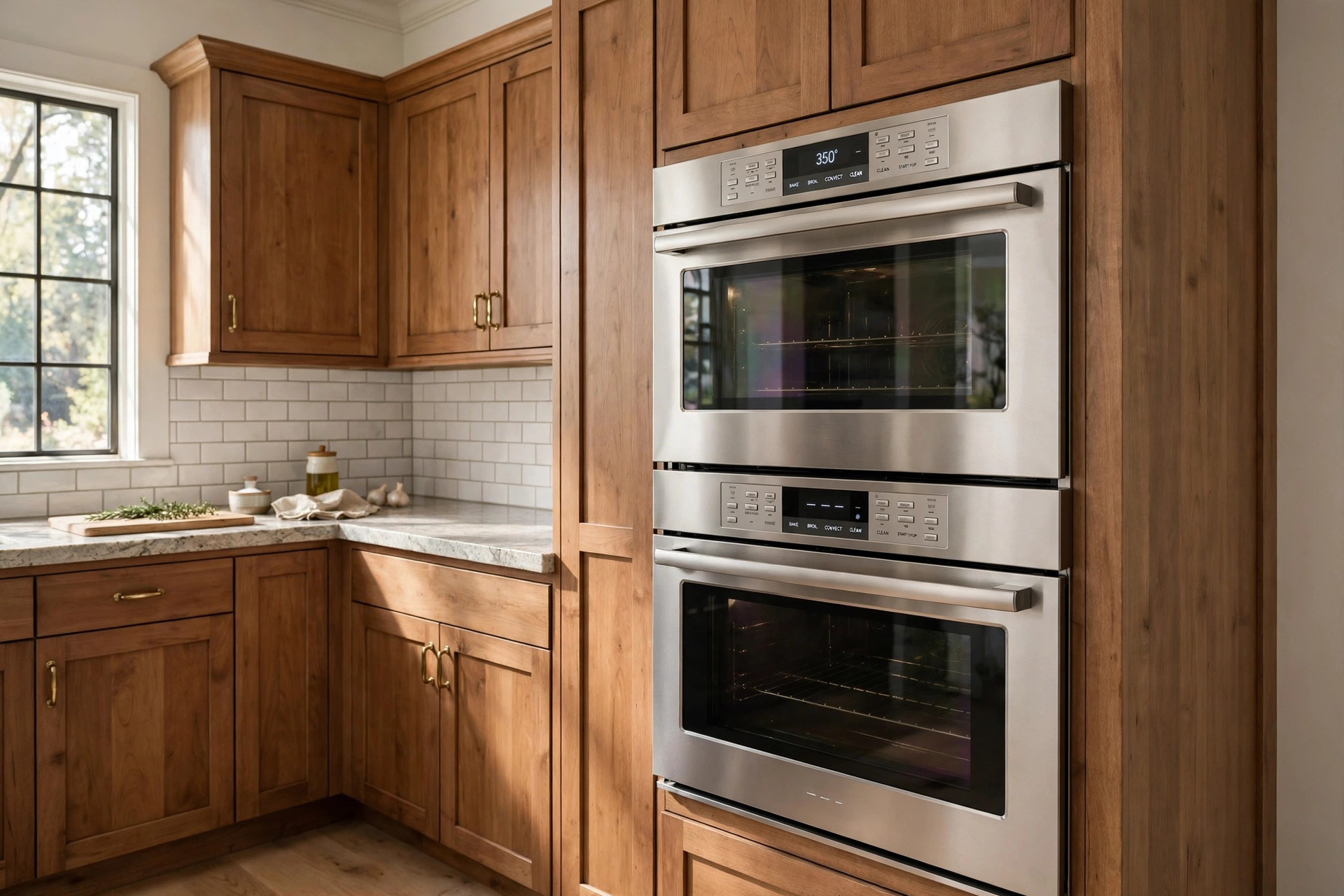

A double wall oven is a kitchen appliance that holds two full ovens, one stacked above the other, built into the wall or into tall cabinets. It bakes and roasts in two spaces at the same time. This guide brings together double wall ovens reviews and a practical buying guide USA shoppers can trust. It covers the types, the sizes, the features, the prices, the care, and the safety facts. Read it through before you spend a dollar.
Home cooks choose a double wall oven for one plain reason. It ends the fight over oven space. You can roast a turkey in the lower oven while the upper oven bakes the rolls. You can broil fish while a pie sets. For families, for holiday cooks, and for people who bake for a crowd, the second oven is not a luxury. It is a tool.
Why a Double Wall Oven Matters
A double wall oven sits at waist or chest height. This changes the daily work of cooking. You do not bend down to the floor level as you do with a range. Heavy roasts lift straight out at a safe height. Dishes go in and out with less strain on the back and knees.
Two ovens change the timing of a meal. A large dinner often needs two temperatures. With a single oven, you cook in shifts, and the first dish goes cold. With a double wall oven, both dishes finish on schedule. Reviews from long time owners return to this point again and again. The second oven becomes the part of the kitchen they use most.
The appliance also saves floor space. A wall oven leaves the range area free for a cooktop or for storage drawers. In a kitchen remodel, designers often pair a double wall oven with a separate cooktop. This gives the cook two ovens and four or five burners in less room than a big range takes. Guides to kitchen islands and seating often show this layout, since the island becomes the work zone in front of the ovens.
How to Choose: What the Reviews Say to Look For: Double Wall Ovens Reviews Buying Guide Usa
Size and Fit
Standard double wall ovens measure 24, 27, or 30 inches wide. The 30 inch size is the common choice in the USA. The 27 inch size fits older cabinet cutouts. The 24 inch size suits small kitchens and apartments. Measure your cabinet opening before you shop. Note the width, the height, and the depth. Note the electrical service too, since most double wall ovens run on 240 volt circuits.
Total capacity runs about 8 to 10 cubic feet for a 30 inch pair. Many models give 4.3 to 5.1 cubic feet per oven. Think about the largest pan you use. A full size sheet pan and a 16 inch turkey roaster need a wide lower oven. Some models split the space unevenly. One oven runs large, and the other runs small. This can suit cooks who want a fast heating daily oven plus a big oven for roasts.
Fuel Type
Most double wall ovens are electric. Electric ovens give steady heat and even baking. Gas wall ovens exist but are rare, and the choice of models is small. If you already have a gas kitchen range and like gas, you may consider a dual fuel range instead. For a true double wall oven, plan on electric service.
Convection
Convection ovens use a fan to move hot air. True convection, also called European convection, adds a third heating element around the fan. Reviews favor true convection for even browning across three racks. It cuts cook times by a modest amount. It is worth having in at least one oven of the pair.
Self Cleaning
Self clean cycles burn food soil to ash at high heat. Steam clean cycles use low heat and water for light soil. Heavy cooks value a strong self clean mode. The cycle locks the door and runs very hot for two to four hours. Some buyers report a strong smell during the cycle. Run it with a window open, and keep pets out of the kitchen during the high heat.
Controls and Displays
Look for a display you can read across the room. Large knobs suit some cooks. Touch panels suit others. Many new models add wireless links and phone apps. These extras can help, but they should not drive the choice. A clear timer, a probe for meat, and simple mode dials matter more in daily use.
Finish and Style
Stainless steel is the standard finish and the easiest to match with other appliances. Black stainless and matte finishes hide fingerprints better. White and custom panel fronts suit farmhouse and traditional kitchens. A fingerprint resistant coating is worth the small price bump for busy families. Check that the finish matches your other appliances, since mixed finishes can look off in a new kitchen.
Types and Options
Standard Double Wall Oven
Both ovens bake, broil, and roast. Some give both ovens convection. This is the basic and most popular type. It fits most homes and most budgets among double ovens.
Double Oven with Microwave
One cavity holds a microwave or a speed oven. This saves counter space. The speed oven cooks fast with microwave plus convection heat. It suits busy families who reheat often. Capacity in each cavity runs smaller than a standard pair.
Combination Wall Oven
A few models pair a standard oven with a steam oven. Steam baking gives moist bread and gentle reheating. These units cost more and appear mainly in premium lines. Brands such as Bosch and GE Appliances offer combination units in their higher ranges.
Price Tiers
Basic 30 inch electric double wall ovens start near 2,000 dollars. Mid range models with true convection and strong self clean run 2,500 to 4,000 dollars. Premium models with steam, wireless links, and custom finishes run 4,000 to 8,000 dollars and more. Installation and cabinet work add to the total.
Cost and Price: Reading the Reviews on Value
Price tracks features more than brand names. The cheapest models bake well. Review sites like Consumer Reports test baking evenness and broiling, and many modest models score well on the basics. You pay more for convection in both ovens, for larger displays, for meat probes, and for designer finishes.
Total cost includes more than the tag. A new 240 volt circuit can cost several hundred dollars if your kitchen lacks one. Cabinet changes cost more. Some buyers replace a single wall oven with a double and find the cutout too small. Get a written quote for the cabinet work before you buy the appliance.
Value also means energy. Ovens are not Energy Star labeled, but efficient models and good door seals cut waste. A smaller upper oven heats faster and uses less power for small meals. Owners who cook for two say the small cavity becomes their daily oven. This habit saves real money over a year.
Watch the sale calendar. Major appliance sales run around holidays. Retailers such as Home Depot and Lowe’s discount wall ovens during these events. Package deals can cut the price when you buy several appliances at once. Rebates from local utilities sometimes apply to efficient models.
Care and Upkeep
Daily care is simple. Wipe spills when the oven cools. Use a damp cloth and mild soap. Do not use harsh oven cleaners on a self clean oven unless the manual allows it. Harsh chemicals can harm the coating.
Run the self clean cycle a few times a year, not every week. Heavy use of self clean wears the door seals and stresses the controls. Wipe loose soil before the cycle starts. Take out the racks first, since the high heat can dull their finish. Place the racks on newspaper and clean them by hand.
Check the door seals once a year. Close the door on a sheet of paper. If the paper pulls out with no drag, the seal may need a fix. A weak seal leaks heat and bakes unevenly. This is a common cause of poor reviews for an oven that once baked well.
Keep the vents clear. Wall ovens vent from the front or from a trim strip. Do not block this area with towels or trays. Clear vents protect the electronics and keep the kitchen cooler.
For repair questions, the repair guides at This Old House and Bob Vila cover common oven faults. The Whirlpool and GE Appliances support pages give model specific manuals and error code lists.
Safety
A double wall oven runs very hot. Keep children and pets away during cooking and during self clean cycles. Use the control lock if the model has one. Teach children that the glass door stays hot long after the oven turns off.
Set the oven back from walkways when you plan a remodel. Hot air from a just opened door can reach a passerby. Leave clear space in front of the unit. Pull the rack out with two hands and a dry mitt. Wet mitts pass heat to the hand.
Steam from a just opened door can burn. Stand back and let the first rush of heat pass. Turn pan handles to the side so they do not tip. A meat probe with a heat safe cord is safer than opening the door to check food.
Mount a working smoke alarm near the kitchen. Self clean cycles can set off alarms, so plan the timing. Never leave a self clean cycle running while the house is empty.
Frequently Asked Questions
Can I replace a single wall oven with a double wall oven?
Often yes, but the cabinet cutout must fit. A double unit stands about 50 inches tall. Measure the opening. If the cabinet is too short, a cabinet maker must rebuild the space. Check the electrical circuit too. The double oven may need a larger breaker than the single oven used.
Do both ovens use convection?
Not always. Many models give true convection in both ovens. Some give it only in one oven. Read the spec sheet. For even baking, convection in both ovens is the better pick.
What size double wall oven fits most US kitchens?
The 30 inch wide model is the standard. It fits the common cabinet width and gives the largest capacity. The 27 inch model fits many older homes. The 24 inch model suits small spaces.
How long does a double wall oven last?
A well kept wall oven lasts 12 to 18 years. Door seals, heating elements, and control boards are the common repairs. Regular cleaning and careful use of self clean cycles extend the life.
Is a microwave drawer a good partner for a double wall oven?
Many buyers pair them. A microwave drawer unit goes under the counter and frees wall space. This combo suits cooks who reheat often and want the full wall space for baking.
Should I buy a gas or electric double wall oven?
Electric is the standard choice in the USA. The models are many, and electric heat bakes evenly. Gas wall ovens are rare. If you want gas, look at a gas kitchen range or a dual fuel range instead.
A Short Final Word
The best double wall oven is the one that fits your cabinets, your circuit, and your cooking habits. Measure twice. Read the reviews for baking evenness and for door seal life. Choose true convection in at least one oven. Plan the install cost before you buy. With those steps done, the second oven will earn its place fast. It will change how you cook on holidays, and it will change how you cook on plain weeknights too. For more ideas on wall oven care and kitchen projects, see the guides at The Spruce.
References
Bob Vila. (n.d.). Home improvement advice. https://www.bobvila.com Bosch. (n.d.). Home appliances. https://www.bosch-home.com Consumer Reports. (n.d.). Product reviews and ratings. https://www.consumerreports.org ENERGY STAR. (n.d.). Energy efficient products. https://www.energystar.gov GE Appliances. (n.d.). Kitchen and home appliances. https://www.geappliances.com Lowe’s. (n.d.). Home improvement products. https://www.lowes.com The Home Depot. (n.d.). Home improvement products. https://www.homedepot.com The Spruce. (n.d.). Home and garden advice. https://www.thespruce.com This Old House. (n.d.). Home renovation guidance. https://www.thisoldhouse.com Whirlpool. (n.d.). Home appliances. https://www.whirlpool.com
Was this guide helpful?

About David Wilson
The My Garden US editorial team writes practical, in-depth home and garden guides for American homeowners — tested advice, no fluff.
You May Also Like
Undermount Stainless Sinks: Reviews and Buying Guide USA
June 3, 2026 0 views
Undermount Stainless Sinks: Finding the Best USA Online Deals
July 6, 2026 0 views
Dishwasher Third Rack Florida Homes USA: A Practical Guide
April 4, 2026 0 views