
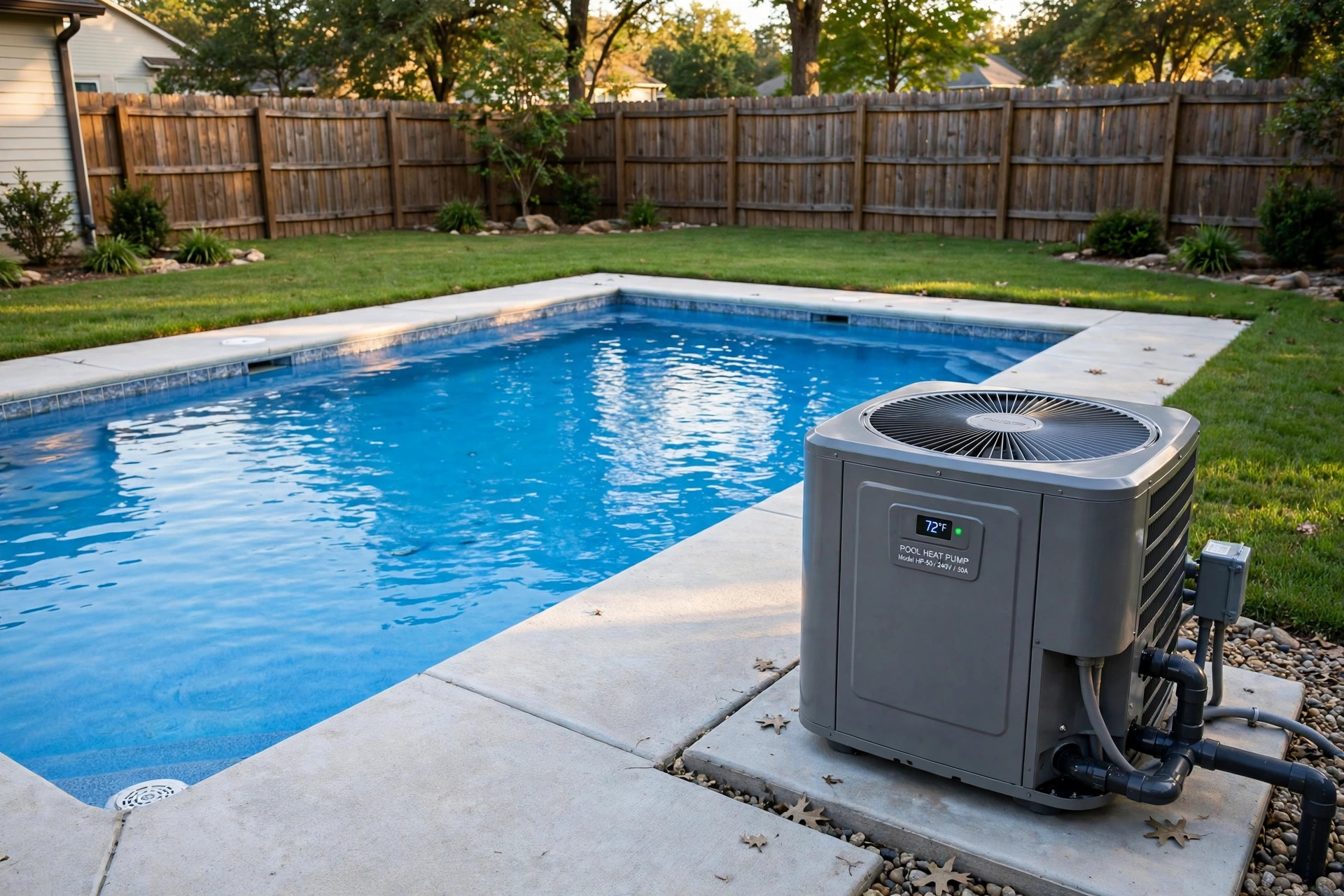

Salt water feels gentle on the eyes and the skin. Many owners now choose the best pool heater for saltwater pools to keep the season long and the water warm. A saltwater pool is not the same as a chlorine pool. The salt level is low, yet it still bites into bare metal. The wrong heater can fail in two or three years. The right one can run for a decade or more.
This guide explains the facts in plain words. It covers why salt water matters, what to look for in a unit, the main types on the market, the costs, the upkeep, and the safety rules. It closes with answers to common questions. By the end you should know how to judge any unit you see in a store or a catalog.
Why Salt Water Changes the Choice
A saltwater pool uses a chlorine generator. The generator turns a small amount of dissolved salt into chlorine. The salt level stays near 3,000 parts per million. That is about one tenth of sea water. It is still enough to corrode metal that is not made for it.
The heater has one part that meets the water directly. That part is the heat exchanger. In a cheap unit the exchanger is copper. Salt water eats copper. The walls thin. Pinhole leaks start. Heat flow drops. In time the whole exchanger fails, and the repair often costs as much as a new unit.
Heaters made for salt water use tougher metals. Many use cupronickel or titanium in the exchanger. Cupronickel is a copper-nickel mix that stands up well to salt. Titanium is stronger still and costs more. Both last far longer in salt water than plain copper. Guides at Swim University describe how water chemistry and salt levels shape equipment life, and the same care notes apply here.
Corrosion is not the only problem. Salt crystals can build up in low-flow spots. Scale can coat the exchanger and cut heat transfer. That is why the right heater for a saltwater pool is never just a heater that is cheap or strong. It must be built to live with salt, day after day, season after season.
What to Look For When You Shop: Best Pool Heater for Saltwater Pools
Start with the heat exchanger. This is the single most important part. Look for the words cupronickel or titanium in the product sheet. If the sheet only says copper, the unit is made for fresh water pools. A sales tag may still call it a pool heater, but it is not the best pool heater for saltwater pools. The metal decides the life of the unit.
Next, check the size. Heater size is given in BTU. BTU means British Thermal Unit. It is the measure of heat power. A small pool of 10,000 gallons may do well with 150,000 to 200,000 BTU in a gas unit. A large pool of 30,000 gallons may need 400,000 BTU or more. Heat pumps use a different scale, often rated in BTU as well. An undersized heater runs all day and never warms the water. An oversized unit costs more to buy and may cycle on and off too often. Match the unit to your gallons and your climate.
Look at the warranty with care. Some makers cover the heat exchanger for saltwater use. Some exclude salt damage by name. Read the fine print. A long exchanger warranty is a good sign that the maker trusts its metal. Retail sites such as The Home Depot list warranty terms on most product pages, which makes comparison easier.
Check the flow rate range. Every heater needs a minimum flow of water to work safely. Your pump must be able to meet it. A pool pump matched to the heater and filter matters more than most owners expect. If the flow is too low, the heater may shut off or overheat. If your pump is old, check its rating before you buy.
Think about your fuel. Gas needs a gas line and a permit in many towns. A heat pump needs a strong electric circuit and enough outdoor air flow. Solar needs roof space and full sun. The best pool heater for saltwater pools for your neighbor may be wrong for your yard. Fuel, climate, and the season you want all count.
The Main Types of Pool Heater
Gas Heaters
Gas heaters burn natural gas or propane. They heat fast. A gas unit can raise pool water ten degrees in a single day, even in cool spring air. That speed is their chief merit. They work in any weather and do not care about the air temperature.
The cost to run them is high. Gas prices move with the market. A full season of gas heat can cost several times the cost of a heat pump. They also wear out faster in salt water unless the exchanger is cupronickel or titanium. For an owner who only wants heat for a few weekends, gas is a fair choice. For daily heat all season, the fuel bill grows large.
Heat Pump Heaters
A heat pump does not make heat. It moves heat from the outdoor air into the water. It works like a refrigerator in reverse. Because it moves heat instead of burning fuel, it uses far less energy. A heat pump can give four to five units of heat for each unit of power it draws.
Heat pumps are slow. They suit owners who keep the pool at one steady temperature for weeks. They lose power as the air gets cold. In cool climates they may not hold the temperature in April or October. Many heat pump models now come with titanium exchangers, which makes them strong picks for salt water. Energy guidance from the U.S. Department of Energy explains why heat pumps are among the most efficient choices for pool heating in warm regions.
Solar Heaters
Solar heaters pump water through dark panels on a roof. The sun warms the water. There is no fuel bill at all after the install. The panels last a long time, and salt water does not harm them much since the water touches plastic, not metal.
The limits are clear. Solar needs sun. On cloudy days and in cold months it does little. It heats slowly. It also needs a large roof area facing the sun. Many owners pair solar with a small gas or heat pump unit. Solar carries the daily load, and the other unit fills the gaps.
Electric Resistance Heaters
Small electric heaters warm spas and very small pools. They are cheap to buy and simple to fit. They are costly to run for a full pool. Few owners choose them for a whole saltwater pool. They still serve well for a spa attached to the pool.
Cost and Price Guide
Prices vary by type and size. A gas heater for a home pool often runs from $1,500 to $3,500. A heat pump often runs from $2,500 to $5,500. Solar systems run from $3,000 to $6,000 installed, based on roof work. Electric resistance units for spas run a few hundred dollars.
Install cost is separate. A gas install may need a gas line, a permit, and an electric hookup. Plan for $500 to $2,000. A heat pump needs a level pad and a dedicated electric circuit. Plan for $500 to $1,500. Solar needs roof mounts and plumbing runs. That labor can be $1,000 to $3,000.
Running cost is where the types split. Gas costs the most per month. A heat pump costs the least where the air stays warm. Solar costs nothing to run. Over five years, a heat pump often beats gas on total cost, even though it costs more to buy. The Pool Warehouse catalog and similar supply houses list unit prices that show this spread clearly.
If you are converting a chlorine pool to salt water at the same time, add the cost of the salt generator. That job runs $1,000 to $2,500 installed. Do the two jobs together if you can. It saves on plumbing labor.
Care and Upkeep for Salt Water Units
Salt water care starts with the salt level. Keep it in the range the generator maker states, often 2,700 to 3,400 parts per million. Too little salt starves the generator. Too much salt speeds corrosion. Test the salt level once a month with a drop kit or a digital meter. Leslie’s Pool Supplies and other pool stores carry salt test kits, and many test water for free in store.
Keep the pH in range. Salt systems tend to push pH up. A high pH scales the exchanger and cuts heat flow. Test pH and chlorine each week. Fix the numbers before they drift far. A well-balanced pool is kind to every metal part, and the heater lives longer.
Rinse the heater each spring. Hose off the cabinet to clear salt film and leaves. Check for white salt crust near pipe joints. A crust can mark a slow leak. Fix small leaks fast. Salt water finds weak spots and makes them worse.
Run the pump long enough each day. The heater needs steady flow. Short pump runs starve the exchanger and let scale settle. Follow the maker chart for minimum flow. A filter built for saltwater systems that is clean and sized right keeps the flow steady and the heater happy.
In cold states, winterize the unit. Drain the exchanger before the first hard freeze. Water left inside can crack the metal. Cap the lines. Cover the cabinet. A spring start-up is then simple and safe.
Once a year, have a tech check the unit. The tech can read the heat rise, check the gas or electric parts, and look inside the exchanger for scale. One visit a year costs far less than one failed exchanger.
Safety Rules You Must Follow
Pool heaters burn fuel or draw heavy power. Treat them with respect. Keep the area around the unit clear. Gas units need air to breathe and a vent path that is open. Do not pile leaves, boxes, or pool toys against the cabinet.
Follow the maker manual for gas and electric hookups. Gas work and heavy electric work need a licensed tech in most places. Bad wiring can shock a swimmer. Bad gas work can leak. Do not cut corners here.
Keep chemicals away from the heater. Store chlorine, acid, and salt bags in a dry spot away from the unit. Fumes and spills corrode metal and can harm the controls. Never add salt right at the skimmer while the heater runs. Brush it into the pool and let it dissolve first.
The U.S. Consumer Product Safety Commission warns about pool equipment hazards and urges owners to follow maker instructions for install and use. Their pool safety pages are a sound read for any new pool owner.
Teach the family the shutoff points. Show them where the gas valve and the breaker sit. Label both. In a leak or a fault, quick action keeps a small fault small.
Frequently Asked Questions
Can I use any pool heater with salt water?
You can, but you should not. A standard copper exchanger will fail early in salt water. Choose a unit with a cupronickel or titanium exchanger. Check the warranty for salt use before you buy.
How long should a saltwater pool heater last?
A well-built unit with the right metal can last 8 to 15 years with fair care. A copper unit in salt water may last only 2 to 5 years. Water balance and yearly service stretch the life of any unit.
What size heater do I need for a saltwater pool?
Size by gallons and climate, not by pool type. A 20,000-gallon pool in a mild state may need about 250,000 to 300,000 BTU in gas, or a 100,000 to 140,000 BTU heat pump. Ask a local dealer to run the math for your yard. A pool heater for an above ground pool follows the same sizing rules at a smaller scale.
Is a heat pump or a gas heater better for salt water?
Both work if the exchanger metal is right. A heat pump costs less to run in warm air but heats slowly. Gas heats fast in any weather but costs more to run. Many salt pool owners pick a heat pump for the long season and keep gas as a backup.
Do saltwater pools need special maintenance for heaters?
They need the same heater checks, plus tight salt and pH control. High salt and high pH are the two chief enemies. Test often, brush often, and rinse the unit each spring.
Can I add a heater to an old saltwater pool?
Yes, in most cases. The plumber cuts the new unit into the return line after the filter and the salt cell. Check that your pump meets the minimum flow. Check that your electric panel or gas line can feed the new unit. A spa maker such as Hot Spring or Bullfrog Spas can also advise on heating small attached spas fed by the same system.
A Final Word
The best pool heater for saltwater pools is not the dearest unit on the shelf. It is the unit whose metal can stand salt, whose size fits your gallons, and whose fuel fits your yard and your budget. Cupronickel or titanium in the exchanger comes first. Size comes next. Then fuel, cost, and upkeep.
Take your time with the choice. Read the warranty. Ask about salt in plain terms. A good dealer will answer straight. A warm pool all season long is worth the care you put into the choice now.
Related guides on this site include best above ground pool for families, how to open pool for summer season, and best pool pump for inground pools.
References
Bullfrog Spas. (n.d.). Hot tubs and spas. https://www.bullfrogspas.com Hot Spring Spas. (n.d.). Hot tubs and spas. https://www.hotspring.com Leslie’s Pool Supplies. (n.d.). Pool supplies and equipment. https://www.lesliespool.com Pool Warehouse. (n.d.). Pool equipment and supplies. https://www.poolwarehouse.com Swim University. (n.d.). Pool and hot tub care guides. https://www.swimuniversity.com The Home Depot. (n.d.). Home improvement products. https://www.homedepot.com The Spruce. (n.d.). Home and garden advice. https://www.thespruce.com U.S. Consumer Product Safety Commission. (n.d.). Product safety information. https://www.cpsc.gov U.S. Department of Energy. (n.d.). Energy efficiency and renewable energy. https://www.energy.gov
Was this guide helpful?

About Jennifer Lee
The My Garden US editorial team writes practical, in-depth home and garden guides for American homeowners — tested advice, no fluff.
You May Also Like

The Best Pool Pump for Inground Pools: A Plain Guide for Pool Owners
August 9, 2026 0 views
How to Balance Pool Water Chemistry: A Clear Guide for Pool Owners
June 3, 2026 0 views
How to Remove Stains From Pool Plaster: A Complete Guide
March 9, 2026 1 views