
Introduction
A new baby spends most of the day asleep. Newborns sleep between sixteen and eighteen hours each day. Much of that sleep happens in the crib. For this reason, the mattress inside the crib matters more than many parents expect. A crib mattress waterproof organic for newborns gives parents two things at once. It keeps the sleeping surface dry and clean. It also reduces the chemicals the baby breathes and touches during those long hours of sleep. This guide explains what these mattresses are, why they matter, and how to choose one with care.
Shopping for a crib mattress can feel confusing. Store shelves and web pages are full of claims. Some labels say natural. Some say organic. Some promise a dry sleep through the night. This article breaks the topic into plain parts. It covers the materials, the safety rules, the costs, and the daily care. It ends with answers to common questions. First time parents can use it as a steady reference from the store to the nursery.
Why a Waterproof Organic Crib Mattress Matters: Crib Mattress Waterproof Organic for Newborns
A newborn wets the bed often. Diapers leak. Spit up lands on the sheets. Milk drips during night feeds. A standard mattress soaks up this moisture. Once moisture gets inside a mattress, it is hard to remove. Damp filling can grow mold and mildew. It can also hold odors for months. A waterproof crib mattress stops this problem at the surface. Liquids stay on top of the cover. Parents wipe them away in seconds. The inner core stays dry and clean.
Organic materials add a second layer of comfort. Many standard mattresses use vinyl covers and polyurethane foam. These can release chemical fumes, especially when new. A newborn breathes close to the mattress for hours at a time. An organic mattress uses plant and animal based fillings instead. Common choices include organic cotton, natural latex, and coconut fiber. These break down less into harsh fumes. Pediatric health guidance often notes that simple, low chemical sleeping spaces are best for infants. HealthyChildren.org offers parent resources that discuss healthy sleep settings for babies.
The waterproof part and the organic part work well together. A waterproof cover keeps the organic filling dry. Organic filling stays fresh longer when it never gets wet. Parents get a mattress that lasts through the whole crib stage. They also get easier nights. There is no need to strip a soaked mattress at three in the morning. A quick wipe with a damp cloth does the job.
What to Look For When You Shop
The best choice starts with a clear list. Parents should check five points before they buy. These points are the core fill, the waterproof layer, the cover, the firmness, and the fit.
Core Materials
The core gives the mattress its shape and support. In organic models, makers use several natural cores. Innerspring cores use steel coils. They give strong, even support. They also allow air to move through the mattress. Organic cotton cores use dense layers of batting. They feel soft but stay firm enough for infants. Natural latex cores come from rubber tree sap. They spring back well and resist dust mites. Coconut fiber cores use husk fiber pressed into firm pads. They are very firm and breathe well.
Each core has trade offs. Innerspring models can be heavy. Latex models can cost more. Cotton models can feel flatter over time. Coconut fiber models can feel too firm for some parents, though firmness is exactly what safety rules require. Consumer Reports publishes independent product testing that compares mattress types and notes these differences.
The Waterproof Layer
Not all waterproof layers are the same. Older mattresses use vinyl or PVC plastic. These block water, but they can also block air and release fumes. Better organic models use food grade polyethylene or thermoplastic polyurethane. These still block water. They breathe better than vinyl. They also avoid the harsh chemicals linked to vinyl.
Some models are only water resistant. Water resistant means spills soak in slowly. Waterproof means spills stay on the surface. Parents of newborns should choose true waterproofing. Nighttime leaks happen often. A true waterproof layer saves the mattress again and again.
Certifications
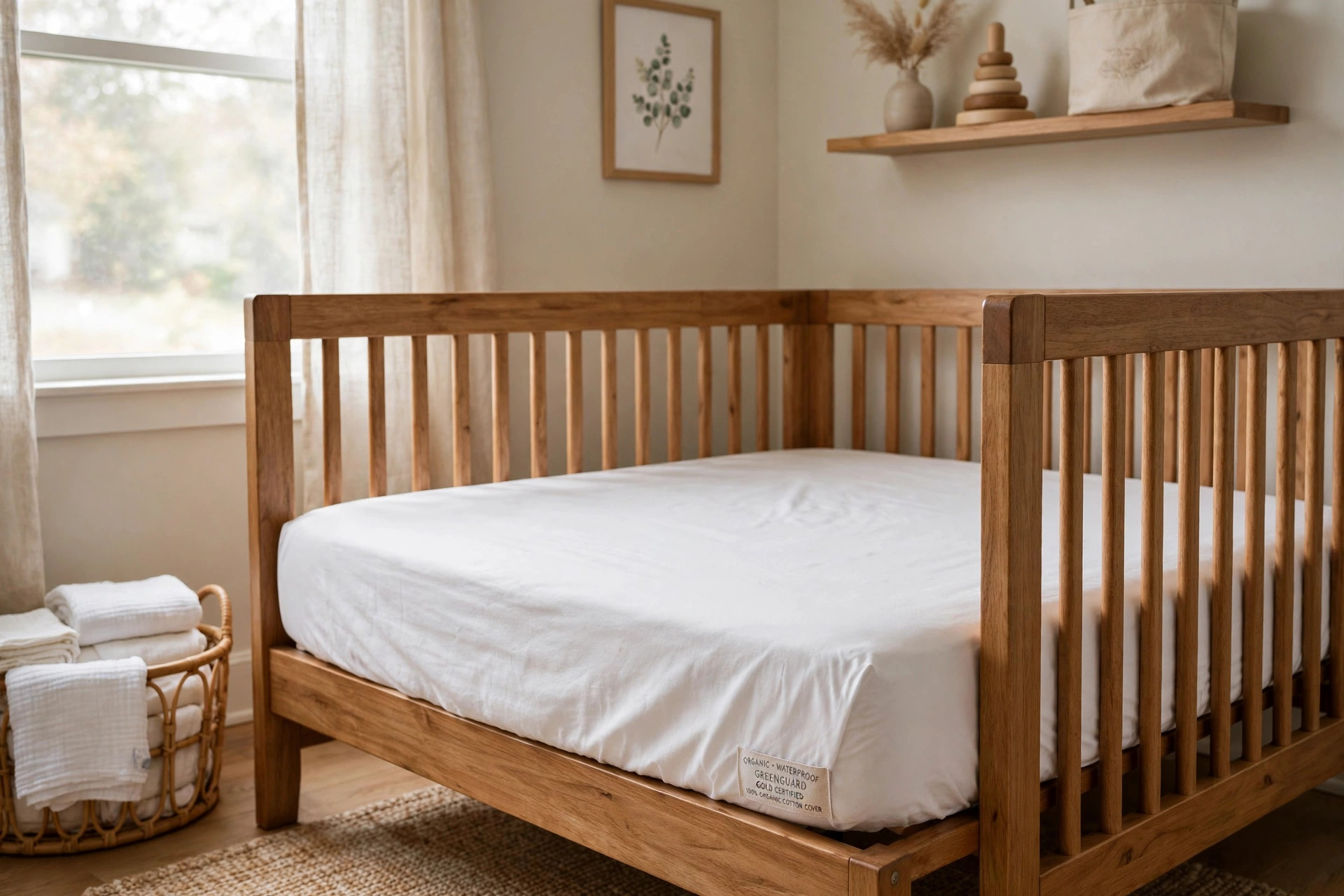
Labels can mislead. A maker can print the word natural on almost anything. Trusted third party marks give real proof. Look for the Global Organic Textile Standard mark, known as GOTS. It certifies that the fabric parts are organic and processed with care. Look for the GREENGUARD Gold mark. It tests the mattress for chemical emissions in a lab. Look for OEKO-TEX Standard 100. It tests fabrics for harmful substances. A mattress that holds one or two of these marks has earned its organic claim.
Firmness and Fit
Safety rules in the United States call for a firm, flat sleep surface for infants. A soft mattress raises the risk of suffocation. Press the center and edges with your hand. It should push back and not hold your handprint. The fit matters just as much. A standard crib mattress is about 52 inches long and 28 inches wide. The gap rule is simple. If you can fit more than two fingers between the mattress and the crib frame, the mattress is too small. The federal safety agency sets rules for crib size and spacing. Parents can read them at the U.S. Consumer Product Safety Commission.
The Main Types and Options
Makers sell three main styles of waterproof organic crib mattress. Each suits a different family.
Dual sided mattresses are the most popular. One side is firm for infants. The other side is slightly softer for toddlers. Parents flip the mattress when the child moves to a toddler bed. This design stretches the value across years. It pairs well with a best convertible crib for small nursery room that grows with the child.
Innerspring organic mattresses use coils wrapped in organic cotton. They weigh more than foam models. Many parents like the classic feel. They also like the airflow that coils allow. These models often cost less than latex models.
Natural latex mattresses use one firm latex core. They resist dust mites and mold well. They hold their shape for years. They weigh less than innerspring models. The price runs higher. Parents who want the longest lasting mattress often choose latex.
A smaller group of models uses coconut fiber. These are firm and light. They breathe very well. They can feel too hard for some families. Reading current parent reviews helps here. What to Expect hosts new parent guides where families share what worked in their own nurseries.
What It Costs
Price ranges are wide. A basic waterproof organic crib mattress starts near one hundred dollars. Mid range models run between one hundred fifty and two hundred fifty dollars. Premium latex or dual sided models can reach three hundred fifty dollars or more. These prices appear across large online retailers, national retail chains, and national retailers.
Parents should weigh price against years of use. A newborn uses a crib mattress for about two to three years. A mid range mattress that lasts the full term costs only a few dollars per month. A cheap mattress that sags after one year costs more in the end. It may also need early replacement.
Watch for sales around major holidays. Nursery furniture stores and furniture retailers often cut prices in spring and fall. Children’s furniture stores run seasonal events too. Affordable nursery furniture makers keep steady low prices through the year. Buying the mattress and crib together sometimes brings a bundle discount.
Care and Upkeep
Daily care is simple. Keep the mattress covered with a fitted crib sheet at all times. The sheet should fit tight with no loose fabric. Change the sheet when it gets wet or soiled. Keep two or three spare sheets on hand.
When a leak happens, act fast. Remove the sheet. Wipe the waterproof surface with a damp cloth and mild soap. Dry it with a clean towel. Let air reach the surface for a few minutes before you put on a fresh sheet. Do not soak the mattress. Do not use bleach or strong cleaners. Harsh cleaners can damage the waterproof layer and leave fumes behind.
Every few months, check the mattress for wear. Look at the seams and the waterproof coating. Press the surface for soft spots. A good organic mattress holds its firmness for years. If the cover tears, repair it or replace the mattress. A torn waterproof layer lets moisture into the core.
Sunlight helps freshen a mattress. On a dry day, stand the bare mattress in indirect sun for an hour. Sunlight reduces odors naturally. Do not leave it in harsh direct sun for long. Strong heat can age some materials.
Safety Rules for the Nursery
The mattress is only one part of safe sleep. Parents should follow the full set of safe sleep rules. Always place the baby on the back to sleep. Use a firm flat mattress with a tight fitted sheet. Keep the crib bare. No pillows, blankets, bumpers, or stuffed animals belong inside. The room should stay at a comfortable temperature. Overheating raises risk.
Check that the crib itself meets current standards. Older cribs with drop sides are no longer sold in the United States. Slats should be no more than two and three eighths inches apart. The mattress support should lock firmly in place. These rules come from the federal safety agency noted above.
Place the crib away from windows, cords, and curtains. Blind cords pose a strangling risk. Keep the nursery simple during the newborn months. A nursery dresser changing table combo for small space and a nursery glider chair with ottoman for breastfeeding cover most daily needs. Extra decor can wait until the child is older.
Frequently Asked Questions
Is a waterproof crib mattress safe for a newborn? Yes. A waterproof crib mattress is safe when it is firm and fits the crib with no gaps. The waterproof layer sits under the fitted sheet. The baby sleeps on the sheet, not on plastic. Choose a model with a breathable waterproof layer and trusted certifications. Follow all safe sleep rules listed above.
What does organic mean on a crib mattress label? Organic means the plant based materials grew without synthetic pesticides. On mattresses, it usually refers to the cotton cover and the fiber filling. The word alone is not proof. Look for third party marks like GOTS, GREENGUARD Gold, or OEKO-TEX. These marks show that an outside lab checked the claim.
Do I still need a separate mattress protector? Most parents do not need one. The waterproof layer built into the mattress already does the job. Adding a thick protector can make the sleep surface softer. That can work against the firmness rule. A simple fitted sheet over the mattress is enough. If you want extra cover, choose a thin breathable pad made for cribs.
How often should I replace a crib mattress? Replace it when it loses firmness or the waterproof layer fails. A quality organic mattress often lasts through one child and sometimes two. Check the surface each season. If it sags, tears, or smells musty despite cleaning, buy a new one. Never use a mattress that is cracked or broken down.
What size mattress fits a standard crib? A standard United States crib takes a mattress about 52 inches long and 28 inches wide. The mattress should be at least four inches thick. Always test the fit. Push the mattress into each corner. If more than two fingers fit in any gap, the mattress is too small for that crib.
Can the mattress be used for a toddler bed later? Many can. Dual sided models have a toddler side for this purpose. Single sided firm models also work in most toddler beds. Check the bed frame size first. The same no gap rule applies. Keep the bare crib approach even as the child grows.
A Final Word
A crib mattress waterproof organic for newborns is a practical choice. It keeps the bed dry through leaks and spills. It lowers the chemical load around a sleeping baby. It lasts for years with simple care. Parents who check the materials, the certifications, the firmness, and the fit will buy with confidence. The nights will still bring feeds and wake ups. At least the mattress will be one less worry.
References
Amazon. (n.d.). Online shopping. https://www.amazon.com American Academy of Pediatrics. (n.d.). HealthyChildren.org. https://www.healthychildren.org Consumer Reports. (n.d.). Product reviews and ratings. https://www.consumerreports.org IKEA. (n.d.). Home furnishings. https://www.ikea.com Pottery Barn Kids. (n.d.). Kids furniture and decor. https://www.potterybarnkids.com Target. (n.d.). Retail store. https://www.target.com U.S. Consumer Product Safety Commission. (n.d.). Product safety information. https://www.cpsc.gov Walmart. (n.d.). Everyday low prices. https://www.walmart.com Wayfair. (n.d.). Furniture and home goods. https://www.wayfair.com What to Expect. (n.d.). Pregnancy and parenting guidance. https://www.whattoexpect.com
Was this guide helpful?

About James Carter
The My Garden US editorial team writes practical, in-depth home and garden guides for American homeowners — tested advice, no fluff.
You May Also Like
Nursery Chandelier for Baby Girl Room Decor: A Plain Guide to Choosing the Right Light
May 4, 2026 0 views
Kids Night Light with Timer for Bedtime Routine: A Parent’s Guide
May 6, 2026 0 views
A Kids Bedroom Fan with Light for the Ceiling: A Plain Buying Guide
March 28, 2026 0 views