A kitchen pantry can fill up fast. Cans hide behind jars. Bottles push each other out of reach. This space saving rotating lazy susan turntables buying guide will show you how a simple spinning tray can bring order back to tight shelves. You will learn what sizes fit where, which materials last longest, and how much a good turntable should cost.
Why Space-Saving Turntables Matter
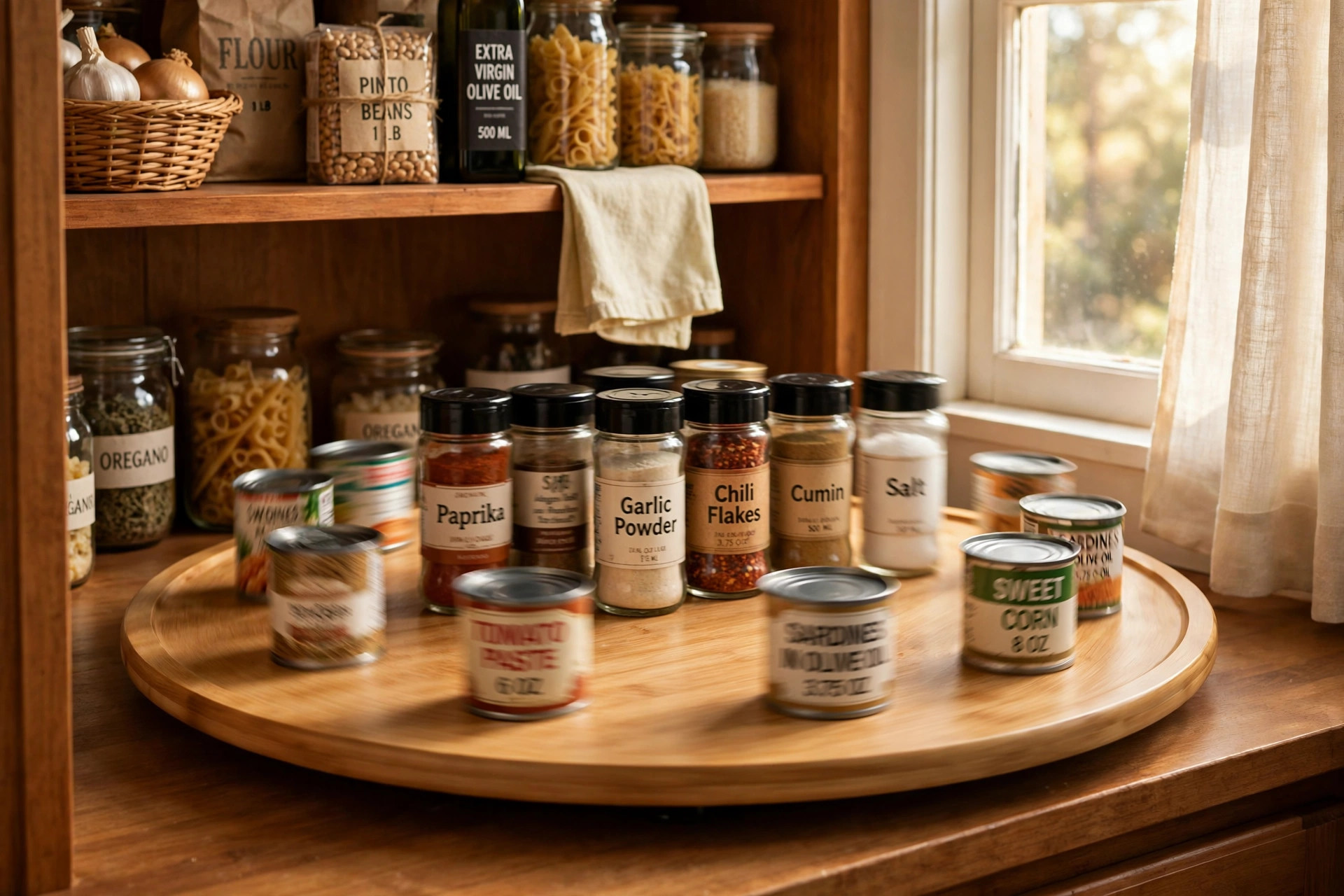
A lazy susan turntable is a round platform that spins on a central bearing. You place it inside a cabinet or on a shelf, set your items on it, and turn the tray with one hand. Nothing hides in the back corner. Everything comes to you.
This matters most in small kitchens. A standard base cabinet is twenty-four inches deep. Most people only use the front ten inches. The back half becomes a graveyard of forgotten soup cans and stale spices. A rotating tray doubles the usable space in that same cabinet. You spin, you grab, you are done.
Pantries benefit in the same way. Narrow pantry shelves look tidy at first. Then you stack jars two deep, and the back row disappears from your mind. Food expires. Money is wasted. A turntable keeps every jar in one visible row. Nothing sits unseen for a year.
Bathrooms and laundry rooms gain from them too. Under a bathroom sink, a turntable holds cleaning sprays in a ring. One spin shows you every bottle. In a laundry room, it keeps detergent, stain removers, and fabric softener within reach without knocking bottles over.
The word lazy susan has a long history. Stories trace the name to the early nineteen hundreds, when such trays were called dumbwaiters in some American homes. The name does not matter much. The function does. A flat spinning tray is one of the cheapest ways to fix deep, dark storage.
What to Look For When You Buy: Space Saving Rotating Lazy Susan Turntables Buying Guide
Measure First
Measure the cabinet or shelf before you shop. Write down the width, the depth, and the height of the opening. The turntable must be at least two inches narrower than the shelf depth so it can spin freely. A twelve inch shelf takes a ten inch turntable. A fifteen inch shelf takes a twelve inch model.
Check the height too. Tall bottles need tall clearance. Some turntables have a raised lip of one inch. Others stand three inches tall with two tiers. Measure from the shelf surface to the bottom of the shelf above it. Leave room to lift bottles on and off.
Corner cabinets need special care. Many corner cabinets are wider than they are deep at the opening. Round turntables fit well here. Some buyers choose a D-shaped tray that slides to the back of the corner. Round models cost less and spin more freely.
Materials and Build Quality
Plastic turntables are the cheapest and the lightest. Good ones are made of thick, rigid plastic that does not flex under a row of full cans. Thin, cheap plastic warps with heat and sags under weight. Look for a sturdy rim and a smooth ball bearing base.
Stainless steel and metal turntables last longer. They handle heavy jars without bending. They wipe clean in seconds. They cost more, but many buyers feel they are worth it in a busy kitchen. Check that the metal edges are smooth and finished.
Wood and bamboo turntables look warm and natural. They suit open pantries and dining tables. Wood needs more care. Wipe spills at once. Oil the wood now and then to keep it from drying out. Never soak a wooden turntable in water.
The bearing matters more than most buyers think. A good bearing spins with a light push and stops without wobbling. Cheap bearings grind or stick after a few months. When you test one in a store, spin it with your finger. It should turn smoothly and quietly.
Raised Edges and Tiers
A raised rim keeps items from sliding off during a spin. This matters for round bottles and tall jars. A rim of one inch holds most pantry items. Higher rims hold bottles up to a quart.
Two-tier turntables stack storage upward. The lower tier holds cans and heavy jars. The upper tier holds spices and small bottles. A two-tier model doubles the storage in the same footprint. The catch is weight. Heavy loads on the top tier can make the tray tip when you spin it fast. Load heavy items low and light items high.
Some models have a non-slip surface. Small raised dots or a rubber mat on the tray keep jars from sliding. This helps in refrigerators, where bottles are cold and smooth. If the turntable lacks a grip surface, you can add small rubber shelf liner cut to a circle.
Types and Options
Single-tier round turntables are the classic choice. They come in diameters from nine to eighteen inches. Use them inside cabinets, on pantry shelves, and in refrigerators. They cost the least and fit almost anywhere.
Two-tier turntables add a second spinning level on a center post. They suit tall cabinets and open pantry shelves. They hold more in less floor space. Check the space between tiers. Eight inches of clearance fits most spice jars and cans.
Rectangular and D-shaped turntables fit corner cabinets and narrow shelves. The flat side sits against the cabinet back or wall. They use space that a round tray would waste. They spin in a smaller circle, so they work best on a stable, flat shelf.
Turntables with handles help in deep cabinets. A small cut-out handle or a raised grip on the rim lets you pull the spin without reaching far. This helps people with limited reach.
Fridge and freezer turntables are made to handle cold. They resist cracking at low temperatures. Many have drainage channels for condensation. A ten inch turntable in the back of a refrigerator ends the lost-leftovers problem for good.
Large tabletop turntables serve at the dining table. A family meal with many dishes becomes easier when the food rotates. These are larger, often eighteen inches or more, and built to carry weight. They make a good serving piece for gatherings.
Buyers looking at region-focused advice often pair this guide with related roundups, such as best rotating lazy susan turntables for texas homes or best rotating lazy susan turntables for florida homes, which cover heat and humidity factors that affect storage choices in warm climates. Those who are organizing whole cabinets may also want to read about best kitchen cabinet organizers for texas homes for ideas that pair well with turntables.
Cost and Price
Prices vary with size, material, and brand. Basic single-tier plastic turntables sell for about eight to fifteen dollars. These work fine for light use in pantries and bathrooms.
Mid-range models cost fifteen to thirty-five dollars. This range includes sturdy plastic with raised rims, stainless steel trays, and bamboo models. Many kitchens are best served here. A twenty-five dollar turntable with a smooth bearing and a good rim will last for years.
Two-tier and large metal turntables cost thirty-five to sixty dollars. Tabletop serving turntables with wood or stone finishes can run higher. Shop sales at big home stores and online retailers often bring these prices down.
Think about cost per use. A twenty dollar turntable used daily in a kitchen pantry for five years costs about a penny a day. That is cheap for the time it saves and the food waste it stops. Buying the cheapest model and replacing it twice costs more in the end.
Shipping matters for online orders. Turntables are bulky for their weight. Some retailers add a shipping fee that doubles the price of a small tray. Look for free shipping thresholds, or buy several turntables in one order for different rooms.
Care and Upkeep
Care is simple. Wipe the tray with a damp cloth and mild dish soap. Dry it fully before you put items back. For sticky spills, soak the spot for a few minutes, then wipe. Avoid harsh chemicals on plastic and metal finishes.
Check the bearing once a year. Lift the tray off the base if it comes apart. Wipe dust and crumbs from the bearing ring. A dry bearing may squeak. A drop of food-safe mineral oil on the bearing track quiets it. Do not use cooking oil, which turns sticky over time.
Wooden and bamboo turntables need extra care. Wipe spills right away. Once or twice a year, rub in a thin coat of mineral oil made for cutting boards. Keep them away from standing water and high heat. A warped wooden tray can often be flattened by pressing it under weight on a flat surface for a day.
Overloading is the main cause of early failure. Every turntable has a weight limit, often printed on the package. A typical twelve inch plastic tray holds about fifteen to twenty pounds. Respect the limit. Spread heavy items around the tray instead of piling them on one side. An evenly loaded tray spins smoothly and lasts longer.
Safety
Safety with turntables is mostly common sense. Place the tray on a flat, level shelf. A wobbly shelf makes the tray tip. Test the spin with a full load before you walk away. Make sure nothing strikes the shelf above when the tray turns.
Keep glass jars from the rim edge. A fast spin can throw a tall bottle outward. Spin slowly. Teach children to turn the tray gently. A dropped glass jar on a tile floor is a hazard you can avoid with a slow hand.
Chemicals and cleaning products need care. If you use a turntable under the sink for sprays and bottles, keep them upright. Cap every bottle. A leaked cleaner can damage the shelf and harm children or pets. Store these products in a locked cabinet if small children live in the home. Guidance on safe home storage of household chemicals is available from public safety resources linked below.
Heavy two-tier models can tip forward if you pull too hard. Anchor is not needed, but load the bottom tier first. Place the turntable near the front of the shelf so you do not lean in far to reach it. Good reach reduces the chance of a dropped item.
Frequently Asked Questions
What size lazy susan turntable do I need for a kitchen cabinet?
Measure the inside depth of the cabinet. Pick a turntable at least two inches smaller. Most kitchen base cabinets take a ten to twelve inch tray. Pantry shelves often fit a twelve to fifteen inch tray. When in doubt, go smaller. A tray that spins freely beats a large tray that jams.
Can I use a lazy susan turntable in the refrigerator?
Yes, if the tray is rated for cold use. Most plastic and stainless steel turntables handle refrigerator temperatures. Cold makes some cheap plastic brittle. Choose a tray sold for fridge use. A ten inch tray fits the back shelf of most refrigerators and keeps condiments and leftovers in view.
How much weight can a turntable hold?
It depends on size and build. A twelve inch plastic tray usually holds fifteen to twenty pounds. Stainless steel models often hold thirty pounds or more. Two-tier models list separate limits for each tier. Check the package or product page. Keep heavy cans on the bottom tier and light items on top.
Do turntables work in corner cabinets?
Yes. Round turntables are a classic fix for blind corner cabinets. Some corner cabinets come with built-in rotating shelves. For a plain corner cabinet, place one large round tray near the back and a smaller one near the front. D-shaped trays also fit corners well because the flat side sits against the cabinet wall.
How do I stop items from sliding off when I spin the tray?
Choose a model with a raised rim. Add a non-slip shelf liner cut to fit the tray. Load heavy items low and near the center. Spin the tray slowly. In most cases, a one inch rim plus a slow hand ends the sliding problem.
Are bamboo turntables better than plastic ones?
Neither is better in every way. Bamboo looks nicer and feels solid. Plastic costs less and handles water better. Bamboo needs oiling and careful drying. Plastic may stain or warp with heat. Choose bamboo for open shelves and dining tables where looks matter. Choose plastic for under-sink and fridge use where moisture is a factor.
A Short Final Word
A space saving rotating lazy susan turntable is a small purchase with a large payoff. Measure your shelves. Pick the right size and material. Load it with care. In one afternoon, you can turn a dark, wasted cabinet into a storage space that works. This space saving rotating lazy susan turntables buying guide has given you the steps. The rest is one easy trip to the store.
For more background, see The Home Depot, Wayfair, and The Spruce. For more background, see Apartment Therapy, Family Handyman, and IKEA. See The Container Store for more detail. See also Target for further detail.
References
Apartment Therapy. (n.d.). Home design ideas and inspiration. https://www.apartmenttherapy.com Family Handyman. (n.d.). DIY home repair and maintenance. https://www.familyhandyman.com IKEA. (n.d.). Home furnishings. https://www.ikea.com Target. (n.d.). Retail store. https://www.target.com The Container Store. (n.d.). Storage and organization products. https://www.containerstore.com The Home Depot. (n.d.). Home improvement products. https://www.homedepot.com The Spruce. (n.d.). Home and garden advice. https://www.thespruce.com Wayfair. (n.d.). Furniture and home goods. https://www.wayfair.com
Was this guide helpful?

About Sarah Mitchell
The My Garden US editorial team writes practical, in-depth home and garden guides for American homeowners — tested advice, no fluff.