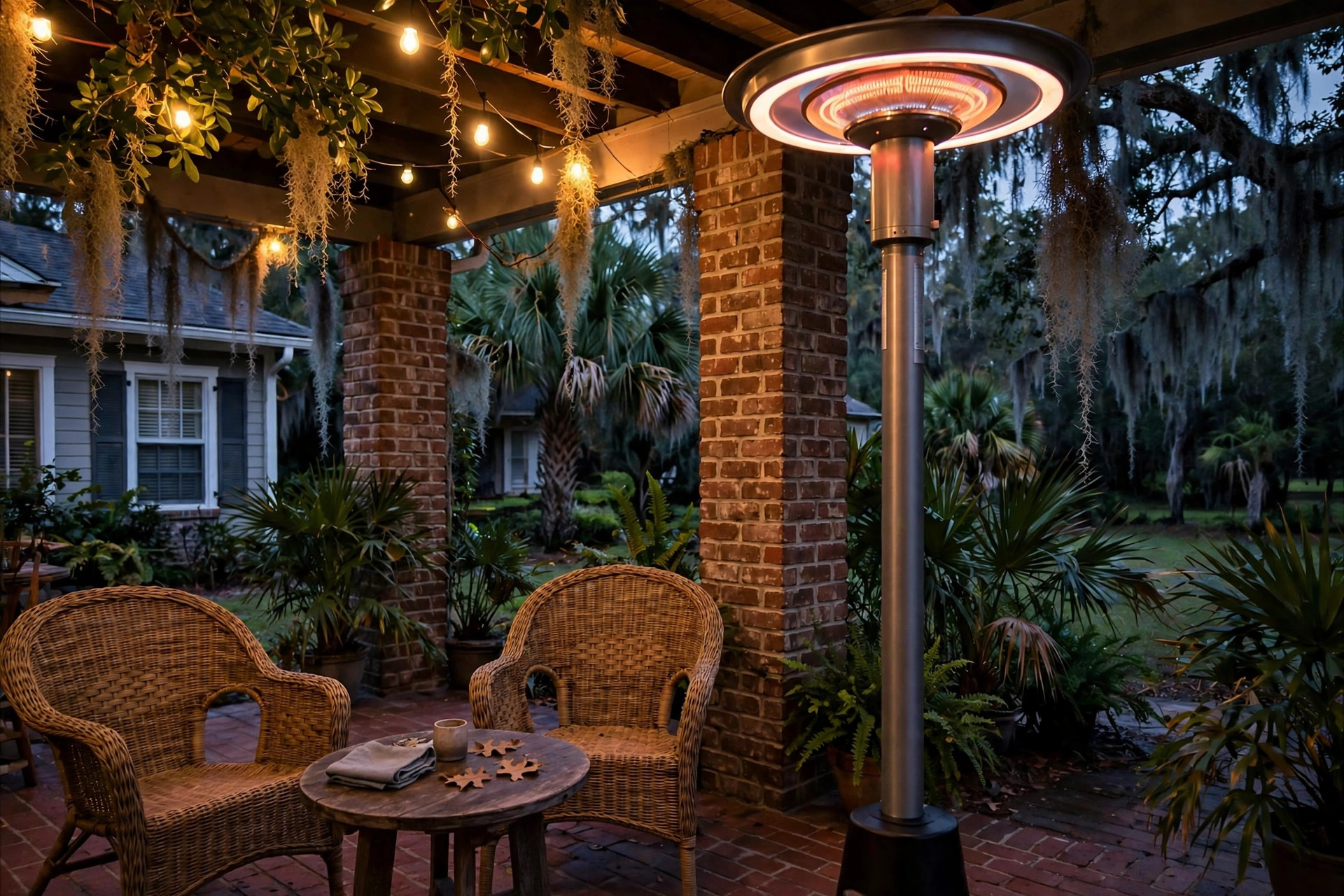

Shoppers who search for top rated electric patio heaters for southern states usually have one goal. They want to sit outside on cool evenings without shivering. The South rarely sees long, bitter cold. In states like Texas, Florida, Georgia, and the Carolinas, winter nights often fall into the forties or fifties. That is chilly enough to spoil a dinner on the patio, yet far too mild for a heavy gas heater. An electric patio heater fits this need well. It warms the people and furniture near it. It starts with a switch. It makes no flame and no smoke. This guide covers how these heaters work, how to pick one, what they cost, how to care for them, and how to use them safely.
Why an Electric Patio Heater Makes Sense in the South
Southern weather shapes the choice of heater. A gas patio heater is built for colder places. It burns fuel and throws out strong heat. That can be too much for a mild Gulf Coast evening. Electric heaters are gentler. They send warmth to objects and people in their path. This is called radiant heat. The Spruce describes how radiant heaters warm nearby surfaces rather than the open air.
Most southern patios are covered or screened. A porch roof traps some of the warmth. An electric heater under a roof works well. It also helps that southern homes often have outdoor outlets. A heater that plugs into a standard outlet is easy to place. There is no gas tank to refill and no line to run.
Electric heat is clean at the point of use. It releases no smoke and no soot. The U.S. Environmental Protection Agency lists electric heating among options that avoid on-site combustion. For families with allergies or small children, that is a real comfort.
Running costs stay low in the South. Heaters run for only a few hours on cool evenings, not all winter long. Many southern states also have moderate electric rates. A 1,500-watt heater used two hours a night for three months costs only a modest sum.
Southern homes prize outdoor living. A patio in Texas or Florida serves as an extra room for much of the year. A heater extends that use into December and January. Families eat dinner outside. Guests gather on the porch. A warm circle of chairs makes these nights pleasant. In a mild climate, a top rated electric patio heater for southern states is not a luxury. It is a practical tool that fits how people live.
How to Choose the Right One: Top Rated Electric Patio Heaters for Southern States
Buying the best electric patio heater for a covered porch starts with a few simple facts. Size the heater to your space. Check your power supply. Pick a mounting style that fits your porch.
Wattage and Coverage Area
Wattage tells you how much heat the unit can give. Most home models draw between 1,000 and 2,500 watts. A 1,000-watt heater suits a single chair or a small table. A 1,500-watt unit warms about 100 to 150 square feet. A 2,000 to 2,500-watt heater covers a dining set or a small group of chairs.
Read the maker’s stated coverage area. Do not buy on wattage alone. Two heaters with the same wattage can warm very different areas. Reflector shape and height matter. The U.S. Department of Energy advises buyers to match heating output to the size of the space.
Power Supply and Plug Type
Most electric patio heaters plug into a standard 120-volt outlet. This is the same outlet that runs a lamp. Larger models may need a 240-volt circuit. That type of circuit is common for dryers and stoves. Check your home’s wiring before you buy. An electrician can add a circuit if you need one.
Avoid long extension cords. A heater draws a heavy load. A thin cord can overheat. If you must use a cord, choose one rated for outdoor use and for the heater’s amperage.
Mounting Styles
Freestanding towers stand on the patio floor. They move easily. Wall-mounted units save floor space. Ceiling-mounted units hang above a table. Tabletop models sit on a side table and warm a small circle. Pick the style that fits your porch layout and how you use the space.
Controls and Timers
Many models come with a remote control or a timer. A remote lets you change the heat level from your chair. A timer shuts the heater off after a set time. This saves power when you forget. Some units have two or three heat settings. Low is enough for a mild night. High helps when a cold front moves through. Pick controls that are simple to read in the dark.
Types of Electric Patio Heaters
Standing Tower Heaters
The tower is the most common type. It looks like a tall lamp with a glowing head. Heat spreads downward and outward. Towers suit open patios and large decks. They need a flat, stable surface. Many have wheels for easy rolling. Look for a model with a tip-over switch. The switch shuts the heater off if it falls. Bob Vila reviews compare tower models and their safety features.
Wall-Mounted and Ceiling-Mounted Heaters
Mounted heaters free up floor space. A wall unit aims heat across a seating area. A ceiling unit hangs over a dining table. These types often come in higher wattages. They need a firm mount and correct clearances from the roof. They are a good pick for a permanent porch setup. Installation is simple for most handymen, though a 240-volt model may need an electrician.
Tabletop Heaters
Tabletop models are small. They warm one or two people. They cost the least and use the least power. They are not meant for a crowd. They suit a balcony or a small bistro set.
Infrared and Quartz Heaters
Two heating elements dominate the market. Infrared elements glow with a soft red light. They warm objects fast and feel like sunlight. Quartz elements heat quickly and cool quickly. Both are electric and both are flameless. Makers such as Napoleon sell outdoor heating products built around these technologies.
Cost and Price
Prices vary with size and build. A small tabletop heater may cost 40 to 90 dollars. A standing tower often runs 90 to 250 dollars. Wall-mounted and ceiling-mounted models range from 150 to 400 dollars. Stainless steel housings and remote controls raise the price. Retailers such as The Home Depot carry models across this whole range.
Running cost is simple to figure. Multiply the wattage by the hours of use, then by your electric rate. A 1,500-watt heater running for two hours uses 3 kilowatt-hours. At 15 cents per kilowatt-hour, that is 45 cents. Three evenings a week comes to a few dollars a month. Energy-saving heating tips from ENERGY STAR can help keep that bill even lower.
Compare that with propane. A propane tank refill costs far more and runs out. Electric heat costs a little each night and never runs out. For the short southern cool season, electric heat usually wins on cost.
Buy at the right time. Prices drop in late spring and summer when demand is low. End-of-season sales can cut the price by a fifth or more. Online sellers often beat store prices, but stores let you see the build quality in person. Check the return policy before you buy. A store with a generous return window lets you test the heater on your own patio.
Care and Upkeep
Electric heaters need little care. Wipe the housing with a damp cloth. Keep the reflector clean. Dust on the reflector blocks heat. Check the cord for wear each season. Store the heater under a cover or bring it inside during storms. Family Handyman publishes seasonal upkeep guides for outdoor heating gear.
Do not spray water on the unit. Do not let leaves pile against the base. If the heater has a remote control, replace its batteries each year. People who also keep an indoor fireplace may want EPA certified remote controls for Florida homes as a companion upgrade. A quick check each fall keeps the heater ready for the first cool night.
Safety
Safety starts with placement. Keep the heater at least three feet from walls, curtains, and plants. Place it on a level surface. Never set it where people might trip over the cord. Turn it off when you leave the patio.
Choose a model with a tip-over switch and overheat protection. These are standard on top rated units. The U.S. Consumer Product Safety Commission offers safety guidance for portable electric heaters. Read it before the first use.
Never use an outdoor electric heater indoors unless the maker says it is safe. Combustion is not a concern, but heat buildup and clearances still matter. Keep water away from the unit. Do not touch the element or the reflector while it is hot. Let it cool before you move it. If your home also burns wood in a fireplace, keep the flue in good shape; see where to buy chimney liners in California for a related maintenance topic.
Keep children and pets at a safe distance. The head of the heater gets very hot. Teach children not to touch it. Place the heater where pets cannot bump it over. A stable base and a tip-over switch add one more layer of care.
Frequently Asked Questions
Do electric patio heaters work on windy nights?
They work, but wind steals heat. Radiant heat still warms what it touches, but a strong breeze cools skin fast. Use a wind screen or place the heater on the sheltered side of the patio.
Can I leave an electric patio heater out in the rain?
Most models are weather resistant, not waterproof. Light mist is fine for outdoor-rated units. Heavy rain is not. Bring the heater under cover or unplug it before a storm. Check the maker’s rating for wet use.
How much does it cost to run one each evening?
A 1,500-watt heater costs about 45 cents for two hours at typical southern rates. A larger 2,500-watt model costs about 75 cents for the same time. Exact cost depends on your utility’s rate.
Is an electric patio heater cheaper to run than a propane heater?
For short southern seasons, yes. Propane costs more per hour of heat. It also needs tank refills. Electric heat costs a little each night and never runs out.
Can I hang an electric heater under a covered porch?
Yes, if the unit is made for ceiling mounting. Keep the maker’s clearance distances from the roof and beams. Do not hang a freestanding tower from a ceiling.
Do I need a permit to install a mounted heater?
For a plug-in unit, no. Mount the bracket with care and follow the maker’s steps. If you add a new 240-volt circuit, local rules may call for a permit and an inspection. Check with your city or county before the electrician starts work.
How long does a typical electric patio heater last?
Most last five to ten years with basic care. The heating element may wear out first. Many makers sell replacement elements. A stainless steel housing resists rust and lasts longer in humid southern air.
A Final Word
An electric patio heater is a simple answer to a mild southern winter. It costs little to buy and little to run. It needs almost no care. Pick the right size, mount it well, and follow basic safety rules. Those who prefer real flames indoors might browse luxury andirons for fireplaces instead. Measure your patio before you shop, and read a few owner reviews of the best electric patio heater for a covered porch. Then enjoy the porch all winter long.
References
Bob Vila. (n.d.). Home improvement advice. https://www.bobvila.com ENERGY STAR. (n.d.). Energy efficient products. https://www.energystar.gov Family Handyman. (n.d.). DIY home repair and maintenance. https://www.familyhandyman.com Napoleon. (n.d.). Fireplaces, grills, and heating products. https://www.napoleon.com The Home Depot. (n.d.). Home improvement products. https://www.homedepot.com The Spruce. (n.d.). Home and garden advice. https://www.thespruce.com U.S. Consumer Product Safety Commission. (n.d.). Product safety information. https://www.cpsc.gov U.S. Department of Energy. (n.d.). Energy efficiency and renewable energy. https://www.energy.gov U.S. Environmental Protection Agency. (n.d.). Protecting human health and the environment. https://www.epa.gov
Was this guide helpful?

About Michael Thompson
The My Garden US editorial team writes practical, in-depth home and garden guides for American homeowners — tested advice, no fluff.
You May Also Like
Top Rated Fireplace Installation Services Reviews: A Homeowner’s Guide
August 29, 2026 0 views
EPA Certified Fireplace Remote Controls With Free Shipping: A Plain Guide to Buying and Using Them
April 29, 2026 0 views
A Practical Guide to Smart Indoor Firewood Holders for Southern States
January 7, 2026 0 views