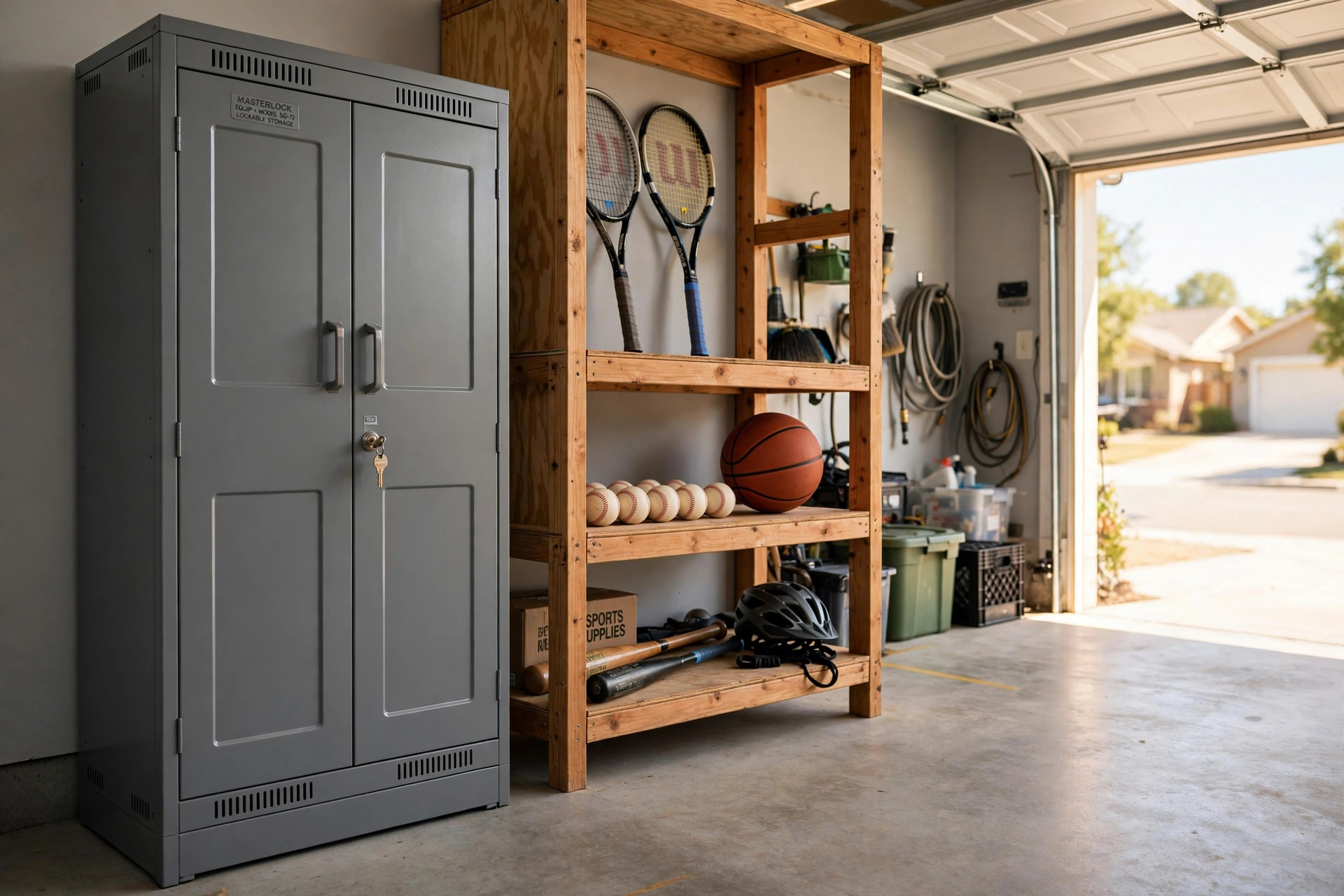

Many families own more sports gear than they can name. Bats lean against the wall. Balls roll under the workbench. Helmets sit on the floor where someone steps on them. Over time, this clutter costs money. Gear gets broken. Gear walks away. Gear rots in a damp corner. A sturdy cabinet with a lock can end these problems at once. This guide walks through lockable sports equipment organizers for sale, what they do, how to choose one, what they cost, and how to keep them in good shape for years.
Why Lockable Storage Matters for Sports Gear
Sports equipment is not cheap. A good bicycle can cost several hundred dollars. A set of golf clubs can cost even more. Hockey sticks, fishing rods, and ski poles break when they fall or get crushed. Children leave gear in the yard, and weather does the rest. A lockable organizer solves the two main risks at once: damage and theft.
First, consider damage. When gear piles up, heavy items land on light ones. A basketball left in the sun loses its shape. Metal bats dent when they hit concrete. An organizer gives each item its own place, and that place is raised off the floor. The result is simple: things last longer.
Second, consider theft. Garages are easy targets. The side door is often left open. A passerby can see expensive items through a window. Lockable sports equipment organizers for sale today come with built in locks, and a locked cabinet turns a casual thief away. Most thieves want a quick grab. A locked steel door ends that plan.
Third, consider order. When every ball has a slot and every bat has a hook, children learn to put things back. Coaches who run teams out of a home garage save time before every practice. Parents stop buying a second glove because the first one is lost. Order pays for itself.
How to Choose the Right Organizer: Lockable Sports Equipment Organizers for Sale
Choosing well starts with a clear look at your space and your gear. Measure first, shop second.
Measure Your Space
Take a tape measure to the garage, the shed, or the mudroom. Write down the width, the depth, and the height of the spot where the organizer will stand. Leave room for the doors to swing open. Leave room for a person to stand in front. Many buyers forget this step and end up with a cabinet that blocks a walkway. A few minutes of measuring prevents a costly return.
Count and Sort Your Gear
List what you own. Group items by type: long items like bats, sticks, and rods; round items like balls; flat items like gloves and pads; and large items like bikes. This list tells you which style you need. A family with three bicycles needs a tall, wide unit. A family with soccer balls and tennis rackets needs shelves and hooks more than height.
Check the Lock
Not all locks are equal. A simple latch keeps small children out but not much else. A keyed cam lock gives basic security and is fine for most homes. A three point locking system bolts the door at the top, middle, and bottom, and this is much harder to force. Padlock hasps let you use your own heavy padlock. Decide what you are guarding. For expensive bikes and golf clubs, choose the strongest lock you can afford.
Study the Build
Look at the gauge of the steel or the thickness of the wood. Check how the shelves hold weight. Wire shelves let air move but can dent under heavy items. Solid shelves carry more but trap moisture. Adjustable shelves are worth the extra cost because gear changes as children grow. Welded frames beat frames held by small screws. Good garage storage cabinets show these details in their product pages, so read the specs before you buy.
Ventilation and Moisture
Sports gear sweats. Balls and pads come home damp. A sealed cabinet can trap that damp air and grow mildew. Look for vents near the top and bottom of the doors. Some models include mesh panels. If your garage runs humid, a unit with airflow matters more than a sealed one. A small packet of desiccant on a shelf can help too.
Types of Lockable Sports Equipment Organizers
The market offers several styles. Each fits a different mix of gear.
Tall Locking Cabinets
Tall cabinets are the most common choice. They stand about six feet high and hold a full mix of gear. Most have a lock on double doors. Inside, you will find shelves on one side and tall space on the other for bats and sticks. These cabinets suit families with many kinds of sports. They fit well against a garage wall.
Sports Lockers
Sports lockers look like school lockers but are built for homes. They come in single, double, and triple widths. Each locker has its own lock, so each child can guard their own gear. Lockers are narrow, so they fit in tight spaces like mudrooms. They are best for balls, shoes, pads, and helmets rather than long items.
Lockable Bike Storage
Some organizers are built around bicycles. These are wide, low units with a locking door or a locking lid. Bikes roll in and stay upright. Hooks on the inside hold helmets and pumps. If cycling is the main sport in your house, a dedicated bike unit beats a general cabinet. Large bike storage solutions often include wall mounts and floor racks that pair well with these units.
Rolling Sports Carts with Locks
Rolling carts suit coaches and team parents. The cart holds balls, cones, and training aids. Wheels let you roll it from the garage to the field. A locking lid keeps items in place during the drive and safe in the garage. These carts are smaller than cabinets, so they work when space is tight.
Wall Mounted Locking Units
Wall mounted units save floor space. They bolt to wall studs and hold lighter gear: rackets, gloves, and balls. A locking front panel folds down to form a small shelf. These units are not for heavy items. They are ideal for apartments and small garages where every square foot counts.
Cost and Price: What to Expect
Prices vary with size, material, and lock quality. A small locking sports rack for balls and bats may cost between forty and one hundred dollars. A medium steel cabinet with adjustable shelves and a keyed lock often runs between one hundred fifty and three hundred fifty dollars. Large multi door units with three point locks can reach five hundred dollars or more.
Steel costs more than resin. Resin resists rust and weighs less, which helps if you move often. Wood looks best in a finished room but needs care against moisture. Built in locks add to the price over a simple hasp. Adjustable shelving adds a little more.
Think about the value of the gear inside. If you store two hundred dollars of gear, a one hundred fifty dollar cabinet is a sound trade. Many lockable sports equipment organizers for sale at sporting goods stores fall in this middle range, and seasonal sales in spring can cut prices by a fifth.
Buy once and buy well. A cheap thin cabinet that dents in a year costs more in the end than a solid one that lasts a decade. Read reviews that mention long term use. Look for warranties of at least one year. Some makers offer five years on the frame.
Care and Upkeep
A lockable organizer needs little care, but regular attention keeps it working for years.
Wipe the inside once a month. Sweat and dirt build up fast. A damp cloth and mild soap handle most grime. Dry the shelves after wiping so moisture does not sit. Check the vents for dust and clear them with a brush.
Oil the lock twice a year. A small drop of graphite or silicone lubricant in the keyhole keeps the tumblers smooth. Do not use thick oil, which can gum up in cold weather. Work the key back and forth to spread the lubricant. If the lock sticks, address it early. A stuck lock on game day is a poor surprise.
Tighten the hardware each season. Screws loosen with vibration from opening and closing doors. A quick pass with a screwdriver keeps panels firm. Check the feet or casters too. Level feet keep the cabinet from rocking on uneven garage floors.
Watch for rust. Steel units in damp garages can rust at the corners and along the bottom edge. Touch up small spots with rust resistant paint. Keep the unit a few inches from the wall so air can move behind it. If you live near the coast, consider a resin model instead of steel.
Rotate the gear. Take everything out once a year. Throw away cracked balls and worn out gloves. This yearly clear out is also a good time to teach children which items need care. A clean cabinet makes the next season start on a bright note. Many home organization guides suggest pairing this task with a full garage sweep each spring.
Safety Tips
Safety matters twice: when you install the unit and when you use it daily.
Anchor tall cabinets to the wall. A loaded cabinet is top heavy. A child who climbs the shelves can tip it over. Use the anti tip straps or brackets that come in the box. Drive them into wall studs, not just drywall. This step takes ten minutes and prevents a serious injury.
Mind the lock around small children. Keys should hang out of reach. Combination locks should use codes that children cannot guess. At the same time, make sure an adult can open the unit fast in an emergency. Never store items that a child might need in a hurry, like an inhaler, inside a locked cabinet.
Check weight limits. Every shelf has a rated load. Do not stack heavy weights on a shelf meant for balls. Spread heavy items low and light items high. This keeps the unit stable and the shelves flat.
Keep the floor clear. Do not let gear pile up in front of the doors. In a fire or a storm, you may need to reach items quickly. A clear path also stops trips and falls in a dark garage.
Follow local rules for chemicals. Some families store pool chemicals or fuel near sports gear. Keep such items in a separate locked space, away from children and away from heat. Safety pages from the U.S. Consumer Product Safety Commission explain how to store household chemicals with care.
Frequently Asked Questions
Are lockable sports equipment organizers worth the money?
Yes, for most families. They protect gear that costs far more than the cabinet itself. They cut clutter, speed up practice days, and deter theft. The value grows with the size of your collection.
What size should I buy?
Measure your space and list your gear first. A family with two or three sports needs a tall cabinet around six feet high. A single sport family can use a locker or a rolling cart. When in doubt, buy a little larger than today. Gear collections grow.
Can these organizers sit outside?
Some can, but most are built for garages and sheds. Direct rain will harm steel and wood. If you must place one outside, choose a resin model rated for outdoor use and keep it under a roof overhang. Bring fabric items indoors during wet months.
What kind of lock is best?
A keyed cam lock suits most homes. A three point locking system suits expensive gear. A padlock hasp suits those who want to choose their own lock. Pick the lock to match the value of what you store.
How do I keep the inside from smelling?
Ventilation is the main answer. Choose a unit with vents. Wipe damp gear before storing it. Leave the doors open for an hour after a game so air can move. Baking soda in a small open box on a shelf absorbs odor well.
Where can I find lockable sports equipment organizers for sale near me?
Large home improvement stores, sporting goods chains, and online furniture sellers all carry them. Stores like IKEA and Wayfair list many styles with customer reviews, and the Container Store carries organizers built for tight spaces. For hands on projects, Family Handyman and Apartment Therapy both publish storage ideas that pair well with a locking cabinet. If you are also tidying other rooms, you may like guides on linen closet organizers, our page on top rated linen closet organizers for Texas homes, vertical file cabinets for the home office, or ottoman storage benches for the living room.
A Final Word
A lockable sports equipment organizer is a quiet worker in the home. It stands in the corner, holds the gear, and asks for little. Yet it saves money, saves time, and keeps order. Measure your space, list your gear, and choose a build that will last. With a little care, the right cabinet will serve your family through many seasons of play.
References
Apartment Therapy. (n.d.). Home design ideas and inspiration. https://www.apartmenttherapy.com Dick’s Sporting Goods. (n.d.). Sports equipment and storage. https://www.dickssportinggoods.com Family Handyman. (n.d.). DIY home repair and maintenance. https://www.familyhandyman.com IKEA. (n.d.). Home furnishings. https://www.ikea.com Lowe’s. (n.d.). Home improvement products. https://www.lowes.com The Container Store. (n.d.). Storage and organization products. https://www.containerstore.com The Home Depot. (n.d.). Home improvement products. https://www.homedepot.com The Spruce. (n.d.). Home and garden advice. https://www.thespruce.com U.S. Consumer Product Safety Commission. (n.d.). Product safety information. https://www.cpsc.gov Wayfair. (n.d.). Furniture and home goods. https://www.wayfair.com
Was this guide helpful?

About Robert Taylor
The My Garden US editorial team writes practical, in-depth home and garden guides for American homeowners — tested advice, no fluff.
You May Also Like
Ottoman Storage Benches Reviews and Buying Guide
August 23, 2026 0 views
Buy Mudroom Storage Benches Online in Arizona: A Plain Guide for Busy Homes
August 13, 2026 0 views
Bed Frames With Drawers Price Comparison USA: A Plain Buyer Guide
September 14, 2026 0 views