---
Table of Contents
Table of Contents
- Remove Carpet Glue from Concrete: What Kind of Glue Are You Dealing With
- What You Will Need
- Step 1: Pull Up the Carpet, Pad, and Tack Strips
- Step 2: Scrape Off the Bulk of the Glue
- Step 3: Soak the Glue With Hot Water
- Step 4: Use an Adhesive Remover on the Stubborn Spots
- Step 5: Try Heat on the Hardest Patches
- Step 6: Grind or Sand When Nothing Else Works
- Step 7: Clean, Rinse, and Seal the Concrete
- Mistakes That Damage Concrete Floors
- When to Call a Professional
- References
Pulling up old carpet feels good for about five minutes. Then you see what is left behind. Yellow or brown glue sits across the concrete in streaks and blobs. It grabs at your shoes. It looks terrible. And it will ruin any new floor you put on top of it. This guide shows how to remove carpet glue from concrete in plain steps.
The good news is that old carpet glue comes off concrete with plain tools and a little patience. You do not need a contractor for most jobs. You do need the right order of steps. Scraping comes first. Water and heat come next. Chemicals come last. If you skip straight to strong chemicals, you waste money and make a bigger mess.
This guide walks you through the whole job, from pulling up the carpet to sealing the clean concrete. Read it all the way through before you start. Then work one small section at a time.
Remove Carpet Glue from Concrete: What Kind of Glue Are You Dealing With
When it comes to remove carpet glue from concrete, getting the details right makes all the difference.
When it comes to remove carpet glue from concrete, getting the details right makes all the difference.
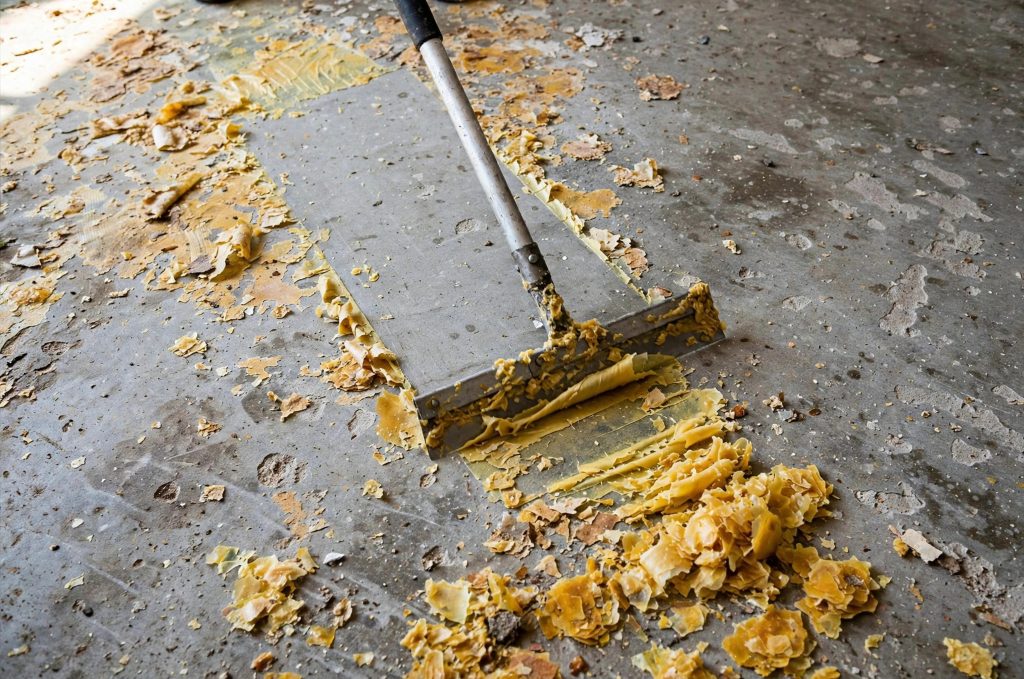

Many homeowners find that remove carpet glue from concrete is easier than they expected once they know the basics.
Most wall-to-wall carpet is not glued down across the whole floor. It is held by tack strips around the edges. The pad underneath is often stapled or glued in spots. But in basements, on patios, and in older homes, installers sometimes glued the carpet straight to the concrete with a full spread of adhesive.
Full-spread glue is the hard kind. It looks like a thick tan or yellow layer, sometimes with a trowel pattern pressed into it. Spot glue from a pad is easier. It comes up in patches and leaves most of the floor clean.
There is one more thing you need to know. Some very old installations used cutback adhesive. It is black and tar-like, and it smells like roofing tar when you scrape it. Old cutback can contain asbestos fibers. If your glue is black and the house is more than a few decades old, stop and get the material tested before you scrape or grind it. A local testing lab can check a small sample for a modest fee. Do not guess about this. The National Concrete Polishing guide to adhesive removal stresses the same point: know what you are removing before you start removing it.
What You Will Need
Many homeowners find that remove carpet glue from concrete is easier than they expected once they know the basics.
Many homeowners find that remove carpet glue from concrete is easier than they expected once they know the basics.
The key to remove carpet glue from concrete is choosing the right approach for your space and budget.
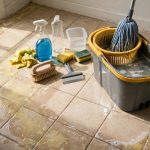
Gather everything before you start. Walking to the store mid-job with glue on your shoes is no fun.
- Work gloves, safety glasses, and a dust mask or respirator
- Knee pads
- Utility knife with extra blades
- Pry bar and hammer
- Long-handled floor scraper with a sharp blade, plus spare blades
- Putty knife and a stiff hand brush
- Bucket, mop, and clean rags
- Dish soap
- Boiling water or very hot tap water
- Adhesive remover made for concrete, such as a citrus-based or soy-based product
- Heat gun, or a household iron with newspaper for small spots
- Plastic sheeting to protect nearby surfaces
- Heavy trash bags for the carpet and pad
For bigger rooms, you may want to rent a floor buffer with a scraping attachment or a concrete grinder from a tool rental shop. If you are planning a new floor after this job, compare local installers and current deals with a flooring store guide before you buy anything.
Step 1: Pull Up the Carpet, Pad, and Tack Strips
The key to remove carpet glue from concrete is choosing the right approach for your space and budget.
The key to remove carpet glue from concrete is choosing the right approach for your space and budget.
With a little planning, remove carpet glue from concrete can fit even a busy schedule.
Start in a corner. Grab the carpet with pliers and pull it up off the tack strip. It will release with a ripping sound. Roll the carpet as you go. Cut the roll into three- or four-foot sections with the utility knife so you can carry it out to the curb.
The pad comes next. It is usually stapled down or glued in spots. Pull it up in pieces. A putty knife gets under the glued spots. Bag the pad as you go. Old pad crumbles and makes dust.
Tack strips run around the edges of the room. Slide the pry bar under them and pop them up. Watch for nails sticking out of the strips and the floor. Pull every nail you find. Then sweep the floor clean with a stiff broom. Now you can see the full extent of the glue, and you can plan your attack.
Step 2: Scrape Off the Bulk of the Glue
With a little planning, remove carpet glue from concrete can fit even a busy schedule.
Before you start, it helps to understand how remove carpet glue from concrete works in real homes.
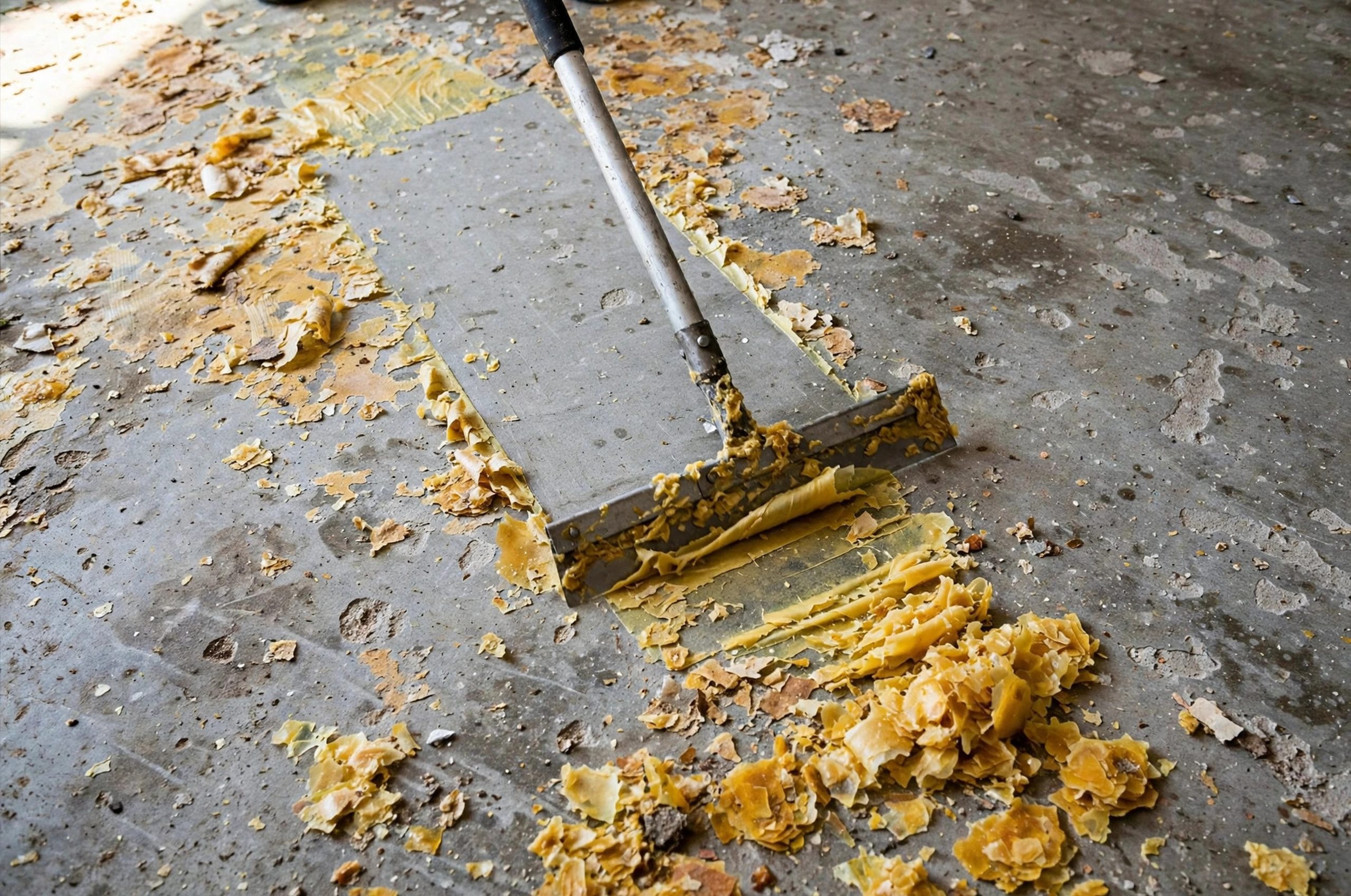
Start with the long-handled floor scraper. Hold the blade at a low angle, like you are shaving the floor. Push forward with steady pressure. Work in the direction of the trowel marks if you can see them.
This is slow work. It is also the most important step of the whole job. Every bit of glue you scrape off dry is glue you will not have to dissolve later with water or chemicals. Take breaks when your back complains. Swap to a fresh blade when the old one dulls. A dull blade skips over glue instead of cutting it.
For thick ridges and blobs, a sharp putty knife or a painter's multi-tool works better than the big scraper. Get the high spots down first, then go back over the whole area with the long scraper. As one detailed walkthrough of adhesive removal explains, mechanical removal should always be your first line of attack because it is cheap, safe, and effective on the thickest material.
Do not gouge the concrete. Keep the blade flat. Small scratches are fine. Deep gouges will show through paint or thin coatings later.
Step 3: Soak the Glue With Hot Water
Before you start, it helps to understand how remove carpet glue from concrete works in real homes.
A good plan for remove carpet glue from concrete saves time, money, and frustration.
Many carpet adhesives soften with heat and water. This is the cheapest method you have, so try it before you buy any chemicals.
Boil water or run the tap as hot as it goes. Mop a small section, about four feet square, with the hot water and a squirt of dish soap. Let it sit for ten to fifteen minutes. Do not let it dry out. Add more hot water if the section starts to dry.
Then scrape again. The glue should come up in soft ribbons instead of hard chips. Wipe the section with a clean rag to pick up the residue. Move to the next section. Work the whole floor this way, one patch at a time. A step-by-step homeowner guide recommends this same soak-and-scrape rhythm and notes that repeating the soak a second time often clears spots that resisted the first pass.
Change your mop water when it gets thick with dissolved glue. Dirty water just spreads the mess around.
Step 4: Use an Adhesive Remover on the Stubborn Spots
A good plan for remove carpet glue from concrete saves time, money, and frustration.
For most people, remove carpet glue from concrete comes down to a few smart choices.
Some patches will not budge with water and scraping. For those, use a commercial adhesive remover. Citrus-based and soy-based removers are popular for concrete because they cut through old adhesive well and have milder fumes than harsh solvent products.
Apply the remover to a small test spot first. Read the label for the recommended dwell time. Most products need ten to twenty minutes to work. Cover the spot with plastic sheeting to keep the product from drying out while it works. This one trick makes a big difference on thick residue.
After the dwell time, scrape the softened glue. It should lift with easy strokes. Wipe the area with a damp rag to remove the chemical film, then rinse with clean water. Repeat on the next spot. Work in small areas so the product never dries on the floor.
Ventilate the room while you work. Open windows and run a fan. Wear gloves and eye protection. As contractor advice on this exact job points out, adhesive removers work well, but they demand respect: ventilation and protective gear are not optional.
Step 5: Try Heat on the Hardest Patches
For most people, remove carpet glue from concrete comes down to a few smart choices.
If you are new to remove carpet glue from concrete, start with the simplest option and build from there.
A heat gun softens old adhesive fast. Hold it a few inches above the glue and move it slowly back and forth. When the glue bubbles or turns glossy, scrape it right away. Do not hold the heat in one spot too long. You can scorch the concrete or fill the room with fumes.
A household iron works too, and it is gentler. Lay newspaper or brown paper over the glue. Press the hot iron on the paper for a few seconds. The heat passes through the paper and softens the glue underneath. Lift the paper and scrape. Repeat until the patch is gone. Homeowners report that the iron-and-paper method is slow but surprisingly effective on small, stubborn areas.
Heat works best as a cleanup tool for small patches. For a whole room, it is far too slow to be your main method. Use it after scraping and chemicals have done the heavy lifting.
Step 6: Grind or Sand When Nothing Else Works
If you are new to remove carpet glue from concrete, start with the simplest option and build from there.
When it comes to remove carpet glue from concrete, getting the details right makes all the difference.
If the glue is rock hard across a large area, mechanical removal may be the fastest answer. A rented floor buffer with a scraping or abrasive attachment can strip a room in an afternoon. For the worst cases, a concrete grinder with a diamond cup wheel takes off the glue along with a thin layer of concrete.
Grinding makes a tremendous amount of dust. Seal the room with plastic sheeting. Wear a respirator, not just a paper dust mask. Hook the grinder to a shop vacuum if you can. Move the machine steadily and keep it flat. Do not park it in one spot or you will dig a shallow bowl into the floor.
After grinding, the concrete will look fresh and slightly rough. That is fine. It is actually an ideal surface for paint, stain, epoxy, or new flooring adhesive. A guide to grinding adhesive off subfloors notes that grinding also profiles the concrete, which helps new coatings bond better than they would to a slick, scraped surface.
If the idea of renting a grinder makes you nervous, this is the point where a professional earns their fee. A concrete crew with the right machine will finish in hours what takes a weekend by hand. See what the service usually includes and what to ask for in this concrete polishing service guide.
Step 7: Clean, Rinse, and Seal the Concrete
When it comes to remove carpet glue from concrete, getting the details right makes all the difference.
Once the glue is gone, mop the whole floor with clean water and a little dish soap. Rinse twice with fresh water. Let the floor dry fully. Any chemical residue left on the surface can interfere with paint, stain, or new flooring adhesive, so do not rush this step.
If you are keeping the concrete as your finished floor, seal it. A concrete sealer keeps out moisture and stains and makes the floor much easier to sweep and mop. Apply it with a roller in thin, even coats, following the label directions. A full removal checklist ends with this same advice: a sealed floor stays clean far longer than bare concrete.
If you are installing new flooring, the clean concrete is now ready. Just make sure it is fully dry first. A moisture meter gives you the surest answer, and most installers will not lay new flooring over a damp slab anyway.
Mistakes That Damage Concrete Floors
Many homeowners find that remove carpet glue from concrete is easier than they expected once they know the basics.
Learn from other people's errors so you do not repeat them.
- Grinding too deep in one spot. Keep the machine moving at all times.
- Reaching for strong acids as a first step. Acid etches the concrete and turns the glue into a gummy mess.
- Skipping the test patch with chemical removers. Some products stain or discolor concrete.
- Letting chemical remover dry on the floor. Dried remover can be harder to get off than the glue was.
- Scraping black cutback adhesive without testing it for asbestos first.
- Pouring rinse water full of dissolved glue down a floor drain. It can clog the drain as it cools. Bag the solids and mop up the rest.
When to Call a Professional
The key to remove carpet glue from concrete is choosing the right approach for your space and budget.
Call a pro if the glue covers a very large area and your body is telling you to stop. Call one if the adhesive is black and might be old cutback. Call one if you need the floor ground and you have never run a grinder. There is no shame in it. A crew with the right machine finishes in hours what takes a whole weekend by hand.
If you plan to coat the concrete after cleaning it, look into coating costs ahead of time. This polyaspartic garage floor coating cost guide gives you a realistic sense of pricing. And if you want something more decorative than plain gray, read up on exposed aggregate concrete costs before you decide. For a broader look at removal methods across different adhesive types, this vinyl adhesive removal guide covers many of the same scraping, heat, and solvent techniques. With these steps, you can remove carpet glue from concrete with confidence.
References
With a little planning, remove carpet glue from concrete can fit even a busy schedule.
Amazing Home Decor Co. (n.d.). How to remove carpet glue from concrete floor. http://www.amazinghomedecorco.com/how-to-remove-carpet-glue-from-concrete/
BookSprints. (n.d.). 5 ways to remove carpet glue from concrete. https://editoria.booksprints.net/how-to-get-rid-of-carpet-glue-on-concrete-2/
Engineer Fix. (n.d.). How to remove adhesive from flooring. https://engineerfix.com/how-to-remove-adhesive-from-flooring/
Engineer Fix. (n.d.). How to remove flooring adhesive from a subfloor. https://engineerfix.com/how-to-remove-flooring-adhesive-from-a-subfloor/
Engineer Fix. (n.d.). How to remove vinyl flooring and adhesive. https://engineerfix.com/how-to-remove-vinyl-flooring-and-adhesive/
JustAnswer. (n.d.). Expert tips on removing carpet glue from cement and concrete. https://www.justanswer.com/home-improvement/nwk1g-old-carpet-glue-off-cement.html
My Bubba and Me. (n.d.). How do you remove dried carpet glue from concrete? http://mybubbaandme.com/trending/how-do-you-remove-dried-carpet-glue-from-concrete/
National Concrete Polishing. (n.d.). How to safely remove adhesive from a concrete floor. https://nationalconcretepolishing.net/how-do-you-remove-adhesive-from-concrete-floor/
Before you start, it helps to understand how remove carpet glue from concrete works in real homes.
Was this guide helpful?

About My Garden US
The My Garden US editorial team writes practical, in-depth home and garden guides for American homeowners — tested advice, no fluff.
You May Also Like
Mexican Tile for Bathroom Floor for Sale: A Plain Buyer's Guide
June 21, 2026 16 views
Hardwood Floor Installation Cost Near Me: A Plain Guide for Homeowners
August 11, 2026 22 views
Regrouting Shower Tile Cost Near Me: What Homeowners Should Know
April 28, 2026 16 views