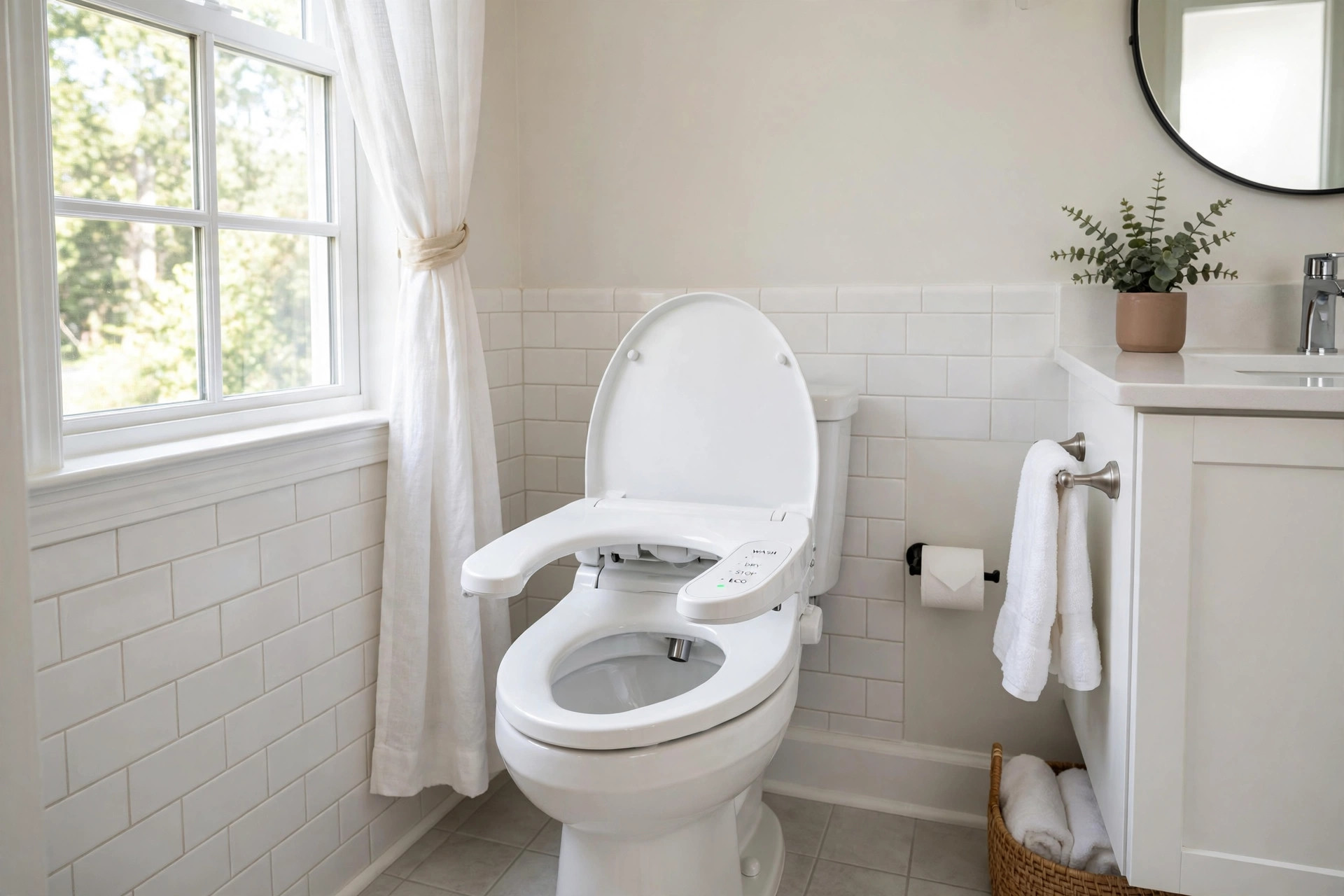

This bidet toilet seats american homes guide explains what a bidet seat is, why more American households are installing one, and how to choose the right model for your bathroom. A bidet toilet seat replaces the seat on your existing toilet. It adds a nozzle that sprays a stream of warm water for cleaning after use. No new plumbing lines are needed. Most seats connect to the toilet’s own water supply in under an hour. Once seen as a luxury from overseas, the bidet seat has become a common sight in American homes.
Why Bidet Seats Matter in the American Home
For most of the twentieth century, the American bathroom relied on dry paper alone. That habit is slow to change. But paper has clear limits. It cleans less well than water. It can irritate sensitive skin. And it costs money every week, year after year.
A bidet seat answers these problems with a simple idea: wash with water, then pat dry. The stream is adjustable, so each person in the home can set the pressure that feels right. Many models also offer warm air drying, a heated seat, and a deodorizer. The result is a cleaner feel and less paper in the trash.
There is an environmental side as well. American homes use millions of rolls of toilet paper each year. A bidet seat cuts that use by a large share. Less paper means fewer trees cut and fewer rolls carried home from the store. If your bathroom remodel includes other fixtures, our rain shower head buying guide for American homes can help you plan the full project.
Health is another reason. Doctors have long said that water cleans better than dry paper. People with hemorrhoids, rashes, or limited mobility often find a bidet seat easier and gentler to use. Older adults and people recovering from surgery value the hands-free cleaning. The seat does the work while they rest.
How to Choose the Right Bidet Toilet Seat: Bidet Toilet Seats American Homes Guide
Choosing a bidet seat starts with your toilet, not with the seat. American toilets come in two common bowl shapes: round and elongated. Measure from the center of the seat bolts to the front edge of the bowl. Round bowls measure about 16.5 inches. Elongated bowls measure about 18.5 inches. Buy the seat shape that matches your bowl. A mismatch will leave gaps at the front or back.
Next, check for an electrical outlet near the toilet. Electric bidet seats need a standard GFCI outlet within about four feet of the toilet. Many bathrooms lack one. If no outlet exists, an electrician can add one, usually for a modest fee. This is the single most common surprise for first-time buyers. Plan for it before you order.
Water supply is the easy part. The seat uses a T-valve that splits the toilet’s fill line. No plumber is needed for most models. The water is the same clean supply that fills the tank.
Consider who will use the seat. A family with children may want a seat with a child mode or a rear and front wash setting. A household with older members may prefer a large, simple remote control with big buttons. Some remotes mount on the wall. Others sit on a side panel. Think about reach and eyesight before you pick.
Key Features to Compare
Warm water is the feature most buyers prize. Basic seats use cold water only, warmed slightly by room air. Mid-range and premium seats heat the water on demand. On-demand heating gives a steady warm stream without a tank. Tank heaters cost less but the warm water runs out after about thirty seconds.
The nozzle tells you much about quality. Look for a self-cleaning nozzle that rinses itself before and after each use. Stainless steel nozzles resist wear better than plastic ones. Some seats offer two nozzles: one for rear wash and one for front wash. A front wash setting matters to many women.
Seat heating is common on electric models. It warms the seat to a set temperature, which feels welcome on cold mornings. Most models let you turn the heater off in summer.
An air dryer reduces paper use further. After washing, warm air blows for a minute or two. Some people still use a small square of paper to finish. Many use none at all.
A deodorizer with an activated carbon filter cuts bathroom odors. It runs quietly when someone sits down. Night lights built into the seat help with late-night visits. Slow-close lids and seats prevent slamming. These small comforts add up over years of daily use.
Types of Bidet Toilet Seats
Three broad types cover the market. Each suits a different budget and need.
Non-electric bidet seats use water pressure alone. A dial or lever on the side controls the spray. They need no outlet and cost the least. The water is cool or room temperature. The stream is simple but effective. Renters like these seats because they install in minutes and remove just as fast. Home improvement retailers such as Home Depot carry several trusted non-electric models.
Electric bidet seats are the most popular type in American homes. They plug into a GFCI outlet and offer warm water, heated seats, air dryers, and remotes. Prices run from the low hundreds to over a thousand dollars. Most buyers find the mid-range models give the best mix of comfort and value. Brands like Kohler and American Standard make seats sized for standard American bowls, and stores like Lowe’s carry both brands side by side.
Bidet attachments are slim plates that fit under the existing seat. They are the cheapest option and the easiest to install, but they offer fewer features. Think of an attachment as a trial run before a full seat.
Within these types, you will see seats made for one-piece and two-piece toilets. Most seats fit both. Check the box before you buy.
Cost and Price
A bidet seat costs far less than a full bathroom remodel. Non-electric seats run from about forty to one hundred dollars. Electric seats run from about two hundred to over one thousand dollars. Most American buyers spend between three hundred and six hundred dollars for a solid electric model with warm water and a dryer.
Installation costs are low. If you have an outlet near the toilet, you can install the seat yourself in thirty to sixty minutes. The box includes the T-valve, hoses, and a mounting plate. Basic tools are enough. If you need a new outlet, an electrician may charge one to three hundred dollars, depending on your area and how far the nearest circuit runs.
Operating costs are small. The seat uses a little electricity for heating and a little water per wash. Most owners report no clear change in their utility bills. Savings on toilet paper often offset the cost. A family of four can cut paper use by half or more. Over a few years, the seat can pay for itself. Guides on The Spruce and Bob Vila break down these running costs in plain terms.
Installation
Turn off the water to the toilet before you start. Flush once to empty the tank. Unscrew the water supply hose from the fill valve under the tank. Screw the T-valve onto the fill valve. Reattach the supply hose to the T-valve. Connect the seat’s hose to the open port on the T-valve. These steps take ten minutes.
Remove the old seat. Two bolts hold it to the bowl. Lift the bolt caps, unscrew the nuts below, and lift the seat away. Clean the bowl rim well. This is a good time to scrub the bolt holes and the area under the old seat.
Place the mounting plate from the new seat over the bolt holes. Tighten the bolts by hand, then a quarter turn with a wrench. Do not over-tighten. Porcelain can crack under force. Slide the new seat onto the plate until it clicks.
Turn the water back on slowly. Check every joint for drips. A small drip at the T-valve usually means the washer needs a firmer seat. Tighten by hand first. Sit on the seat and test the spray into the bowl before first use. Adjust the nozzle position with the remote until the aim feels right.
If your seat is electric, plug it into the GFCI outlet. Keep the cord away from the floor where water may pool. Never use an extension cord in the bathroom. If the outlet is too far, call an electrician rather than stretching the cord.
Care and Upkeep
A bidet seat needs little care. Wipe the seat and lid weekly with a soft cloth and mild soap. Avoid bleach and harsh cleaners. Strong chemicals can cloud the plastic and harm the nozzle. A damp cloth is enough for daily touch-ups.
Clean the nozzle once a month. Most seats have a nozzle-clean button on the remote. It extends the nozzle so you can wipe it. Use a soft cloth with a little vinegar water for mineral spots. Hard water leaves scale on nozzles in some regions. A vinegar wipe keeps the spray even.
The deodorizer filter needs replacement every six to twelve months, depending on use. The box tells you the filter type. Slide the old filter out and press the new one in. No tools are needed.
Check the water hoses once a year. Look for cracks, bulges, or damp spots at the joints. Replace a worn hose before it fails. Spare hoses cost little and fit standard threads.
In winter, keep the bathroom above freezing if the seat holds water. A seat in an unheated cabin or garage bathroom can freeze and crack. Drain the seat before a long cold absence if the maker advises it.
Safety
Bidet seats are safe for normal home use when installed as directed. A few rules keep it that way. Use only a GFCI outlet. The GFCI cuts power fast if water touches the circuit. Test the outlet’s reset button each month.
Keep the remote dry. Most remotes resist splashes but are not waterproof. Do not aim the spray at the outlet or the cord.
Set the water temperature with care. Start low and raise it slowly. Most seats top out near body temperature. People with reduced feeling in their skin should use lower settings and ask a family member to test first.
Children need guidance. Show young children how the seat works. Lock the remote or set a child mode if the seat offers one. This prevents surprise sprays and wasted water.
People with certain medical devices or recent surgery should ask their doctor before use. This is rare, but a quick question costs nothing. When in doubt, choose gentler settings.
Frequently Asked Questions
Do bidet seats fit all American toilets? Most do. Standard round and elongated two-piece toilets accept nearly every seat on the market. One-piece toilets, wall-hung toilets, and French-style curved bowls need a model made for that shape. Measure your bowl and check the maker’s fit list before you buy. Brands like Moen and Delta Faucet publish clear fit charts.
Is the water clean? Yes. The seat draws from the same clean supply line that fills the toilet tank. The nozzle rinses itself before and after each use on most electric models. It retracts behind a guard door when idle. This design keeps the nozzle clean between uses.
Will a bidet seat raise my water bill? Only by a small amount. Each wash uses a fraction of a gallon. The drop in toilet paper purchases usually saves more money than the water costs.
Can renters install a bidet seat? In most cases, yes. Non-electric seats and attachments install without tools beyond a wrench and remove without a trace. Keep the old seat and the original hose parts. Restore them before you move out. Electric seats need an outlet, so check with your landlord before adding one. Planning a bigger bathroom refresh? Our rain shower heads guide for Texas homes covers another popular upgrade renters often ask about.
How long does a bidet seat last? A good electric seat lasts seven to ten years with basic care. Non-electric seats last even longer because they have fewer parts. Hoses and filters are the parts most likely to need replacement. Buy from a maker with a clear warranty and reachable support. Reviews on This Old House often note which brands honor their warranties well.
Are bidet seats hard to use for guests? Not at all. Show a guest the remote once. Point to the wash and stop buttons. Most guests learn in one try. A small printed card near the toilet can explain the basics for visitors who feel shy about asking.
A Final Word
A bidet toilet seat is one of the simplest upgrades an American homeowner can make. It costs less than most fixtures, installs in an afternoon, and changes a daily routine for the better. Water cleans more gently than paper. The seat pays back its cost in paper savings and comfort. If you are weighing bathroom updates, start with the seat. And if the shower is next on your list, our rain shower head buying guide for American homes can help you plan that project too. And while you plan, take a look at our mirrored medicine cabinet deals near you for storage ideas that pair well with a fresh bathroom.
References
American Standard. (n.d.). Bathroom and kitchen products. https://www.americanstandard.com Bob Vila. (n.d.). Home improvement advice. https://www.bobvila.com Delta Faucet. (n.d.). Kitchen and bathroom faucets. https://www.deltafaucet.com Kohler. (n.d.). Bathroom and kitchen fixtures. https://www.kohler.com Lowe’s. (n.d.). Home improvement products. https://www.lowes.com Moen. (n.d.). Faucets and plumbing fixtures. https://www.moen.com The Home Depot. (n.d.). Home improvement products. https://www.homedepot.com The Spruce. (n.d.). Home and garden advice. https://www.thespruce.com This Old House. (n.d.). Home renovation guidance. https://www.thisoldhouse.com
Was this guide helpful?

About Sarah Mitchell
The My Garden US editorial team writes practical, in-depth home and garden guides for American homeowners — tested advice, no fluff.
You May Also Like

Bathroom Linen Cabinets USA Online Deals: A Practical Buying Guide
August 5, 2026 0 views
Bathtub Refinishing Kits American Homes Guide
April 21, 2026 0 views
Bathroom Sink Vanities for Florida Homes
August 16, 2026 0 views