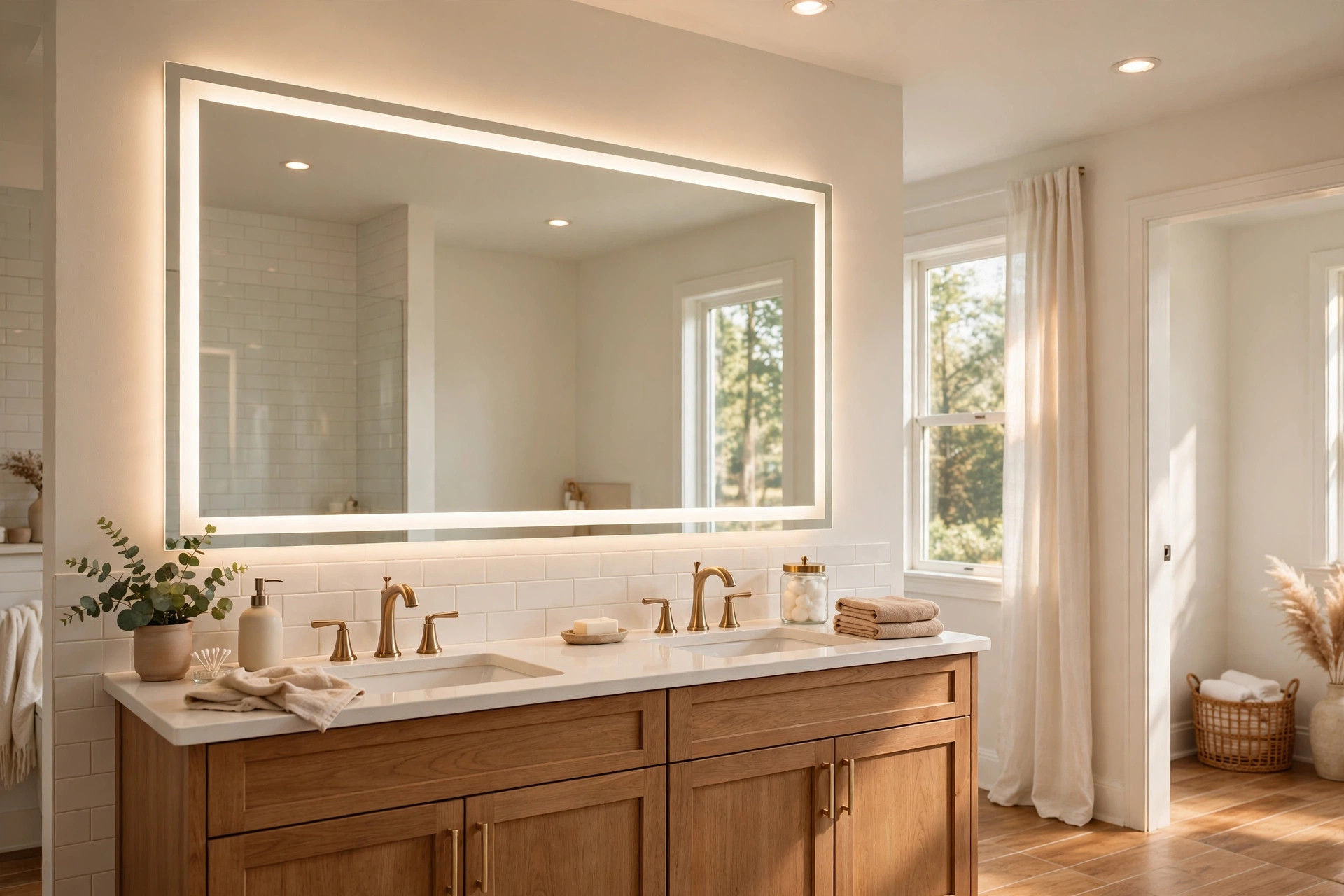

Bathroom light matters more than most people think. A dim bathroom makes the morning rush harder. A harsh one makes shaving and makeup a guessing game. For many homeowners, the fix is simple: install one of the many led bathroom mirrors texas homes usa sellers now stock. These mirrors carry their own light. The bulbs sit behind the glass or along the frame edge. The light falls on your face, not on the ceiling. The result is a clearer, kinder image every time you look.
Texas homes have their own reasons to want these mirrors. The state is warm much of the year, so bathrooms run hot and damp. Steam fogs plain mirrors in seconds. Many LED models carry a heated pad behind the glass that keeps the center clear. Summers in Texas are also long, so energy bills add up fast. LED light costs very little to run compared with the old vanity bars of six bulbs.
Why It Matters
A bathroom mirror is the most-used glass in the house. Most people stand before it every day. They shave, brush their teeth, put on makeup, check a tie, or take out contact lenses. Each task needs good light. Overhead lights throw shadows under the eyes and chin. Wall sconces help, but they sit to the sides and still leave uneven spots. An LED mirror puts the light source right where you look. Your face gets even light from all sides. Shadows shrink. Colors look true.
There is also the matter of mood. Bathrooms used to be plain, white, and flat. Today many Texas homeowners treat the bath as a small retreat. A mirror with a soft backlit glow changes the whole feel of the room. For families with small children, that small feature gets used every single day.
Energy use is a third reason. A typical LED mirror draws between 12 and 30 watts. That is about the same as one old incandescent bulb. Many models let you dim the light or switch between warm and cool tones.
Finally, there is home value. Remodelers report that bathroom updates pay back well at resale. A frameless shower doors buying guide usa article on this site covers the shower side of the job, but the mirror is the cheaper upgrade. It changes the look of the room for a few hundred dollars. Buyers notice clean light and modern glass.
What to Look For When You Choose: Led Bathroom Mirrors Texas Homes Usa
Start with size. Measure the wall space above your vanity before you shop. The mirror should be a little narrower than the vanity, usually by two to four inches on each side. A 24-inch mirror suits a small powder room. A 48-inch or 60-inch mirror fits a double vanity. Round mirrors soften a small bath. Rectangular mirrors read more modern and give a larger viewing area.
Next, look at the light itself. Two numbers matter. The first is color temperature, written in Kelvin. Warm white is 2700 to 3000K and feels like old bulbs. Daylight is 5000 to 6500K and looks crisp and blue-white. Most people pick something in the middle, 3500 to 4000K, which suits both shaving and makeup. Many LED mirrors offer three settings in one unit, so you can switch by tapping a button. The second number is CRI, the color rendering index. Pick 90 or above. A high CRI means skin and makeup look right, not washed out.
Check the brightness controls. A touch button on the glass is common. Some mirrors use a small rocker switch on the side. A dimming feature is worth having. Full brightness works for makeup. Low brightness works for a midnight trip to the sink. Anti-fog is another feature to weigh. The heated pad runs on the same circuit as the light. It takes a few minutes to clear steam. If your bathroom lacks a strong exhaust fan, the pad is almost a must in Texas summers.
Look at how the mirror mounts. Most LED mirrors need a wall outlet or a hardwired line. Hardwiring means an electrician ties the mirror into the wall circuit. Plug-in models are easier, but the cord shows.
Frame or no frame? Frameless mirrors give a clean, modern line and match the glass shower doors many Texas homes already have. Framed models hide the light strip and add style, with metal or wood edges. Both work. The frame is a matter of taste, not function.
Types and Options
The market holds several clear types. The backlit mirror is the most popular. LEDs sit behind the glass. Light spills out around the edges. The glow on the wall looks soft and high-end.
The front-lit mirror places the LED strip on the face of the glass, often in vertical bars on the left and right. It gives the brightest light on your face. Makeup users tend to like it. It looks a little more like a dressing-room mirror and a little less like wall art.
The edge-lit mirror runs light around the outer rim only. It is a slim style, often very thin in profile. It gives less direct face light than a front-lit model, so it works best in a bathroom that already has decent ceiling light.
Some models add extras. A digital clock sits in the corner of the glass. A Bluetooth speaker plays music or news. A magnifying round mirror swings out on an arm. Each extra feature adds cost. Ask yourself which ones you will use every week before you pay for them.
Shapes matter too. Round and oval mirrors fit small powder rooms and modern guest baths. Full-width rectangles fit master suites with double sinks. Pivoting models tilt to your height, which helps households where people differ in height.
Matching Your Bathroom Style
The mirror should speak the same language as the rest of the room. In a farmhouse bath with shiplap, pick a warm-light mirror with a black or wood frame. In a sleek city condo, pick a frameless backlit model in cool white. Pair the finish with your faucet. If your taps are brushed nickel, a mirror with a thin nickel frame ties the room together. Our brushed nickel faucets buying guide usa explains that finish in depth. The light color should match too. Warm bulbs in the ceiling and cool light on the mirror will clash. Keep every light in the room near the same Kelvin setting.
Cost and Price
Prices vary wide. A small round LED mirror, 24 inches across, can cost 80 to 150 dollars. A mid-range 36-inch backlit mirror with dimming and anti-fog runs 200 to 400 dollars. A large 60-inch double-sink model with Bluetooth and a clock can reach 600 to 900 dollars.
Installation adds to the bill. A plug-in mirror costs nothing to install beyond hanging it. A hardwired mirror needs an electrician. In Texas, expect 150 to 300 dollars for a simple hardwire job if the circuit is already there. If the electrician must run a new line from the panel, the price climbs. Get the quote in writing before the mirror ships.
Running costs stay low. At 20 watts and a few cents per kilowatt hour, daily use costs pennies. The LEDs last 30,000 to 50,000 hours. When the LEDs finally fade, most mirrors are sealed units. You replace the whole mirror, not the bulbs. This is the main trade-off of the design. You gain slim glass and even light. You lose the swap-a-bulb simplicity of the old bar fixture.
Think about value over the long haul. A 250-dollar mirror that lasts ten years costs about 25 dollars a year. Spend a little more for high CRI and good controls. You will use this mirror twice a day, every day.
Care and Upkeep
LED mirrors ask little of you. Clean the glass the way you clean any mirror. Use a soft microfiber cloth. Dampen it with water or a light glass cleaner. Do not spray cleaner straight onto the glass near the touch buttons. Spray the cloth first. Wipe in slow circles. Dry with a second cloth to stop streaks.
Do not use scouring pads or powder cleaners. They scratch the coating on the mirror backing. Scratches show as dark spots. Avoid harsh chemicals like bleach or ammonia cleaners in strong form. A mild cleaner does the job.
Check the anti-fog pad once a year. Turn on the light and wait five minutes. The center of the mirror should stay clear in steam. If fog spreads across the middle, the pad may have failed. Pads are not easy to replace on sealed units.
Dust the back vents if the model has them. Some LED mirrors vent heat through small slots. Dust can block the slots and shorten the life of the drivers. A soft brush or a quick pass with a vacuum hose keeps them clear.
Keep water off the electrical parts. The mirror face can take splashes. The back cannot. When you scrub the wall around the mirror, do not let water run behind the glass.
Safety
Electricity and water share the bathroom. Respect both. Any hardwired mirror should sit on a GFCI-protected circuit. A GFCI outlet or breaker cuts power in a fraction of a second if current leaks. Most Texas homes built in the last few decades already have GFCI outlets in the bath. Older homes may not. An electrician can add protection at the panel or the outlet.
Hire a licensed electrician for hardwired installs. The job looks simple. The stakes are not. A loose wire behind glass is a hazard you cannot see. The electrician also knows local code. Texas cities follow the National Electrical Code with local changes. A pro will place the mirror the right distance from the tub and shower.
Check the rating of the mirror itself. Look for a UL or ETL mark on the label or the listing. These marks mean a testing lab checked the wiring and the design. Mirrors without such marks cost less for a reason. Skip them.
Weight matters on the wall. Large mirrors are heavy. Use the mounting bracket that ships with the mirror. Anchor into studs when you can. If you are not sure where the studs are, a stud finder costs little and saves trouble.
For homes with small children, note the touch controls. Many mirrors turn on with a light tap. A child may leave the light on for hours. The LEDs draw little power, so the risk is low. But a model with a physical switch on the side gives parents more control.
Texas-Specific Notes
Heat and humidity shape the Texas bath. In Houston and the Gulf Coast, damp air hangs heavy for months. An anti-fog pad earns its keep here. A strong exhaust fan matters even more. Run the fan during every shower and for twenty minutes after. It clears steam, protects the mirror backing, and stops mold on the ceiling.
In dry West Texas, dust is the bigger foe. Fine dust settles on the glass and dulls the light. A weekly wipe keeps the mirror sharp.
Storms roll through Texas in spring. Power surges can harm the LED drivers. A whole-home surge protector at the panel is a sound investment for any house with smart fixtures. It protects the mirror, the rain shower heads buying guide usa digital valves some owners add, and every other wired device in the bath.
Frequently Asked Questions
Do LED bathroom mirrors need an electrician to install? Plug-in models do not. You hang the mirror and plug it into a bathroom outlet. Hardwired models do need one. The electrician connects the mirror to the wall circuit and makes sure the GFCI protection is in place.
How long do the LED lights last? Most makers rate their LEDs at 30,000 to 50,000 hours. At two hours of use a day, that is 40 years at the low end. In real life, the driver or the touch sensor may fail first. Buy a mirror with at least a two-year warranty. Keep the receipt.
Can I replace the LED strip when it burns out? In almost all models, no. The LEDs and the drivers are sealed inside the unit. When the light dies, the whole mirror goes. This is one more reason to buy from a known brand with a good track record.
Are LED mirrors safe around showers? Yes, when installed to code. The mirror should sit a safe distance from direct spray. The circuit should have GFCI protection. The mirror should carry a UL or ETL mark. Do not mount a wired mirror inside a shower stall.
Do anti-fog mirrors really work? They work well within limits. The heated pad keeps the center of the glass above the dew point, so steam does not settle there. The edges may still fog. Turn the light on a few minutes before the shower for the best result.
What color light is best for makeup? Pick 3500 to 4000K with a CRI of 90 or higher. This range is close to neutral daylight and shows true skin tone. A mirror with three color settings lets each person in the house pick their own.
A Short Final Word
An LED bathroom mirror is a small change with a daily payoff. It gives clear, even light where you need it most. It trims energy use. It lifts the look of the room. For Texas homes, the anti-fog pad and the low heat of LED light fit the climate well. Measure your space. Pick high CRI and good controls. Wire it safe with GFCI protection. A good mirror does not shout. It simply shows you at your best, twice a day, for years.
For more background, see Bob Vila, The Spruce, and Kohler. For more background, see Moen, Delta Faucet, and American Standard. Buying guides are also published by The Home Depot and Lowe’s.
References
American Standard. (n.d.). Bathroom and kitchen products. https://www.americanstandard.com Bob Vila. (n.d.). Home improvement advice. https://www.bobvila.com Delta Faucet. (n.d.). Kitchen and bathroom faucets. https://www.deltafaucet.com Kohler. (n.d.). Bathroom and kitchen fixtures. https://www.kohler.com Lowe’s. (n.d.). Home improvement products. https://www.lowes.com Moen. (n.d.). Faucets and plumbing fixtures. https://www.moen.com The Home Depot. (n.d.). Home improvement products. https://www.homedepot.com The Spruce. (n.d.). Home and garden advice. https://www.thespruce.com
Was this guide helpful?

About Sarah Mitchell
The My Garden US editorial team writes practical, in-depth home and garden guides for American homeowners — tested advice, no fluff.
You May Also Like
How to Find the Best Shower Grab Bars Deals Near Me
September 19, 2026 0 views
Rain Shower Heads: How to Find the Best USA Online Deals
July 23, 2026 0 views
Bathroom Linen Cabinets Deals Near Me: How to Save on Bathroom Storage
September 10, 2026 0 views