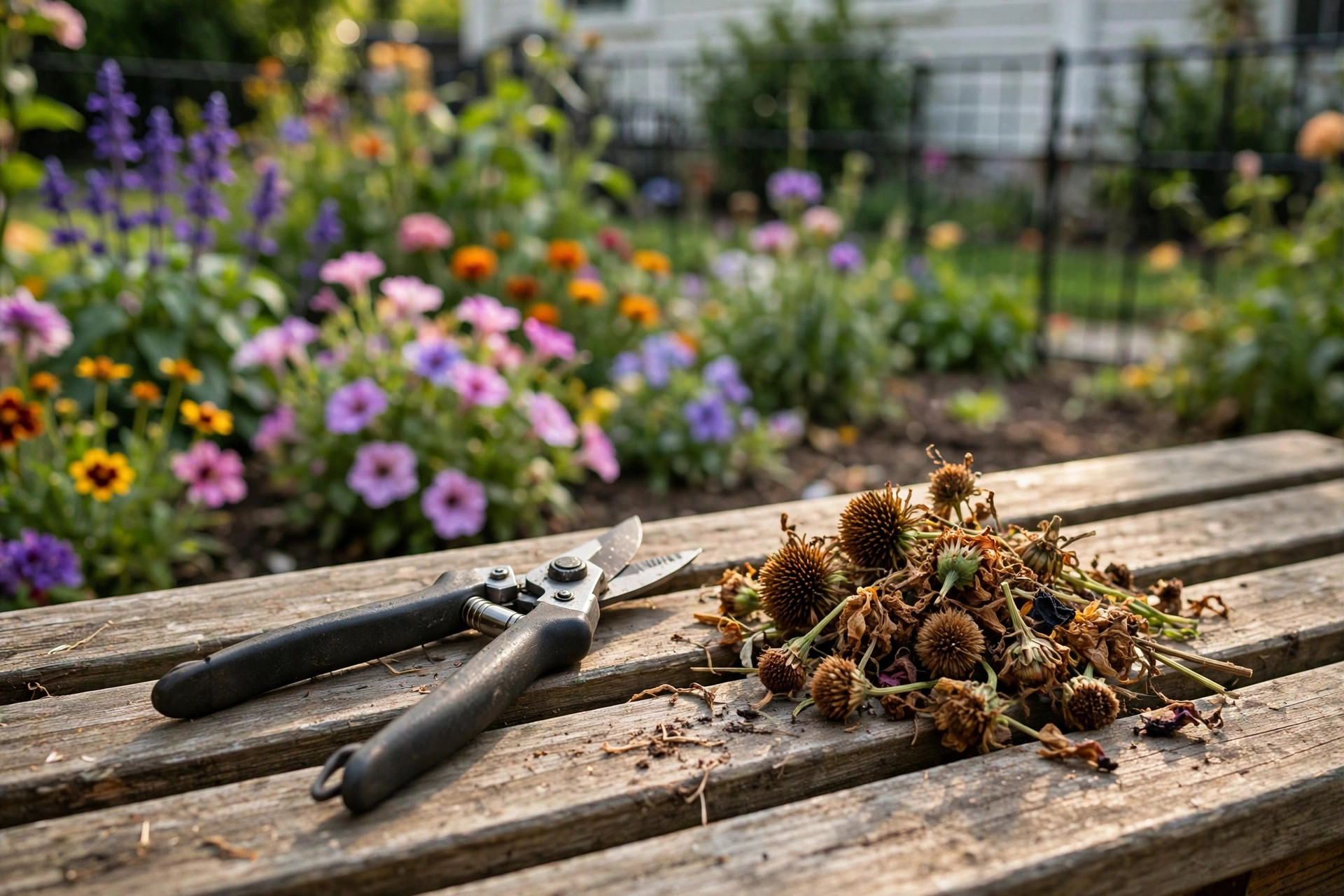

The best garden snips for deadheading flowers are small, sharp, and easy to hold. Deadheading means cutting off flowers that are past their prime. The spent blooms fade and turn brown. The plant still spends energy on them. A clean cut with snips removes them in one motion. The plant then puts its energy into new buds. Good snips make this weekly job fast and pleasant. Bad snips crush the stems. They also tire your hand. This guide explains what to look for in a pair of garden snips. It covers blade types, handle styles, and prices. It also covers cleaning, sharpening, and safe use. With the right tool, deadheading becomes one of the best jobs in the garden.
Why Deadheading Matters
Deadheading is one of the simplest garden tasks. It also brings some of the clearest rewards. A flower bed with spent blooms looks tired. A few cuts with snips bring it back to life. The fresh look lasts for weeks.
The main reason to deadhead is to push the plant to make more flowers. Most annuals and many perennials bloom to set seed. Once a flower fades, the plant turns its energy toward seed making. When you cut off the dead flower, you break that cycle. The plant grows new buds instead. Flowers such as petunias, marigolds, zinnias, and salvias respond well to regular deadheading. They can bloom again and again through the season.
Deadheading also keeps disease away. Old, wet blooms rot on the stem. Rot can spread to healthy leaves and buds. Petals that fall to the soil can carry fungus. A clean cut keeps the plant tidy and dry. Small pruning snips for flower heads make clean cuts that heal fast.
There is also the matter of shape. Spent flowers make a plant look leggy and thin. Cutting them back keeps the plant full and even. Roses benefit most of all. Cutting a faded rose back to the first strong leaf gives you a better second flush. Garden snips for deadheading roses are a must for any rose grower.
Finally, deadheading saves time later. A plant that keeps blooming needs less cleanup in the fall. You will have fewer seed heads and less old growth to cut away. A weekly walk through the beds with your snips keeps everything under control.
What to Look for in Garden Snips: Best Garden Snips for Deadheading Flowers
Blade Type
The blade is the most important part of the snips. Two types exist. Bypass blades pass one blade past the other, like scissors. They make clean cuts on live stems. Anvil blades press one blade down onto a flat surface. They work best on dry, dead wood. For deadheading live flower stems, bypass blades are the better choice. They leave a clean edge. The stem heals faster.
Blade length matters too. Short blades, about one to two inches long, work best for deadheading. They fit into tight spaces between buds. They let you cut one stem without harming the stems nearby. Long blades are harder to control in a thick flower bed.
Blade material also matters. High carbon steel holds a sharp edge. It can rust if left wet. Stainless steel resists rust better. It may need sharpening more often. Either type works fine for deadheading. The key point is that the blade should be sharp when you buy it. Dull snips are worse than none at all.
Handle and Grip
You will hold these snips for long stretches. The handle must feel right in your hand. Most snips have a spring between the handles. The spring opens the blades after each cut. This saves hand strength. A good spring is firm but not stiff.
Grip material makes a difference. Rubber or cushioned grips feel best. Hard plastic can cause blisters. Some snips have a latch that locks the blades closed for storage. This is a useful safety feature.
Weight is another factor. Light snips tire your hand less. Look for a pair under six ounces. The best garden snips for deadheading flowers feel like an extension of your hand. You should be able to cut dozens of stems without strain.
Size and Weight
Garden snips are smaller than pruning shears. The full tool is usually six to seven inches long. This small size is a benefit. It lets you reach into the middle of a plant. It keeps you from cutting buds by accident.
Try the tool in your hand if you can. The handles should not pinch your fingers. The tool should open and close smoothly. If you buy online, check product reviews and independent test reports before you order. Home gardeners often post useful notes about grip comfort and blade sharpness.
Types of Garden Snips
Several types of snips work well for deadheading. Each has a slightly different strength.
Micro snips are the most popular type for deadheading. They are tiny, often under six inches long. They have short, sharp bypass blades. They excel at fine work. They cut thin flower stems cleanly. The best snips for deadheading petunias and other soft-stemmed flowers are usually micro snips.
Floral snips are like micro snips with pointed tips. Flower arrangers use them. They also work well in the garden. The pointed tips slip between crowded stems. They are ideal for dense beds of annuals.
Snips with a curved blade make it easier to cut at an angle. The curve hugs the stem. Some gardeners find these more comfortable for long sessions. They work well on roses and other stems with thorns.
Shears with an anvil blade are less suited for deadheading. They can crush live stems. Save them for cutting dead wood. Some gardeners keep both types. They use bypass snips for live stems and anvil shears for dead cuts.
A few brands are well known for garden snips. Fiskars makes light, sharp tools with bright handles. Tool brands like Corona make sturdy snips for heavy use. Many gardeners buy their snips from big home improvement stores like Home Depot or Lowe’s. Gardener’s Supply also carries a wide range of hand tools made for home gardeners.
Cost and Price
Garden snips for deadheading are not expensive. Basic pairs start at around five dollars. Mid-range pairs cost ten to twenty dollars. High-end pairs can cost thirty dollars or more.
Price often reflects the blade steel and the grip quality. A five-dollar pair may dull fast. A fifteen-dollar pair often holds an edge through a full season. For a home gardener, the ten to twenty dollar range is the sweet spot. You get sharp blades and a comfortable grip. You do not pay for features you will never use.
Think about how much you deadhead. If you cut flowers every week, a better pair is worth the cost. If you have only a few pots on a patio, a basic pair will do. Either way, keep the blades sharp. A cheap pair with sharp blades cuts better than an expensive pair with dull ones.
Replacement parts are rare for small snips. At this price point, most gardeners replace the whole tool when it wears out. A well-kept pair can last several seasons. Cleaning and sharpening extend the life a great deal.
Care and Upkeep
Sharp, clean snips cut well and stay safe. Follow these simple steps after each use.
First, wipe the blades. Sap and plant juices build up on the steel. A damp cloth removes most of it. For sticky sap, use rubbing alcohol on a cloth. Dry the blades after wiping. Wet steel rusts.
Second, sharpen when needed. A small whetstone or a diamond file works well. Follow the angle of the blade edge. Three or four light strokes are often enough. Test the cut on a piece of paper. A sharp blade cuts paper cleanly. Many gardening advice sites offer simple sharpening guides for hand tools.
Third, oil the pivot. One drop of light oil keeps the spring and pivot moving smoothly. Wipe off the extra oil. Oil attracts dirt if you use too much.
Fourth, store the snips dry. A tool shed or a garage shelf works well. Lock the blades closed if your snips have a latch. Do not leave them in the rain. Rust shortens the life of any tool.
When you move between plants, dip the blades in rubbing alcohol. This keeps plant disease from spreading. It is a small step. It protects the whole garden. Flower beds with old blooms sometimes hide mildew. Clean blades stop it from moving plant to plant.
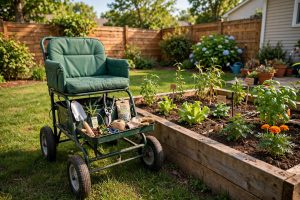
Many gardeners keep a bucket of spent blooms nearby as they work. A small garden wagon with a canopy makes the job easier on a sunny day. You can carry the snips, the bucket, and a drink. Cold-hardy herbs also benefit from a light trim in late season. Your snips work well for that job too.
Safety
Garden snips are sharp. Treat them with care.
Always cut away from your body. Keep your other hand clear of the blades. When you reach into a plant, watch where the blade points. It is easy to nick a finger on a hidden stem.
Wear gloves. Thorns and rough stems can scratch your skin. Gloves also give you a better grip on the tool. Choose gloves that fit well. Loose gloves slip and catch on blades.
Lock or cover the blades when you are not cutting. Do not carry open snips in a pocket. Do not leave them on the ground where a child or pet might find them. A blade guard or a locked latch keeps everyone safe.
Keep snips away from children. Store them on a high shelf or in a locked box. Teach older children to hand you the tool handle-first if they help.
If you cut yourself, stop and clean the wound. Garden soil carries bacteria. Wash with soap and water. Cover with a clean bandage. A tetanus shot should be current for any gardener. Check with your doctor if you are not sure.
Frequently Asked Questions
How often should I deadhead my flowers? Walk through the beds once a week. Look for faded blooms. Cut them off. During peak season, some fast-blooming flowers may need a check twice a week. A weekly habit keeps the job small. It also keeps the flowers coming.
Can I use regular scissors instead of garden snips? Household scissors can work on soft stems in a pinch. They dull fast in the garden. They also pinch your fingers less comfortably. Garden snips are made for this job. They have stronger blades and better grips. Buy a pair of snips. Your hands will thank you.
Should I deadhead every type of flower? No. Some flowers do not need it. Plants grown for seed heads, such as coneflowers left for birds, can stay. Ornamental grasses do not need deadheading. Newer self-cleaning varieties of petunias drop their own spent blooms. For most traditional bedding flowers and roses, deadheading helps a great deal.
How do I know where to cut the stem? Follow the faded flower down its stem. Cut just above the first healthy leaf or bud. For roses, cut back to a leaf with five leaflets. The new growth will come from that point. A short, sharp blade makes this easy. Avoid cutting into the main stem of the plant.
Do snips work for pruning tomato plants? Small snips work well for pinching suckers on tomato plants. The technique is the same as deadheading. Make a clean cut close to the stem. Our guide on pruning tomato plants explains the steps in full. Sharp bypass snips give the cleanest results.
How long do garden snips last? A good pair lasts three to five seasons with basic care. Keep the blades clean, dry, and sharp. Oil the pivot now and then. Cheap pairs may wear out in a season or two. Burpee’s growing guides and tool reviews often note how long a given model holds up in real garden use.
Final Word
The best garden snips for deadheading flowers are the ones you will actually use. They should be sharp, light, and comfortable. They should fit into tight spots between buds. A fair price is ten to twenty dollars. Keep them clean and sharp. Store them dry. Deadhead once a week. Your flowers will reward you with steady blooms from spring to frost. It is a small tool. It makes a large difference in the garden.
Related guides on this site include best pruning shears for rose bushes, how to sharpen garden tools properly, and best garden hose for large yards.
References
Best garden wagon with canopy reviews. (n.d.). Home and garden information. https://best-garden-wagon-with-canopy-reviews/ Bob Vila. (n.d.). Home improvement advice. https://www.bobvila.com Burpee. (n.d.). Seeds, plants, and gardening supplies. https://www.burpee.com Cold hardy herbs for winter garden. (n.d.). Home and garden information. https://cold-hardy-herbs-for-winter-garden/ Consumer Reports. (n.d.). Product reviews and ratings. https://www.consumerreports.org Corona Tools. (n.d.). Garden and landscape tools. https://www.corona-tools.com Fiskars. (n.d.). Garden and cutting tools. https://www.fiskars.com Gardener’s Supply Company. (n.d.). Gardening tools and supplies. https://www.gardeners.com How to prune tomato plants properly. (n.d.). Home and garden information. https://how-to-prune-tomato-plants-properly/ Lowe’s. (n.d.). Home improvement products. https://www.lowes.com The Home Depot. (n.d.). Home improvement products. https://www.homedepot.com The Spruce. (n.d.). Home and garden advice. https://www.thespruce.com
Was this guide helpful?

About Jennifer Lee
The My Garden US editorial team writes practical, in-depth home and garden guides for American homeowners — tested advice, no fluff.
You May Also Like
Best Garden Hose Quick Connect Fittings for a Leak-Free Yard
February 15, 2026 0 views
The Best Garden Gloves for Arthritis Sufferers: A Gentle Guide
September 6, 2026 0 views
Best Garden Apron for Harvesting Reviews
April 7, 2026 0 views