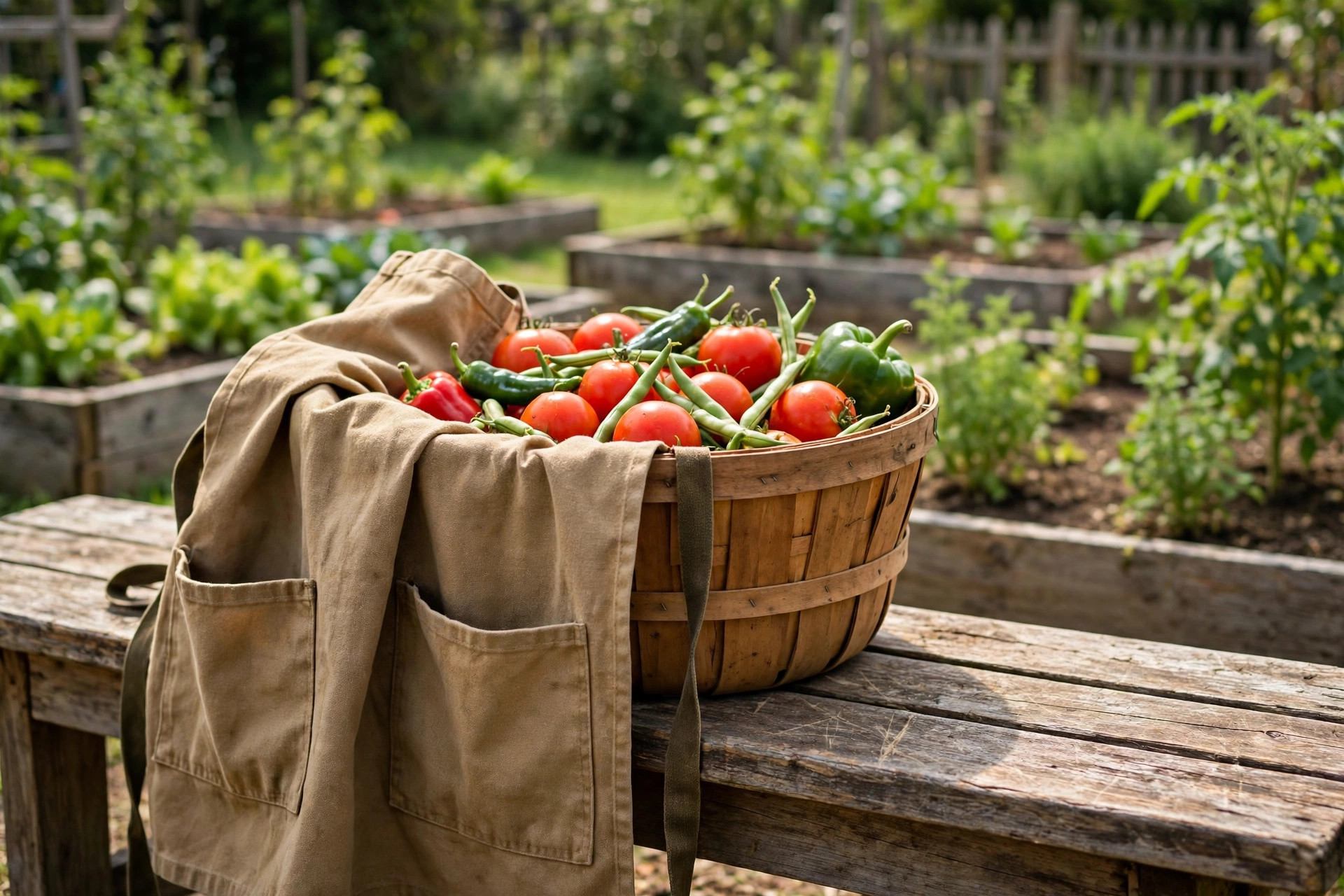

The search for the best garden apron for harvesting reviews begins in the garden at harvest time. Tomatoes ripen on the vine. Beans hang heavy on the trellis. Herbs need cutting before the sun grows hot. A gardener with both hands full knows the value of a good apron. It keeps tools close. It holds produce safe. It protects clothes from dirt and stains. This guide walks through what makes a garden apron right for harvest work. It covers fabrics, pockets, fit, types, prices, care, and safety. It draws on honest buying advice from trusted garden sources. By the end, you will know what to look for and how to choose one with care.
Why a Garden Apron Matters at Harvest Time
Harvest is the busiest season in the garden. It is also the messiest. Juice runs from ripe fruit. Soil sticks to knees and hands. A harvest apron solves small problems before they grow. Its pockets carry garden scissors for harvesting herbs so cuts are clean and quick. A front pouch gathers beans, peppers, or cherry tomatoes without a trip back to the shed. The cloth shields your shirt from mud, sap, and green stains that never wash out.
Many gardeners carry baskets. A basket is fine for large harvests. But an apron works with the body. Both hands stay free for picking. Small items go in the pocket. Large items rest in the deep front pouch. This matters when you move down a long row of plants. Fewer trips mean faster work and less bruising of tender crops. Garden writers at The Spruce often note that simple gear changes how much joy the harvest brings. The right apron is one of those changes.
A good apron also saves tools from loss. How many hand trowels rest forgotten under tomato leaves each year? A deep pocket keeps each tool in sight and in reach. When the pocket has a divider, sharp items sit apart from seeds and phone. This order keeps work smooth from the first plant to the last.
What to Look for When You Choose: Best Garden Apron for Harvesting Reviews
Reviews of harvest aprons repeat the same themes. Strong fabric. Smart pockets. A fit that does not slip. These three points decide most purchases.
Strong, Washable Fabric
Canvas cotton is the classic choice. It resists thorns and stems. It softens with age. Waxed canvas sheds light rain and holds up longer. Denim is a firm second choice. It is cheap and tough. Linen blends look fine but tear sooner under heavy use. Whatever the fabric, it should wash in a home machine. Harvest brings juice, sap, and soil. An apron that cannot be washed will soon smell and stain.
Look at the stitching too. Double stitching at the pocket corners lasts longer. Bar tacks on stress points keep pockets from tearing when full. Metal rivets add strength but may scratch a harvest basket. Plastic buckles are light and rust free. These small details show in product photos and in honest reviews.
Deep, Thoughtful Pockets
The best harvest aprons carry tools and crops at once. A center pouch works like a basket against the body. It should be deep enough for a pound of beans but not so deep that small items vanish. Side pockets hold shears, ties, and a phone. A narrow top pocket fits a pen and plant tags.
Some aprons add a water bottle holder. This helps on hot days. Others add a hook or loop for garden gloves or keys. Think about your own harvest path. If you pick herbs and greens, many small pockets help. If you pick squash and cucumbers, one big pouch matters more. Retailers like Gardener’s Supply show many pocket layouts side by side, which makes comparison easy.
A Fit That Stays Put
Straps make or break an apron. Wide neck straps spread weight and spare the neck. A cross-back design is even better for long hours. It holds the apron up without pulling on the neck at all. Waist ties should be long enough for a firm bow at the back. Split leg designs let you kneel and bend with ease.
Size matters. A short apron suits quick herb picking. A full-length apron shields knees when you work low beds. Adjustable straps fit most adults. Some makers offer youth sizes for young helpers. Try to picture yourself wearing it for two hours. Comfort now beats looks later.
Types of Garden Harvest Aprons
The Classic Bib Apron
The bib apron covers chest to knee. It has a neck strap and waist ties. This is the most common garden apron. It gives the most protection and the most pocket space. It suits long harvest sessions and muddy work. Many trusted makers, including Fiskars, describe this style as the workhorse of garden clothing.
The Waist Apron
A waist apron ties at the hips and covers the lap and thighs. It is cooler in summer. It is lighter for quick tasks. It holds fewer tools. Choose it for short picking rounds near the house. Skip it for full-day work in tall, wet rows.
The Harvest Gathering Apron
This special design has a large pouch at the front that closes with a drawstring. You pick into it like a bag, then release the bottom to pour produce into a basket. It is clever and quick. It suits berries, beans, and small fruits. The pouch must be strong. Wet produce is heavy, and weak seams will fail at the worst moment.
The Tool Belt Apron
Some gardeners prefer a belt with hanging pouches over a cloth apron. It keeps tools at the hip. It adds little heat. But it protects no clothing, and it holds no produce. It is best for pruning and weeding days, not for harvest days. Guides at Lowe’s and The Home Depot list both styles, which helps buyers see the trade offs.
Waterproof and Waxed Styles
Waxed canvas and oilcloth aprons shed water and juice. They suit wet climates and early morning picking when dew is heavy. They are heavier and warmer. They need re-waxing now and then. For most home gardens, plain canvas is enough. For coastal or rainy regions, the waterproof type earns its price.
Cost and Price Ranges
Garden harvest aprons sell at many price points. Simple cloth aprons cost from ten to twenty dollars. These work for light use. They use thin cotton and basic ties. Mid range aprons cost from twenty-five to fifty dollars. This is the sweet spot for most gardeners. Fabrics are thicker. Pockets are deeper. Straps adjust well. Heavy duty and waxed canvas aprons cost from fifty to ninety dollars. These last for years of hard use.
Price does not always match quality. Read reviews with care. Look for notes about real use over months, not first day praise. Independent testers at Consumer Reports remind buyers that price tags tell little about long wear. A mid price apron from a garden brand often beats a cheap one that tears in one season. Factor in shipping too. A twenty dollar apron with ten dollar shipping costs as much as a thirty dollar one from a local store.
Buy once and buy well is the old rule. It holds here. A fifty dollar apron that lasts six seasons costs less per year than a fifteen dollar one replaced each spring. Set your budget, then spend it on fabric and stitching rather than on looks.
Care and Upkeep
A harvest apron needs simple care to last. Shake off loose soil after each use. This keeps grit from grinding into the weave. Machine wash in cold water with mild soap. Skip bleach. It weakens cotton fibers. Hang to dry in shade. Sun dries fast but fades color and stiffens cloth.
Treat stains quickly. Tomato and berry juice set fast. Rinse in cold water first. Hot water cooks protein stains into the cloth. A paste of baking soda lifts mild stains. For waxed canvas, skip the machine. Wipe with a damp cloth and re-wax once a year with bar wax. Store the apron dry. Fold it or hang it by the straps. Never leave it balled up damp in the shed. Mildew will grow, and the smell is hard to remove.
Check the straps each season. Retie loose knots. Replace frayed ties before they snap mid harvest. A small repair with needle and thread takes minutes and adds a year of life. The tool experts at Corona Tools give the same advice for all garden gear: clean it, dry it, store it right, and it will serve for years.
Safety Tips for Harvest Work
An apron aids safety when used with sense. Keep sharp tools in closed or divided pockets. Shears should point down and away from the body. Never carry a knife loose in the front pouch. Tie long straps so they cannot catch on trellis wires or thorn canes.
Watch your step when the pouch is full. A heavy load shifts your balance. Pick in small loads rather than one huge one. On hot days, choose a light apron and drink water often. The water bottle pocket is there for a reason. In the evening, store the apron where children cannot reach the tools in its pockets.
Pair the apron with other safe habits. Wear closed shoes in the garden. Use gloves for thorny crops. A garden kneeler with handles protects knees and helps you rise without strain. Harvest in daylight when you can see fruit, thorns, and insects clearly. These small steps keep a pleasant chore from turning into a trip to the clinic.
Frequently Asked Questions
Can one apron serve both harvest and weeding?
Yes, in most cases. A bib apron with deep pockets works for weeding, planting, and harvest alike. You may want to wash it between jobs. Weed seeds can hide in pockets and ride into clean beds. Keep one apron for seed work and one for general use if you can.
How many pockets does a harvest apron need?
Three to five pockets suit most gardeners. One large pouch holds produce. Two side pockets hold tools and a phone. A slim top pocket holds tags and a pen. More pockets add weight and cost. Fewer pockets force tools to share space, which dulls blades and risks cuts.
Is waxed canvas worth the extra cost?
It is worth it if you pick in wet weather or handle juicy crops often. Waxed canvas sheds water and wipes clean. It lasts longer than plain cotton. For dry climates and light use, plain canvas saves money and washes easier. Read long term reviews before you decide. Advice from Bob Vila and seed experts at Burpee both stress matching gear to your real climate.
What size apron should I buy?
Most adults fit a standard bib apron with adjustable straps. If you are tall, look for extra long styles that cover the shin. If you are slight, a youth or small size will drape better. When in doubt, choose adjustable over fixed straps. Comfort over two hours matters more than a neat look in the mirror.
Can I wash a harvest apron with garden clothes?
Yes, with care. Wash it with sturdy work clothes in cold water. Keep it away from fine fabrics that snag on Velcro or hooks. Empty every pocket first. A forgotten pen or plant tag can mark a whole load. Air dry when you can. Machine drying is fine on low heat but wears the cloth faster.
How long should a good garden apron last?
A well made canvas apron lasts three to six years of home garden use. Waxed styles can last longer with re-waxing. Cheap thin aprons may last one season. Stitching fails first, usually at pocket corners. Reinforced corners and bar tacks add years. Store it dry and clean, and it will outlast its price.
A Final Word
The best garden apron for harvesting reviews point to the same truth. The best apron is the one that fits your body, your crops, and your climate. Strong cloth. Deep pockets. Straps that stay put. These matter more than brand names or bright patterns. Take time to read reviews from real gardeners. Compare pocket layouts. Check the stitching in photos. Then choose with a clear head and wear it with pride through harvest season.
References
Bob Vila. (n.d.). Home improvement advice. https://www.bobvila.com Burpee. (n.d.). Seeds, plants, and gardening supplies. https://www.burpee.com Consumer Reports. (n.d.). Product reviews and ratings. https://www.consumerreports.org Corona Tools. (n.d.). Garden and landscape tools. https://www.corona-tools.com Fiskars. (n.d.). Garden and cutting tools. https://www.fiskars.com Gardener’s Supply Company. (n.d.). Gardening tools and supplies. https://www.gardeners.com Lowe’s. (n.d.). Home improvement products. https://www.lowes.com The Home Depot. (n.d.). Home improvement products. https://www.homedepot.com The Spruce. (n.d.). Home and garden advice. https://www.thespruce.com
Was this guide helpful?

About James Carter
The My Garden US editorial team writes practical, in-depth home and garden guides for American homeowners — tested advice, no fluff.
You May Also Like

The Best Garden Gloves for Arthritis Sufferers: A Gentle Guide
September 6, 2026 0 views
Best Garden Kneeler Seat Combo Reviews: Comfort for Long Days in the Garden
February 15, 2026 0 views
Best Garden Sprayer Backpack Battery Reviews for Home Gardeners
May 16, 2026 0 views