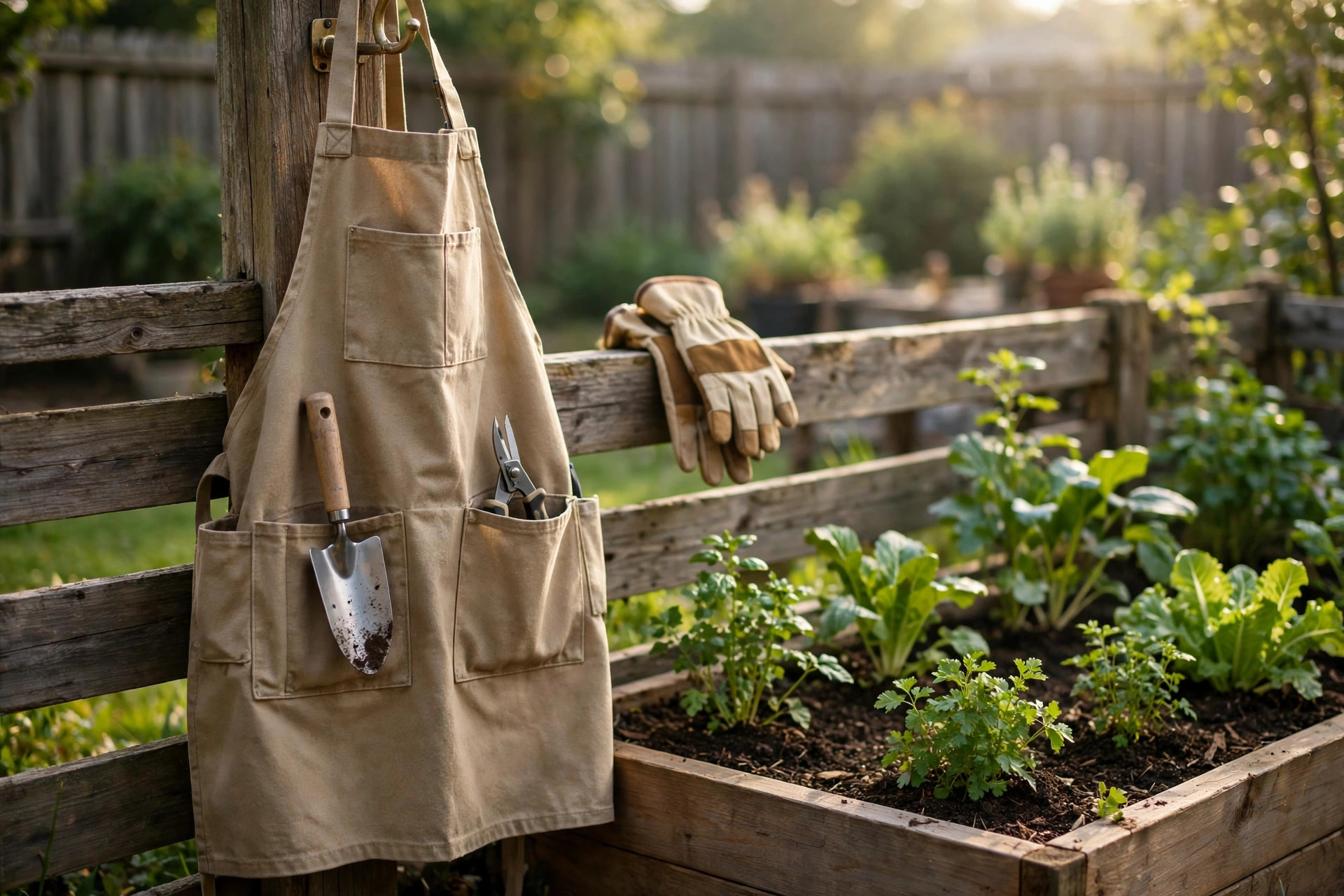

Every gardener knows the trouble of full hands. You walk out with shears, twine, seed packets, and a pair of gloves. You find a weed and reach for the trowel. It is still on the potting bench. You walk back. The work breaks apart. These best garden apron with pockets reviews were written to end that trouble. A good apron holds your tools at your waist or chest. It saves steps and keeps your clothes clean. It turns a scattered morning into a smooth one.
An apron with pockets is a small item. It does a big job. The pockets carry the hand tools you reach for most. The fabric takes the dirt and thorns so your shirt does not. The right fit lets you bend, kneel, and lift without strain. In this guide we look at what makes a garden apron worth its price. We cover fabric, pockets, fit, and care. We give plain advice on cost and safety. By the end you will know how to pick one that suits your body and your garden.
Why a Garden Apron Matters
Gardening is work with many small steps. Prune the rose. Tie the tomato vine. Mark the row of carrots. Each step needs a tool. Without a place to carry them, tools end up in piles on the ground. They get lost in the mulch. They rust in the rain.
An apron solves this in a simple way. The pockets sit where your hands rest. You reach down and the trowel is there. You reach across and the twine is there. You never set a tool down in the dirt. You never lose a seed packet in the grass.
A good apron also guards your clothes. Soil stains are hard to wash out. Thorns catch and tear. Wet compost soaks through thin shirts. A heavy apron takes this wear instead. At the end of the day you shake it off and hang it up. Your clothes stay clean.
There is a comfort point too. A well-made apron spreads its weight across your shoulders or waist. It feels like part of your work clothes. A bad one digs at the neck or slides around. That is why fit matters as much as fabric. Read on to learn what to check before you buy.
What to Look for in a Garden Apron With Pockets: Best Garden Apron with Pockets Reviews
Fabric and Build
The fabric is the first thing to study. Canvas is the most common choice. It is heavy cotton, woven tight. It resists tears and holds up to rough use. Waxed canvas adds a coat that sheds water and mud. It costs more, but it lasts longer in wet beds.
Denim is another solid pick. It is tough and softens with age. Some aprons use heavy twill or duck cloth. These are all good. What you want to avoid is thin fabric. A light apron will wear through at the pockets in one season.
Check the seams. Strong aprons use double stitching. The pocket edges often have rivets at the stress points. Look at the hem. A bound hem resists fraying. Bar tacks, the small tight stitches at corners, show that the maker cared about strength.
Gardening experts often note that tool quality begins with materials, and the same holds for the gear that carries them. The test labs at Consumer Reports have long graded workwear on durability, and their method is worth copying: rub the fabric, pull the seams, check the pockets under load. Guides from Fiskars also remind gardeners that good hand tools deserve good storage, since a dropped pruner can dull or bend.
Pocket Layout
Pockets are the point of the apron. Count them, and then look closer. You want a mix of sizes. Big pockets hold a trowel, a hand rake, or a phone. Small slots hold pencils, plant labels, or a pocketknife. A deep center pocket can hold a harvest of beans or tomatoes.
The pocket mouths should stay open. Stiff fabric helps here. Some aprons have elastic tops that grip tools. That keeps a phone from sliding out when you bend. Divided pockets beat one large sack. You can find what you want without digging.
Think about what you carry. A flower grower needs narrow slots for snips and ties. A vegetable grower needs wide pockets for harvest. A beginner can start with a simple five-pocket layout. It covers most chores without fuss.
Retailers like Home Depot and Lowe’s carry a wide range of pocket styles, and their product pages often show close-up photos of the layout. That is a good way to judge before you order.
Fit and Straps
An apron that fits poorly will sit in the shed. Neck-strap aprons are common and cheap. The strap can press on the neck during long days. A cross-back design spreads the weight across the shoulders. Many gardeners prefer it for comfort.
Waist aprons tie around the hips. They keep the chest free on hot days. Full-length aprons cover the torso and thighs. They give the most protection and the most pockets.
Look for straps you can adjust. A sliding buckle or a long tie lets the apron fit over a winter coat or a summer shirt. If you are tall, check the length. If you are small, look for a youth or petite size. The apron should end above the knee for a full-length style, so it does not catch on plants.
Types and Options
Waist Aprons
A waist apron ties at the hips and covers the front of the thighs. It is light and cool. It suits quick jobs like deadheading flowers or pulling weeds. The pockets sit right at hand level. Many waist aprons have three or four roomy pockets. Some add a loop for a towel or a holster for snips.
The drawback is less coverage. Your shirt will still catch dirt and water. For heavy pruning or muddy work, a full apron guards you better.
Full-Length Aprons
The full-length apron covers from chest to shin. It is the classic choice for serious garden work. It holds the most pockets. It shields your whole front. Split legs or a vent at the bottom help you kneel and walk.
Full-length aprons work well for jobs with lots of bending. Planting, mulching, and harvesting all suit this style. They can feel warm on summer days. Look for breathable cotton if heat is a worry.
Cross-Back Aprons
The cross-back apron has straps that cross behind the shoulders. No neck strap. The weight rests on the back, not the neck. Many gardeners who work long hours swear by this style. It stays in place when you bend. It rarely needs adjusting.
Cross-back aprons come in both waist and full lengths. They often cost a bit more. The comfort is worth it for anyone with neck or shoulder strain. Tips on ergonomic garden gear appear often in the how-to guides at Bob Vila and The Spruce, where writers test gear in real gardens.
A related long-tail search, best garden kneeler with handles reviews, covers another comfort item that pairs well with a good apron.
Cost and Price
Garden aprons with pockets span a wide price range. A simple waist apron can cost very little. Basic full-length aprons in canvas sit in the middle range. Waxed canvas and leather-trimmed models cost the most.
What drives the price? Fabric weight is the main factor. Hardware is next. Brass buckles and metal rivets cost more than plastic slides and plain stitching. Extra pockets, leather patches, and brand names add to the price too.
For most home gardeners, the middle range is the sweet spot. You get heavy canvas, good stitching, and a fair pocket count. A cheap apron may last one season. A mid-range apron often lasts five or more. That makes the better one cheaper over time.
Watch for sales at garden centers in late fall. Stores clear summer gear to make room for holiday stock. You can find strong aprons at good prices. Online prices shift often, so compare a few sellers before you buy.
Care and Upkeep
A garden apron is easy to care for. Shake it out after each use. This stops soil from grinding into the fibers. Brush off dried mud with a stiff brush. For canvas, spot clean with mild soap and water. Avoid machine washing if you can. It wears the fabric faster.
Waxed canvas needs special care. Do not use detergent on it. It strips the wax. Wipe it with a damp cloth. Once a year, rewax it with a wax bar and a hair dryer. This restores the water resistance.
Hang the apron by its straps in a dry place. Do not leave it crumpled in a damp shed. Mildew can grow in the folds. If the apron gets wet, let it dry fully before you store it. Check the stitching once a season. A loose seam is easy to fix with a few stitches before it tears.
Sharp tools in pockets will cut through fabric over time. Put a leather patch or a plastic liner in the pocket that holds your pruners. This small step adds years to the apron. Tool care guides from Corona Tools stress keeping blades clean and dry, and the same habit protects your apron too.
If you are setting up a new garden from scratch, a seed starting supplies checklist for beginners can help you gather the basics before the season starts.
Safety Notes
An apron is a helper, not a shield. Keep these points in mind.
First, watch sharp tools in open pockets. A pruner blade should face down or stay sheathed. A fall with an open blade near your body can cause a bad cut. Use the holster or loop if the apron has one.
Second, keep chemicals out of the pockets. Do not carry open pesticide or fertilizer in a fabric pocket. Spills soak in and stay. Store chemicals in their own sealed container.
Third, think about strings and ties. Long loose ties can catch on branches or machinery. Tie them short or tuck them in. If you work near a mower or tiller, a snug waist apron is safer than a long loose one.
Fourth, wash harvest pockets. A pocket that held tomatoes or berries can grow mold. Rinse it out and let it dry. This is a small food safety step worth taking.
For general garden safety, the seasonal checklists at Gardener’s Supply and the project guides at Burpee both cover safe handling of tools and soil. When you plan watering, the drip line for container plants reviews guide is a useful companion read.
FAQ
How many pockets should a garden apron have?
Five to eight pockets suit most gardeners. Fewer than that and you run out of room. More than ten can feel bulky. Look for a mix: two or three deep pockets for tools, a few slim slots for pencils and labels, and one wide pocket for harvest.
Is waxed canvas worth the extra cost?
For wet climates, yes. Waxed canvas sheds rain and mud. It wipes clean fast. In dry climates, plain heavy canvas works fine and costs less. Both last for years with basic care.
Can I machine wash a garden apron?
You can, but hand washing is kinder. Use cold water and mild soap. Skip the dryer. Hang it to dry. Never machine wash waxed canvas, since the heat and soap strip the wax coat.
What size garden apron should I buy?
Measure from your chest to just above the knee for a full-length apron. For a waist apron, check that the ties are long enough to wrap and knot at your waist. Many aprons come in one size with adjustable straps. If you are very tall or petite, look for sized options.
Will a garden apron fit over winter clothes?
Most do. Choose an apron with long adjustable straps or ties. Cross-back styles adjust well over bulky coats. Check the strap length in the product details before you order.
Are leather garden aprons better than canvas?
Leather is tougher and resists thorns best. It is also heavier and pricier. It needs oiling to stay soft. Canvas is lighter, cheaper, and easier to wash. For thorny work like roses or blackberries, leather has an edge. For daily mixed chores, canvas is the practical pick.
A Final Word
The best garden apron with pockets is the one you reach for every time you step outside. It need not be fancy. It needs strong fabric, pockets that match your tools, and straps that fit your body. Read these best garden apron with pockets reviews with your own garden in mind. Think about what you carry, how long you work, and what the weather brings. Pick the apron that fits that picture. Then put it on, load the pockets, and get to work. Your tools will be where your hands expect them. Your clothes will thank you. And the garden will get the steady care it deserves.
References
Bob Vila. (n.d.). Home improvement advice. https://www.bobvila.com Burpee. (n.d.). Seeds, plants, and gardening supplies. https://www.burpee.com Consumer Reports. (n.d.). Product reviews and ratings. https://www.consumerreports.org Corona Tools. (n.d.). Garden and landscape tools. https://www.corona-tools.com Fiskars. (n.d.). Garden and cutting tools. https://www.fiskars.com Gardener’s Supply Company. (n.d.). Gardening tools and supplies. https://www.gardeners.com Lowe’s. (n.d.). Home improvement products. https://www.lowes.com The Home Depot. (n.d.). Home improvement products. https://www.homedepot.com The Spruce. (n.d.). Home and garden advice. https://www.thespruce.com
Was this guide helpful?

About James Carter
The My Garden US editorial team writes practical, in-depth home and garden guides for American homeowners — tested advice, no fluff.
You May Also Like
Seedling Heat Mat for Germination Reviews: What Works and What Does Not
April 4, 2026 0 views
Best Garden Hose for Large Yards: A Buyer’s Guide
August 21, 2026 0 views
How to Prune Fruit Trees for Beginners: A Plain and Patient Guide
March 1, 2026 0 views