
Roses are among the most loved flowers in American gardens. They also have thorns that can cut and scratch. The best garden gloves for handling roses protect your hands and arms while you prune, weed, and plant. A good pair lets you work with confidence around thorny canes. This guide explains what to look for, the main types of gloves, what they cost, and how to keep them in good shape. With the right gloves, rose care becomes easier and much safer.
Why Good Gloves Matter for Rose Care
Rose thorns are sharp and strong. A scratch from a cane can go deep. It can break off under the skin and cause a sore that takes days to heal. Roses can also carry soil bacteria on their thorns. A puncture wound can lead to infection if dirt gets into the cut. Gardeners who work without gloves often end up with scratched hands and sore fingers.
Gloves do more than stop scratches. They give you a better grip on pruners and stems. They keep your hands clean when you work in soil. They also protect your wrists and forearms, which brush against thorny branches when you reach into a bush. Many rose gardeners say that once they found the right gloves, they spent more time in the garden. Work that felt risky before felt easy.
If you tend roses often, gloves are not a luxury. They are basic gear, like pruners and a watering can. Cheap cloth gloves are not enough for roses. Thorns push right through thin fabric. You need gloves made for thorny work.
What to Look for in Rose Gardening Gloves: Best Garden Gloves for Handling Roses
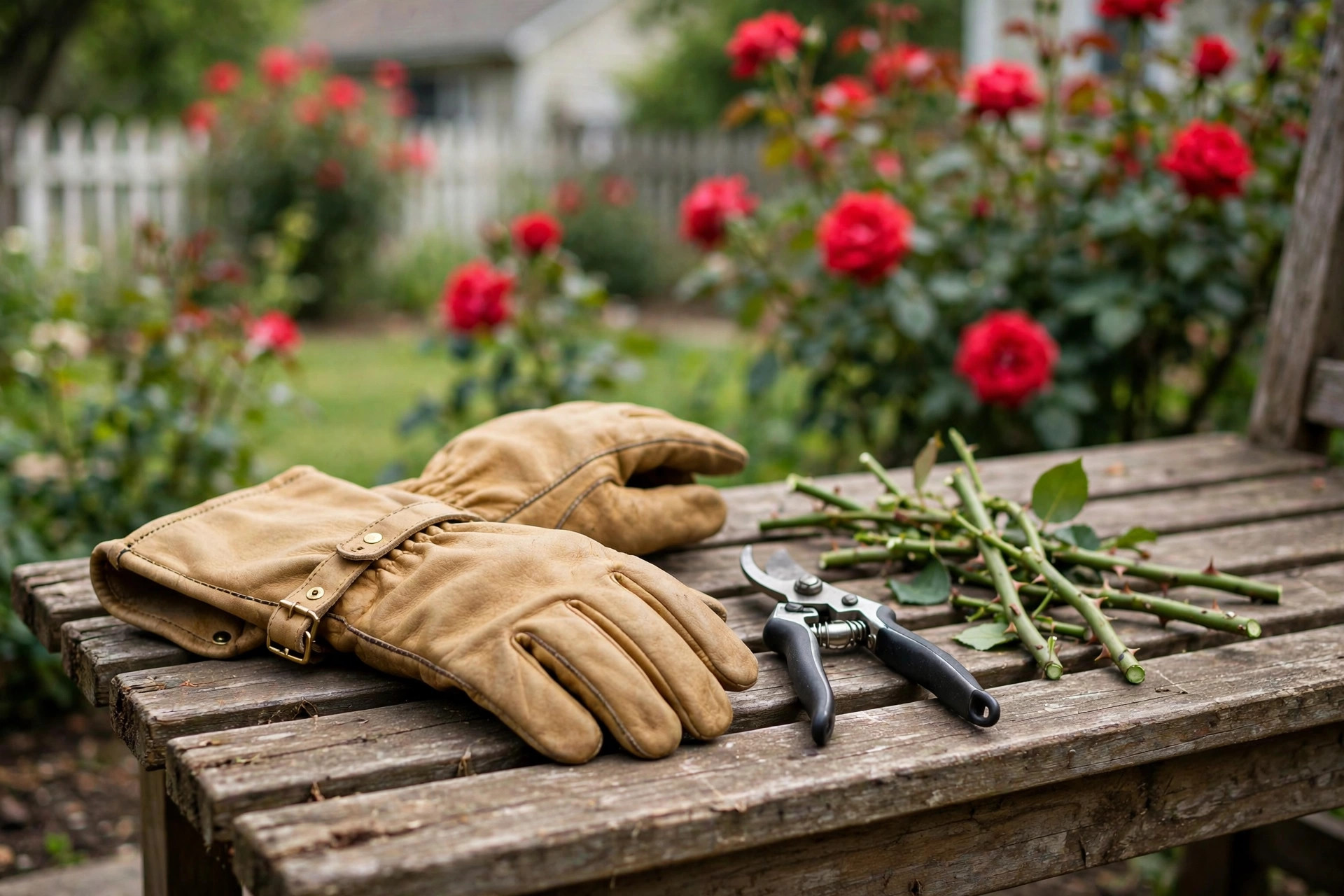
Start with the material. Leather is the top choice for rose work. Goatskin and pigskin are both popular. Goatskin is soft and flexible. It lets you move your fingers well. Pigskin is tougher and resists punctures. Cowhide is the strongest of all, but it can feel stiff at first. It softens with use. Many of the best garden gloves for handling roses use leather on the palm and fingers, with lighter fabric on the back of the hand.
Fit matters as much as material. A glove that is too loose will slip and bunch. You will lose your grip on small stems and tools. A glove that is too tight will tire your hands fast. Try gloves on if you can. Your fingers should reach the ends of the glove without extra space. You should be able to close your fist with ease. Look at the sizing charts on Fiskars or The Home Depot if you buy online.
Cuff length is key. Short gloves leave the wrist and forearm open. Thorns will find that gap when you reach into a bush. Gauntlet-style gloves with long cuffs cover the forearm up to the elbow. This is a must for pruning climbing roses and large shrubs. Elastic or drawstring closures at the top keep the cuffs from sliding down.
Reinforcement is another point to check. Look for double-stitched seams on the palm. Look for padded knuckles and reinforced fingertips. These spots take the most wear. Thorn-proof gloves often add extra layers of leather where the thorns hit first. Reviews on Consumer Reports and The Spruce often point out which models hold up best over a full season.
Water resistance helps too. Roses are often pruned and planted in damp weather. Wet leather gloves can stretch and lose shape. Some gloves have water-resistant coatings. Others dry well if you care for them right. For more on how gloves work with other hand tools, see our guide on how to prune tomato plants properly.
Types of Gloves for Rose Work
Leather gauntlet gloves
These are the gold standard for roses. They run from the fingertips to the elbow. The palms are thick leather. The forearms are covered with sturdy canvas or leather. They stop thorns along the whole arm. If you prune large bushes or climbing roses, start here.
Puncture-resistant work gloves
These look like normal work gloves but use extra layers. The palms may have synthetic armor under the leather. They are shorter than gauntlets. They work well for light pruning and deadheading. They give you more feel in your fingers than heavy gauntlets.
Synthetic thorn-proof gloves
Some brands now use synthetic fabrics that resist punctures. These gloves are often lighter than leather. They wash well and dry fast. They may not last as long as good leather. But they are a fine choice for gardeners who want low upkeep.
Nitrile-coated garden gloves
These are thin gloves with a rubber-like coating on the palm. They are great for weeding and planting. They are not enough for heavy rose pruning. Thorns can still push through the thin coating. Use them only for light tasks around roses, and switch to leather for real pruning. Guides at Gardener’s Supply and Corona Tools note the same rule: match the glove to the job.
Rose gloves with long cuffs versus short gloves
Long cuff gloves protect the whole arm. Short gloves protect the hand only. For roses, long cuffs win every time. Short gloves are fine for herbs and flowers without thorns. Keep a pair of each if you garden a lot.
Goatskin versus pigskin for rose gloves
Goatskin gloves are soft right out of the package. They let you feel small stems and buds. They cost a bit more. Pigskin gloves are stiffer at first but tougher. They resist punctures a little better. Both work well for roses. Pick goatskin if you want comfort and dexterity. Pick pigskin if you want maximum toughness for heavy pruning.
Cost and Price Ranges
Rose gloves come in a wide price range. Simple leather gauntlet gloves start around twelve to twenty dollars. These work well for casual gardeners. Mid-range gloves cost twenty to forty dollars. They use better leather and stronger stitching. They last longer and fit better.
Premium gloves cost forty to eighty dollars. They use top-grade goatskin or deerskin. They have padded palms and reinforced seams. Professional landscapers often choose these. They can last several seasons with care.
You do not need the most costly pair to be safe. A mid-range leather gauntlet is enough for most home rose gardens. Check prices at Lowe’s and Burpee before you buy. Prices shift with the season. Gloves often cost less in late fall when garden centers clear stock.
Think about cost per year, not just the price tag. A fifteen-dollar pair that wears out in one season costs more over time than a forty-dollar pair that lasts four seasons. Read long-term reviews when you can. They tell you which gloves hold their shape and which ones fall apart.
Care and Upkeep of Your Gloves
Leather gloves last much longer with simple care. After each use, shake off loose dirt. Let them air dry away from direct heat. Do not toss them in the washing machine. Do not dry them on a radiator. Heat makes leather crack and shrink.
If the gloves get muddy, wipe them with a damp cloth. Let them dry at room temperature. Once dry, rub in a small amount of leather conditioner or mink oil. This keeps the leather soft and stops it from drying out. Condition them once or twice a season.
Store gloves in a dry place. Hanging them by the cuffs lets air flow through. Do not leave them in a damp shed all winter. Moisture leads to mold and rot. If you garden in the rain, let wet gloves dry fully before you store them.
Check the stitching now and then. Loose threads at the seams are easy to fix with a needle and strong thread. Small repairs can add a full season to a pair of gloves. Tips from Bob Vila and Family Handyman cover these simple fixes in more detail.
Pair your glove care with good tool habits. Sharp pruners mean fewer crushed stems and less strain on your hands. A comfortable best watering can for indoor plants keeps your indoor roses happy too. And when rose season ends, a best garden kneeler seat combo reviews guide can help you find the right seat for bed work.
Safety Tips for Working with Roses
Even with good gloves, work with care. Cut stems at an angle with sharp pruners. Dull blades tear the wood and leave jagged edges. Jagged edges catch on gloves and skin.
Watch where your other hand rests. When you hold a stem with one hand and cut with the other, keep your holding hand behind the blade. Wear eye protection when you prune large bushes. A springy cane can whip back toward your face.
Clean small cuts right away. Wash the wound with soap and water. Cover it with a clean bandage. Watch for redness or swelling in the days after. These can be signs of infection. See a doctor if a wound does not heal or feels worse.
Keep a first aid kit in your garden shed or garage. It should have bandages, antiseptic, and tweezers. Tweezers help pull out broken thorn tips. Do not try to dig out a deep thorn with a dirty knife or pin.
Teach children to wear gloves around roses too. Kids love to help in the garden. A child-sized pair of leather gloves keeps little hands safe. Watch them closely around thorny plants.
Frequently Asked Questions
What are the best garden gloves for handling roses?
The best garden gloves for handling roses are leather gauntlet gloves with long cuffs. Goatskin and pigskin are the most popular leathers. Look for double-stitched seams, reinforced fingertips, and cuffs that reach the elbow. These features keep thorns away from your hands and arms.
Can thorns go through leather gloves?
Thorns can push through thin or worn leather. They rarely go through thick, quality leather. Pigskin and cowhide resist punctures well. If your gloves are old and thin, thorns will find weak spots. Replace gloves when the leather gets soft and papery.
Are long cuff gloves really needed for roses?
Yes. Short gloves leave the forearm open. Thorns scratch the wrist and forearm when you reach into a bush. Long cuff gloves, also called gauntlet gloves, cover the arm to the elbow. They are the standard for rose pruning.
How do I clean leather rose gloves?
Shake off dirt after each use. Wipe with a damp cloth when needed. Air dry away from heat. Rub in leather conditioner once or twice a season. Do not machine wash or machine dry leather gloves. Heat and agitation ruin the leather.
How long should rose gardening gloves last?
A good pair lasts two to four seasons with regular use and basic care. Cheap gloves may last one season. Premium leather gloves can last longer. Watch the seams and the fingertips. When thorns start getting through, it is time for a new pair.
Can I use regular work gloves for roses?
You can use them for light tasks like weeding around roses. They are not enough for pruning thorny canes. Regular work gloves are often too thin. They lack the long cuffs and reinforced palms that rose work needs. Get gloves made for thorns.
A Short Final Word
Roses reward the gardener who gives them care. The best garden gloves for handling roses make that care safe and easy. Choose leather, choose long cuffs, and choose a fit that lets you work. Care for the gloves and they will care for your hands for many seasons. Then get out in the garden and enjoy your roses without fear of the thorns.
References
Bob Vila. (n.d.). Home improvement advice. https://www.bobvila.com Burpee. (n.d.). Seeds, plants, and gardening supplies. https://www.burpee.com Consumer Reports. (n.d.). Product reviews and ratings. https://www.consumerreports.org Corona Tools. (n.d.). Garden and landscape tools. https://www.corona-tools.com Family Handyman. (n.d.). DIY home repair and maintenance. https://www.familyhandyman.com Fiskars. (n.d.). Garden and cutting tools. https://www.fiskars.com Gardener’s Supply Company. (n.d.). Gardening tools and supplies. https://www.gardeners.com Lowe’s. (n.d.). Home improvement products. https://www.lowes.com The Home Depot. (n.d.). Home improvement products. https://www.homedepot.com The Spruce. (n.d.). Home and garden advice. https://www.thespruce.com
Was this guide helpful?

About Robert Taylor
The My Garden US editorial team writes practical, in-depth home and garden guides for American homeowners — tested advice, no fluff.
You May Also Like

How to Make Compost Tea for Plants
August 7, 2026 0 views
Best Garden Knife for Harvesting Reviews: What Buyers Say and What Matters
July 27, 2026 0 views
Drip Irrigation for Fruit Trees Guide: How to Water Your Orchard the Right Way
July 25, 2026 0 views