
A garage can fill up fast when gardening season arrives. Rakes lean in the corner. Shovels slide to the floor. Hand tools vanish into dark boxes. Finding the best garden tool organizer for garage storage is the simple fix that turns this daily mess into order. With the right rack, tower, or cabinet, every tool has a home, and every tool is within reach.
This guide walks through everything a homeowner should know. It covers why an organizer matters, what to look for before buying, the main types on the market, real price ranges, care tips, and safety advice. It ends with answers to the questions buyers ask most often. The goal is plain and practical help, so the choice you make fits your garage, your tools, and your budget.
Why the Right Organizer Matters
Gardening tools are built to last. Steel heads, hardwood handles, and sharp edges can serve for years when they are treated well. Yet most garages treat them badly. Long-handled tools fall over and strike the car door. Damp blades rest on concrete and rust. Hand tools end up scattered across workbenches and floors.
An organizer stops this slow damage. It lifts tools off the floor and keeps blades dry. It holds handles upright so they do not bend or crack. It also saves time. A task that starts with a ten-minute search for the pruning shears is a task that feels like a chore. A tool rack that shows every tool at a glance makes the work begin on time.
Safety is the third reason. A rake that tips off a pile can strike a foot or a shin. A shovel leaning at the wrong angle can slip and hit a child. In a busy family garage, a solid garden tool organizer for small garage setups that hold tools firm against the wall lowers the risk of these accidents. Order is not only about looks. It is about keeping the workspace safe for everyone who walks through it.
There is also the value of the garage itself. A clean, organized garage feels larger than it is. It gives room for the car, the lawn mower, and the workbench at the same time. Homeowners who plan garden tool storage ideas for shed often find that the same ideas work in the garage, since both spaces need vertical storage, clear zones, and easy access.
What to Look for in the Best Garden Tool Organizer for Garage Use
Not every organizer suits every garage. Before spending money, check the details below. A few minutes of thought at this stage will save a return trip to the store.
Storage Capacity
Count your tools first. List the long-handled tools, such as rakes, shovels, hoes, and brooms. Then count the hand tools, such as trowels, shears, and weeders. Add boxes of seed packets, gloves, and twine. A good organizer should hold all of this with a little room left over for the tools you will buy next year. A rack that fits ten tools is the wrong choice for a gardener with fifteen.
Materials and Build Quality
Garage organizers come in steel, heavy plastic, wood, and coated wire. Steel frames carry the most weight and last the longest. Good plastic resists rust and costs less, but cheap plastic hooks can snap under a heavy shovel. Wood racks look warm and traditional, though they need paint or sealant to survive damp air. Look at the joints and fasteners. Screws and bolts hold better than glue or thin clips. Product guides at The Home Depot and Lowe’s show load ratings, and these numbers are worth comparing.
Mounting and Wall Space
Measure the wall before you shop. Most wall-mounted racks need a stretch of wall about four to five feet wide and a clear floor below for handles to hang. Check for wall studs, since heavy racks must be anchored into studs and not only into drywall. If the walls are full, a freestanding tower or rolling cart may be the better answer. Leave space near the garage door or the walkway to the yard so tools go in and out without crossing the whole room.
Adjustable Holders and Small Tool Storage
The best designs allow change. Sliding hooks and adjustable slots let the rack fit new tools as the collection grows. Many gardeners also want a small shelf or bin for hand tools, gloves, and plant ties. A rack that only holds long handles leaves the small items scattered. Look for units with a top shelf, side hooks, or a built-in basket. Reviews on Consumer Reports often note whether these extras hold up in daily use.
The Main Types to Choose From
The market offers several basic designs. Each has strengths, and the right one depends on your tools, your space, and how often you garden.
Wall-Mounted Racks
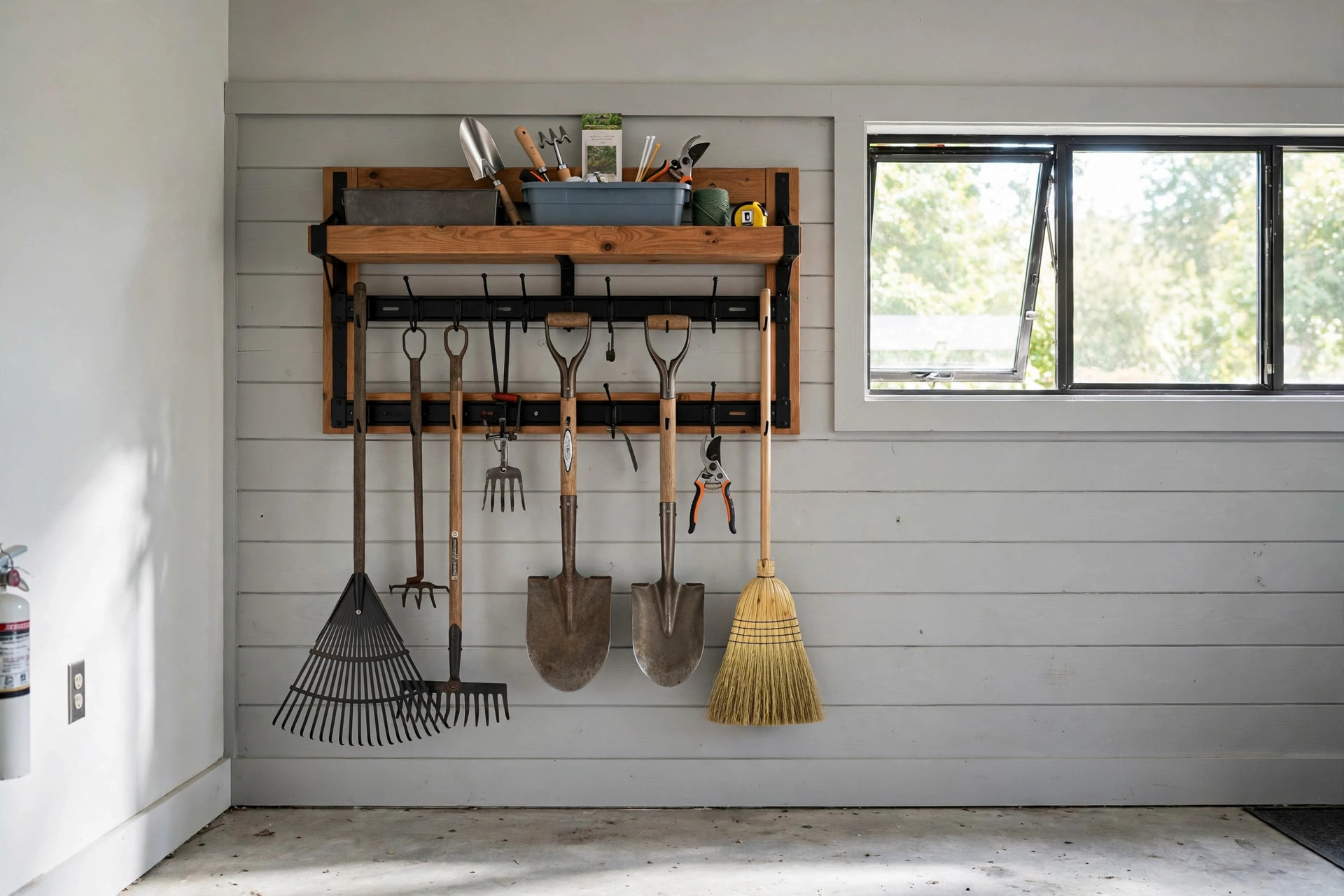
These are the most common choice. A steel or wood bar mounts to the wall, with hooks or spring clips that grip tool handles. They hold ten to fifteen long-handled tools in a small stretch of wall. They are cheap, simple to install, and keep the floor clear. The main limit is weight capacity, so check the rating before loading them with heavy digging bars or post-hole tools.
Freestanding Corner Towers
A corner tower is a tall unit with slots around its frame, often shaped to fit a corner. It holds long tools in an upright circle and small tools in a top tray. It needs no wall and no screws, which suits renters and crowded garages. The trade-off is floor space, since the base must be wide enough to stay stable when fully loaded.
Rolling Storage Carts
A cart on wheels carries hand tools, pots, soil bags, and sprayers. Gardeners who do a lot of work in one long session can roll everything to the yard in one trip. Carts also help gardeners with a best garden cart for heavy loads already in use, since the two can work side by side. The wheels should lock firmly so the cart does not roll on a sloped driveway.
Pegboard and Slatwall Panels
Pegboard and slatwall panels turn a whole wall into storage. Hooks of every shape hold hand tools, coiled hoses, gloves, and spray bottles. These panels suit gardeners who own many small tools and want each one visible. They take more work to install than a simple rack, and the hooks can loosen over time, so check them each season.
Tool Cabinets and Chests
A cabinet with doors keeps tools out of sight and out of dust. It protects sharp edges from children and pets. Cabinets cost more than racks, and they take up real floor space, but for a finished garage they are the neatest option. Some cabinets include a worktop, which doubles as a potting bench in spring.
Cost and Price
Prices vary with size, material, and brand. Simple wall-mounted racks start near fifteen dollars. Well-built steel racks with adjustable hooks run from thirty to sixty dollars. Freestanding towers and large racks with shelves often cost sixty to one hundred twenty dollars. Rolling carts range from eighty to two hundred dollars depending on size and wheels. Cabinets are the priciest choice, from one hundred fifty to four hundred dollars or more.
There is no need to buy the most expensive unit. A mid-priced steel rack will serve most homeowners for many years. What matters is honest capacity and strong mounting. Watch for seasonal sales in spring, when garden goods are marked down. Shoppers who compare prices across Gardener’s Supply Company and Burpee often find package deals that include hooks and bins at a lower total cost.
When judging value, think in years, not months. A twenty-dollar rack that breaks in one season costs more than a fifty-dollar rack that lasts ten years. Check the warranty. A company that backs its product for several years has confidence in its build.
Care and Upkeep
An organizer needs little care, but a few habits will keep it strong for a long time.
Clean the rack twice a year. Dust and soil hold moisture, and moisture breeds rust. Wipe steel racks with a damp cloth and dry them fully. Wash plastic parts with soap and water. Check wooden racks for soft spots or cracks, and reseal them with paint or outdoor sealant when the finish wears thin.
Tighten all screws and bolts each spring. Vibration from the garage door and daily use can loosen fasteners over time. A rack that wobbles is a rack that may fail. Replace any broken hooks right away rather than overloading the ones that remain.
Keep blades clean and oiled. A rack does its job by holding tools, but the tools still need care. Wipe soil from shovel heads, oil pruner blades lightly, and hang tools with handles down so water runs away from the heads. Guidance on tool upkeep from Corona Tools and Fiskars explains simple sharpening and oiling routines that extend tool life.
Store the organizer away from direct water. If the garage roof leaks or the floor floods, move tools and racks to dry ground until the problem is fixed. Even galvanized steel will rust in standing water over time.
Safety Around Stored Tools
A garage is a shared space, and sharp tools demand respect. Hang heavy or sharp tools with the cutting edges facing the wall or pointing down. Never leave a loaded rack where a child can pull it down. Anchor tall freestanding units to the wall with a strap so they cannot tip forward.
Keep chemical products apart from tools. Fertilizers, pesticides, and fuel for power tools should sit on a separate shelf, in closed containers, out of reach of children and pets. Mark sharp tools with a wrap of bright tape so they are easy to see in dim light.
Good lighting matters. A dark garage corner invites accidents. A simple shop light over the tool wall makes every handle and blade visible. Advice on safe storage layouts from The Spruce and Bob Vila shows how a little planning keeps the whole space safer.
Frequently Asked Questions
How many tools can a wall-mounted garden tool rack hold? Most wall-mounted racks hold ten to fifteen long-handled tools. Some wide models hold up to twenty. Count your tools before buying, and leave two or three empty slots for future purchases.
What is the best garden tool organizer for garage walls made of drywall? For drywall alone, choose a light rack and anchor every screw into a wall stud. If studs are hard to find, use a freestanding tower instead. A heavy rack hung only on drywall anchors can pull loose.
Should I choose metal or plastic for a garage tool organizer? Metal suits heavy tools and long life. Plastic suits damp garages and lighter budgets. Either works well if the load rating fits your tools. Read the weight limit on the box before you buy.
Can one organizer hold both garden tools and workshop tools? Yes, many racks mix both. Use the main slots for long garden handles and side hooks for hammers, levels, and saws. Keep garden hand tools in a separate bin so soil does not dirty the workshop tools. Gardeners with a full tool kit may also review their best garden kneeler with handles reviews for comfort gear that stores on the same wall.
How do I stop my garden tools from rusting in the garage? Keep them off the concrete floor, dry them after use, and oil metal parts twice a year. A rack that holds tools upright lets air reach every surface, which slows rust. A dehumidifier helps in damp regions.
Is a rolling cart better than a wall rack? Neither is better in every case. A wall rack wins on floor space and price. A cart wins on portability for big yard jobs. Many gardeners use both, with the rack for daily storage and the cart for workdays.
A Short Final Word
Choosing the best garden tool organizer for garage storage comes down to three things: count your tools, measure your space, and buy for strength. A mid-priced steel rack or tower, mounted well and kept clean, will serve a busy gardener for a decade or more. The reward is a garage where every rake, shovel, and trowel waits in its place, ready for the next fine day of work in the yard.
References
Bob Vila. (n.d.). Home improvement advice. https://www.bobvila.com Burpee. (n.d.). Seeds, plants, and gardening supplies. https://www.burpee.com Consumer Reports. (n.d.). Product reviews and ratings. https://www.consumerreports.org Corona Tools. (n.d.). Garden and landscape tools. https://www.corona-tools.com Family Handyman. (n.d.). DIY home repair and maintenance. https://www.familyhandyman.com Fiskars. (n.d.). Garden and cutting tools. https://www.fiskars.com Gardener’s Supply Company. (n.d.). Gardening tools and supplies. https://www.gardeners.com Lowe’s. (n.d.). Home improvement products. https://www.lowes.com The Home Depot. (n.d.). Home improvement products. https://www.homedepot.com The Spruce. (n.d.). Home and garden advice. https://www.thespruce.com
Was this guide helpful?

About Sarah Mitchell
The My Garden US editorial team writes practical, in-depth home and garden guides for American homeowners — tested advice, no fluff.
You May Also Like

Best Garden Gloves for Men Large: How to Find a Pair That Fits
July 26, 2026 0 views
Raised Garden Bed on Legs Reviews: What Real Gardeners Say
January 20, 2026 0 views
Best Garden Gloves for Pruning Thorns
September 4, 2026 0 views