
Gardeners have long fed their soil with compost. But in recent years a new tool has caught on: the compost tea brewer. It takes finished compost and steeps it in water with steady air. The result is a dark liquid full of the small living things that help plants grow. These compost tea brewer for garden reviews will walk you through what a brewer does, how to pick one, what it costs, and how to keep it in good shape. You will also learn what to expect from the first brew and how to avoid common mistakes.
Why a Compost Tea Brewer Matters
Good soil is alive. It holds tiny creatures and threads of fungus that feed roots. When you brew compost tea, you wash those helpful living things out of the compost and into water. Then you pour the water on your garden beds. The idea is simple. You give the soil a drink of life.
Gardeners like compost tea for several reasons. First, it spreads the benefit of compost over a wide area. One pound of compost can treat a whole bed once it is brewed into tea. Second, the tea reaches leaves and stems when used as a foliar spray. Many gardeners spray it on the leaves in the morning to coat them with friendly microbes. Third, it fits well with raised beds and container gardens, where soil life can run low. If you have read our raised garden bed soil mix recipe, you know that soil mixes often start with little life. Compost tea can wake them up.
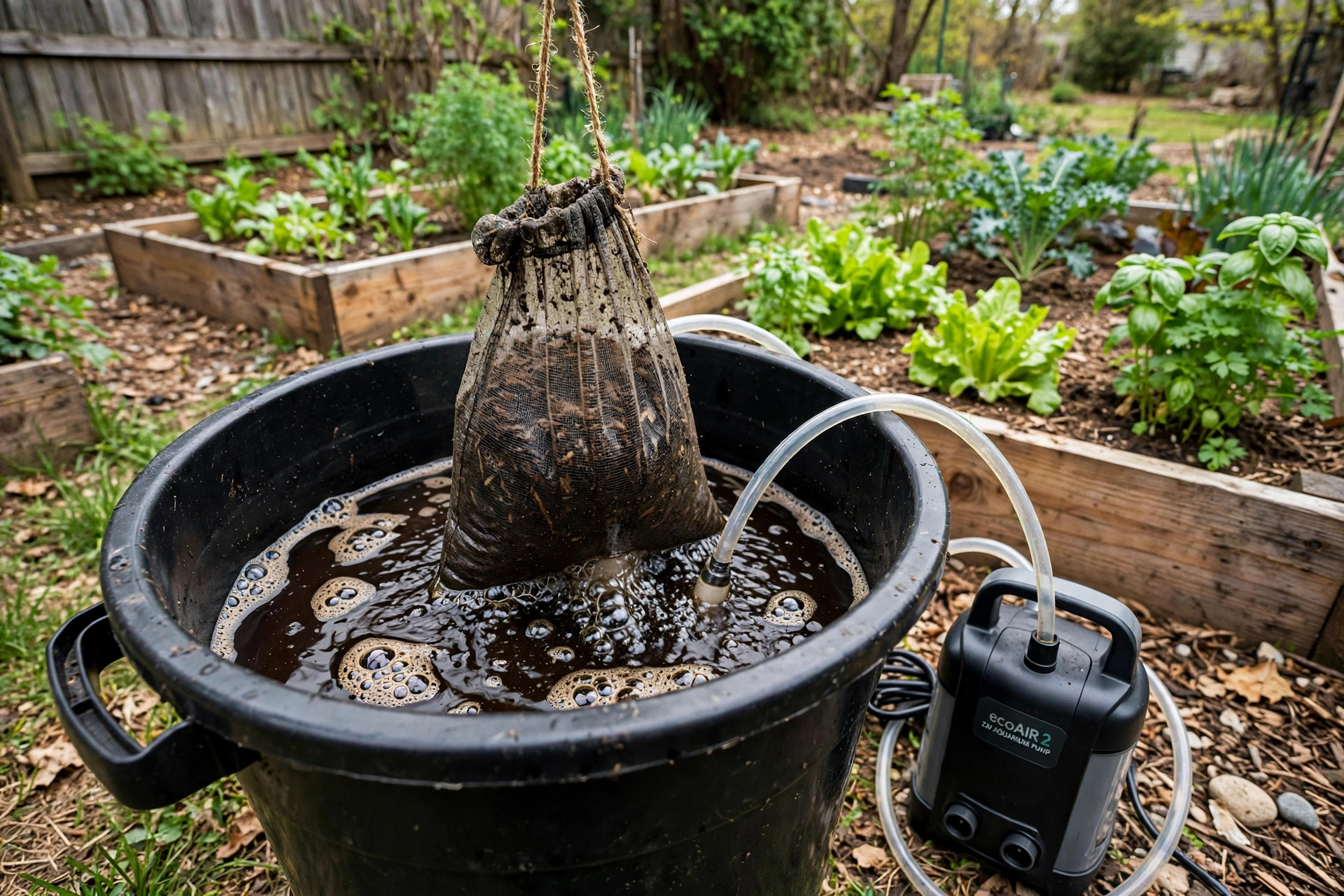
A brewer does the work of the old bucket method with less guesswork. In the old days, gardeners dropped a sack of compost in a barrel and stirred it by hand. Some batches worked. Some went sour. A brewer adds steady air through a pump and a mesh bag. The air keeps the mix fresh and alive during the whole brew. Reviewers often say the brewer takes the doubt out of the process.
What to Look for When You Choose a Brewer: Compost Tea Brewer for Garden Reviews
Air Pump Strength
The pump is the heart of the brewer. Look for one that moves a good volume of air for the size of the bucket. A weak pump gives weak tea. Reviews often praise pumps that run quiet, since the brewer may run all night. Check that the pump has a rating for the tank size you plan to use. Consumer Reports test data is a useful guide when you compare pump ratings across brands.
The Mesh Bag
The mesh bag holds the compost during the brew. A fine mesh keeps grit out of the tea. A bag that is easy to tie, hang, and wash will save you trouble. Some kits include extra bags. That is a plus, because a torn bag ruins a batch.
Bucket or Tank
Most home brewers use a five-gallon bucket. That size suits a small or mid-size garden. Larger kits come with bigger tanks for big plots. Pick a size that matches your watering needs. A five-gallon batch treats roughly a quarter acre of beds when diluted.
Ease of Cleaning
Compost tea leaves a film on every surface. A brewer with smooth walls and few corners is easier to clean. Ask in reviews whether the pump parts and stones come apart for scrubbing. Clean gear makes better tea next time. Scrubbing tips from Family Handyman can help you keep the pump parts and stones in top shape.
Clear Directions
A good kit ships with a recipe card or guide. It should state the brew time, the water temperature range, and the amount of compost to use. Vague directions are a warning sign. The best brands give a full walkthrough for first-time brewers.
Types of Compost Tea Brewers
Basic Bucket Kits
These are the most common. They include a bucket, a mesh bag, an air pump, tubing, and an air stone or diffuser. You supply the compost, the water, and sometimes a food source like unsulphured molasses. These kits cost the least and fit most home gardens. They are a good place to start. Most garden supply stores, such as Lowe’s, stock these kits in the garden aisle each spring.
Commercial Brewers
Some shops sell larger brewers that hold twenty gallons or more. They use strong pumps and long diffuser tubes. These suit market gardeners and landscapers. They cost much more, but they save time when you brew often.
DIY Builds
Many gardeners build their own brewer from a bucket and a pond pump. This path costs the least if you own the parts. It needs some care to get the air flow right. The reviews in this field often compare store kits with home builds. The Home Depot sells pond pumps and fittings that many DIY builders use. A home build can work well if the air reaches every corner of the bucket.
Cone-Bottom Tanks
A few brewers use a tank shaped like a cone at the bottom. The shape keeps the mix moving and stops dead spots. These are less common for home use, but reviewers who own them praise the even brew.
Compost Tea Brewer for Garden Reviews: What Users Say
When you read through compost tea brewer for garden reviews, the same themes come up again and again. Happy users talk about thicker growth and fewer leaf problems after a season of tea. They like that the kit runs on its own once the brew starts. They also like that one bucket treats many beds.
Critical reviews point to real issues. The most common complaint is a burnt-out pump after a season or two. Cheap kits cut corners on the pump. Advice columns at Bob Vila remind buyers that a strong, quiet pump matters more than fancy extras. Another complaint is foul smell. A bad smell means the brew turned anaerobic, usually from too little air or too long a brew. Good reviews stress that clean gear and the right brew time prevent this.
Several reviewers test tea quality with a microscope or a simple smell test. They note that the best tea smells earthy, like a forest floor after rain. If it smells like rotten eggs, they dump it on the compost pile and start over. This honest testing helps new buyers set fair expectations. No brewer makes tea that replaces good compost. The tea spreads the good life that is already in your compost.
Price also shapes reviews. Budget kits draw praise for value when the pump holds up. Premium kits earn high marks for strong pumps and sturdy tanks. Most reviewers agree that mid-range kits hit the sweet spot for home gardens. They cost less than a full day of garden work and last several seasons with care.
How to Brew Your First Batch
Start with clean water. Let tap water sit for a day so the chlorine escapes, or use rainwater. Fill the bucket. Hang the mesh bag and fill it with good, finished compost. A good compost should smell earthy and crumbly. The Spruce offers clear guides on how to tell finished compost from compost that needs more time. If you also keep a kitchen scrap bin, our compost bin for kitchen scraps reviews can help you make the base compost that feeds your tea.
Drop in the air stone and start the pump. The water should roll and bubble from the start. Many recipes add a spoon of unsulphured molasses to feed the microbes. Brew for twenty-four to thirty-six hours. The room should be warm, not hot. In cool weather the brew takes longer.
When the brew is done, use it right away. Strain it through a coarse cloth if your sprayer clogs. Dilute it with water if you like, or use it full strength on soil. Spray leaves in the early morning so the leaves dry by noon. Water the soil around roots at any time of day. Clean the whole kit the same day. Do not let used tea sit in the bucket overnight. Keeping your garden hand tools sharp and clean, like the Fiskars shears many gardeners use, follows the same simple habit of care.
Cost and Price Range
A basic five-gallon kit costs about forty to ninety dollars. It includes the bucket, bag, pump, and tubing. You will need to buy compost or make your own. A bag of food-grade molasses costs a few dollars and lasts many batches.
Mid-range kits run ninety to two hundred dollars. They often include a stronger pump, a better diffuser, and a sturdy tank. Reviews say these last longer and brew more even tea.
Large or commercial brewers start near three hundred dollars and rise past one thousand. These are for farms and nurseries, not home gardens.
Over a season, the cost per batch is low. Water, a scoop of compost, and a little power for the pump are the main costs. If you make your own compost from leaves and scraps, our how to make leaf mold compost guide shows one cheap way to feed the brewer.
Care and Upkeep
Clean the brewer after every batch. Rinse the bucket, bag, tubing, and stones with plain water. Scrub off any slime. Let everything dry in the sun. Store the pump in a dry place.
Check the air stone often. It clogs with use. Soak it in a mild vinegar rinse now and then. Replace it when the bubbles grow weak.
Inspect the tubing for cracks each season. Replace worn tubing before it leaks air. Keep a spare mesh bag on hand. Corona Tools and Gardener’s Supply are two places where gardeners shop for replacement garden gear.
Store the kit out of freezing cold in winter. Pumps and plastic last longer in a shed or garage. A little care adds years to a brewer.
Safety Notes
Compost tea is safe for most gardens, but use common sense. Do not drink it. Keep it away from food crops that you eat raw within a few days of harvest unless you know your compost was clean and hot-composted. Wash your hands after handling tea and compost.
Wear gloves when you handle compost. Keep the brewer away from wells and ponds so runoff does not reach water. Dump bad-smelling batches on the compost pile, not on the garden. If you use a sprayer, clean it well after so old tea does not clog the nozzle.
Young children and pets should stay clear of the brewing bucket. The pump cord should be plugged into a dry, sheltered outlet. Never run the pump where cords can sit in standing water.
Frequently Asked Questions
How long does compost tea stay good?
Use it within four to six hours of finishing the brew. The helpful life in the tea fades fast without air. Brew only what you can use right away.
Can I use tap water for compost tea?
Yes, but let it sit for a day first so the chlorine fades. Chlorine can harm the microbes you want to grow. Rainwater or well water also works well.
What compost works best in a brewer?
Use finished, earthy-smelling compost from a hot pile. Bagged compost from a trusted brand can work too. Burpee is one well-known source gardeners turn to for compost and soil products. Avoid slimy or sour compost. The tea can only be as good as the compost that starts it.
Why does my tea smell bad?
A rotten smell means the brew went without enough air. Check the pump and stone. Shorten the brew time. Clean the kit well. Dump bad batches on the compost pile and try again.
Do I need molasses?
Many recipes use a small amount of unsulphured molasses to feed microbes. It is common, but not required. Some brewers skip it and still get good tea from rich compost.
How often should I apply compost tea?
Most gardeners apply it every two to four weeks during the growing season. More is not always better. Watch your plants. If growth looks strong, keep your current plan.
A Short Final Word
A compost tea brewer is a simple tool with a clear job. It gives your garden a living drink made from your own compost. The compost tea brewer for garden reviews agree on the main points: pick a kit with a strong pump, keep it clean, brew only what you will use, and trust your nose. Do these things, and the brewer will earn its place in your shed for many seasons.
References
Bob Vila. (n.d.). Home improvement advice. https://www.bobvila.com Burpee. (n.d.). Seeds, plants, and gardening supplies. https://www.burpee.com Consumer Reports. (n.d.). Product reviews and ratings. https://www.consumerreports.org Corona Tools. (n.d.). Garden and landscape tools. https://www.corona-tools.com Family Handyman. (n.d.). DIY home repair and maintenance. https://www.familyhandyman.com Fiskars. (n.d.). Garden and cutting tools. https://www.fiskars.com Gardener’s Supply Company. (n.d.). Gardening tools and supplies. https://www.gardeners.com Lowe’s. (n.d.). Home improvement products. https://www.lowes.com The Home Depot. (n.d.). Home improvement products. https://www.homedepot.com The Spruce. (n.d.). Home and garden advice. https://www.thespruce.com
Was this guide helpful?

About Sarah Mitchell
The My Garden US editorial team writes practical, in-depth home and garden guides for American homeowners — tested advice, no fluff.
You May Also Like

The Best Garden Gloves for Arthritis Sufferers: A Gentle Guide
September 6, 2026 0 views
Best Garden Caddy for Carrying Tools: A Practical Guide
July 3, 2026 0 views
How to Grow Mint Without Spreading: A Complete Guide
September 16, 2026 0 views