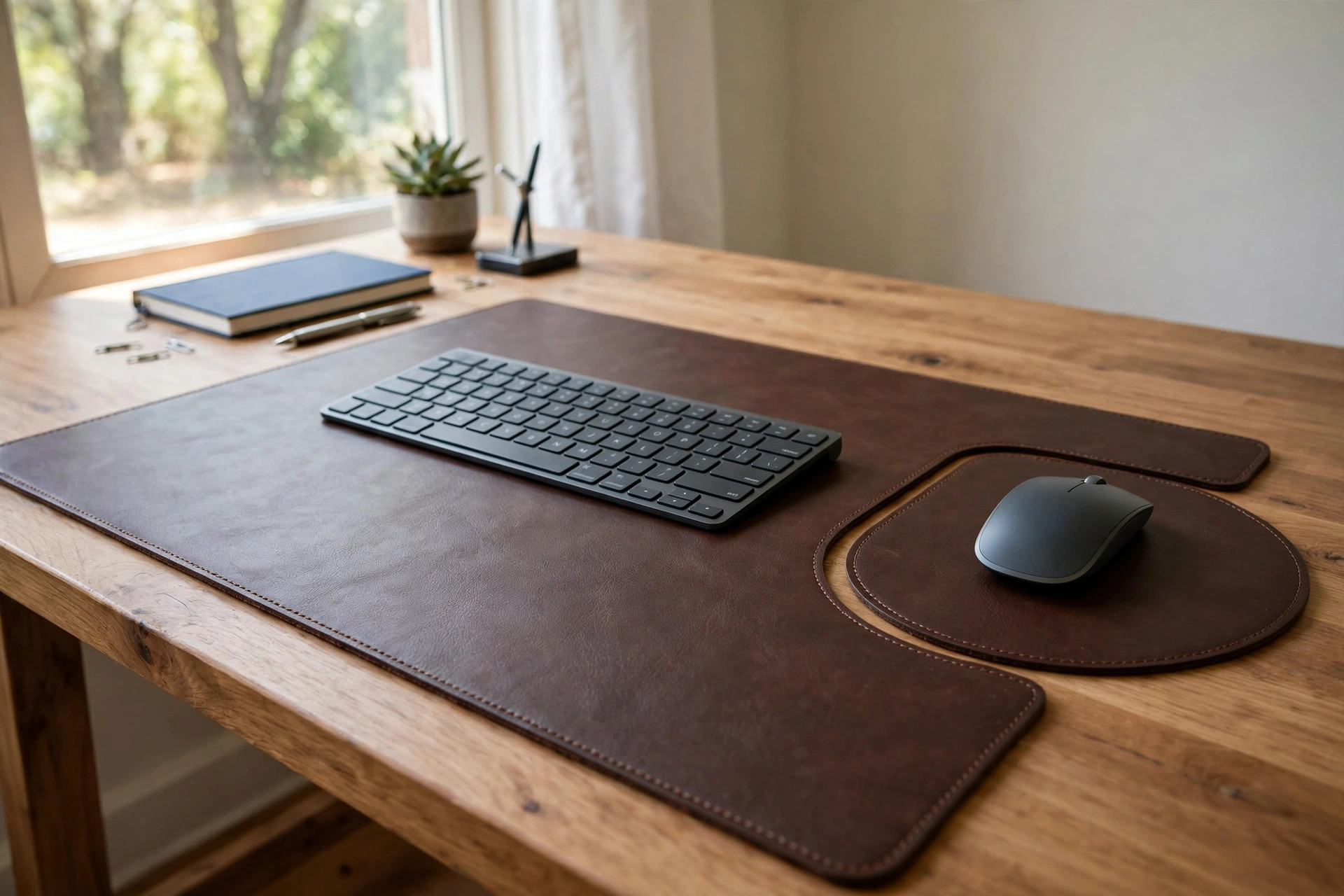

Many people now work from home. A home office desk pad with mouse pad combo is one of the simplest ways to improve a home desk. It is a large flat mat that sits on the desk. It covers the work area and gives the mouse a smooth surface. The keyboard often rests on it too.
A home office desk pad with mouse pad combo may sound like a small thing. In daily use it makes a real difference. It protects the desk from scratches and stains. It stops the mouse from skipping. It also makes the desk look neat and finished. This guide explains what to look for, what kinds are sold, what they cost, and how to keep them clean.
Why a Desk Pad With a Mouse Pad Combo Matters
A desk takes more wear than most people expect. Coffee rings form. Pen marks appear. A mouse can leave small scratches on a wooden or laminate top. Over months and years, the desk starts to look old before its time. A desk pad covers the work area and takes this wear instead of the desk.
A home office desk pad with mouse pad combo also improves comfort. The surface is even and smooth. The mouse moves without sticking. The wrists rest on a soft layer instead of a hard desk edge. People who work long hours on a computer often notice less strain in their hands and wrists.
The combo design saves space. A separate mouse pad can slide around or eat up room. In a combo pad, the mouse area is part of one large mat. The keyboard and the mouse sit on the same surface. Everything stays in place. The desk looks tidy. For a small home desk, this can free up useful space on each side.
A desk pad can also reduce noise. A keyboard taps less loudly on a padded mat than on bare wood. The mouse clicks sound softer too. In a home where others are nearby, this small change can matter.
Retailers that sell office furniture and supplies, such as Wayfair, Target, Staples, and Office Depot, carry many desk pads. Their listings show how wide the choice has become.
What to Look for When You Choose: Home Office Desk Pad with Mouse Pad Combo
Size
Measure the desk before you buy. A desk pad should fit the work area without hanging off the edge. Common sizes are about 24 by 14 inches and about 31 by 15 inches. Larger pads cover the space under the keyboard and the mouse with room left for notes. If the desk is small, a mid-size pad works better than one that curls over the edge.
Material
Most pads are made from one of four materials. Polyurethane leather is the most common. It looks like leather, wipes clean, and resists water. Felt and wool pads feel soft and warm. They give a classic look but stain more easily. Cork pads are light and natural. They grip the desk well but can wear faster. Rubber-backed fabric pads are thin and very cheap. They work, but they do not last as long.
Thickness
Thickness usually runs from 1.5 to 3 millimeters. Thicker pads feel softer under the wrists. They also lie flatter and move less. Very thin pads can curl at the edges. A thickness of 2 millimeters is a good middle choice for most desks.
Mouse Tracking Surface
Not every smooth surface works well with a mouse. Optical and laser mice need a surface with a light texture. Most combo pads are tested for mouse use, but very shiny or glossy pads can cause the cursor to jump. A matte finish is the safest choice.
Base and Grip
The bottom of the pad should keep it from sliding. Rubber bases grip well on wood and laminate. Suede or leather bottoms are common on nicer pads. They hold position through normal use. If the pad slides when you move the mouse fast, the base material is probably wrong for the desk.
Product reviewers such as Wirecutter and PCMag test desk pads for mouse tracking and build quality. Their guides can help narrow the choice.
Types and Options
Full-Desk Cover Pads
These are the largest pads. They can cover most of the desk top. A keyboard, mouse, notebook, and phone all fit on one surface. They suit people who like a uniform look. They also protect the whole desk. The trade-off is size. They may be too big for a small desk or for a desk with drawers that need clearance.
Standard Combo Pads
The standard size covers the keyboard and mouse area only. It leaves the rest of the desk free. This is the most popular type. It suits most home desks. It is easy to move and store. Many come in common sizes that fit under a full-size keyboard.
Dual-Sided Pads
Some pads have two usable sides. One side is smooth for the mouse. The other side has a different color or texture. These pads offer variety without a second purchase. The design is simple and practical.
Heated or Smart Pads
A few newer pads add extras, such as built-in heating or wireless charging. These are still rare and cost more. For most buyers, a plain pad is the better buy. The extras can fail over time, while a simple pad lasts for years.
Leather Blotter Pads
Traditional leather desk blotters are the high end of this market. They are thick, heavy, and handsome. They cost more, but they can last a decade with care. They suit wood desks and classic home offices.
Furniture makers and office brands, including Herman Miller, UPLIFT Desk, and IKEA, offer desk accessories that pair well with a desk pad.
Cost and Price
A home office desk pad with mouse pad combo is one of the cheaper desk upgrades. Basic fabric or rubber pads sell for about 10 to 20 dollars. Mid-range polyurethane leather pads sell for about 20 to 40 dollars. These are the best value for most buyers. They look good and last for years.
Leather and premium pads sell for 40 to 100 dollars or more. The price reflects the material and the finish. A real leather pad can cost well over 100 dollars. For most home offices, the mid-range pad gives the same daily benefit at a lower price.
Price lists on sites like Wayfair, Target, and Staples show the full range. Shoppers can compare sizes and materials side by side.
When you judge value, think in years. A 25 dollar pad that lasts three years costs less than 10 dollars a year. That is cheap for an item used every workday.
Care and Upkeep
Desk pads need little care. Wipe the surface with a damp cloth once a week. This removes dust and oils from the hands. For polyurethane leather, a mild soap and water mix works well. Dry the pad fully before use.
Do not soak the pad. Water can seep into felt or leather and leave marks. Keep hot cups off the pad or use a coaster. Heat can leave a ring on some materials. Keep the pad out of direct sun when possible. Sunlight can fade colors over time.
If the pad curls at the edges, lay it flat under a book for a day or two. This usually fixes the curl. Store a spare pad rolled, not folded. Folds can leave creases that do not come out. A rolled pad keeps its shape and is ready to use at any time.
Home care guides on The Spruce cover how to clean common desk pad materials without damage.
Safety
Desk pads are simple items, but a few safety points are worth noting. A pad that slides can be a problem. If the pad moves under the hands, typing accuracy suffers. A pad that bunches up near the desk edge can push items off the desk. Choose a pad with a grippy base and check it now and then.
Some cheap pads have a strong chemical smell when new. Air the pad out for a day before long use. If the smell stays strong after a week, return it. Choose pads from known brands to avoid this problem.
Keep cables under control. A desk pad can cover cables, which is neat, but cables under the pad can lift it. Run cables through a tray or behind the desk instead.
Also, check that the pad does not cover air vents on a laptop or dock. Blocked vents can make a machine run hot. Leave space for air flow.
Pairing the Pad With the Rest of the Desk
A desk pad works best as part of a good setup. Pair it with a chair that supports the back. See our guide to the best home office chair for bad posture correction for tips on seating. When the whole desk area is organized, work feels easier.
Small extras can help too. A best desk accessories set for new home office often includes items that sit well on a desk pad, such as a pen holder and a phone stand. Under the desk, a home office desk chair mat for carpet protects the floor from the chair wheels.
Frequently Asked Questions
Will a combo pad work with any mouse?
Most modern optical and laser mice work well on combo pads. Matte surfaces give the best tracking. Very glossy pads can cause problems. If the cursor jumps, try a different mouse setting or a matte pad.
Can I put a desk pad on a glass desk?
Yes. Most pads grip glass fine with a rubber or suede base. Test the pad before long use. If it slides on glass, a thin non-slip liner underneath can help.
How long does a desk pad last?
A mid-range pad usually lasts two to four years of daily use. Leather pads can last much longer with care. Cheap fabric pads may wear in a year. Wipe the pad weekly and it will last longer.
Is a desk pad worth it for a laptop-only setup?
Yes, if you use an external mouse. The pad gives the mouse a smooth surface and protects the desk. If you only use the trackpad, a smaller pad or a simple mat may be enough.
How do I clean a leather desk pad?
Wipe it with a soft damp cloth. Use mild soap if needed. Dry it at once. Do not use harsh cleaners. A leather conditioner once a year keeps the surface from drying out.
What size should I buy for a dual-monitor setup?
Measure the space the monitors, keyboard, and mouse occupy. A large pad of about 35 by 17 inches often works. The pad should sit under the keyboard and mouse at least. The monitor stands can sit on the desk itself.
A Final Word
A home office desk pad with mouse pad combo is a small purchase with a large daily effect. It protects the desk. It gives the mouse a smooth track. It softens the work surface. It makes the desk look neat.
Choose the right size first. Pick a material that fits your habits. Look for a grippy base and a matte mouse surface. Spend a little more for a pad that will last years. Keep it clean with a weekly wipe. With these simple steps, a desk pad can serve a home office well for a long time.
For more ideas on building a comfortable home workspace, guides from Wirecutter, PCMag, The Spruce, and IKEA cover desks, chairs, and accessories in plain detail.
References
Herman Miller. (n.d.). Office furniture and ergonomic seating. https://www.hermanmiller.com IKEA. (n.d.). Home furnishings. https://www.ikea.com Office Depot. (n.d.). Office supplies and furniture. https://www.officedepot.com PCMag. (n.d.). Technology product reviews. https://www.pcmag.com Staples. (n.d.). Office supplies and furniture. https://www.staples.com Target. (n.d.). Retail store. https://www.target.com The Spruce. (n.d.). Home and garden advice. https://www.thespruce.com UPLIFT Desk. (n.d.). Standing desks and ergonomic office furniture. https://www.uplift-desk.com Wayfair. (n.d.). Furniture and home goods. https://www.wayfair.com Wirecutter. (n.d.). Product reviews from The New York Times. https://www.nytimes.com/wirecutter
Was this guide helpful?

About Lisa Anderson
The My Garden US editorial team writes practical, in-depth home and garden guides for American homeowners — tested advice, no fluff.
You May Also Like

Home Office Desk Grommet for Cable Pass Through: A Simple Guide
January 25, 2026 0 views
Small Rolling Desk for Laptop in Living Room: A Practical Buying Guide
January 7, 2026 0 views
Quiet Paper Shredder for Home Office Apartment: A Buyer’s Guide
September 8, 2026 0 views