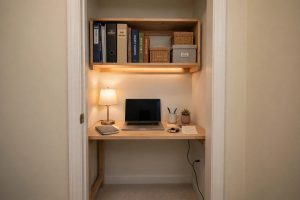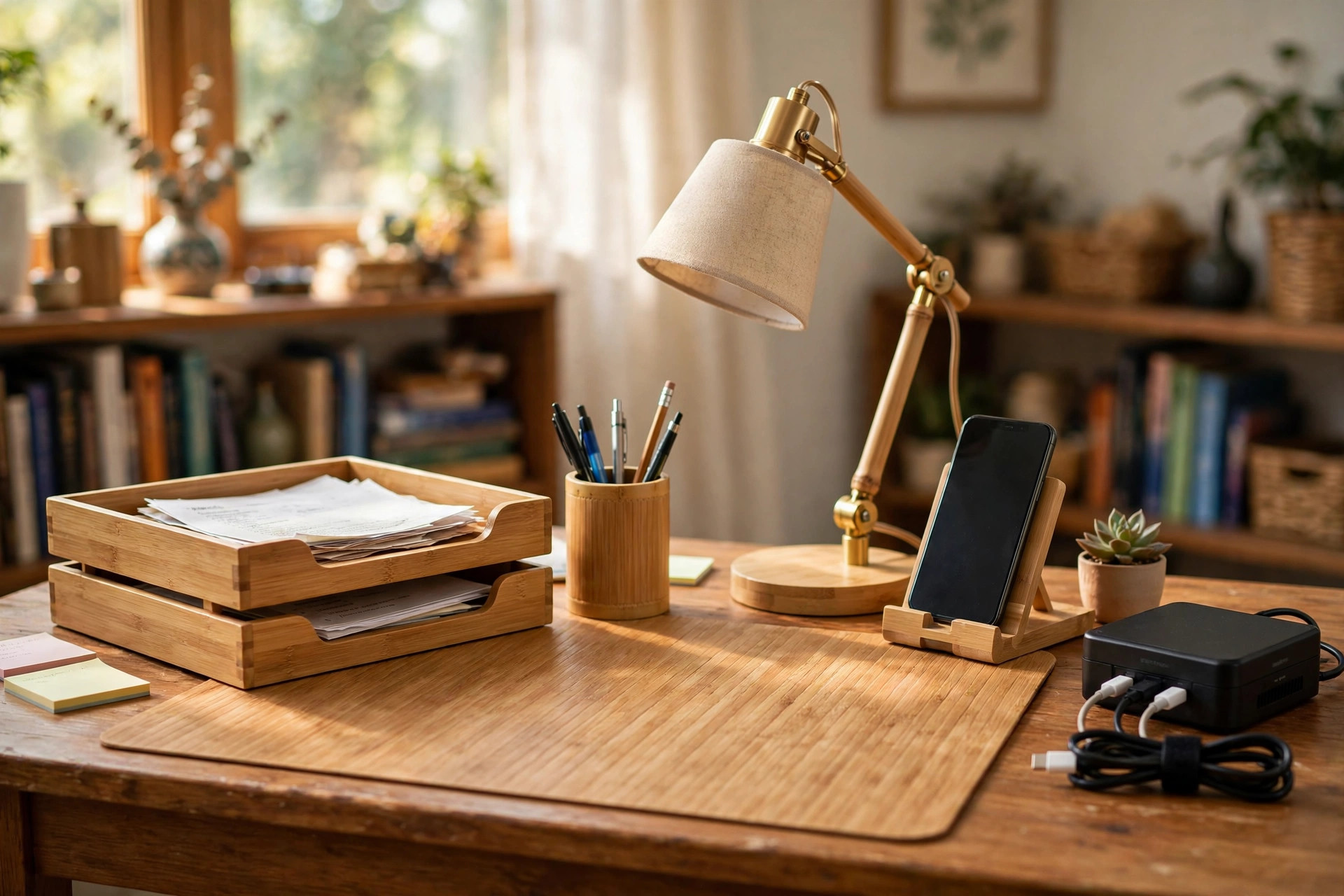

A new home office is a blank page. The desk stands ready. But the small things make the space work. The best desk accessories set for new home office needs covers pens, paper, light, cables, and time. Without them, papers pile up. Cords tangle. Keys and phones go missing. With them, the day runs smooth.
A desk accessories set is a matched group of items that sit on and around your desk. A tray holds papers. A cup holds pens. A mat protects the desk top. A lamp lights the work. A clock or planner keeps time. Some sets add a cable box or a phone stand. The point is simple. Every tool has a place.
This guide explains why a set matters, what to look for, what kinds exist, what they cost, how to care for them, and how to use them safely. It closes with answers to common questions.
Why a Desk Accessories Set Matters
A home office is not an office building. No supply room stands down the hall. The home worker must keep order alone. A good set makes that easy.
First, a set saves time. Studies of office work show that workers spend minutes each day hunting for small items. A pen tray, a phone stand, and a paper sorter cut that search to zero. When each item lives in one spot, the hand finds it without thought.
Second, a set protects the desk. Hot coffee rings stain wood. Pen tips scratch veneer. A desk mat or pad stops most of that damage. A coaster adds more defense. Your desk cost real money. A small set of guards keeps it looking new for years.
Third, a set calms the mind. A messy desk fills the eye with noise. The brain reads each loose paper as an unfinished task. Trays and boxes hide the clutter. The surface stays clean. A clean surface tells the mind that the work is under control. On video calls, a tidy desk sits behind you on screen, and a neat space signals a neat worker.
Finally, a set marks the boundary of work. In a home, work and rest share walls. A desk set belongs to work hours. When you set the pen down at day’s end, the workday ends. This small ritual helps the mind rest at night.
What to Look For When You Choose: Best Desk Accessories Set for New Home Office
Not every set fits every desk. Look at these points before you buy.
Size of your desk. Measure your desk top first. Write down the width and depth in inches. A full set for a wide desk will crowd a small one. Small desks need slim pieces. Corner desks need pieces that fit the angles. If your desk is tiny, a floating shelf desk for tiny bedroom office can add storage above while a compact accessory set handles the surface.
Your daily tasks. A writer needs pens, a notebook, and a bookend. A bookkeeper needs a calculator, trays for bills, and a letter opener. A designer needs color markers and a large cutting mat. Match the set to the work. Do not pay for pieces you will never touch.
Material. Sets come in wood, metal, leather, felt, bamboo, plastic, and acrylic. Wood and bamboo look warm and last long. Retailers such as IKEA stock simple bamboo and felt organizers that suit many home styles. Metal is strong and modern. Leather feels rich but needs care. Acrylic looks clean and shows everything inside, which forces tidiness. Plastic costs little but may crack with age. Pick a material that suits your home style and your budget.
Weight and stability. Heavy pieces stay put. Light plastic cups tip over when you pull a pen. Look for a felt or rubber base that grips the desk. A set that slides around is more trouble than help.
Color. Most sets come in black, white, gray, brown, or wood tones. Dark sets suit a formal office. Light sets brighten a small room. One or two colors are enough.
Matching versus mixing. A matched set looks tidy and costs less than buying pieces one by one. For a first home office, a matched set is the safer choice.
Number of pieces. Sets range from five pieces to twenty. A basic set may hold a tray, a pen cup, a note holder, a phone stand, and a desk pad. Larger sets add a waste bin, a clock, scissors, tape, and drawer boxes. Start with the basics. Add pieces only when a need appears.
Types of Desk Accessories Sets
Makers group their sets in several ways. Each type suits a different worker.
Classic office sets. These are the old standard. They include an inbox tray, an outbox tray, a pen cup, a memo holder, and a desk pad. Leather and wood versions have sat on bankers desks for a hundred years. They suit formal work like law, finance, or teaching. They age well and impress clients.
Modern minimal sets. These use clean lines and few pieces. A slim tray, a small cup, a wireless charging pad, and a cable box. Nothing extra. They suit small desks and modern rooms. Workers who hate clutter love them. Ergonomic specialists such as UPLIFT Desk sell matching risers and cable kits that fit this clean style.
Bamboo and natural sets. These are made from bamboo, cork, or felt. They look warm and handmade. Many are sold as eco-friendly. They suit craft rooms and studios. Bamboo resists moisture better than plain wood, which helps near coffee cups.
Mesh and metal sets. Wire mesh trays, metal cups, and steel letter sorters. They are cheap, light, and tough. They suit busy family offices and student desks. The open mesh lets you see what sits inside, which speeds finding.
Leather executive sets. These include a large desk pad, a letter opener, a blotter, a clock, and a pen stand. They cost more. They look rich in a wood-paneled study or a formal home office. Buyers should know that real leather needs conditioning once or twice a year.
Tech-focused sets. These center on modern tools. A phone dock, a cable management tray, a headphone stand, a monitor riser, and a power strip box. They suit programmers, editors, and anyone with many devices. PCMag reviews many of these gadgets, which helps you compare docks and stands. Pair them with an under desk cable management tray for clean setup to keep cords fully hidden.
A travel and compact set folds down or rolls up. It suits people who work at the kitchen table or move between rooms.
Cost and Price: What to Expect
Prices vary widely. Knowing the bands helps you spend wisely.
Budget sets, 15 to 40 dollars. Plastic or mesh pieces. Five to ten items. They work fine and last a few years. Good for students and first apartments. Online stores and big retailers carry them in many colors.
Mid-range sets, 40 to 100 dollars. Bamboo, felt, acrylic, or metal pieces. Better fit and finish. Often sold in sets of eight to twelve. This is the sweet spot for most new home offices. You get solid quality without paying for luxury.
Premium sets, 100 to 250 dollars. Real wood, leather, or designer metal. Larger piece counts. Fine details like stitching or hand sanding. Good for a permanent office you plan to keep for a decade. Luxury sets above 250 dollars buy craft and beauty, not new functions.
Watch for hidden costs. A cheap set may need a separate desk mat. A premium set may not include a lamp. Add up the full list before you compare. Also check shipping. Heavy wood sets cost more to ship than mesh ones.
Where to buy matters. Office supply stores like Staples and Office Depot let you touch the pieces. Online shops like Wayfair offer more choice and user reviews. Independent testers such as Wirecutter compare many of these sets side by side. Read reviews that mention weight, smell, and stability.
Do not chase the cheapest price alone. A twenty-dollar set that cracks in a year costs more than a sixty-dollar set that lasts ten. Buy once and buy well.
Care and Upkeep
A desk set needs little care, but a few habits keep it in top shape.
Dust weekly. A soft cloth or a small brush clears dust from trays and cups. Dust builds fast on dark pieces. A weekly wipe takes two minutes. The Spruce publishes simple home-cleaning guides if you want a routine for the whole office.
Wipe spills at once. Coffee and tea stain felt, cork, and light wood. Blot, do not rub. Rubbing pushes the stain deeper. For leather, use a damp cloth, then dry it. For wood, a dry cloth first, then a slightly damp one.
Condition leather twice a year. A small tin of leather conditioner costs a few dollars. Rub a thin layer on, wait, and buff. This keeps the leather soft and stops cracks.
Oil bamboo and wood once a year. A light coat of mineral oil or beeswax keeps bamboo from drying. Wipe on, wait an hour, wipe off. This is the same care cutting boards get.
Tighten and check. Mesh trays can bend. Wood joints can loosen. Check pieces once a season. A drop of wood glue fixes a loose joint.
Safety in the Home Office
Desk accessories are safe, but a few cautions apply.
Cords and fire. Never stuff a power strip into a closed box with a cloth inside. Heat builds up. Use a cable box made for the job, with vents. Keep paper trays away from heaters and lamps. A hot bulb near a stack of paper is a real risk.
Heavy items above. Do not stack heavy books or boxes on a shelf above your head. Keep heavy items low and close.
Sharp tools. Letter openers and scissors need a home. Store them blade-down or in a closed drawer. If small children visit, move sharp items out of reach.
Tip-over. Tall file sorters can topple. Place tall pieces against a wall. A tipping tray can spill coffee onto a laptop.
Air and smell. New leather, plastic, and glued wood can give off a strong smell. Air new pieces by a window for a day before use.
Ergonomics. Accessories affect posture. A monitor riser should lift the screen to eye level. A phone stand should sit close so the neck does not bend. Furniture makers such as Herman Miller and Steelcase publish posture guides that explain these heights in plain terms. A footrest or a wrist rest can ease strain during long days. Place the pieces you use most within easy reach. Stretch every hour.
Setting Up Your New Desk Step by Step
A simple order makes the setup easy.
1. Clean the desk. Wipe the top. Clear everything off. 2. Lay the desk pad in the center. This marks your work zone. 3. Place the lamp opposite your writing hand, so your hand does not cast shadows on the page. An adjustable desk lamp with dimmer for eye strain lets you tune brightness for late work. 4. Put the letter trays to one side, out of the main work area. 5. Set the pen cup near your writing hand and the phone stand where a glance reaches it. 6. Route cords through the cable box or tray. Plug in the lamp and charger. 7. Sit down. Reach for each item. Move anything that feels too far. Work one full day, then adjust again.
Common Mistakes to Avoid
Buying too much. A twenty-piece set on a small desk creates clutter. Start small. Add pieces one at a time.
Ignoring the lamp. Poor light causes headaches and tired eyes. Budget for good task lighting from the start, since it shapes comfort more than any tray or cup.
Forgetting cables. Cords are the mess makers. A set without a cable solution leaves the worst problem unsolved.
Matching the room, not the work. A pretty set that fights your tasks is a bad set. Function first. Beauty second.
Skipping the measure. Guessing the desk size leads to pieces that do not fit. A tape measure costs two dollars. Use it.
Frequently Asked Questions
What is the best desk accessories set for new home office workers on a tight budget? A mesh or bamboo set in the fifteen to forty dollar range works well. It should include a tray, a pen cup, a note holder, and a desk pad. Add a cable box if the budget allows. This covers the basics without waste.
How many pieces should a starter set have? Eight to twelve pieces suit most starters. This covers paper sorting, pens, notes, a phone stand, a desk pad, and cable control.
Should I buy a matched set or pick pieces one by one? A matched set is better for a first office. It costs less and looks tidy. Once you know your habits, you can swap single pieces for custom upgrades.
Do I really need a desk pad? Yes. It protects the desk, smooths the mouse, and marks the work zone. It catches pen marks and coffee drips before they reach the wood.
A Final Word
The best desk accessories set for new home office work is not the most costly one. It is the one that fits your desk, your tasks, and your habits. Measure first. Buy the basics. Keep the surface clean. Choose well, and your desk will serve you for years.
References
Herman Miller. (n.d.). Office furniture and ergonomic seating. https://www.hermanmiller.com IKEA. (n.d.). Home furnishings. https://www.ikea.com Office Depot. (n.d.). Office supplies and furniture. https://www.officedepot.com PCMag. (n.d.). Technology product reviews. https://www.pcmag.com Staples. (n.d.). Office supplies and furniture. https://www.staples.com Steelcase. (n.d.). Office furniture and workplace research. https://www.steelcase.com The Spruce. (n.d.). Home and garden advice. https://www.thespruce.com UPLIFT Desk. (n.d.). Standing desks and ergonomic office furniture. https://www.uplift-desk.com Wayfair. (n.d.). Furniture and home goods. https://www.wayfair.com Wirecutter. (n.d.). Product reviews from The New York Times. https://www.nytimes.com/wirecutter
Was this guide helpful?

About Jennifer Lee
The My Garden US editorial team writes practical, in-depth home and garden guides for American homeowners — tested advice, no fluff.
You May Also Like
Best Whiteboard Calendar for Home Office Wall
July 27, 2026 0 views
Ergonomic Executive Office Chair for Home Study: A Complete Guide
March 9, 2026 0 views
Corner Desk with Hutch for Small Home Office: A Complete Buying Guide
June 9, 2026 0 views