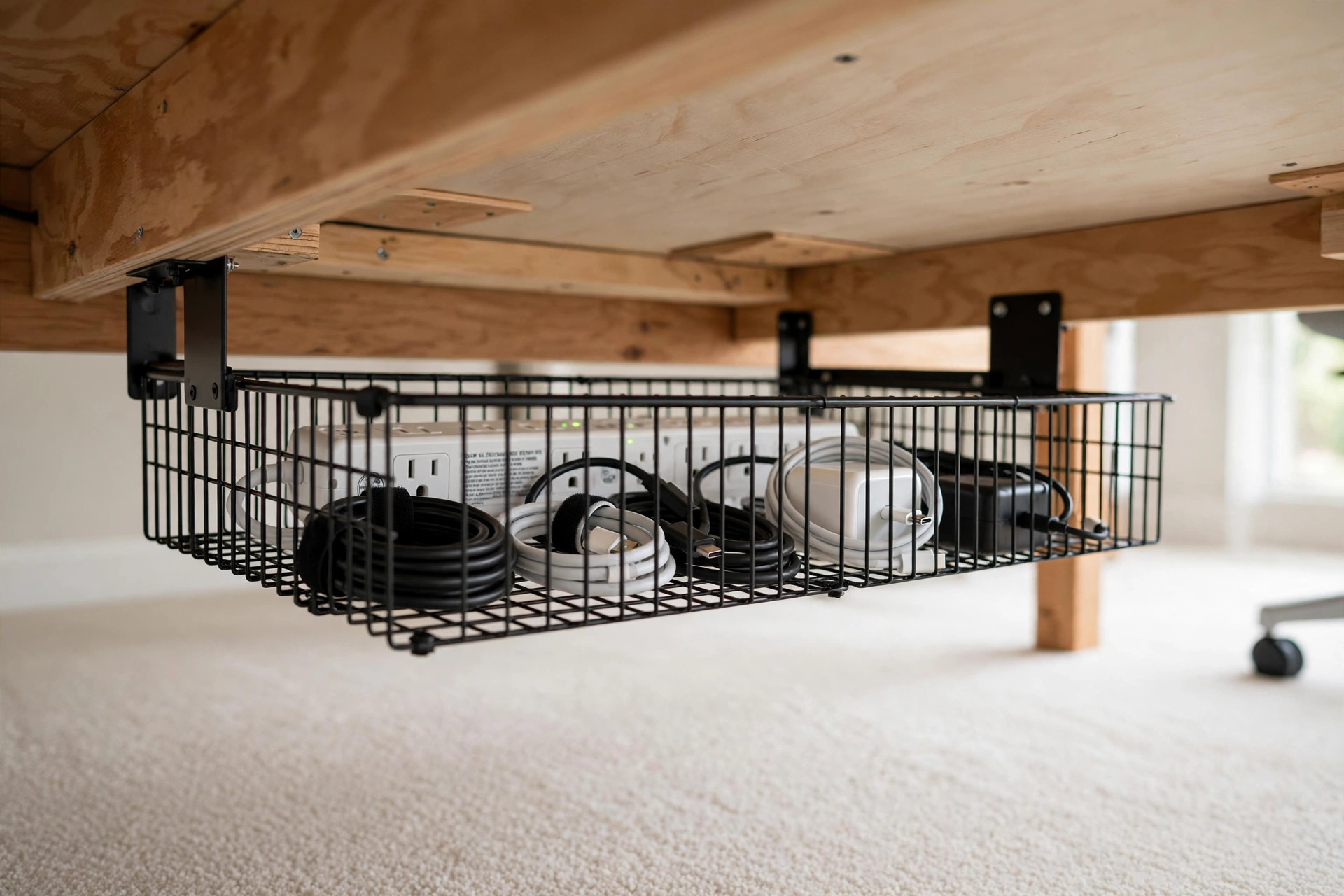

A desk with loose cables is a desk that fights you every day. Cords dangle. They catch your feet. They collect dust. An under desk cable management tray for clean setup solves this problem in a simple way. It is a tray that screws or clamps to the underside of your desk. It holds your power strip, chargers, and extra cord length. The result is a clean floor, a tidy desk, and a workspace that feels calm. This guide explains how these trays work, which types exist, what they cost, and how to keep them safe.
Why It Matters
A Cleaner Look
A home office looks better when cords are hidden. Loose wires draw the eye. They make a room feel messy even when the desk top is neat. An under desk cable management tray for clean setup lifts everything off the floor and out of view. The desk looks like it belongs in a photo. For people who take video calls, this matters. A tidy background looks professional.
Less Dust and Easier Cleaning
Cables on the floor are dust traps. Dust clings to wires and to the power strip. A tray under the desk keeps cables in one place, off the carpet. You can vacuum under the desk without fighting a knot of wires. This small change makes weekly cleaning faster.
Fewer Trip Hazards
Feet catch on loose cords. A rolling office chair can snag a cable and yank a laptop. A tray keeps cables above foot level. Your power strip stays put. The office becomes safer for children and pets too. This is one of the simplest safety upgrades a home office can have.
Longer Cord Life
Cables wear out where they bend hard or get pinched. A tray gives cords a gentle path with no sharp bends. The cable management box for desk wires that sits on the floor can work, but cords still travel across the ground. A tray keeps the whole run short and neat, so chargers and cables last longer.
Focus and Calm
A messy desk can pull at your attention. Many people work better when the space around them is orderly. Hiding cables does not change the work itself. It changes the feel of the room. A clean setup tells your mind that the day is organized.
How to Choose the Right Tray: Under Desk Cable Management Tray for Clean Setup
Measure Your Desk First
Before you buy, measure the space under your desk. Note the width of the desktop. Note the depth. Note how much room sits between the desk top and your knees. Trays come in several lengths. A tray that is too long will hang past the desk edge. A tray that is too short will not hold your power strip. Write the numbers down and shop with them in hand.
Check the Mounting Style
Most trays mount in one of two ways. Screw mounts use wood screws into the underside of the desk. They are strong and permanent. Clamp mounts grip the desk edge with no drilling. They suit renters and glass tops. Some trays use adhesive pads. Adhesive is weak for heavy loads. It can fail in heat. For a desk that holds a full power strip, screw or clamp mounts are better. Reviews of office gear at Wirecutter often note which mounting style holds up over time.
Match the Size to Your Gear
List what will live in the tray. A power strip. A laptop charger. A monitor power brick. A docking station. The tray must hold the power strip flat plus extra cord slack. Wide power strips need wide trays. Measure your power strip. Add two inches on each side for cable turns. If you plan to add gear later, buy a tray one size up.
Think About Airflow
Power bricks get warm. A tray with open mesh lets air move around them. A solid tray can trap heat. Do not pack a tray tight with warm bricks. Leave gaps. Good airflow also makes dust less likely to settle. Many guides at The Spruce point out that heat buildup shortens the life of cheap chargers.
Pick a Finish That Matches
Trays come in black, white, silver, and gray. Match the desk legs or the desk frame. A black tray under a black frame disappears. A white tray under a white desk looks clean. The tray is mostly out of sight, but a match makes the setup feel finished. Retailers like IKEA and Wayfair sell trays in several colors for common desk styles.
Check the Weight Rating
A full power strip with six plugs can weigh several pounds. Add cable weight. Check the tray’s stated weight limit. Cheap trays sag over time. Steel trays hold more than plastic ones. If your strip is heavy, choose metal. This is one place where spending a little more pays off.
Types of Under Desk Cable Trays
Wire Mesh Trays
Wire mesh trays are baskets made of steel wire. They screw under the desk. They are open, so air flows freely. They hold a power strip and a tangle of cords with ease. They are light and cheap. Most buyers choose this type. It is the standard answer for an under desk cable management tray for clean setup.
Enclosed Boxes That Mount Under the Desk
Some cable boxes mount to the desk underside like trays but have a lid. They hide cords fully. They look very tidy. They cost more. They also trap more heat, so they suit setups with few warm bricks. For a simple desk with one power strip, a box can look sharper than a mesh tray.
Clamp-On Rail Trays
Rail trays clamp to the back edge of the desk. They do not need screws. They work well for renters. They hold less weight than screw-mounted trays. They are easy to move from desk to desk. If you change desks often, this type makes sense.
Adhesive Trays
Adhesive trays stick to the desk underside with strong tape. They install in a minute. They hold light loads only. A single charger cable is fine. A full power strip is too much. Adhesive fails in hot rooms or on dusty surfaces. Use this type only for light duty.
Trays With Built-In Power
Some trays come with outlets built in. They act as both tray and power strip. They cost more but cut down on gear. Fewer boxes mean less clutter. Check that the built-in outlets match your plug needs before you buy. UPLIFT Desk and similar standing-desk makers sell such combo units for clean setups.
Spine and Channel Covers
A tray holds gear under the desk. But cables still run from the tray to the wall outlet. A vertical spine or channel covers that run. It clips to the desk leg. It turns a hanging cord into a neat line. Pair a tray with a spine for the cleanest look. Guides from Steelcase on office cable routing show how pros hide the full path.
Cost and Price
An under desk cable management tray for clean setup is a low-cost upgrade. Prices run from about five dollars to about forty dollars in most American stores.
Basic wire mesh trays cost five to fifteen dollars. These hold a standard power strip. They come with screws. They do the job for most desks. Budget buyers start here.
Mid-range trays cost fifteen to twenty-five dollars. They are wider or longer. They use thicker steel. Some include cable ties and mounting clamps. A mid-range tray suits a desk with two monitors and a docking station.
Premium trays and enclosed boxes cost twenty-five to forty dollars. They may include built-in outlets. They come in matched colors. They suit home offices that double as video studios.
Accessories add a few dollars more. A pack of reusable cable ties costs about eight dollars. A desk grommet for cable pass through costs five to ten dollars and gives cords a clean hole to drop through. A vertical cable spine costs ten to twenty dollars. Even a full kit stays under sixty dollars in most cases.
Prices shift by store and season. Check a few sellers before you buy. PCMag rounds up desk accessories each year and lists current street prices for popular picks.
Care and Upkeep
A cable tray needs little care. A quick check every few months keeps it safe and neat.
Dust the Tray
Unplug nothing. Use a dry cloth or a small brush on the tray every month or two. Dust builds on cords even off the floor. A quick wipe keeps it clean. Do this when you clean the desk.
Check the Mounts
Vibration and weight loosen screws over time. Once a quarter, press up on the tray. If it moves, tighten the screws. Check clamp mounts too. A tray that sags puts stress on plugs. Tight mounts keep everything safe.
Re-Tie Loose Cords
New gear means new cords. When you add a charger, tie it into the tray with a reusable tie. Cut or coil the extra length. Do not let new cords dangle past the tray edge. Keep the rule simple: nothing hangs below the tray.
Watch for Heat
Feel your power bricks now and then. They should be warm, not hot. If a brick is very hot, move it to the tray edge for more air. Do not stack bricks on each other. If a charger smells odd or looks swollen, replace it. Heat damage is a real fire risk. Guidance on cord and charger safety at The Spruce covers the warning signs worth knowing, and Herman Miller workplace guides stress the same habit of checking warm equipment.
Label Your Cords
A tray full of black cords is hard to sort. Put a small label on each cord near the plug. Painter’s tape and a pen work fine. Labels save time when you need to unplug one device. This small step pays off the first time you move gear.
Safety
Cable safety is simple but worth taking seriously. Keep these rules in mind.
First, never overload a power strip. Each strip has a watt rating. Add up the watts of what you plug in. Space heaters, printers, and gaming PCs draw a lot. If the total nears the rating, split the load across two strips on different wall outlets.
Second, keep liquids away. A tray under the desk is still near your coffee. A spill that runs down a cord can reach the strip. Keep drinks on the desk surface, away from cord paths.
Third, do not run cords under rugs from the tray to the wall. Rugs trap heat and hide damage. Use a cord cover made for floors if a cable must cross a walkway.
Fourth, use undamaged cords only. Check for cuts, frays, and bent prongs. Replace damaged cords at once. Cheap replacement cords with no safety marks are a poor bargain.
Fifth, give the tray room to breathe. Do not cram it full. Airflow keeps bricks cool. A tray packed tight is a tray that runs hot.
FAQ
Will a tray fit my standing desk?
Yes, in most cases. A standing desk moves up and down. Mount the tray to the moving desktop, not to the fixed frame. Leave slack in the cords from the tray to the wall so the desk can rise fully. A cable raceway for wall mounted setups can hide the vertical run to the outlet. Test the full range of motion after install. If cords pull tight at full height, add slack or reroute.
Do I need to drill holes in my desk?
Not always. Clamp-on trays need no drilling. Screw mounts need a drill and work best on wood tops. Glass tops cannot take screws. Adhesive works on any smooth surface but holds little weight. Pick the mount that fits your desk material and your lease rules.
How many cords can one tray hold?
A standard tray holds one full power strip plus the slack of six to ten cords. Wide trays hold more. The limit is weight and heat, not cord count. If the tray sags or bricks crowd together, you have too much. Split the load into two trays or add a second strip.
Can I put the tray on a glass desk?
Yes, with care. Use a clamp-on tray that grips the edge. Or use a tray with strong adhesive pads rated for the load. Do not drill glass. Keep the load light. Glass tops show everything from above, so a tray helps a lot with looks.
What is the difference between a tray and a cable box?
A tray mounts under the desk and stays open for airflow. A cable box sits on the floor or desk and has a lid. Boxes hide cords better. Trays cool better and cost less. For an under desk cable management tray for clean setup, the tray wins on price and heat. For a living room, a box may look nicer.
Should the power strip face up or down in the tray?
Face the plugs up or to the side. Plugs facing straight down can pull out under their own weight. Up-facing plugs stay seated. Some trays have slots that hold the strip at an angle. Test the fit before you mount the tray.
A Short Final Word
An under desk cable management tray for clean setup is one of the cheapest ways to improve a home office. It hides cords. It cuts dust. It removes trip hazards. It takes less than an hour to install. Pick the right size, mount it solidly, and keep the cords tied and labeled. Your desk will look better. Your office will feel calmer. And your gear will last longer. That is a lot of value for a small tray.
References
Herman Miller. (n.d.). Office furniture and ergonomic seating. https://www.hermanmiller.com IKEA. (n.d.). Home furnishings. https://www.ikea.com PCMag. (n.d.). Technology product reviews. https://www.pcmag.com Steelcase. (n.d.). Office furniture and workplace research. https://www.steelcase.com The Spruce. (n.d.). Home and garden advice. https://www.thespruce.com UPLIFT Desk. (n.d.). Standing desks and ergonomic office furniture. https://www.uplift-desk.com Wayfair. (n.d.). Furniture and home goods. https://www.wayfair.com Wirecutter. (n.d.). Product reviews from The New York Times. https://www.nytimes.com/wirecutter
Was this guide helpful?

About Lisa Anderson
The My Garden US editorial team writes practical, in-depth home and garden guides for American homeowners — tested advice, no fluff.
You May Also Like

A Small Adjustable Desk for Kids Homework Station: A Plain Guide for Parents
August 8, 2026 0 views
Rolling Cart for Home Office Printer Stand: A Complete Guide
July 31, 2026 0 views
Best Surge Protector with USB Ports for Desk: A Practical Buyer’s Guide
January 16, 2026 0 views