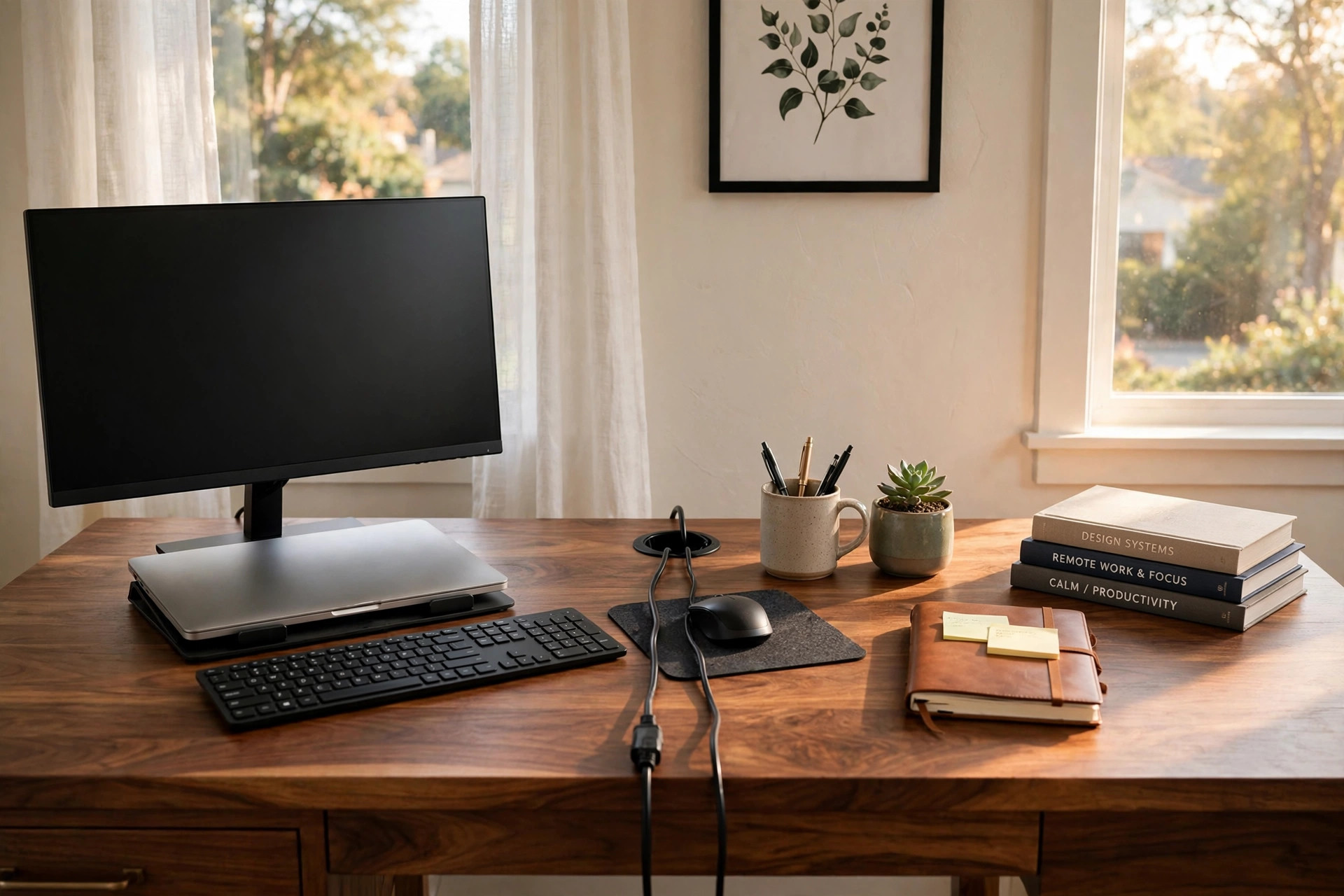

A home office desk grommet for cable pass through is a small fitting that sits in a round hole in the desk top. Cords pass through the hole and drop below the surface. The grommet covers the rough edge of the hole. It keeps the desk neat. It keeps cords safe from wear.
Many home workers add one when they set up a desk. It is a cheap part. It takes little time to fit. This guide explains what it is, why it helps, which types exist, what they cost, and how to install one.
Why a Home Office Desk Grommet for Cable Pass Through Matters
A desk can collect many cords. A monitor cord, a keyboard wire, a charger, a lamp cord, and a speaker wire all meet in one small space. They tangle. They pull on each other. They drag dust along the back edge of the desk.
A home office desk grommet for cable pass through gives each cord a clean path. The cord goes down through the hole. It runs below the desk to the power strip. The top of the desk stays clear.
A cord that hangs off the back of a desk can catch on a foot or a chair leg. A cord that runs through a grommet stays in place. The plug does not pull out of the wall by chance.
People who work from home all day notice small comforts. Wirecutter and PCMag often point out that cable control is part of a good home desk setup. It removes a daily annoyance.
What to Look for When You Buy One: Home Office Desk Grommet for Cable Pass Through
A home office desk grommet for cable pass through is simple. Still, a few points matter when you choose.
Size of the Hole
Grommets come in set diameters. Common sizes are one and a half inches, two inches, two and a half inches, and three inches. The size refers to the hole the grommet fits into, not the outer rim.
Think about what must pass through. A thick monitor power cord needs more room than a phone charger. If you plan to pass three or four cords through one grommet, a two-inch or larger size is safer. A small hole forces cords to bunch. That defeats the purpose.
Measure first. Decide where the hole will go. Mark the spot. Choose the grommet size, then buy a hole saw of the same size to cut the opening.
Material
Most grommets are plastic. ABS plastic is common. It is strong enough for home use. It comes in many colors. Black, white, gray, and brown are easy to find.
Metal grommets also exist. They are usually aluminum or steel. They suit desks that get hard use. They cost more. For a normal home office, plastic is fine.
Some grommets have a soft rubber brush or a split flap in the center. The brush closes the gap around the cords. This hides the cords from view. It also keeps dust from falling through the hole.
Finish and Color
A grommet should blend with the desk. Many buyers match the desk color. A black grommet in a black desk almost disappears. A wood-tone grommet suits a walnut or oak top.
White grommets suit white desks. Gray suits gray laminate. Take a photo of your desk when you shop if you are unsure. Retailers like IKEA and Wayfair list several colors for desk parts.
Snap-In or Screw Fit
Some grommets press into the hole and hold by friction. They are easy to fit. You push them in by hand. This type suits holes that are cut clean and true.
Other grommets have a locking ring below the desk. You set the top piece in the hole. Then you twist or screw the ring on from under the desk. This type holds firm in thin tops. It is better for particle-board desks, which can crumble a little at the edge.
Common Types of Desk Grommets
Round Snap-In Grommets
The round snap-in type is the most common home office desk grommet for cable pass through. It is a ring with a cap. You drill a round hole. You press the grommet in. Done.
Many have a two-part cap. The center disk lifts out. You thread the cords through. Then you set the disk back in place. Some caps have a slot for cords to pass through the side.
Brush Grommets
Brush grommets have a ring of soft bristles across the opening. Cords push through the bristles. The bristles close around them. From above, you see only a dark brush circle.
This type is popular in home offices because it looks neat. It also stops small items from falling through the hole. A pen or a paper clip will not drop into the desk cavity.
Rectangular and Oval Grommets
Some desks have long slot holes instead of round holes. Rectangular grommets fit these slots. They are common in office furniture from brands like Herman Miller and Steelcase.
For a home desk, a round hole is easier to cut. A hole saw makes a clean round opening in one pass. Rectangles need more careful cutting. Most home users choose round.
Grommets with Power Outlets
A few products combine a grommet with a small power unit. The unit sits in the hole. It has two or three outlets and often USB ports. Cords plug in at the desk surface instead of dropping below.
These are more costly. They also need care with electric safety. For most home offices, a simple grommet plus a power strip under the desk is enough and cheaper.
How to Install a Home Office Desk Grommet for Cable Pass Through
Installation is a small DIY job. It takes about fifteen minutes. Read these steps before you start.
Tools You Need
You need a drill, a hole saw of the right size, a pencil, masking tape, and sandpaper.
If your desk is metal, you need a hole saw made for metal and cutting oil. Most home desks are wood, particle board, or laminate. A standard bi-metal hole saw works on those.
Step 1: Choose the Spot
Pick a spot near the back of the desk. It should be close to where the cords come from. Behind a monitor or to the side of a lamp are good spots.
Keep clear of desk legs, drawers, and braces under the top. Look under the desk before you mark. Make sure no bracket sits in the path.
Step 2: Mark and Tape
Mark the center of the hole with a pencil. Put a strip of masking tape over the spot. The tape stops the drill bit from slipping. It also guards the desk surface from scratches.
Step 3: Drill the Hole
Set the hole saw in the drill. Start slow. Let the saw bite into the surface. Keep the drill straight and steady. Push with light pressure. Heavy pressure can crack laminate.
Drill through the top. If the desk is thick, drill halfway from the top, then finish from the underside. This keeps both faces clean.
Step 4: Clean the Edge
Pull the cut plug out. Sand the inside edge of the hole lightly. Remove loose bits. Vacuum the dust. A clean edge lets the grommet sit flat.
Step 5: Fit the Grommet
Press the grommet into the hole. It should sit flush with the desk top. If it has a locking ring, reach under the desk and fix the ring in place.
Thread your cords through. Set the cap on. Your home office desk grommet for cable pass through is done.
A Note on Rented Desks
If you rent your home, check your lease before you drill. Some landlords do not allow holes in furniture that came with the flat. A no-drill fix is a clip-on cable tray under the desk. It holds cords without a hole.
Cost and Price
A home office desk grommet for cable pass through is one of the cheapest desk upgrades. Prices are low.
Basic plastic round grommets cost about one to three dollars each. They often come in packs of four or six. A pack is a good buy if you want grommets in two spots, or for a second desk.
Brush-style grommets cost about three to six dollars each. The brush insert adds to the price. It is worth it for a clean look.
Metal grommets cost about six to twelve dollars each. They suit desks that see heavy daily use.
A hole saw adds to the cost if you do not own one. A basic set of hole saws costs about fifteen to twenty-five dollars. You can also buy a single size for less.
Large home stores carry these parts. Home Depot and Lowe’s stock grommets and hole saws in the hardware aisle. UPLIFT Desk and similar desk makers sell grommets that match their desks.
For a total spend of under ten dollars, you can add a grommet to an existing desk. Few home office upgrades give this much tidiness for so little money.
Fitting a Grommet into a Wider Desk Plan
A grommet works best as part of a wider cable plan. Think about the whole path of each cord.
Under the desk, fix a cable tray or a set of clips. The tray holds the power strip and the slack of each cord. Cords drop through the grommet into the tray. Nothing hangs loose.
Keep the power strip off the floor if you can. A strip mounted under the desk top is easy to reach. It also keeps cords away from feet and vacuum cleaners.
If you run two screens, plan the grommet size for both monitor cords. An affordable dual monitor setup for remote workers usa sends at least four cords to the back of the desk. A two-inch grommet handles this.
Small extras help too. A best desk organizer set for small office desk keeps pens and notes off the cord path. An ergonomic footrest for under desk at home sits on the floor where cords once hung. With cords routed through the grommet and into a tray, the footrest area stays clear and safe.
The Spruce has guides on home office layout that show how cable paths fit into a full desk plan. It is worth reading one before you buy parts.
Care and Upkeep
A desk grommet needs little care. Wipe it with a damp cloth when you clean the desk. Dust can gather in the brush type. A quick pass with a vacuum brush keeps it clear.
Check the fit once a year. In particle-board desks, the hole can widen a little over time. If the grommet grows loose, a small ring of tape around its edge will tighten it. Or replace it. At these prices, replacement is easy.
If cords are added or removed, lift the cap and re-thread. Do not force thick plugs through a small grommet. Pull the cap out first. Thread the cord. Then set the cap back.
Safety Notes
A home office desk grommet for cable pass through is safe when fitted with care. A few points deserve note.
First, drill with care. Wear eye protection. Keep fingers clear of the saw. Unplug the drill when you change the bit.
Second, know what is under the desk before you drill. Some desks have metal braces or wiring channels under the top. Drilling into a brace can damage the drill. Drilling into a hidden wire is dangerous. Look and feel under the desk first.
Third, do not overload outlets. A grommet does not change how much power a socket can give. If you plug many devices into one strip, check the load. A strip with a built-in breaker adds safety.
Fourth, keep cords in good shape. Check them now and then for nicks or fraying. A grommet guards the cord at the hole. It cannot fix a cord that is worn elsewhere.
Fifth, keep liquids away from cords and outlets. A cup of coffee near a grommet hole can spill into the opening. Brush grommets slow a spill a little. But the best rule is to keep drinks to the side.
FAQ
What size hole do I need for a home office desk grommet for cable pass through?
A two-inch hole suits most home desks. It passes two or three cords with ease. For a single charger cord, one and a half inches is enough. For a full monitor and printer setup, use two and a half or three inches.
Can I install a grommet without a drill?
A drill with a hole saw is the right tool. If you cannot drill, use a clip-on cable tray under the desk instead. It routes cords without a hole.
Will the grommet fit a glass desk?
Glass desks need a different approach. You cannot drill glass with a normal hole saw. Glass desks often have a gap at the back for cords. Use that gap. Or use adhesive cable clips on the underside.
Do I need one grommet or two?
One is enough for most desks. Place it behind the main work zone. Large desks, over sixty inches wide, may suit two grommets. One sits behind the monitor. The other sits near a side lamp or printer.
Can the grommet hold a phone charger cord that I plug in daily?
Yes. Thread the charger through the grommet. Leave enough slack above the desk to reach the phone. The brush type keeps the cord in place when you unplug the phone. It will not slide back through the hole.
What if my desk top is very thin?
Thin tops, under half an inch, can hold a snap-in grommet if the hole is clean. A locking-ring type is safer for thin tops. The ring clamps the grommet in place so it cannot pop out.
A Final Word
A home office desk grommet for cable pass through is a small part with a clear job. It gives cords a tidy path. It guards them from wear. It keeps the desk top clear for work.
The part costs a few dollars. The job takes minutes. The gain lasts for years. For any home worker who wants a calmer, safer desk, it is one of the simplest upgrades to make.
References
Herman Miller. (n.d.). Office furniture and ergonomic seating. https://www.hermanmiller.com IKEA. (n.d.). Home furnishings. https://www.ikea.com Lowe’s. (n.d.). Home improvement products. https://www.lowes.com PCMag. (n.d.). Technology product reviews. https://www.pcmag.com Steelcase. (n.d.). Office furniture and workplace research. https://www.steelcase.com The Home Depot. (n.d.). Home improvement products. https://www.homedepot.com The Spruce. (n.d.). Home and garden advice. https://www.thespruce.com UPLIFT Desk. (n.d.). Standing desks and ergonomic office furniture. https://www.uplift-desk.com Wayfair. (n.d.). Furniture and home goods. https://www.wayfair.com Wirecutter. (n.d.). Product reviews from The New York Times. https://www.nytimes.com/wirecutter
Was this guide helpful?

About David Wilson
The My Garden US editorial team writes practical, in-depth home and garden guides for American homeowners — tested advice, no fluff.
You May Also Like
Adjustable Standing Desk with Memory Presets USA: A Plain Guide for Home Offices
January 19, 2026 0 views
An Affordable Dual Monitor Setup for Remote Workers USA Can Count On
January 15, 2026 0 views
Home Office Window Privacy Film for Meetings: A Plain Guide
January 23, 2026 0 views