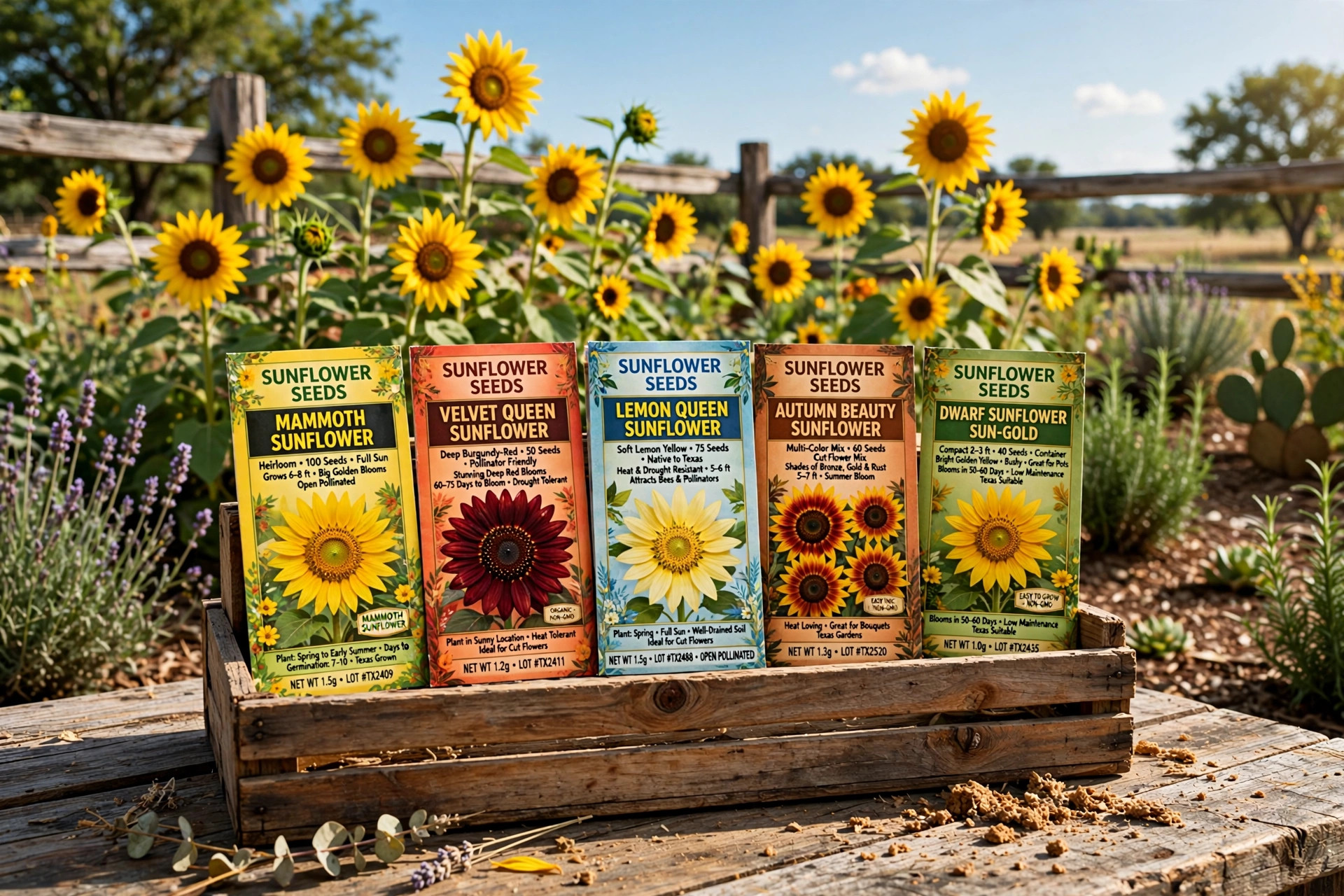

Shoppers who search for sunflower seed packs texas homes usa want one thing. They want strong seed that will grow in hot Texas soil. Sunflowers are a natural fit for the state. They rise tall. They bloom through the hottest months. They ask for little and give back bright color. This guide explains how to buy the right packs, how much they cost, and how to grow them well at a Texas home.
Why Sunflowers Suit Texas Homes
Few flowers match the Texas summer. Daytime highs reach the nineties and often pass one hundred. Many cool-season plants give up in July. Sunflowers keep growing. They trace their roots to the American plains. Heat is part of their nature. A home in Houston, Dallas, San Antonio, or El Paso can grow them with basic care.
Sunflowers also grow fast. A seed planted in spring can stand eight feet tall by midsummer. Children love this. Neighbors stop to look. A row of blooms along a fence turns a plain yard into a garden worth keeping.
Texas yards come in many sizes. A large lot can hold a long border of tall blooms. A small patio can hold a pot of dwarf types. Sunflower seed packs for Texas gardens cover both cases. Buyers only need to pick the right variety for the space.
Birds add one more reason. Goldfinches and chickadees feed on the seed heads. A home that leaves some heads standing will draw birds all fall. Butterfly watchers get a bonus too. Bees and butterflies visit the open blooms through the day.
How to Choose Sunflower Seed Packs: Sunflower Seed Packs Texas Homes Usa
A seed rack can hold twenty packets that all look the same. The labels tell a different story. Read each one before you buy.
Check the Variety Name
The front of the pack names the variety. Common names include Mammoth, Autumn Beauty, Teddy Bear, and Velvet Queen. Each grows to a different height and color. Mammoth types rise past eight feet and make large heads. Teddy Bear stays near three feet and fits a pot. Pick the name that matches your yard. National sellers like Burpee list dozens of types with full growing notes for each one.
Check the Seed Count and Pack Date
Packets list the seed count or the weight. A tall variety may hold only twenty seeds. A dwarf variety may hold fifty or more. More seeds mean more plants, but not always better plants. Fresh seed gives the best results. Look for a pack date or a sell-by date on the back. Seed from the current year sprouts fastest.
Check the Days to Bloom
The back of the pack lists days to bloom. Most types need sixty to ninety days. A long-season county in south Texas can handle a ninety-day type planted in spring. A short season is not a problem in most of Texas. Still, the number helps you plan color for a party or a school event.
Seed buyers often compare guides before they shop. A growing guide can help a new gardener read a packet with care. For ideas on matching seed to space, many readers also browse home garden ideas before they buy. Growers who raise food crops as well as flowers may find a heirloom vegetable seed buying guide useful for the same packet-reading skills.
Types of Sunflowers for Texas Gardens
Heat tolerant sunflower seeds for Texas come in four main groups. Each group serves a different goal.
Tall Single-Stem Types
These are the classic giants. One thick stalk. One large head. Heads may span ten inches. Types like Russian Mammoth and American Giant lead this group. They suit the back of a border or a spot along a fence. They need room. Set seeds a foot apart in full sun.
Branching Types
Branching sunflowers grow many stems from one plant. Each stem ends in a bloom. Types like Autumn Beauty and Indian Blanket mix gold, red, and rust. They bloom for weeks because new buds keep opening. They make good cut flowers. A vase of branching blooms lasts a week with fresh water.
Dwarf and Patio Types
Dwarf types stay under three feet. Teddy Bear and Sunspot fit a twelve-inch pot. They grow well on a porch or a balcony. Small yards gain big color from small plants. Dwarf heads are smaller, but the plant often blooms more than once. Home growers can browse garden plant collections for pot-ready types suited to warm states.
Pollenless Types for Cut Flowers
Some newer types make little or no pollen. ProCut and Sunrich lines suit indoor vases because they drop less pollen on tables. They cost more per seed. They are worth the price for gardeners who cut blooms each week.
Buyers who want more choice can study seed catalogs from national sellers. Home growers also compare sunflower varieties to find colors beyond plain yellow. Texas gardeners often plant more than one type, so the yard holds both tall giants and small pot blooms.
Cost and Price of Sunflower Seed Packs
Sunflower seed is one of the cheapest garden starts. A standard packet at a store costs about one to six dollars. The price follows the variety and the seed count.
Common single packets cost one to three dollars. They hold twenty to fifty seeds. Fancy hybrid types cost three to six dollars per packet. Bulk bags for large plantings cost more up front. A one-pound bag may cost ten to twenty dollars and plant a long row.
Price is not the only cost. Soil, water, and stakes add small amounts. Still, a full bed of sunflowers costs less than one nursery-grown shrub. This low cost makes sunflowers a safe first project for a new gardener. Shoppers often compare garden supply prices across sellers before the spring rush.
Shop seed like any other home good. Compare the price per seed, not just the price per pack. A three-dollar pack with fifty seeds beats a two-dollar pack with ten seeds. Keep old packets in a cool dry drawer. Most seed stays good for two to three years. Shoppers who like to hunt for bargains also watch for morning glory seed deals online from trusted sellers.
Planting Times in Texas
Texas sunflower planting times shift with the region. The state runs long from north to south. Soil warmth matters more than the calendar. Sunflower seed needs soil near sixty-five degrees to sprout well.
South Texas and the Gulf Coast
Gardeners in Brownsville, Corpus Christi, and Houston can plant from late February into May. The long warm season allows two plantings. Sow one round in early spring and a second round in June. The second round blooms in fall.
Central Texas
Austin, San Antonio, and Waco plant from mid-March to early May. Night frost ends by late March in most years. Sow seed a week after the last expected frost. A second sowing in July gives fall blooms before the first cold front.
North Texas and the Panhandle
Dallas, Fort Worth, Amarillo, and Lubbock plant from early April to late May. Frost can linger into April. Wait for warm nights. The growing season is shorter, so pick types with fewer days to bloom.
A planting calendar helps a gardener fix the right week for the county. Local agricultural research also guides growers on soil warmth and regional timing. Gardeners who plant fall crops too can study garlic planting for Texas homes when they plan the autumn bed.
Care and Upkeep
Sunflowers are easy plants. They still repay basic care with taller stalks and larger heads.
Soil
Sunflowers grow in average soil. They do not need rich garden loam. Loose soil helps roots spread. Work compost into heavy clay before planting. Texas clay packs hard in dry spells. A fork breaks it open. Good drainage matters more than rich feed.
Water
Young plants need steady water. Keep the top inch of soil moist until sprouts stand four inches tall. After that, deep watering once a week is enough. In a Texas heat wave, water twice a week. Potted dwarfs dry fast and may need daily water in August.
Support
Tall types fall in strong wind. A garden stake tied loosely to the stem saves the plant. Plant tall rows near a fence for a natural wind break. Do not crowd the stems. Air flow cuts disease.
Feeding and Deadheading
Pests and Problems
Few pests trouble sunflowers, but a few do visit. Cutworms may chew young stems at soil level. A cardboard collar around each young plant stops them. Aphids gather on buds in dry spells. A hard spray of water knocks them off. Sunflower moth larvae can bore into the heads in late summer. Planting early helps the heads set before the moths peak. Powdery mildew shows as white dust on leaves in humid weeks. Thin the plants for air flow and water at the base. None of these problems need strong chemicals. Simple steps keep most stands healthy.
Sunflowers need little feed. A light layer of compost at planting is enough. Too much nitrogen grows tall weak stems with small heads. Snip spent blooms to push new buds on branching types. Leave the last heads for seed. Cut the stalk to the ground in winter and compost it.
Safety Around Seeds and Plants
Sunflowers are safe garden plants. No part of the common sunflower is poisonous to people. Seeds sold for planting are treated in some cases. Check the packet. Treated seed carries a warning and a colored coating. Do not eat treated seed. Keep it away from children and pets.
Raw seed heads draw bees. This is good for the garden but worth a note for families with bee allergies. Place tall rows away from play areas. Teach children not to pick seed heads with bare hands when bees are working them. Readers who cut stems for indoor vases can learn simple flower care tips from growers who ship fresh stems.
Store seed packets up high. Small seeds are a choking risk for toddlers. Wash hands after handling treated seed. These small steps keep a safe garden.
Frequently Asked Questions
When should I plant sunflower seed packs in Texas?
Plant after the soil warms past sixty-five degrees. That means late February in the south, mid-March in the center, and April in the north. You can sow a second round in early summer for fall blooms.
How long do sunflowers take to bloom in Texas heat?
Most types bloom sixty to ninety days after sowing. Warm soil speeds the start. Hot weather rarely slows them. Check the packet for the exact number of days.
Do sunflowers come back every year in Texas?
Most garden sunflowers are annuals. They grow, bloom, set seed, and die in one season. New plants may sprout from dropped seed the next spring. For a sure stand, sow fresh seed each year.
Can I grow sunflowers in pots in Texas?
Yes. Pick a dwarf type and a pot at least twelve inches wide. Use potting soil with good drainage. Water pots daily in hot months. Place the pot in full sun for the strongest blooms.
How much sun do sunflowers need each day?
Six to eight hours of direct sun is best. Less sun gives thin stems and small heads. A full-sun spot along a south or west fence suits them well.
Are sunflower seeds from the store the same as seed packets?
No. Grocery sunflower seeds are grown for food and may not sprout well. Seed packets are bred and tested for garden growth. Buy packets marked for planting to get true results.
A Short Final Word
Sunflower seed packs give Texas homes a cheap, bright, and easy garden win. Pick a variety that fits your space. Plant when the soil is warm. Water the young plants and stake the tall ones. By midsummer the blooms will tower over the fence and draw birds, bees, and smiles. Few garden projects pay back so much for so little. Buy a pack this spring and watch what Texas sun can do.
References
Burpee. (n.d.). Seeds, plants, and gardening supplies. https://www.burpee.com Gardening Know How. (n.d.). Gardening guides and plant care. https://www.gardeningknowhow.com Gurney’s Seed & Nursery Co. (n.d.). Seeds, plants, and garden supplies. https://www.gurneys.com Monrovia. (n.d.). Plants for home gardens. https://www.monrovia.com National Institute of Food and Agriculture. (n.d.). Agricultural research and extension. https://www.nifa.usda.gov Park Seed. (n.d.). Seeds, plants, and gardening supplies. https://www.parkseed.com Proven Winners. (n.d.). Plants and gardening inspiration. https://www.provenwinners.com The Old Farmer’s Almanac. (n.d.). Gardening calendars and advice. https://www.almanac.com The Spruce. (n.d.). Home and garden advice. https://www.thespruce.com White Flower Farm. (n.d.). Plants, bulbs, and garden supplies. https://www.whiteflowerfarm.com
Was this guide helpful?

About Sarah Mitchell
The My Garden US editorial team writes practical, in-depth home and garden guides for American homeowners — tested advice, no fluff.
You May Also Like
Finding Morning Glory Seeds Deals Near Me: A Practical Buying Guide
June 6, 2026 0 views
Tulip Bulbs Fall California Homes USA: A Simple Planting Guide
June 1, 2026 0 views
Native Grass Seed for California Homes: A Guide to a Lawn That Loves Dry Weather
February 20, 2026 0 views