
A Hard Chair Can Make a Long Day Worse
Sciatica is a sharp pain that runs from the lower back down the leg. The sciatic nerve is the longest nerve in the body. When it gets pressed or annoyed, the pain can be mild or strong. Many people feel it after sitting for hours at a desk. That is why the search for the best office chair for sciatica pain relief matters to so many home workers.
A poor chair forces the spine into bad angles. It flattens the lower back. It tilts the pelvis. It lets the thighs press hard into the seat edge. All of these things can squeeze the sciatic nerve. A good chair does the opposite. It holds the spine in its natural curve. It spreads weight evenly. It lets you shift and move. The right seat will not cure sciatica on its own. But it can cut daily pain and make work bearable while you heal.
This guide explains what to look for in a chair, which types help most, what they cost, and how to set up your seat so your back and legs feel better.
Why the Chair Matters for Sciatica: Best Office Chair for Sciatica Pain Relief
Pressure on the Nerve
The sciatic nerve runs from the spine through the buttock and down each leg. Long sitting is one of the most common causes of sciatica pain. When you sit, your upper body weight presses down through the pelvis. A chair that sags or tilts you back too far lets the lower discs take that load. Pressure builds near the nerve roots. Pain follows.
Studies in workplace health have long shown that poor sitting posture raises the risk of low back trouble. Doctors often tell patients to fix their seat before they try other steps. A chair built for the best office chair for sciatica pain relief keeps the hips slightly above the knees and the lower back supported. That small change can lower the load on the nerve roots by a large amount.
Posture and Pelvic Tilt
Most cheap chairs let the pelvis roll backward. The lower spine then rounds into a C shape. This position stretches the discs and can push them toward the nerve. A chair with adjustable lumbar support holds the lower back in its natural inward curve. The pelvis stays upright. Weight moves to the seat bones where it belongs.
People who work a best office chair for long hours home office day feel the difference by the second week. Mornings are easier. The dull ache after dinner fades. Standing up after a long call no longer sends a jolt down the leg.
What to Look for When You Choose
Adjustable Lumbar Support
Lumbar support is the single most important feature. Look for a chair with a lumbar pad that moves up and down. Some pads also move in and out. Set it so it fills the gap in your lower back. It should feel firm but not push you forward. Fixed lumbar bumps fit only one body type. Adjustable ones fit many.
A Seat Pan That Fits Your Legs
The seat should hold your thighs without pressing the back of your knees. If the seat is too deep, the front edge cuts into the back of the legs. That cuts blood flow and can make leg pain worse. If it is too short, the thighs lack support and the body slides forward.
Look for seat depth adjustment or a sliding seat pan. Aim for a gap of two to three finger widths between the seat edge and the back of your knees. This is a small detail that makes a big difference for sciatica.
A Waterfall Seat Edge
A waterfall edge curves down at the front of the seat. It removes the hard lip that presses into the thighs. This shape keeps blood moving down the legs. Many chairs made for back pain use this shape. It is one of the quiet signs of a well built seat.
Tilt and Recline
A chair that locks upright all day is not ideal. The best chairs let you lean back a few degrees. A slight recline of about 100 to 110 degrees opens the hip angle. That takes pressure off the lower discs. Look for a chair with a tilt tension control so the recline feels smooth and easy.
Armrests That Adjust
Armrests take weight off the shoulders and upper back. That helps the whole spine sit taller. Adjustable armrests let you set the height so your elbows rest near 90 degrees. Flip-up arms are useful in small rooms because the chair can slide under the desk.
A High, Supportive Backrest
Sciatica sufferers often lean back for relief. A high backrest gives the shoulders and upper back a place to rest. Some chairs add a headrest. A headrest helps when you recline to take short breaks. It is not required, but many people find it adds comfort during a long day.
Material and Padding
Mesh backs are popular for a reason. They breathe in warm rooms. They flex with your back as you move. Memory foam seats cushion the seat bones. Some people prefer a firm seat because it holds posture better than a soft one. Try to sit in the chair before you buy if you can. If you shop online, read the return policy with care.
Types of Chairs That Help
Ergonomic Task Chairs
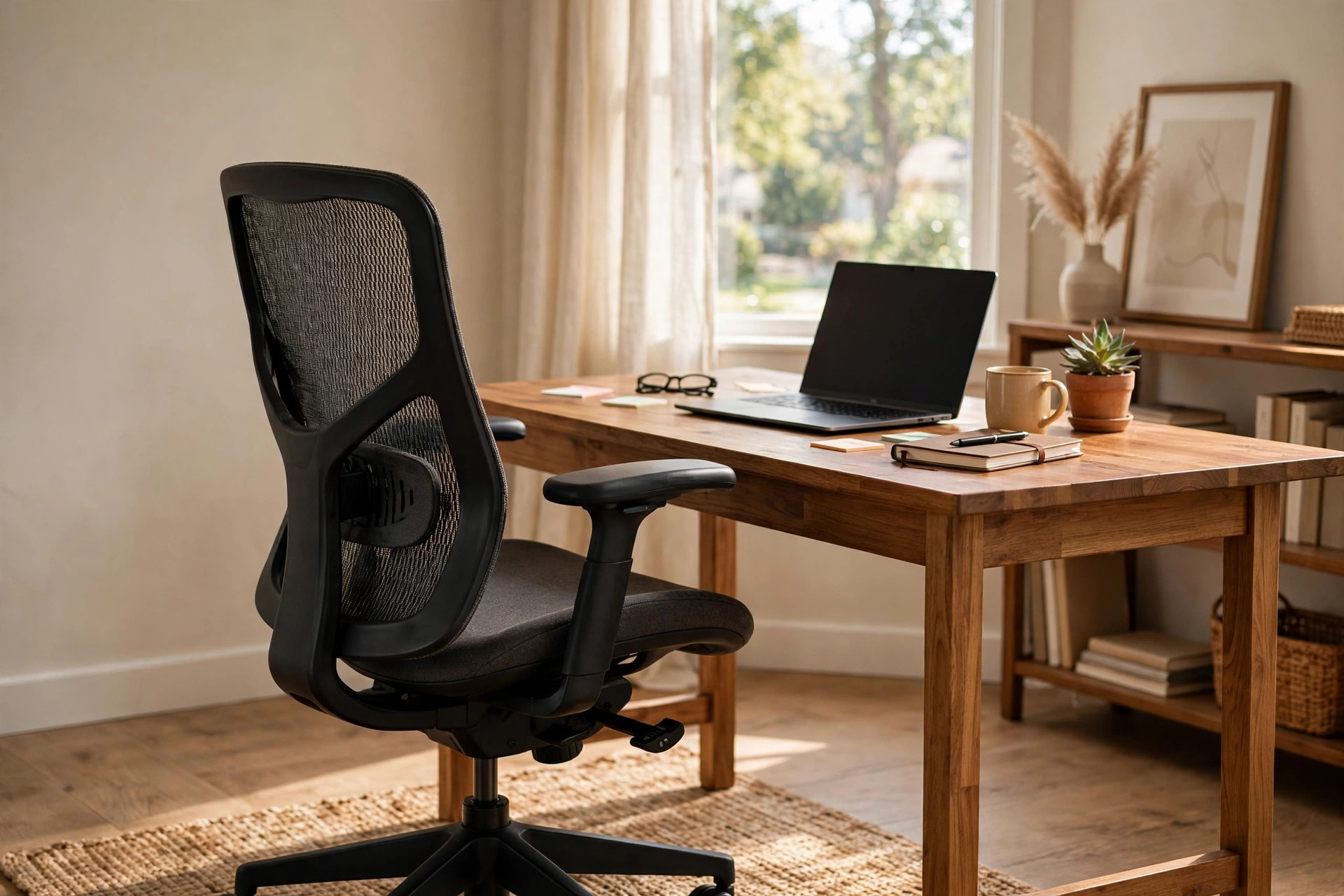
The standard ergonomic task chair is the most common choice. It has a five wheel base, a gas lift, adjustable arms, and a backrest with lumbar support. Good models cost more than basic chairs, but the adjustments are what make them useful for sciatica. An ergonomic mesh office chair under 200 dollars can be a smart buy if it includes lumbar support and a waterfall seat edge.
High Back Executive Chairs
Executive chairs have tall backs and thick padding. They suit people who like to recline often. The padding feels kind on sore muscles. Watch out for models with fixed lumbar support that does not match your back. Thick padding that sags will make posture worse over time.
Kneeling Chairs
Kneeling chairs open the hip angle and tip the pelvis forward. Some people with sciatica find this position relieves pressure on the lower back. Others find the knee pressure hard to take for more than an hour. A kneeling chair works best as a second seat for part of the day, not as the only chair.
Sit Stand Stools and Saddle Stools
Saddle stools place you in a semi standing position. They keep the spine tall and the hips open. They suit people who move between a desk and other tasks. They lack back support, so they do not suit a full day of computer work on their own.
Recliners and Gaming Style Chairs
Reclining chairs with strong lumbar support can suit people with severe pain who need to change position often. Gaming chairs look sporty but vary widely in quality. Some have flat backs with weak lumbar pads. Judge each chair by its adjustments, not by its style name.
Cost and Price: What Should You Expect
Prices for the best office chair for sciatica pain relief span a wide range. Basic ergonomic chairs start near 100 dollars. Mid range chairs with good lumbar systems and mesh backs run from 200 to 500 dollars. Premium brands charge 800 dollars and up.
Do not judge a chair by price alone. A 150 dollar chair with adjustable lumbar support and a waterfall edge can beat a 600 dollar chair with fixed padding. Look at the feature list first. Read reviews from people who sit eight hours a day. Many makers, such as Herman Miller, Steelcase, and UPLIFT Desk, publish detailed adjustment guides for their seats. These guides show how each control should be set.
Budget buyers should check large retailers like Wayfair and IKEA, which carry wide ranges of task chairs at many price points. Review sites such as Wirecutter and PCMag test chairs over long periods and publish honest findings. Home advice sites like The Spruce keep updated lists of chairs rated for back support.
A chair is a tool you use for thousands of hours. If your budget is tight, spend the most on lumbar support and seat depth. Add a separate lumbar cushion or an ergonomic lumbar support pillow later if the chair lacks one. These small add-ons cost little and can fill the gap.
Setting Up Your Chair the Right Way
Buying the right chair is only half the job. The setup matters just as much.
1. Set the seat height so your feet rest flat on the floor. Your knees should sit at about 90 degrees. 2. Move the lumbar support until it fits the curve of your lower back. It should press gently, not hard. 3. Slide the seat pan so two to three fingers fit between the seat edge and your knees. 4. Set the armrests so your shoulders hang loose and your elbows rest near 90 degrees. 5. Lean back a few degrees. Lock the tilt if the chair allows it. Full upright sitting all day is hard on the discs. 6. Place your monitor at eye level, about an arm’s length away. Looking down pulls the whole spine forward.
Stand up every 30 to 45 minutes. Walk to get water. Roll your shoulders. A short walk feeds the discs with fluid and gives the nerve a break. No chair, however good, can replace movement.
Care and Upkeep
A good chair lasts many years if you care for it. Vacuum mesh backs once a month to keep dust from grinding into the weave. Wipe vinyl and leather with a damp cloth. Check the gas lift and tilt locks twice a year. Tighten any loose bolts with the wrench that came in the box.
Keep the chair out of direct sun. Heat and light break down foam and fabric. If the seat cushion flattens, replace it or add a cushion rather than sitting in a dip. A dip tilts the pelvis and brings the pain back. Replace worn casters so the chair rolls smoothly. A chair that sticks forces you to twist and reach, which strains the back.
Safety Notes
A chair is not a medical device. If your leg pain is severe, if you feel numbness in the foot, or if you lose control of your bladder or bowels, see a doctor at once. These can be signs of a serious nerve problem that needs fast care.
Do not use a chair that tips or wobbles. Lock the tilt before you lean back hard. Keep the base flat on the floor. Do not stand on the seat to reach high shelves. People with balance problems should choose a chair with a wide, stable base and lockable casters.
Heat pads and ice packs can help with flare ups, but use them away from the chair fabric to avoid damage. If you add an electric heating pad, never leave it on when you step away.
Frequently Asked Questions
Can an office chair really help sciatica?
A chair cannot fix a herniated disc or a pinched nerve root on its own. But the right chair can lower the pressure that makes sciatica worse. Many people find that good lumbar support, a proper seat depth, and a slight recline cut their daily pain in half. Pair the chair with short walks and gentle stretching for the best result.
How long should I sit before taking a break?
Most back specialists suggest standing or walking every 30 to 45 minutes. Set a timer if you forget. Even two minutes of standing helps. A sit stand desk paired with a good chair makes this habit easier.
Is a soft or firm seat better for sciatica?
Most people do better with a medium firm seat. A very soft seat lets the pelvis sink and roll back, which rounds the lower spine. A very hard seat can press on the seat bones and annoy the nerve. Look for foam that holds its shape when you press it with your hand.
Should the chair have a headrest?
A headrest is helpful if you recline often during the day. It supports the neck and keeps the head from dropping forward. It is not required for sciatica relief. If a chair fits you well without one, do not pay extra just for the headrest.
Can I use a lumbar pillow instead of buying a new chair?
Yes, in many cases. A firm lumbar roll or pillow can add support to a chair that lacks it. Place it in the small of your back and adjust until the curve feels natural. If the seat itself is the problem, such as a seat that is too deep or too soft, a pillow will not fix that. Then a new chair is the better step.
When should I see a doctor about sciatica?
See a doctor if the pain lasts more than a few weeks, if it keeps you from sleeping, or if it spreads below the knee with weakness or numbness. Seek urgent care for sudden loss of bladder or bowel control. These signs can point to a condition that needs prompt treatment.
A Final Word
The best office chair for sciatica pain relief is the one that fits your body and lets you sit tall without effort. Look for adjustable lumbar support, a seat pan that fits your legs, a waterfall edge, and smooth recline. Set it up with care. Move often. These plain steps have helped countless desk workers sit through the day with less pain. Take your time, choose well, and give your back the seat it deserves.
References
Herman Miller. (n.d.). Office furniture and ergonomic seating. https://www.hermanmiller.com IKEA. (n.d.). Home furnishings. https://www.ikea.com PCMag. (n.d.). Technology product reviews. https://www.pcmag.com Steelcase. (n.d.). Office furniture and workplace research. https://www.steelcase.com The Spruce. (n.d.). Home and garden advice. https://www.thespruce.com UPLIFT Desk. (n.d.). Standing desks and ergonomic office furniture. https://www.uplift-desk.com Wayfair. (n.d.). Furniture and home goods. https://www.wayfair.com Wirecutter. (n.d.). Product reviews from The New York Times. https://www.nytimes.com/wirecutter
Was this guide helpful?

About Michael Thompson
The My Garden US editorial team writes practical, in-depth home and garden guides for American homeowners — tested advice, no fluff.
You May Also Like

Small Desk with Built In Bookshelf for Students: A Guide for Small Rooms
September 17, 2026 0 views
The Best Desk Clock With Temperature Display Office Workers Rely On
August 19, 2026 0 views
Ergonomic Footrest With Massage Rollers Under Desk: A Guide for Home Workers
May 15, 2026 0 views