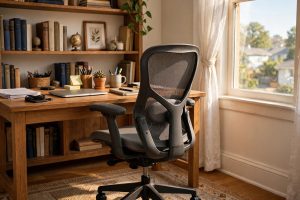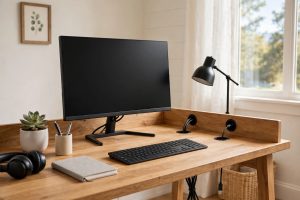
An adjustable height standing desk frame only is the working heart of a standing desk, sold without the desk top. You buy the frame with its legs, motors, and controls, then add a top of your own choice. This approach has grown in use since the late 1980s, when the first sit-stand workstations began to appear in offices. Today it is a smart way for home workers to build a desk that fits their room, their budget, and their taste.
The focus keyword for this guide is the adjustable height standing desk frame only, and the aim here is plain advice: why people choose frames, what to check before you buy, how much to pay, and how to set one up at home.
Why a Frame-Only Desk Makes Sense
A full standing desk ships with a top already fixed to the frame. That is simple, but the top may be the wrong size, the wrong color, or made of a material you do not like. Buying an adjustable height standing desk frame only lets you choose every part.
Cost is one clear reason. Frames often cost less than a complete desk of the same build quality. You can then pair the frame with a low-cost top from a hardware store, a sheet of butcher block, or even an old door refinished at home. The savings can be large when you compare prices across brands.
Choice is another reason. A frame-only purchase lets you match your desk to your room. If you want a deep top for art work, or a narrow top for a small study corner, you can cut or buy exactly that size. Many owners also reuse a top they already own, which keeps a good piece of furniture out of the landfill.
Repair is a third reason. If a top gets worn, scratched, or stained, you can swap it in an afternoon while the frame stays in place. With a complete desk, a damaged top often means replacing the whole unit.
How the Frames Work: Adjustable Height Standing Desk Frame Only
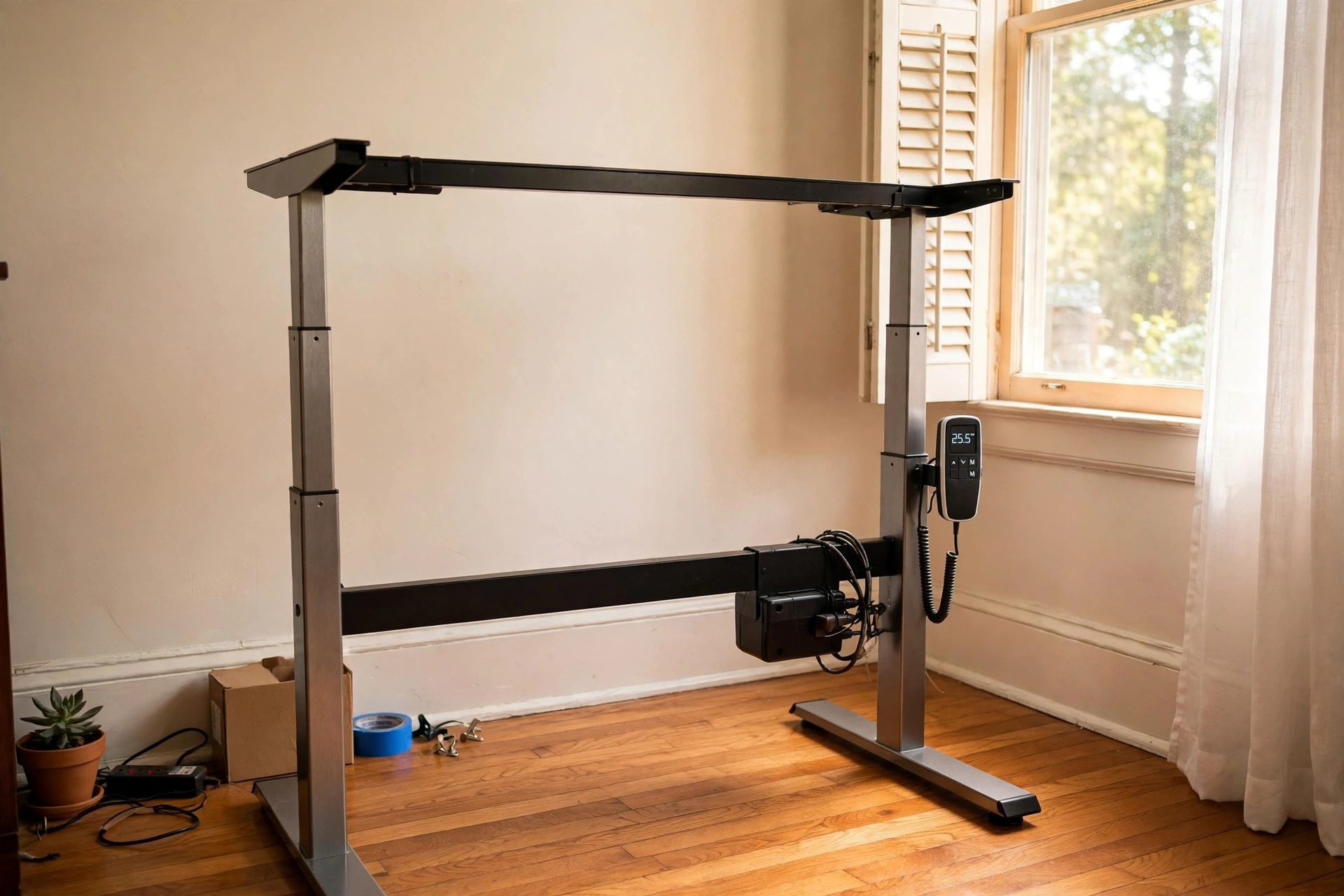
An adjustable height standing desk frame only is built from a few main parts.
The lifting columns are the steel legs that raise and lower. Most frames use two lifting columns, one on each side. Heavy-duty frames may use three, with the third leg set behind a wide top for extra support.
The motors drive the columns. Most electric frames have one motor in each lifting column, called a dual-motor design. Some low-cost frames use a single motor with a drive shaft that links both legs. Manual frames skip motors and use a hand crank instead.
The feet sit on the floor. Wider feet give more balance, which matters when the desk is raised high with a load on top.
The crossbar or frame rails connect the legs and hold the top. Many frames have width-adjustable rails, so one frame can fit tops from about 40 to 80 inches wide.
The control box and handset manage the motion. The handset lets you raise or lower the desk, and many models include memory buttons that store your favorite sit and stand heights.
What to Look for When You Choose
Weight Capacity
Weight capacity is the most important number. Add the weight of your top to the weight of everything you plan to place on it: monitors, computer, lamps, books, and papers. A solid wood top can weigh 50 to 80 pounds by itself. Choose a frame rated well above your total. A common rule is to keep the rated capacity at least 25 percent higher than your expected load.
Height Range
Check both the lowest and highest points. A good electric frame adjusts from about 24 to 50 inches. This range suits most adults for sitting and standing. If you are tall, make sure the top of the range reaches your standing elbow height. If you use a short chair, check the bottom of the range too.
Motor Type and Noise
Dual-motor frames lift faster and handle uneven loads better than single-motor frames. They also tend to run a bit quieter. Look for noise ratings near 50 decibels, which is about as loud as a quiet office. A noisy motor can disturb others in a shared room.
Frame Width and Top Size
Match the frame width to your planned top. Adjustable frames cover a range of widths, but check the exact numbers before you order. Leave a margin: a frame that spans 44 to 70 inches works best with tops of 48 to 72 inches.
Stability
A desk that wobbles at standing height is no good. Frames with thick lifting columns, often described as two-stage or three-stage, offer more stability. Three-stage columns have more overlap between sections and tend to sway less at full height. Read owner reviews with care and look for comments about side-to-side movement.
Handset and Controls
Memory presets save time. Four preset buttons are common. Anti-collision sensors are also useful: they stop the desk if it meets an object while moving, which protects the desk, your items, and small children.
Types of Frames
Electric Dual-Motor Frames
These are the most common. Two motors lift the desk smoothly and quickly. They suit most home office users and handle wide tops with ease.
Electric Single-Motor Frames
These cost less. One motor drives both legs through a shaft. They lift a bit slower and may struggle with very heavy tops, but they work fine for light setups.
Manual Crank Frames
A hand crank raises and lowers the desk. These frames are cheap, silent, and need no outlet. They are a good pick for a workshop or a room with no free socket. The trade-off is effort: cranking a heavy desk up and down many times a day grows old.
Pneumatic Frames
A few frames use gas springs, like office chairs do. They adjust fast and need no power. Load limits tend to be lower, so they suit light setups.
If you want a lighter change instead of a full frame, an adjustable height desk converter for existing table sits on top of a normal desk and raises your screen and keyboard. It costs less but offers less space.
Cost and Price
An adjustable height standing desk frame only can range widely in price. Manual crank frames often sell for under one hundred dollars. Basic single-motor electric frames range from about one hundred fifty to three hundred dollars. Dual-motor frames of good build quality run from about three hundred to six hundred dollars. Premium frames with three-stage columns and strong motors can pass eight hundred dollars.
Then add the top. A ready-made laminate top may cost forty to one hundred dollars. A butcher-block top from a home store often costs one hundred fifty to three hundred dollars, depending on size and wood. A custom hardwood top can cost more.
Shipping is worth checking. Frames are heavy, and some sellers add a freight charge at checkout. Warranty also matters: look for at least five years on the frame and motors, with clear terms on who pays return shipping for defects.
Picking the Right Top
The top is half the desk, and your frame-only purchase gives you full control here.
Thickness matters. Most frames accept tops from three quarters of an inch to one and a half inches thick. Check the screw lengths supplied with your frame so the screws do not poke through a thin top.
Material sets the look and the weight. Laminate tops are light and easy to clean. Butcher block gives a warm, natural look at a fair price. Solid hardwood is heavy but long lasting. Glass tops look sharp but show dust and add weight.
Pre-drill pilot holes before you drive screws. This stops the wood from splitting. Make sure the top is level on the frame before you fix it down, and tighten bolts in stages rather than all at once.
Care and Upkeep
A frame needs little care, but a few habits keep it running well.
Dust the lifting columns now and then. Wipe them with a dry cloth so grit does not work into the moving parts. Keep cords clear of the legs so nothing snags when the desk moves. Check bolts twice a year and snug any that have worked loose.
Most electric frames have a reset process that levels the legs if they drift apart in height. The manual explains how to hold the buttons to run this reset. Do this once a year, or any time the desk seems uneven.
Keep the control box dry and away from heat. If the desk stops moving, check that the power plug is firm and that the cables between the motors and the control box are fully seated before you call for help.
Safety
An adjustable height standing desk frame only is safe when used with care, but a few points deserve note.
Mind the pinch points where the columns meet the rails. Keep fingers, ties, and loose sleeves clear while the desk moves. Teach children not to play with the controls, and use the lock function on the handset if your model has one.
Set up the anti-collision feature if fitted, and test it with a soft object before you place valuables near the desk. Place the desk so the top cannot hit shelves or wall cabinets as it rises. Measure the full rise height plus a margin for items on the desk.
Cable management matters for safety too. Loose power cords can catch under a foot or snag on a chair. A tray or spine that guides cables as the desk moves is a cheap fix that prevents many small accidents.
Getting the Ergonomics Right
The frame is only part of good posture. Set the desk so your elbows rest at about a right angle when you type, with wrists straight. The top of your screen should sit near eye level. An adjustable monitor arm for dual screen setup can help you reach that height without stacking books.
Change position often. Standing all day can be as hard on the body as sitting all day. Many experts suggest a mix, such as sitting for an hour and standing for half an hour, with short walks in between. A standing desk anti fatigue mat for hardwood floors makes long standing sessions kinder to feet and joints.
FAQ
Is a frame-only desk hard to build?
Most owners finish the job in one to two hours. The steps are clear: fix the feet to the legs, join the legs with the rails, mount the control box and motors, set the top face down, then fix the frame to the top. Two people make it easier when the top is heavy.
Can I reuse a top I already own?
Yes, if it is flat, strong, and at least three quarters of an inch thick. Old office desk tops, dining tables, and solid doors all work. Check that the top has no warp, since a warped top will rock on the frame.
Will the frame fit a corner desk top?
Most straight frames do not suit L-shaped tops. A few makers sell three-leg frames for corner setups. If you want an L shape, look for a frame sold for that purpose rather than forcing a straight frame under it.
How long do the motors last?
A well-made electric frame should last ten years or more with normal home use. Duty cycles are stated in the manual, often about two minutes of run time followed by a rest period. Respect those limits and the motors will serve you well.
Are crank frames worth it?
They are worth it for light use and tight budgets. If you change height once or twice a day, a crank is fine. If you switch often, an electric frame is worth the extra cost.
Can I move the desk after it is built?
Yes. Lower it to the bottom, unplug it, and lift with a partner. Do not drag it by the legs, and do not carry it by the top alone, since that stresses the frame joints.
Final Word
An adjustable height standing desk frame only is a flexible way to build a standing desk that truly fits you. Choose a frame with enough lift capacity and a height range that suits your body, pair it with a top you like, and set the ergonomics with care. Done right, it will serve you for a decade or more.
For more background, see Herman Miller, Steelcase, and UPLIFT Desk. For more background, see The Spruce, Wirecutter, and PCMag. Buying guides are also published by IKEA and Wayfair.
References
Herman Miller. (n.d.). Office furniture and ergonomic seating. https://www.hermanmiller.com IKEA. (n.d.). Home furnishings. https://www.ikea.com PCMag. (n.d.). Technology product reviews. https://www.pcmag.com Steelcase. (n.d.). Office furniture and workplace research. https://www.steelcase.com The Spruce. (n.d.). Home and garden advice. https://www.thespruce.com UPLIFT Desk. (n.d.). Standing desks and ergonomic office furniture. https://www.uplift-desk.com Wayfair. (n.d.). Furniture and home goods. https://www.wayfair.com Wirecutter. (n.d.). Product reviews from The New York Times. https://www.nytimes.com/wirecutter
Was this guide helpful?

About David Wilson
The My Garden US editorial team writes practical, in-depth home and garden guides for American homeowners — tested advice, no fluff.