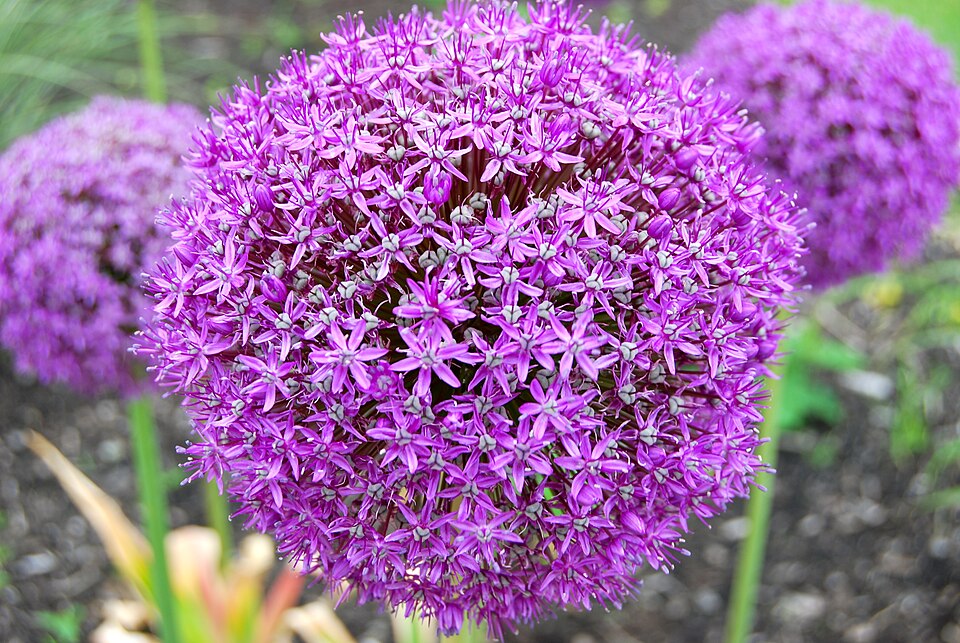
Few sights in the late-spring garden stop people like a drift of ornamental alliums - perfect spheres of tiny purple florets floating on stiff stems above the border, like something from a storybook. Allium giganteum and its relatives bring architecture to the flower bed: height, geometry, and a color that photographs beautifully. Learning how to grow ornamental alliums is straightforward bulb work with one non-negotiable rule: sharp drainage, or the bulbs rot.
Table of Contents
Table of Contents
These are the aristocratic cousins of onions and garlic, bred and selected for flowers instead of flavor. They bloom after the tulips and daffodils finish, bridging the gap to summer perennials, and their dried seed heads stand through winter as sculpture. Plant them once, site them right, and they return for years with almost no attention.

Photo: Wikimedia Commons
Getting Started: Choosing Your Globes
When it comes to how to grow ornamental alliums, getting the details right makes all the difference.

Many homeowners find that how to grow ornamental alliums is easier than they expected once they know the basics.
The range is wide: giant types like 'Globemaster' and Allium giganteum with softballs of purple on three-to-four-foot stems; medium drumsticks (Allium sphaerocephalon) in deep wine red; tiny Allium moly with yellow stars for the front of the border. For beginners, the big purple hybrids are the most dramatic and the most reliable. Buy firm, heavy bulbs - the giants are impressively large - and avoid anything soft or moldy. Gardenia.net has good variety profiles for sorting the options.
Ornamental alliums are hardy in zones 4 through 10, tougher than many gardeners expect. The USDA PLANTS database documents the wild species behind the garden forms, most of them from the dry mountains of Central Asia - which explains everything about their needs: sun, drainage, and a dry summer rest.
One design truth to accept up front: allium foliage is ugly. The strappy leaves yellow and wither just as the flowers peak, which is why every allium guide says the same thing - plant them among perennials that hide the fading foliage. Plan the companions at planting time, not after you are staring at brown leaves in early summer.
When and How to Plant
Many homeowners find that how to grow ornamental alliums is easier than they expected once they know the basics.
The key to how to grow ornamental alliums is choosing the right approach for your space and budget.
Plant in the cool season, about seven weeks before your first fall frost, when the soil has cooled. The bulbs root through fall and winter and explode in spring. If you want to check your USDA zone planting dates, our planting calendar will help you find that frost date and count back.
Set bulbs 6 to 8 inches deep - deeper for the giants - with the pointed end up, spacing them 8 to 12 inches apart depending on variety. Deep planting anchors the tall stems against wind and protects the bulbs from temperature swings. Water once after planting and let fall weather handle the rest.
Site them within the perennial border, not in isolated bulb beds. The classic planting threads alliums through coneflowers, ornamental grasses, and black-eyed Susans - plants whose emerging foliage hides the allium leaves and whose summer flowers take over the show after the globes fade. This companion-planting is not optional decoration; it is the difference between a stunning border and an embarrassing one. The Almanac planting calendar helps with fall timing.
Soil and Sun
The key to how to grow ornamental alliums is choosing the right approach for your space and budget.
With a little planning, how to grow ornamental alliums can fit even a busy schedule.
Full sun is the rule - six hours minimum, more for the biggest varieties. Alliums in shade grow weak stems that flop under the weight of the flower heads. The sunniest part of the border is the right part.
Sharp drainage is the non-negotiable. Allium bulbs rot in waterlogged soil, especially during winter wet and summer dormancy. Well-drained sandy loam is ideal; heavy clay needs serious amendment or raised beds. If your garden stays soggy, alliums will be a one-season experiment - improve the drainage or plant them in a raised bed where you control the soil. This is the single most common cause of allium failure, and it is entirely preventable.
They are not hungry plants. Average soil grows fine alliums; the compost you would work in for any perennial bed is plenty. Do not overfeed - excess nitrogen makes soft growth that flops. A little bone meal in the planting hole is the traditional feeding and all most gardens need.
Watering and Feeding
With a little planning, how to grow ornamental alliums can fit even a busy schedule.
Before you start, it helps to understand how how to grow ornamental alliums works in real homes.
Water once after planting, then leave them alone until spring growth appears. Winter moisture handles dormancy; spring rains usually handle growth. In a dry spring, water during the stem-elongation phase - the weeks when the flower stalk is rising - since drought then can stunt the bloom. After flowering, taper off; dormant bulbs want dry soil for summer.
Do not fertilize established plantings. Alliums are light feeders, and the initial planting-hole feeding carries them for years. This is refreshingly low-maintenance compared to hungry annuals, and one reason allium drifts persist with zero attention. The University of Minnesota Extension lists alliums among the lowest-care bulbs for northern gardens.
Mulch is optional and often unnecessary. A light winter mulch in the coldest zones moderates freeze-thaw heaving, but pull it back in spring so the emerging foliage gets light and air.
Care Through the Season
Before you start, it helps to understand how how to grow ornamental alliums works in real homes.
A good plan for how to grow ornamental alliums saves time, money, and frustration.
Leave the seed heads standing after bloom. This is the great pleasure of alliums that beginners miss: the dried globes - perfect tan spheres on stiff stems - are architectural and beautiful for months, standing through summer and into winter. They make superb dried arrangements too. Resist the urge to "tidy up" by cutting them down; the winter garden is better for them.
Watch for the two real problems: onion white rot in infected soils (bulbs rot with a white fungal growth - destroy affected bulbs, do not compost, and do not plant alliums there for years) and slugs on the emerging leaves in damp springs. White rot is rare in home gardens unless you plant alliums where onions had disease; buy clean bulbs and rotate the spot. Slugs are handled the usual way - handpicking, traps, iron-phosphate bait. The Clemson Home and Garden Information Center covers both in its bulb guides.
Divide crowded clumps every few years, when flowering declines. Dig after the foliage has died back, separate the bulbs, and replant immediately. One congested clump becomes several new drifts - free alliums, and the divisions often bloom better than the crowded parent.
The foliage question, revisited: as the leaves yellow, do not cut them. They are feeding the bulb for next year. The companion perennials you planted around them - bee balm, daylilies, grasses - will hide the decline. Plan for it and you will never notice it.
Harvest
A good plan for how to grow ornamental alliums saves time, money, and frustration.
For most people, how to grow ornamental alliums comes down to a few smart choices.
The dried seed heads are the harvest. Cut them when fully dry - tan, papery, rattling slightly - for dried arrangements that last indefinitely. They need no preservative, no wiring, no fuss; stand them in a tall vase and they are sculpture. Spray-painted gold or silver, they become holiday decorations, though purists prefer them natural.
For fresh cutting, take stems when about half the florets have opened. They last well over a week in the vase and the geometric form is striking in modern arrangements. Cut in the cool of the morning and put stems straight into water.
Leave plenty standing in the garden. The winter interest of allium seed heads - tan globes against snow, rattling in the wind - is one of the quiet pleasures of the cold months, and the seeds feed small birds. The Missouri Botanical Garden specifically recommends leaving them for winter structure.
Troubleshooting
For most people, how to grow ornamental alliums comes down to a few smart choices.
If you are new to how to grow ornamental alliums, start with the simplest option and build from there.
Bulbs rotted. Waterlogged soil - the number one allium killer. Improve drainage, plant shallower in clay (but not too shallow), or move to raised beds. Never plant alliums where water stands in winter.
Stems flopped. Too much shade, too much nitrogen, or bulbs planted too shallow. Full sun, lean soil, and proper 6-to-8-inch depth grow stiff stems. The giant varieties in rich soil sometimes need the depth plus a sheltered spot.
No flowers, just leaves. Foliage cut too early last year, bulbs too young (some take two years to reach blooming size), or white rot. Also, small bulbs of giant varieties need a season or two to size up - buy the biggest bulbs you can.
White fluffy fungus on bulbs. Onion white rot. Destroy affected bulbs - do not compost - and avoid planting any allium family member in that spot for several years. The Old Farmer's Almanac notes this as the serious allium disease to respect.
Slugs shredded the emerging leaves. Damp spring classic. Bait, handpick, and clear winter mulch promptly so shoots emerge into air. The plants usually outgrow the damage.
Ornamental alliums are the exclamation points of the late-spring border - plant them deep, give them sun and drainage, hide their tatty leaves behind good companions, and leave the seed heads for winter. The USDA National Agricultural Library holds the nursery catalogs that brought these Central Asian beauties to American gardens. A drift of purple globes is worth every bit of the fall planting effort.
References
If you are new to how to grow ornamental alliums, start with the simplest option and build from there.
When it comes to how to grow ornamental alliums, getting the details right makes all the difference.
- Clemson University Cooperative Extension. (n.d.). Home & garden information center. https://hgic.clemson.edu/
- Gardenia. (n.d.). Ornamental allium growing guide. https://www.gardenia.net/
- Missouri Botanical Garden. (n.d.). Plant finder. https://www.missouribotanicalgarden.org/
- U.S. Department of Agriculture. (n.d.). PLANTS database. https://plants.usda.gov/home
- University of Minnesota Extension. (n.d.). Spring flowering bulbs. https://extension.umn.edu/
Many homeowners find that how to grow ornamental alliums is easier than they expected once they know the basics.
When it comes to how to grow ornamental alliums, getting the details right makes all the difference.
Was this guide helpful?

About My Garden US
The My Garden US editorial team writes practical, in-depth home and garden guides for American homeowners — tested advice, no fluff.
You May Also Like
How to Grow Cornflowers from Seed
November 18, 2026 5 views
Wildflower Seed Mixes for Florida Homes: A Plain Guide for American Gardeners
January 21, 2026 24 views
Peat Pots for Seedlings: A Guide for American Homes
July 7, 2026 17 views