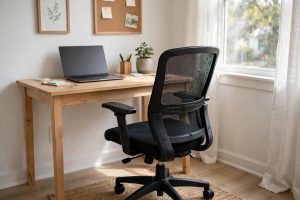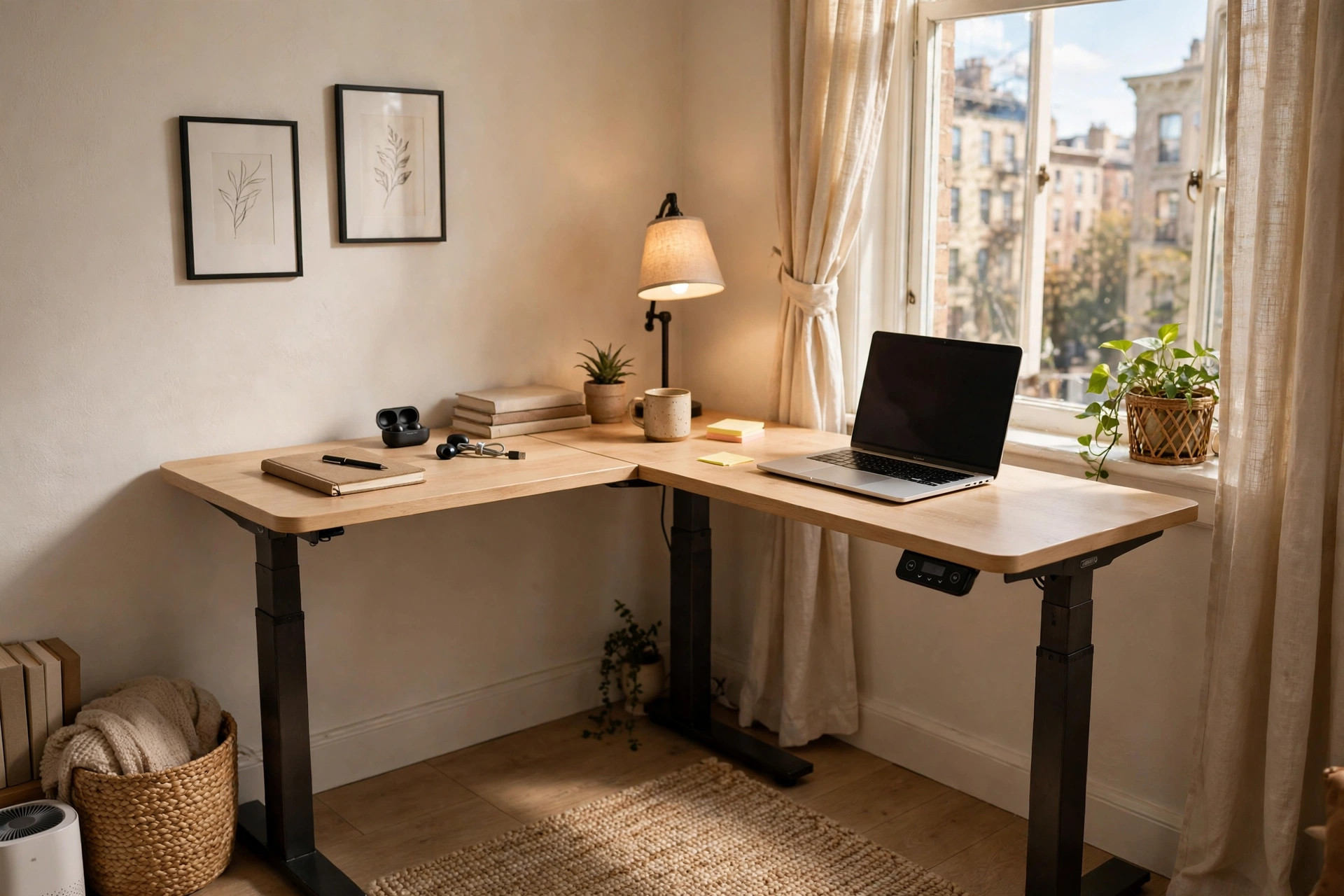

Many people now work from home, and many of them live in apartments. Space is tight. A spare room for an office is rare. A full size desk takes up half the living room. That is why a small corner standing desk for apartment living has become so popular. It fits into a corner that would otherwise sit empty, and it lets a person sit or stand while they work, all without taking over the room.
This article explains everything a buyer should know: why the desk matters, what to look for, the main types, the cost, and how to care for it. It also answers the most common questions people ask before they buy.
Why It Matters
A desk is more than a table. It is where the work of the day gets done. In an apartment, every square foot counts. A straight desk along a wall eats into the room. A corner desk uses space that often goes to waste. The corner of a room is the one place where two walls meet and little else happens. A small corner standing desk for apartment living turns that dead corner into a real workspace.
The standing feature matters too. Most people sit for long hours. Their backs ache. Their necks stiffen. Their legs feel tired. A desk that moves up and down lets the worker change position through the day. An hour of standing, an hour of sitting, and the body feels better. Doctors have noted for years that long sitting is hard on the body. A sit-stand desk does not cure everything, but it gives the body more choice.
There is a third reason. Many apartments serve as home, office, and gym all at once. Furniture must do double duty. A compact standing desk can be a work desk by day and a craft table or study desk by night. Some fold flat against the wall. Others roll aside on casters. The best designs fit the rhythm of small-space life.
How to Choose the Right One: Small Corner Standing Desk for Apartment Living
Before buying, a shopper should measure the corner. This sounds simple, yet it is the step most people skip. Take a tape measure to both walls. Write down the width available on each side. Note the height of the windowsill if the desk will sit under a window. Check for outlets. A desk with a motor needs power. A cable tray needs room behind the desk.
Next, think about the work surface. A small corner desk is often L-shaped or triangular. The usable area is smaller than it looks because the corner point is hard to reach. A good rule is to plan for the size of a laptop, a monitor, and a small lamp, plus room for a notepad. If two monitors are needed, look for a wider model. Shoppers can read roundups of top-rated office furniture to see how reviewers test real work setups.
Weight capacity is another key point. A standing desk must lift the monitor, the keyboard, the lamp, and anything else on top. A small motor can lift twenty or thirty pounds with ease, but a heavy setup may strain it. Check the listed capacity and keep the load below it. A desk that lifts smoothly and quietly will be used more often. A noisy, slow motor gets left at one height, and then the buyer paid for a feature they never use.
Stability matters most of all. Some desks wobble at full height. Test reports and expert reviews often mention this. A crossbar between the legs adds strength. So does a thick steel frame. If the desk will hold a large monitor, stability is worth more than a few extra inches of width.
Also consider the noise level of the motor. In an apartment with thin walls, a loud lift can bother a neighbor or a sleeping child. Most modern desks run near a low hum. Dual motors are often quieter and stronger than single motors. They also lift more evenly, so the desk does not tilt to one side.
Types and Options
There are four main types of small corner standing desks for apartment living.
Manual crank desks. These raise and lower with a hand crank. They cost less and never need electricity. They are quiet. The trade is speed and ease. Turning a crank fifty times to change height gets old fast. They suit people who change position once or twice a day.
Electric desks. These use one or two small motors. A button or a handset moves the desk up and down. Many standing desk models have memory presets for sit and stand heights. Electric desks are the most popular choice. They cost more than manual ones, but the ease of use wins most buyers over.
Converter or riser desks. These sit on top of an existing table and raise the monitor and keyboard. They are the cheapest way to stand at work. They take up desk space, though, and many are small. In a tight corner they can work well because the base table can be a simple shelf. They suit renters who do not want to buy new furniture.
Fold-down wall desks. These mount to the wall and fold down when needed. Some designs include a standing height. They free the floor completely when closed. They need a solid wall for mounting, so renters must check their lease. For a true studio apartment, nothing beats a desk that disappears. Small-space furniture collections often show clever versions of this idea.
Beyond the lift type, buyers choose the shape. The L-shape gives two work zones, one along each wall. The triangle shape fits deep corners but wastes less wall space. Some desks are simply small rectangles pushed into a corner. Each shape has fans. The L-shape is the most common and the easiest to shop for.
Materials vary too. Laminate tops are light and cheap and wipe clean. Solid wood tops are heavy and handsome and cost more. Bamboo tops sit in the middle. They are sturdy, light, and easy on the eye. For a small apartment where the desk is always in view, a nice top makes the room feel better.
Cost and Price
Prices for a small corner standing desk for apartment living fall into three bands.
Budget models run from about one hundred fifty to three hundred dollars. These are often manual crank desks or small electric models with a single motor. The tops are laminate. The frames are light steel. They work fine for a laptop setup. Heavy monitor arms may be too much for them.
Mid-range models run from three hundred to six hundred dollars. This is where most buyers land. The desks have dual motors, memory presets, and stronger frames. Tops are thicker and look better. Many well-known brands sell in this range. Big online furniture retailers carry wide selections, and comparison sites test stability and noise so buyers can judge value.
Premium models run from six hundred dollars to over a thousand. These come from office furniture makers with long histories in workplace design. The motors are quiet. The frames are built for years of daily use. The tops use real wood or high-grade bamboo. A premium desk is an investment, but it may outlast two or three cheap ones.
Renters on a tight budget should also count the extras. A monitor arm, a cable tray, and an anti-fatigue mat add to the total. The mat alone is worth the money for anyone who stands for hours. Good chairs matter too, and a <a href="//”>chair made for hardwood floors keeps the flooring safe in a rental.
Care and Upkeep
A standing desk needs little care, but a few habits keep it working for years. Dust the top each week. Wipe spills at once so they do not seep into the edge of a laminate top. Oil a wood top once or twice a year with a product made for furniture.
Check the bolts and screws every few months. Movement loosens hardware over time. A loose bolt is often the cause of a wobble that was not there at first. Tighten with care and do not strip the threads.
Keep the motor free of dust. Do not stack boxes against the legs. Make sure cables do not snag when the desk moves. A cable that catches can pull a monitor off the desk. A simple cable tray or a few clips solve the problem.
If the desk has a handset with memory, test the presets now and then. If a preset drifts, reset it to the right height. For a manual crank desk, keep the crank stored where it will not get lost. A missing crank turns the desk into a fixed-height table.
Apartments bring their own care issue: humidity. Wood tops may swell. Laminate tops may bubble at the edges.
Safety
A moving desk has moving parts, and a buyer should respect them. Keep fingers clear of the lift columns. Teach children that the desk is not a toy. Some handsets have a lock so children cannot run the motor.
Do not overload the desk. The maker lists a weight limit. Stay under it. An overloaded motor burns out, and a tilted top can slide items onto the floor or onto a foot.
Anchor tall setups when possible. In a corner this is easy because two walls are close. A simple bracket ties the desk to the wall and stops it from tipping. This matters in homes with small children or in quake-prone areas. The national product safety agency publishes guidance on anchoring furniture, and renters can use removable brackets that leave little mark.
Watch the cord. A power cord stretched across the floor is a trip hazard. Run it along the wall to the nearest outlet. Use a cord cover if the outlet is far. Keep liquids away from the motor and the handset.
Finally, mind posture. A standing desk helps only if the screen is at eye level and the elbows rest near ninety degrees. Raise the monitor on a stand or an arm. Wear supportive shoes or stand on a mat. Shift weight from foot to foot.
Setting It Up in a Small Apartment
Placement decides how well the desk works. Put the desk in the corner with the best light. Natural light cuts eye strain. But do not face a bright window head-on; the glare washes out the screen. A side angle is best.
Think about noise. If calls are part of the job, pick the corner farthest from the kitchen and the front door. A room divider can help in a shared space, and an <a href="//”>adjustable divider for a shared home office adds privacy without a wall.
Protect the floor. Standing desks move, and chairs roll. A hard chair wheel can scratch wood floors in a month. A <a href="//”>rug made to protect hardwood floors under the desk and chair saves the deposit. Felt pads under the desk feet stop small shifts from marking the floor.
Plan the cables before the first workday. Plug in the monitor, the laptop dock, the lamp, and the desk motor. Bundle the slack with ties. Leave enough slack for the desk to rise to full height. It is easier to fix a snag on day one than after a monitor has fallen.
Frequently Asked Questions
Will a standing desk fit in a very small corner? Yes. Many models are made for corners as narrow as thirty inches on each wall. Measure first and compare to the product dimensions. A triangular model or a compact L-shape works best in tight spots.
Is a manual or electric desk better for an apartment? Electric desks win for daily use because the height change is effortless. Manual desks cost less and make no noise. If the budget allows, choose electric. If the outlet is far or the lease limits changes, a manual desk is a fine choice.
How much weight can a small standing desk hold? Most small models hold between one hundred fifty and two hundred fifty pounds. That covers a monitor or two, a laptop, and desk items with room to spare. Always check the listed limit and keep the load below it.
Can I use a standing desk on carpet? Yes, but stability drops on thick carpet. Use a firm mat under the desk or pick a model with wide feet. On hard floors, add felt pads to protect the surface.
Do I need an anti-fatigue mat? It is not required, but most standing workers find it helps a great deal. A mat cushions the feet and legs. It makes standing for an hour feel easy instead of tiring. It is one of the cheapest upgrades for a stand-up setup.
Will my landlord mind a standing desk? A freestanding desk needs no permission. Only wall-mounted fold-down desks need approval, since they put holes in the wall. When in doubt, ask the landlord before drilling.
A Final Word
A small corner standing desk for apartment living solves two problems at once. It finds room where there seemed to be none. And it gives the body the freedom to sit and stand through the workday. The buyer who measures first, checks the weight limit, and plans the cables will end up with a desk that fits the space and the life. In a small home, that is no small thing.
References
Herman Miller. (n.d.). Office furniture and ergonomic seating. https://www.hermanmiller.com IKEA. (n.d.). Home furnishings. https://www.ikea.com PCMag. (n.d.). Technology product reviews. https://www.pcmag.com Steelcase. (n.d.). Office furniture and workplace research. https://www.steelcase.com The Spruce. (n.d.). Home and garden advice. https://www.thespruce.com UPLIFT Desk. (n.d.). Standing desks and ergonomic office furniture. https://www.uplift-desk.com Wayfair. (n.d.). Furniture and home goods. https://www.wayfair.com Wirecutter. (n.d.). Product reviews from The New York Times. https://www.nytimes.com/wirecutter
Was this guide helpful?

About David Wilson
The My Garden US editorial team writes practical, in-depth home and garden guides for American homeowners — tested advice, no fluff.
You May Also Like
The Best Ergonomic Office Desk Chair for Back Pain: A Simple Buying Guide
March 23, 2026 0 views
LED Desk Lamp with Wireless Charging Base: A Practical Guide for Home Offices
May 30, 2026 0 views
The Best Small Desk for Chromebook and Homework
June 2, 2026 0 views