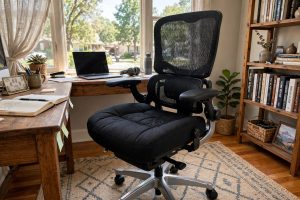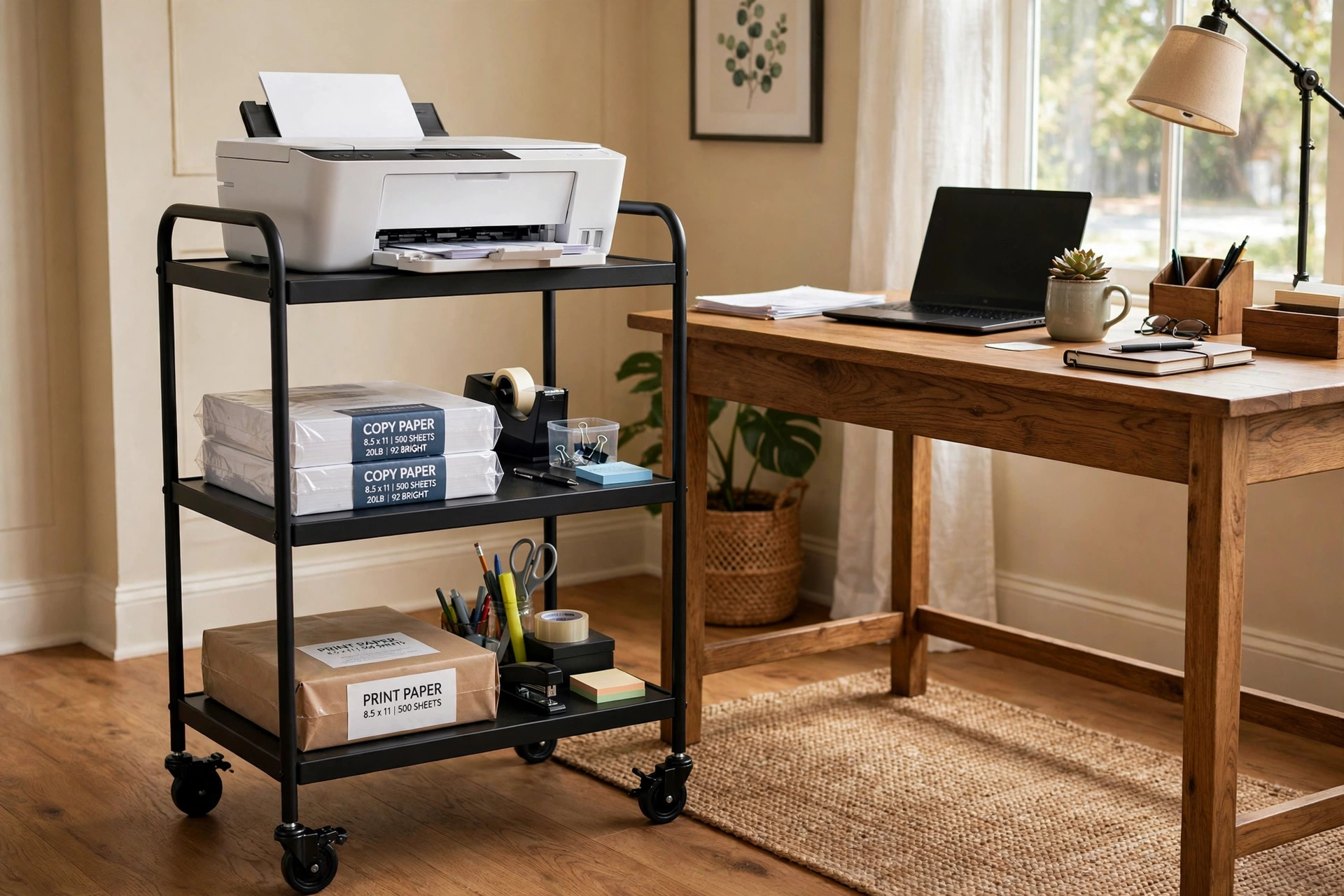

A rolling cart for home office printer stand is a small, sturdy cart on wheels that holds your printer. It gives your printer a home of its own, away from your desk. The wheels let you move it where you need it and roll it out of the way when you do not. Many home workers find that this simple piece of furniture changes the whole feel of a room. The desk becomes a clean work surface. The printer stays close, yet out of sight. Paper, ink, and supplies can live on the lower shelves. In short, a rolling cart for home office printer stand solves a common problem in a plain and honest way. Many home office ideas start with exactly this kind of small, practical change.
Why It Matters
A printer takes up a great deal of room. On a desk, it eats the space where your arms and papers should go. On the floor, it collects dust and is hard to reach. A rolling cart puts the machine at a good height, near the desk, but not on it. This matters for comfort. You should not have to bend to the floor or stretch across the desk to grab your pages.
The cart also keeps your work flow smooth. You can roll it next to you when you print a large job. Then you can roll it back to its corner when the job is done. This flexibility is worth a lot in a small home office. Rooms that serve two purposes, such as a guest room and an office, gain the most. The printer cart can be moved aside when guests arrive.
There is also the matter of noise. Printers hum, whir, and click. When the machine sits on the desk, the sound and the shake travel right to your hands. On a cart, some of that noise stays at a distance. Your desk stays calm. Your calls stay clear.
Finally, a cart helps with order. Most carts have two or three shelves. The top shelf holds the printer. The lower shelves hold paper reams, spare ink, and a small tray for finished pages. Everything has a place. This kind of order is the quiet backbone of a good home office. If you are setting up the room from scratch, home office furniture guides can help you plan the layout around the cart, the desk, and the chair.
What to Look For When You Choose: Rolling Cart for Home Office Printer Stand
Start with size. Measure your printer. Write down its width, depth, and height. Then look for a cart whose top shelf is at least two inches wider and deeper than the machine on every side. A tight fit looks neat, but you need room to open the paper tray and lift the lid. Do not forget the height. The cart must slide under nothing and stand clear of the wall.
Next, check the weight rating. Printers are heavy. A small inkjet may weigh twelve pounds. A full-size laser printer can weigh forty pounds or more. Add the weight of paper and supplies. Then choose a cart rated for at least twenty percent more than that total. A cart that is pushed past its limit will bow, wobble, and wear out fast.
Wheel quality comes next. Look for casters that lock. A cart that rolls away while you print is no cart at all. Four locking casters are best. Rubber wheels roll quietly on wood and tile. Hard plastic wheels are fine on carpet. If your office floor is carpeted, wider wheels roll more easily and leave fewer marks.
Think about shelf height and spacing. The top shelf should be near waist height so you can load paper without bending. Lower shelves should be tall enough for a standard ream of letter paper, which is about nine inches tall when stacked. Adjustable shelves are a fine feature. They let you fit the cart to your machine and your habits.
Material matters too. Steel carts are strong and last for years. Wood carts look warm and match home furniture. Plastic carts are light and cheap but may sag under a heavy laser printer. For most home offices, a steel frame with wood or metal shelves is the sound choice. Shoppers comparing finishes often browse furniture and home accessories collections to see how different materials look in a real room.
One more point: cable management. A good cart has a place for the power cord and the printer cable, or at least open sides where you can tie them neatly. Loose cables snag on wheels. Plan for a short cable route to the wall outlet.
Types and Options
Rolling printer carts come in several common forms. Each suits a different kind of office.
The two-tier cart is the most common. It has a top shelf for the printer and one shelf below for supplies. It is compact and light. It suits a small inkjet and a modest stack of paper. It is also the least costly type.
The three-tier cart adds a second lower shelf. This gives room for paper, ink, and a finished-work tray all at once. It is the best choice for a busy home office where printing is a daily task. It takes up little more floor space than a two-tier model.
The printer stand with doors is a cabinet on wheels. It hides the printer behind a door or a pair of doors. The room looks tidy. The machine is safe from dust and curious hands. The trade is access: you must open the doors to load paper and collect pages. Some models have a pull-out shelf that brings the printer out for use.
The mobile file cart with printer top does two jobs. The top holds the printer. Below are drawers or a hanging file section for documents. This is a smart pick for a small office with no filing cabinet. Keep in mind that drawers add weight, so the frame and wheels must be strong. Many workplace furniture makers offer mobile storage lines built on the same idea.
The corner cart is shaped to fit in a corner. It uses dead space that no other furniture can use. It is a fine answer for a very small room. The round or angled front still gives full access to the printer.
When you compare types, think of your daily routine. If you print every day, choose three tiers or a file cart. If you print once a week, a two-tier cart or a cabinet stand is enough. Match the cart to your life, not to the catalogue photo.
Cost and Price
Prices for a rolling cart for home office printer stand vary with size, material, and brand. A basic two-tier metal cart costs between twenty-five and sixty dollars. It will hold a light inkjet and some paper. It is a fine start for a tight budget.
A three-tier steel cart from a known maker runs between sixty and one hundred twenty dollars. These carts carry more weight, roll better, and last longer. For a home office that prints every day, this is the sweet spot. The extra cost buys real strength. Independent product reviews can help you compare build quality before you buy.
Cabinet-style printer stands with doors cost between ninety and two hundred dollars. Wood models cost more than steel ones. File carts with drawers fall in the same range. Prices rise with finish quality and brand name.
Set a budget before you shop. Then spend within it on the strongest cart you can find. A cheap cart that fails in a year is not a bargain. It is a lesson. One fair rule: spend more on the wheels and the frame than on the finish. The finish pleases the eye. The frame does the work.
Care and Upkeep
A printer cart asks little, but a little care goes far. Dust the shelves once a week. Paper dust settles everywhere and finds its way into the printer. A quick wipe keeps both the cart and the machine clean.
Check the wheels once a month. Hair and thread wrap around caster axles. This makes the cart hard to push and can stain floors. Turn the cart over, or lock the wheels and tilt it, and cut away any wrapped fibers. A drop of light oil on each axle keeps the wheels turning free.
Tighten the bolts twice a year. A cart that is rolled daily will loosen at its joints. A small wrench and five minutes are all it takes. Pay attention to the shelf brackets. They carry the load.
Keep paper dry and flat on the lower shelves. Do not stack heavy books on the paper shelf. The stack can warp the shelf and curl the paper. Curled paper jams printers. Store spare ink upright, away from heat, as the maker directs.
If the cart has a wood finish, treat it like any wood furniture. Wipe spills at once. Use coasters under drinks. Sunlight fades finishes over time, so keep the cart out of the path of strong afternoon sun if you can.
Safety
A rolling cart is safe when it is used with sense. Keep the load balanced. Put the heaviest items, such as the printer and paper reams, low and centered. A top-heavy cart can tip when it is rolled over a rug edge or a cord.
Always lock at least two casters when the cart is parked. A cart that drifts can pull its power cord out of the wall or knock a cup of coffee onto the printer. Make this a habit, the way you lock a door.
Mind the cord. Route the power cord so it hangs free of the wheels. A cord caught under a wheel can be cut or pulled loose. Use a short cord if the outlet is near, and tie up the slack with a simple cable tie.
Keep the cart away from heat vents and out of damp corners. Printers dislike heat and moisture. Both shorten the life of the machine and the ink.
If small children visit the office, lock the wheels and keep the printer lid closed. Children are drawn to buttons and moving parts. A locked cart is a stable cart.
Frequently Asked Questions
Will a rolling cart hold a heavy laser printer?
Yes, if you choose the right cart. Look for a steel frame and a weight rating that covers the printer, paper, and supplies with room to spare. Check the rating on the top shelf, not just the whole cart. A three-tier steel cart rated for one hundred pounds or more will serve most home laser printers well. Check technology reviews and buying guides if you are unsure how much your printer weighs.
What size cart do I need for a standard printer?
Measure your printer first. Most home printers are about sixteen inches wide and fourteen inches deep. A cart top of eighteen by sixteen inches fits them with room to open trays. If you use a wide-format printer, measure twice and choose a cart with a larger top. Guessing leads to returns.
Do the wheels damage hardwood floors?
Good rubber casters are kind to wood floors. Cheap hard plastic wheels can scratch. If you are unsure, place a low-pile mat under the cart. It protects the floor and still lets the cart roll. Check the wheels for grit before rolling the cart across the room.
Can I use the cart for more than a printer?
Yes. Many people keep a scanner, a small shredder, or a charging station on the lower shelf. The rule is simple: respect the weight limit and keep the printer on top for easy access. A cart that tries to do everything becomes cluttered, so give each shelf one job.
Is a cabinet printer stand better than an open cart?
It depends on your priority. A cabinet hides the printer and keeps dust out. An open cart gives faster access and better air flow around the machine. If your office doubles as a living space, a cabinet looks tidier. If you print all day, an open cart saves time. Ergonomic seating and office furniture guides take the same view: fit the furniture to the work you actually do.
How do I keep the cart from rolling during printing?
Lock the casters. Every decent printer cart has locking wheels. Lock at least two before you print. This stops drift and keeps the paper feed steady. It is the single most useful habit for cart owners.
A Final Word
A rolling cart for home office printer stand is a small buy with a large effect. It frees your desk, quiets your room, and puts your printer where your hands can reach it. Choose a cart that fits your machine, rates above its weight, and rolls on good locking wheels. Care for it with a dusting and a yearly tightening. Then enjoy the order it brings. The best office tools are the ones you stop noticing. A good printer cart becomes one of them. Many workers pair the cart with standing desks and office accessories to build a full setup that moves with them. Pair it with a well-chosen desk and chair for a room that works as hard as you do, and consider simple steps to keep the whole space tidy, from a small office desk with storage drawers white to a home office desk chair without wheels stable and a neat home office cable raceway for wall mounted tv.
References
Herman Miller. (n.d.). Office furniture and ergonomic seating. https://www.hermanmiller.com IKEA. (n.d.). Home furnishings. https://www.ikea.com PCMag. (n.d.). Technology product reviews. https://www.pcmag.com Steelcase. (n.d.). Office furniture and workplace research. https://www.steelcase.com The Spruce. (n.d.). Home and garden advice. https://www.thespruce.com UPLIFT Desk. (n.d.). Standing desks and ergonomic office furniture. https://www.uplift-desk.com Wayfair. (n.d.). Furniture and home goods. https://www.wayfair.com Wirecutter. (n.d.). Product reviews from The New York Times. https://www.nytimes.com/wirecutter
Was this guide helpful?

About David Wilson
The My Garden US editorial team writes practical, in-depth home and garden guides for American homeowners — tested advice, no fluff.
You May Also Like

The Best Small Desk for Chromebook and Homework
June 2, 2026 0 views
A Portable Standing Desk for Working from Anywhere: What to Know Before You Buy
March 25, 2026 0 views
How to Choose an Adjustable Standing Desk for a Tall Person 6ft in Height
January 9, 2026 0 views