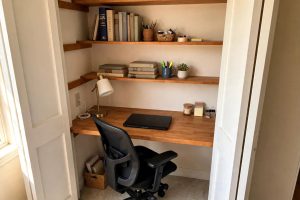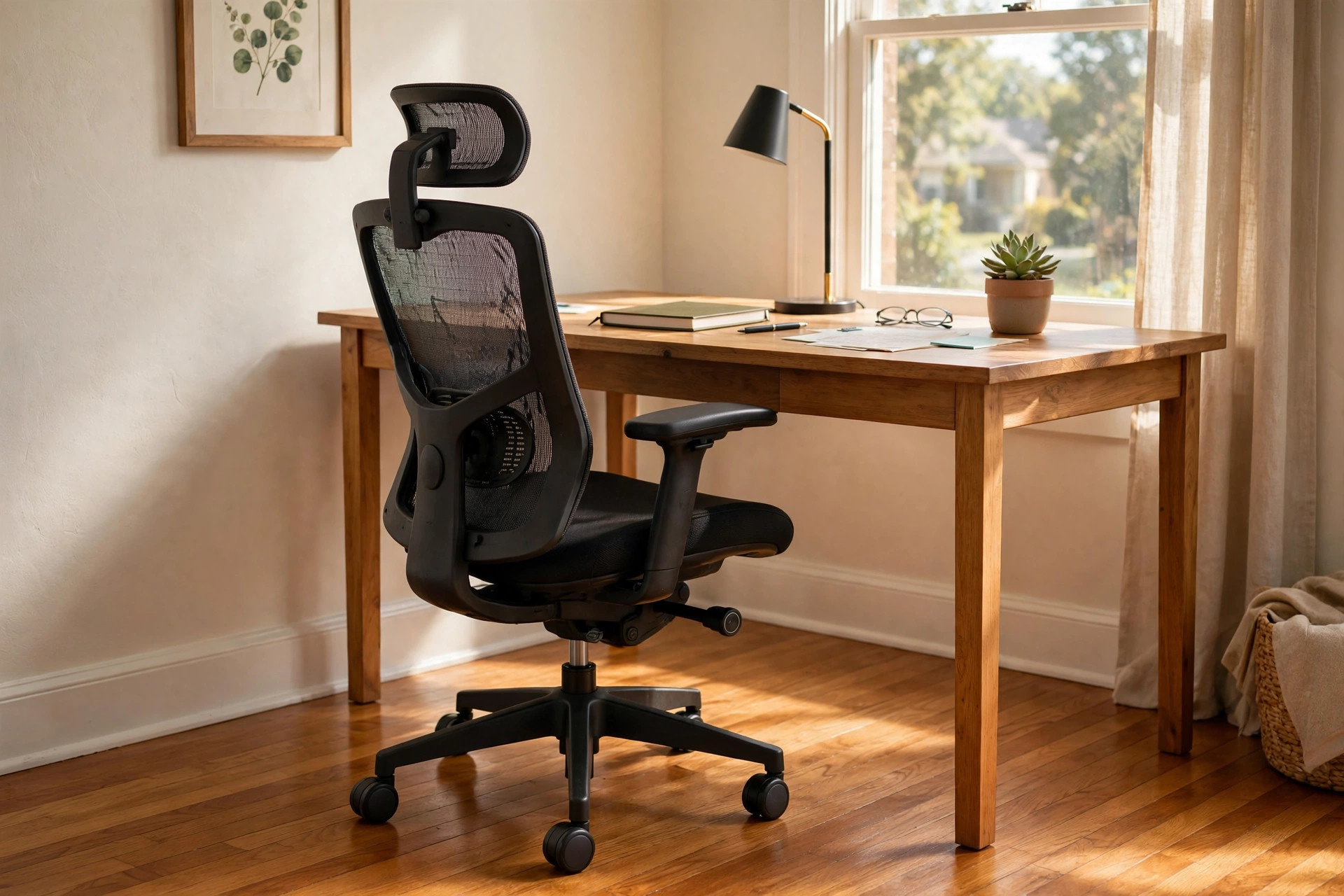

A home office desk chair for hardwood floors has to do two jobs at once. It must keep you comfortable through long work hours, and it must protect the wood floor beneath it. Hardwood floors scratch more easily than carpet. A chair with hard plastic casters can leave marks in a few weeks. The good news is that a few simple choices will solve the problem. This guide explains what to look for, which chair types work best, what they cost, and how to keep both your chair and your floor in good shape.
Why It Matters
Hardwood floors are smooth and hard. That is part of their beauty. But a desk chair rolls back and forth dozens of times a day. Each small roll can press grit and dust into the finish. Over months, the area under the chair can turn dull or show fine scratches. Refinished wood floors are expensive to repair. A good home office desk chair for hardwood floors prevents this damage from the start.
Comfort matters just as much. Many people now work from home five days a week. A poor chair can cause back pain, stiff shoulders, and tired legs. When you choose a chair, you are really choosing how your body will feel at the end of each day. The floor question is only one part of the choice, but it is an important part.
What to Look for When You Choose: Home Office Desk Chair for Hardwood Floors
The Wheels
The single most important feature is the wheel. Standard office chairs come with hard plastic casters. These are fine on carpet but harsh on wood. Look for chairs with soft rubber or polyurethane wheels. These roll quietly and do not dig into the finish. Many chair makers call them “hardwood-safe” casters. If your current chair has hard wheels, you can buy a set of soft replacement wheels. They fit most chairs and cost far less than a new chair.
The Base
The five-leg star base is the most common. It spreads weight over a wide area, which helps protect the floor. Check the base material. Aluminum bases are strong and light. Nylon bases are cheaper but can feel less solid. Either one works if the wheels are soft.
Seat Comfort
Sit in the chair for at least ten minutes before you decide, if you can. The seat should support your thighs without pressing behind your knees. A waterfall edge on the front of the seat helps. The cushion should be firm enough to hold its shape but soft enough for long days. Foam density matters more than foam thickness.
Back Support
Look for a backrest that follows the curve of your spine. Adjustable lumbar support is a strong plus. Your lower back does most of the work when you sit. A chair that supports it will cut down on afternoon aches. Mesh backs breathe well and keep you cool. Padded backs feel warmer and softer. Both styles can work well on hardwood floors.
Armrests
Adjustable armrests let you set the height so your shoulders stay relaxed. If your desk is tall, high armrests may hit the desk edge. Some chairs have armrests that flip up or slide out of the way. If you tuck your chair fully under the desk each day, consider one of the options like an adjustable drafting chair for tall desk users when your desk sits high, since the foot ring changes how the chair balances.
Floor Protection Features
Some chairs are sold as “floor friendly.” This usually means they come with soft casters from the start. Others rely on the buyer to add a chair mat. A clear vinyl or polycarbonate mat is a proven way to guard the finish. Mats for hardwood should be thin and flat, without the sharp spikes meant for carpet. A mat plus soft wheels is the safest setup.
Types and Options
Task Chairs
The task chair is the classic office chair. It has five wheels, adjustable height, and often a tilt feature. Prices start low, and the range of models is wide. For hardwood floors, pick a task chair with soft casters or plan to replace them. Task chairs suit desks of standard height and most body sizes. Reviewers at Wirecutter and PCMag test many of these chairs each year, and their roundups can help you compare models.
Ergonomic Chairs
Ergonomic chairs add more adjustments: seat depth, back angle, lumbar height, armrest width. They cost more, but they repay the money in comfort. If you sit more than six hours a day, this type is worth a close look. Makers such as Herman Miller and Steelcase built their names on this class of chair. Their designs work well on hardwood as long as the casters are the soft kind.
Mid-Back and Low-Back Chairs
Mid-back chairs stop at the middle of your back. Low-back chairs stop at the waist. These look neat and fit small rooms. They are fine for short work sessions. For a full workday, a high-back chair gives better support. Stores like IKEA and Wayfair carry many mid-back models at fair prices.
Chairs with Fixed Legs
Some home office chairs have four fixed legs instead of wheels. This removes the rolling problem entirely. Felt pads on each leg will protect the wood. These chairs do not move around, so they suit people who sit still at their desks. They are also easy to pair with a standing setup like a best l shaped standing desk for corner office, where you only sit for part of the day.
Stool-Style Chairs
Drafting stools and perch stools have a high seat and a small footprint. They roll less than task chairs. They work well at standing-height desks. For comfort under the desk, many owners add an adjustable foot hammock for under desk comfort to keep their feet from hanging.
Cost and Price
Prices for a home office desk chair for hardwood floors run from about fifty dollars to over one thousand dollars. The range is wide, so it helps to know what each tier gives you.
Budget chairs, roughly fifty to one hundred fifty dollars, cover the basics. You get adjustable height and a simple backrest. The wheels are often hard plastic, so you should plan to buy soft replacement casters or a chair mat. The total cost stays low.
Mid-range chairs, roughly one hundred fifty to four hundred dollars, are the sweet spot for most home workers. You get better foam, more adjustments, and often soft casters included. Many chairs in this range last five to eight years with daily use.
Premium chairs, four hundred dollars and up, offer top build quality and long warranties. Some carry twelve-year warranties. If you work from home full time, the cost per year of a premium chair can match a budget chair that you replace every two years. Specialty retailers such as UPLIFT Desk sell chairs built for long hours at sit-stand desks.
Do not forget the extras in your budget. A set of soft casters costs about twenty to forty dollars. A hardwood-safe chair mat costs about forty to one hundred dollars. These small items protect floors worth thousands of dollars.
Care and Upkeep
A chair on hardwood needs light, regular care. Clean the wheels once a month. Hair and dust wrap around the axle and slow the roll. A slow wheel drags, and dragging marks the floor. Pull the hair out with tweezers and wipe the wheels with a damp cloth.
Sweep the floor under the chair twice a week. Grit is the main cause of scratches. A soft broom or a dry mop works well. Avoid dragging the chair across the room. Lift it or roll it gently.
Check the chair bolts every few months. Loose bolts make the chair wobble. A wobbling chair puts uneven pressure on the floor. Tighten bolts with the wrench that came with the chair.
Wipe mesh and fabric seats with a damp cloth as needed. For leather or faux leather, use a cleaner made for that material. Keep the chair out of direct sun for long hours. Sun fades fabric and dries out leather.
Safety
A chair on a hard floor can slide if you lean too far. Set the tilt lock when you lean back. Keep the base flat on the floor. Do not stand on the chair to reach a high shelf. That is how falls happen.
Check the weight limit on the box or the maker’s site. Most chairs hold two hundred fifty to three hundred pounds. Going past the limit wears out the gas cylinder and the base. If the chair sinks on its own, the gas cylinder is worn and should be replaced.
Keep cords away from the wheels. A cord under a wheel can stop the chair fast and tip it. It can also pull a lamp or a monitor off the desk. Tie cords up with cable clips.
Small children and pets add risk. A chair can roll over a pet’s paw or pinch a finger in the tilt mechanism. Teach children not to spin or rock in the chair. If you have a toddler, lock the wheels when you leave the room.
Frequently Asked Questions
Do I need a chair mat if my chair has soft wheels? Soft wheels alone are enough for most people. The rubber spreads the load and does not scratch. A mat adds extra protection, and it is wise if your floors are new, dark, or have a soft finish like oil. Many people use both and never see a mark.
Will a heavy chair damage hardwood floors? Weight matters less than wheel material. A heavy chair with soft rubber wheels is gentler than a light chair with hard plastic wheels. That said, very heavy chairs can dent soft woods like pine. Oak and maple hold up better. If your floors are softwood, use a mat.
Can I use my carpet chair on hardwood? You can, but change the wheels first. Hard casters meant for carpet will mark wood. Swap them for soft polyurethane casters. The swap takes ten minutes and needs no tools on most chairs. Until you swap them, use a mat.
How often should I replace the casters? Check them once a year. If the soft rubber looks flat, cracked, or worn thin, replace the set. Worn wheels roll poorly and can expose hard edges. A fresh set costs little and restores the smooth glide.
Are armless chairs better for hardwood floors? Armless chairs are lighter, and light chairs are easier to move without dragging. But the wheels matter far more than the arms. Choose arms based on comfort, not floor safety. If your desk is low and the arms bump it, armless is the practical pick.
What is the best chair height for hardwood floors? Chair height has nothing to do with the floor. Set the seat so your feet rest flat on the floor and your knees bend at about ninety degrees. Your elbows should rest near desk height. If the chair feels too tall even at its lowest setting, your desk may be the wrong height instead.
A Final Word
The right home office desk chair for hardwood floors is not hard to find. Choose soft wheels, add a mat if you want extra care, and pick comfort features that match your workday. Keep the wheels clean and the floor swept. With those simple steps, your chair will roll smooth and your wood floors will keep their shine for years. For more ideas on setting up the room around the chair, browse the home office guides at The Spruce.
References
Herman Miller. (n.d.). Office furniture and ergonomic seating. https://www.hermanmiller.com IKEA. (n.d.). Home furnishings. https://www.ikea.com PCMag. (n.d.). Technology product reviews. https://www.pcmag.com Steelcase. (n.d.). Office furniture and workplace research. https://www.steelcase.com The Spruce. (n.d.). Home and garden advice. https://www.thespruce.com UPLIFT Desk. (n.d.). Standing desks and ergonomic office furniture. https://www.uplift-desk.com Wayfair. (n.d.). Furniture and home goods. https://www.wayfair.com Wirecutter. (n.d.). Product reviews from The New York Times. https://www.nytimes.com/wirecutter
Was this guide helpful?

About Emily Rodriguez
The My Garden US editorial team writes practical, in-depth home and garden guides for American homeowners — tested advice, no fluff.
You May Also Like
Home Office Door Sign Do Not Disturb Working: A Complete Guide
March 28, 2026 0 views
Small Office Desk With Storage Drawers White: A Practical Guide
May 7, 2026 0 views
Small Corner Standing Desk for Apartment Living
January 27, 2026 0 views