
Introduction
An adjustable foot hammock for under desk comfort is a simple aid for people who sit at a desk for long hours. It hangs beneath the work surface. Your feet rest on it instead of pressing flat on a hard floor. The sling gives a little. That softness matters more than most people expect.
Long days at the computer take a toll on the body. The feet go numb and the knees ache by late afternoon. Many workers blame their chair. Often the chair is only part of the story. What happens below the knees matters too.
A foot hammock answers a plain need. It lets you lift your feet a few inches off the floor. It lets you shift your legs through the day. It turns a fixed sitting position into something with a little motion. Desk comfort guides like those at The Spruce often point to small under desk changes like this as easy wins for home workers. This guide explains how these products work, what to look for when you buy one, and how to use one safely.
Why Under Desk Foot Support Matters: Adjustable Foot Hammock for under Desk Comfort
The cost of sitting still
The human body was not built for eight hours in a chair. Blood pools in the lower legs when the feet stay still. Pressure builds under the thighs. The lower back takes on strain that grows through the day. These are not small complaints. They are the reason so many home workers feel worn out by evening.
Small changes in posture can cut that strain. A footrest changes the angle of the knees. That changes the load on the hips and the spine. An ergonomic footrest for under desk at home does this job on the floor. A hammock does it in the air, with a gentle sway.
What a hammock adds that a floor rest cannot
A solid footrest holds the feet at one fixed angle. A hammock has give. It moves with you. When you shift your weight, the sling shifts too. That micro motion keeps the calf muscles working in a light way. Light motion is good for blood flow.
There is also the matter of rest. A hammock lets the feet hang in a relaxed position. The ankle does not have to hold a set angle. For people with tired feet, that feeling of release is the whole point.
Who benefits most
People with desk jobs that run long benefit first. Programmers, writers, and remote workers sit the longest. Anyone with leg swelling from sitting finds relief. People with lower back ache often find that a change in leg position eases the back too.
Those who use an ergonomic standing desk for small home office setups should note that a foot hammock is for sitting time, not standing time. It suits the chair part of the day.
How an Under Desk Foot Hammock Works
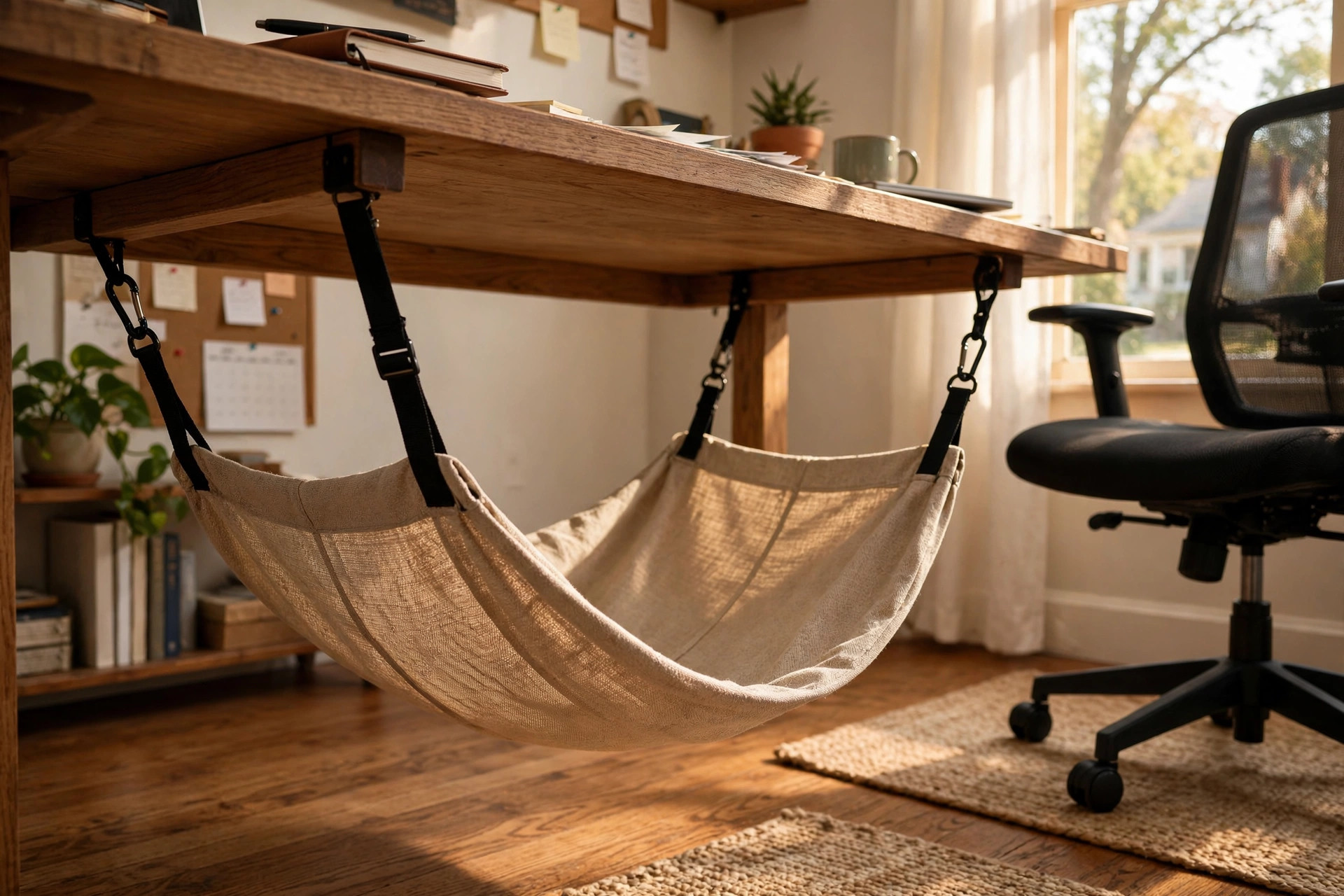
The design is plain. A rectangle of fabric hangs between two straps. Each strap fastens to the desk or the desk legs. The straps are long enough to let you set the height. Some models use hooks that grab the edge of the desk top. Others use straps that wrap around the desk legs or crossbars.
Once hung, the fabric forms a shallow curve for your feet. The weight of your legs pulls the fabric down a little, and the straps hold firm.
The best models let you change the length of each strap on its own. That means you can set the tilt. The front edge can sit a bit higher than the back edge, or the other way around. Small changes in tilt change how the knees feel. A degree or two of difference can matter over a long day.
Good hammocks also let you set the height. Some days you want the feet high. Other days a low swing feels better. The adjustable desk guide from Uplift Desk notes that foot position affects posture in much the same way that seat height does.
What to Look for When You Choose One
Fabric and build quality
The fabric is the heart of the product. Look for thick canvas, heavy duty polyester, or woven cotton with reinforced stitching. Thin cloth wears out fast. It stretches in the middle and loses its shape. A good hammock keeps its curve after months of daily use.
Check the seams. Double stitching along the edges is a sign of care. The fabric should feel firm when you press it with your hand.
Mesh panels are a nice extra. They let air pass through. Feet get warm in summer. A mesh center keeps the feet cooler. Some models are full mesh, which works well in warm rooms.
Straps and fasteners
The straps carry all the weight. They should be wide, at least one inch. Wide straps spread the load. Narrow cords dig into the desk edge and wear down.
Metal hooks or sturdy plastic buckles beat cheap clips. Hooks that fit the desk edge should have rubber tips so they do not scratch the wood. Straps that wrap around the legs should close with buckles that lock tight. Velcro alone is not enough for daily use. It loosens over time.
Adjustability is the key word in the product name. The straps should slide and lock in small steps. You want to set the height to the inch. Models with fixed lengths miss the point of the product.
Weight capacity
Most makers list a weight limit. Common figures run from 20 to 50 pounds of foot and leg load. That is not body weight. It is the weight of the feet and lower legs pressing down. Check the figure before you buy. If you are a larger person, choose a model with a higher rating for peace of mind.
Size and desk fit
Measure your desk before you order. Most hammocks are about 20 inches wide and 14 inches deep. Make sure the desk top is thick enough for the hooks to grip. Make sure the desk legs or side panels give the straps something to wrap around. Very small desks may not suit a hammock. In that case a floor footrest is the better pick.
Also check the space under the desk. If you keep a computer tower or storage boxes beneath it, there may be no room for the sling. The hammock needs clear space to move a little.
Padding and comfort
Some models add a padded layer over the fabric. A thin layer of foam or fleece makes long use more pleasant. Padding adds a little cost.
Removable covers are a plus. You can wash them. Feet carry dust from the floor. A cover you can pull off and throw in the wash keeps the product fresh.
Main Types and Options
The classic desk hammock
This is the common form. Two straps, one fabric sling, hooks or wraps for the desk. It is cheap, light, and easy to move from one desk to another. It suits standard desks with open space beneath.
The padded comfort model
Padded models use thicker fabric and foam inserts. They cost more. They feel more like a small bed for the feet. People who go barefoot at the desk often prefer these. The extra cushion helps when the feet rest on the sling for hours.
The standing desk companion
Some models are built for desks that move up and down. They attach to the moving frame so the hammock rises and falls with the desk. If you use a sit-stand desk, check that the hammock you pick works with the lift. A fixed hook on a moving desk can slip when the height changes.
The travel and portable type
Light models pack flat into a laptop bag. They use lighter straps and thinner fabric. They will not last as long as heavy duty models. For people who move between work spaces, a portable one is better than nothing.
Cost and Price
Prices are modest. Basic models sell for about 15 to 25 dollars. These are thin fabric and simple hooks. They work, but they wear out sooner.
Mid range models run 25 to 45 dollars. This is where most buyers should look. The fabric is thicker and the straps are wider. A mid range hammock can last years of daily use.
Premium models cost 45 to 80 dollars. They add padding, mesh panels, washable covers, and stronger hardware. They suit people who will use the hammock every single day and want the best feel.
Watch for very cheap models under ten dollars. The stitching often fails within weeks. A hammock that drops you mid workday is no bargain.
Care and Upkeep
A foot hammock needs little care. Shake out dust once a week. Wipe the fabric with a damp cloth when it looks dirty. If the model has a removable cover, wash it on a gentle cycle and let it air dry. Do not put the straps in a hot dryer. Heat weakens the fibers.
Check the straps every month or so. Look for fraying where the straps bend over the desk edge. If a strap looks worn, replace the hammock. A strap that fails under load can dump your feet onto the floor and jerk the desk.
Keep the hooks clean. Dust builds up in the gripping surface. A wipe with a damp cloth keeps the grip firm. If the rubber tips on the hooks wear through, the metal can scratch the desk.
Store a portable model flat or rolled. Do not fold it sharply at the same place each time. Sharp folds break down the fabric along the crease.
Safety and Sensible Use
Set the height with care
Do not hang the hammock so high that the knees push up into the desk. Do not hang it so low that the legs dangle. The knees should rest at about a right angle, with the feet resting lightly on the sling.
Keep the floor clear beneath
The space under the hammock should be empty. Cords, power strips, and computer towers belong off to the side. If the hammock fails or slips, your feet drop straight down. You do not want them landing on hard gear.
Mind the desk
A hammock pulls on the desk with steady force. Make sure the desk is stable before you hang one. Light folding tables may wobble. If the desk rocks when you press on it, do not hang a hammock from it. Sturdy desks from makers like IKEA or Herman Miller handle the load without trouble. For light desks, a floor footrest is safer.
Watch for cord hazards
Keep the straps away from chair wheels. A wheel can catch a strap and yank the desk. Route the straps tight against the desk so they do not hang loose where wheels or feet can snag them.
Do not stand or push on it
A foot hammock is for resting feet, not for standing on. Never put your full weight on it. Never let children swing on it. It is not a toy. Treat it like a small piece of furniture with a set job.
People with health conditions
If you have poor circulation, diabetes, or a recent leg injury, talk to a doctor before using one. A hammock changes how blood flows through the legs. For most people that change is good. For some conditions it may not be. The Steelcase research library has useful background on seating posture and leg support for those who want to read more.
Frequently Asked Questions
Will a foot hammock fit any desk?
Most desks with open space beneath work well. You need a desk edge or legs to attach the straps to. Glass top desks can be tricky since hooks may not grip well. Measure the desk and compare it with the product size before you buy.
Is a foot hammock better than a footrest on the floor?
It depends on what you want. A floor footrest gives a firm fixed angle. A hammock gives a soft moving rest. Many people find the hammock more relaxing. If you are not sure, a cheap hammock is a low cost way to test the idea.
Can I use a foot hammock with a standing desk?
Yes, if the model is built for it. Pick a hammock that attaches to the moving frame rather than a fixed edge. When the desk rises, the hammock should rise with it. Models meant for fixed desks can slip on a sit-stand frame. If you use an adjustable height desk converter for existing table, test the fit at both the low and high settings.
How long does a foot hammock last?
A well made model lasts two to four years of daily use. The fabric usually wears out before the straps do. Washing a removable cover and keeping the straps clean extends the life.
Do foot hammocks help with back pain?
They can help. Foot position changes the angle of the pelvis. A better pelvic angle can ease lower back strain. It is not a cure. Think of the hammock as one part of a sound setup, not a fix on its own.
Where can I buy one?
Online stores carry the widest range. Large retailers like Wayfair and Amazon list many models with buyer reviews. Tech and desk gear roundups at PCMag can help you compare well rated models before you buy.
A Short Final Word
An adjustable foot hammock for under desk comfort is a small buy that can change how the workday feels. It costs less than a night out. It takes five minutes to hang. It gives the feet a soft place to rest through long hours of sitting.
Pick a model with strong fabric, wide straps, and true adjustability. Set the height so the knees rest easy. Keep the space beneath it clear. Use it as part of a sound desk setup with a good chair and regular breaks. The feet will thank you by evening, and the rest of the body may feel the difference too. For side by side reviews of foot comfort gear, the desk accessory roundups at Wirecutter are a sound place to compare models before you buy.
References
Amazon. (n.d.). Online shopping. https://www.amazon.com Herman Miller. (n.d.). Office furniture and ergonomic seating. https://www.hermanmiller.com IKEA. (n.d.). Home furnishings. https://www.ikea.com PCMag. (n.d.). Technology product reviews. https://www.pcmag.com Steelcase. (n.d.). Office furniture and workplace research. https://www.steelcase.com The Spruce. (n.d.). Home and garden advice. https://www.thespruce.com UPLIFT Desk. (n.d.). Standing desks and ergonomic office furniture. https://www.uplift-desk.com Wayfair. (n.d.). Furniture and home goods. https://www.wayfair.com Wirecutter. (n.d.). Product reviews from The New York Times. https://www.nytimes.com/wirecutter
Was this guide helpful?

About Michael Thompson
The My Garden US editorial team writes practical, in-depth home and garden guides for American homeowners — tested advice, no fluff.
You May Also Like
Wall Mounted Monitor Stand to Save Desk Space
May 30, 2026 0 views
A Small Corner Desk with Drawers for Apartment Office Work
January 4, 2026 0 views
Wall Mounted Desk Shelf Above Computer Monitor: A Simple Buying Guide
September 26, 2026 0 views