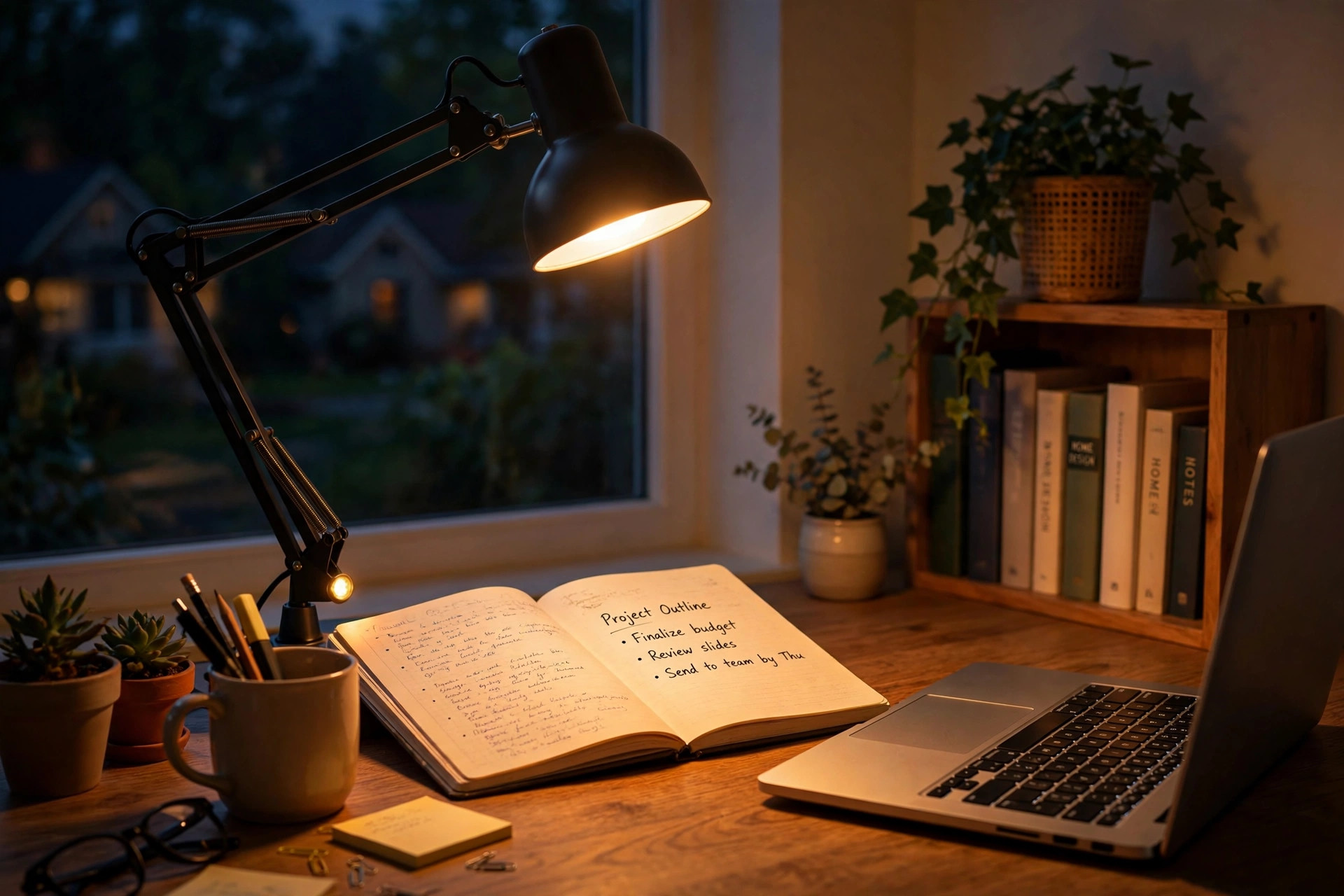

Many people end their workday with tired, dry, or burning eyes. The screen often takes the blame. Yet the lamp on the desk plays a large part too. An adjustable desk lamp with dimmer for eye strain lets you shape the light around your work instead of fighting against it. You can turn it down when the room is dark. You can turn it up when you read fine print. Small changes like this add up over weeks and months.
Eye doctors have long noted that poor light makes near work harder. The eyes work overtime when they face sharp glare or deep shadows. A good desk lamp fills the gaps. It puts steady light where your eyes need it and keeps it out of them. The dimmer adds control. Instead of one fixed level, you get a range that matches the hour and the task.
Why Eye Strain Happens at the Desk
Eye strain is rarely caused by one thing. It builds from a mix of long screen hours, dry indoor air, and harsh light. The muscles that focus your eyes tire when the contrast between the screen and the room is too strong. A bright window behind the monitor can force your eyes to adjust again and again. A dim room with a glowing screen does the same in reverse.
The layout of the desk matters more than people think. An overhead light alone often leaves the desk in shadow. Your eyes then jump between the bright screen and the darker desk. Thousands of small jumps across a day tire the eye muscles. A dedicated desk lamp evens out the field of view. It closes the gap between screen brightness and desk brightness so your eyes rest.
How a Dimmer Lamp Helps Your Eyes: Adjustable Desk Lamp with Dimmer for Eye Strain
A dimmer is a simple idea. It lets you raise or lower the lamp’s brightness to match the room. Morning light through a window is strong, and a low lamp setting may be enough. Late evening calls for more. When the sun is gone, the desk lamp carries the room, and you set it where it feels right.
The key benefit is control over contrast. Eye specialists advise keeping the light on your desk near the brightness of your screen. A fixed lamp cannot do this. Rooms change through the day. A dimmer lets you follow those changes with a touch or a slide. Your eyes no longer fight a mismatch between screen and paper.
Dimming also cuts glare on demand. A lamp that feels fine at noon can feel harsh at nine at night. With a dimmer, you lower it instead of switching it off and reading in the dark. You keep enough light for the task and remove the harsh edge. Many users of adjustable task lighting say this single feature changed how long they can work in comfort. Our best task lighting for home office desk setup guide covers placement in more depth.
Step dimmers with three or four levels work well too. The best control is the one you will actually use.
What to Look for When You Choose
Brightness and Dimming Range
Look for a lamp with a wide dimming range. A lamp that drops from full brightness to a soft glow is more useful than one with two stiff levels. Check the rated lumens at full power. For desk work, most guides put the useful range between 450 and 800 lumens at full brightness. More is not always better. It is the range that counts.
Color Temperature
Color temperature shapes how the light feels. Warm light near 2700K looks soft and calm. Cool light near 5000K looks crisp and bright. Many lamps with dimmers also let you shift between warm and cool settings. This is a useful feature.
For eye comfort, most eye-care writers favor the middle range for long work sessions. Warm white around 3000K to 4000K suits reading and computer work. Very cool daylight tones can feel stark at night. Very warm tones can make small print harder to read. A lamp that offers three or four color steps lets you pick the mood of the hour. ENERGY STAR certified LED lighting often lists these specs clearly, which makes comparison shopping easier.
The Arm and the Head
An adjustable lamp earns its name from its arm. Look for joints that move with light pressure and hold their place. Springs and tension screws should feel firm, not loose. The lamp head should tilt and turn so you can aim the light at the desk, not at your eyes.
A long arm reaches across a wide desk. A short arm suits a small table. Measure your desk before you buy. The light should fall on your papers and keyboard. Clamp bases save desk space and hold firm. Weighted bases suit glass or thin tops where a clamp cannot grip.
Flicker and Glare
Flicker is a hidden source of eye strain. Some cheap LED drivers flicker at rates the eye cannot see but still feels. After hours, this can add to fatigue and headaches. Look for lamps that claim flicker-free or low-flicker drivers. Reviews from testing labs often measure this, and Wirecutter and independent product tests sometimes cover desk lamps and their light quality.
Glare control matters as well. A bare bulb aimed at your face will strain any eyes. Look for a shade or diffuser that softens the light. Frosted lenses spread the beam evenly. Positionable heads let you bounce light off the wall or desk for a softer wash. The goal is a pool of light on the work, not a beam in your eyes.
Size, Base, and Extra Features
Match the lamp to the desk. A large head on a tiny desk crowds your work. A small lamp on a deep desk leaves corners dark. Some lamps add USB ports or wireless charging in the base. A desk lamp with a wireless charging base can clear cable clutter, though the light quality should come first. Compare models in our LED desk lamp with wireless charging base guide. Do not trade good dimming for gadgets you may never use.
Cord length matters if your outlet sits far away. Check the switch type too. A physical knob or slider gives sure control. Think about how you work before you decide.
Types of Adjustable Desk Lamps
Architect or Swing-Arm Lamps
The classic architect lamp has a spring arm with two or three joints. It reaches far and folds flat when not in use. This style suits drafting, drawing, and detailed work. The wide reach lets you park the light exactly where you need it. The trade-off is desk space. The arm needs room to swing.
Gooseneck Lamps
A gooseneck lamp uses a flexible metal neck instead of jointed arms. You bend it into shape and it stays. These lamps cost less and move easily. The neck can weaken over years of bending. For light daily use, a gooseneck serves well.
Bar and Panel Lamps
Bar lamps stretch a line of LEDs across a slim bar. The wide beam covers the whole desk with even light. There are no hot spots. These lamps suit computer work because the even wash reduces contrast across the desk. They fold less compactly than arm lamps.
Ring and Monitor-Mount Lamps
Some lamps clip to the top of the monitor and throw light down on the desk without taking desk space. This can work in tight rooms. The fixed position limits aim, so they suit single-purpose desks. Make sure the mount fits your monitor before you buy.
Cost and Price
Prices for an adjustable desk lamp with dimmer range widely. Simple models with basic dimming sell for 25 to 50 dollars. Mid-range lamps with better arms, color shifting, and smooth dimming run 60 to 120 dollars. Premium models from office furniture brands can reach 200 dollars or more. The premium buys build quality, better drivers, and longer warranties.
Set a budget with dimming quality in mind. Below 40 dollars, dimming can be rough. Between 60 and 100 dollars sits the sweet spot for most home workers. Above that, you pay for design and brand. Read the dimming reviews before you pay more.
Good task lighting for a home office desk setup does not have to cost a fortune. Large home-goods stores such as Wayfair carry hundreds of dimmable desk lamps, which makes side-by-side comparison easy. Many mid-priced lamps earn strong marks from reviewers for steady, flicker-free light.
Care and Upkeep
An LED desk lamp asks for little care. Dust the head and shade once a month. Dust on a diffuser dims the output and can create hot spots. A soft dry cloth is enough. Never use water on the electrical parts.
Check the joints once or twice a year. Springs and screws loosen with use. Tighten what you can reach. If the arm starts to drift, look for a tension screw near the joint. A small turn often fixes it.
Keep the lamp away from heat sources. Do not park it next to a space heater or a hot radiator. Heat shortens the life of LED drivers. Give the head some air flow. Do not drape papers or cloth over the head while it runs.
If the lamp dims on its own or flickers after years of use, the driver may be failing. Most lamps are not worth repairing at low prices. Recycle the old lamp through a local e-waste program.
Safety
Desk lamps are safe when used with care. Keep the cord away from walkways where feet can catch it. Do not run the cord under a rug, where heat can build. Check the plug each year for cracks or loose prongs.
Buy lamps with recognized safety marks. In the United States, a UL or ETL listing shows the lamp passed safety testing. Cheap unlisted lamps can have poor wiring. The few dollars saved are not worth the risk.
Do not leave the lamp on when you leave the house. Turn the dimmer down or off when the workday ends. This also trains you to reset the light each morning, which keeps your eyes matched to the day.
Place the lamp so the head cannot tip into papers. A clamp or heavy base prevents falls. Keep flammable items clear of the head. LED heads stay cooler than old bulbs, but the rule still stands.
Frequently Asked Questions
Does a dimmer really help with eye strain?
It helps most people. The dimmer lets you match the desk light to the room light. This cuts the sharp contrast that tires eyes. Paired with breaks and good posture, it lowers daily fatigue. Eye-care groups note that balanced lighting eases screen-related eye fatigue.
What color temperature is best for reducing eye strain?
For most desk work, 3000K to 4000K feels comfortable. This is warm white to neutral white. It is soft enough for evening and clear enough for reading. Avoid very cool light above 5000K late at night. It can feel harsh and may disturb sleep. Try a lamp with adjustable color and see what your eyes prefer.
How bright should the lamp be?
Aim for desk light near your screen brightness. In lumens, 450 to 800 at full power covers most desks. You will rarely run it at full. The dimmer lets you find the level that feels right. If you squint or feel glare, turn it down. If you lean in to read, turn it up.
Where should I place the lamp to avoid glare?
Place the lamp to the side of your writing hand. Right-handed writers should put it on the left. This keeps your hand from casting a shadow on the page. Aim the head down at the desk. Keep the bulb or LED panel out of your direct line of sight. For computer work, keep the lamp off to the side so it does not reflect in the screen.
Can a desk lamp replace overhead lighting?
It can for focused work. A good desk lamp lights the task area well. But a fully dark room with one bright pool can strain eyes too. A soft background light helps. A small floor lamp or a dim ceiling light keeps the whole space balanced. Pair your desk lamp with gentle room light for the best result.
How long do LED desk lamps last?
Most LED desk lamps are rated for 25,000 to 50,000 hours. At eight hours a day, that is eight to seventeen years. The dimmer and driver usually fail before the LEDs. Buy from a maker with a real warranty. Well-known office brands often back their lamps for five years or more.
A Short Final Word
An adjustable desk lamp with dimmer for eye strain is a small tool with a daily payoff. It will not fix poor posture or long hours alone. But it gives your eyes steady, tunable light through every part of the day. Choose one with smooth dimming, gentle color, and a sturdy arm. Place it with care. Keep it clean. Your eyes do hard work for you. A little kindness in lighting is a fair return.
Pair the lamp with other comfort basics. A laptop stand that supports good posture and a chair that fits your body work together with good light. Our best laptop stand for standing desk posture guide can help you complete the setup. The whole desk should serve you, not fight you.
Home workers who set up a proper ergonomic workspace often list lighting among the first upgrades. It costs less than a chair and changes the feel of the whole room. Compare the dimming specs, not just the looks. The prettiest lamp in the store is not always the kindest to your eyes.
References
Consumer Reports. (n.d.). Product reviews and ratings. https://www.consumerreports.org ENERGY STAR. (n.d.). Energy efficient products. https://www.energystar.gov Herman Miller. (n.d.). Office furniture and ergonomic seating. https://www.hermanmiller.com IKEA. (n.d.). Home furnishings. https://www.ikea.com PCMag. (n.d.). Technology product reviews. https://www.pcmag.com Steelcase. (n.d.). Office furniture and workplace research. https://www.steelcase.com The Spruce. (n.d.). Home and garden advice. https://www.thespruce.com UPLIFT Desk. (n.d.). Standing desks and ergonomic office furniture. https://www.uplift-desk.com Wayfair. (n.d.). Furniture and home goods. https://www.wayfair.com Wirecutter. (n.d.). Product reviews from The New York Times. https://www.nytimes.com/wirecutter
Was this guide helpful?

About Lisa Anderson
The My Garden US editorial team writes practical, in-depth home and garden guides for American homeowners — tested advice, no fluff.
You May Also Like

Home Office Whiteboard for Remote Team Planning: A Practical Guide
June 15, 2026 0 views
Lockable Filing Cabinet for Home Business Documents: A Practical Guide
April 3, 2026 0 views
A Small Adjustable Desk for Kids Homework Station: A Plain Guide for Parents
August 8, 2026 0 views