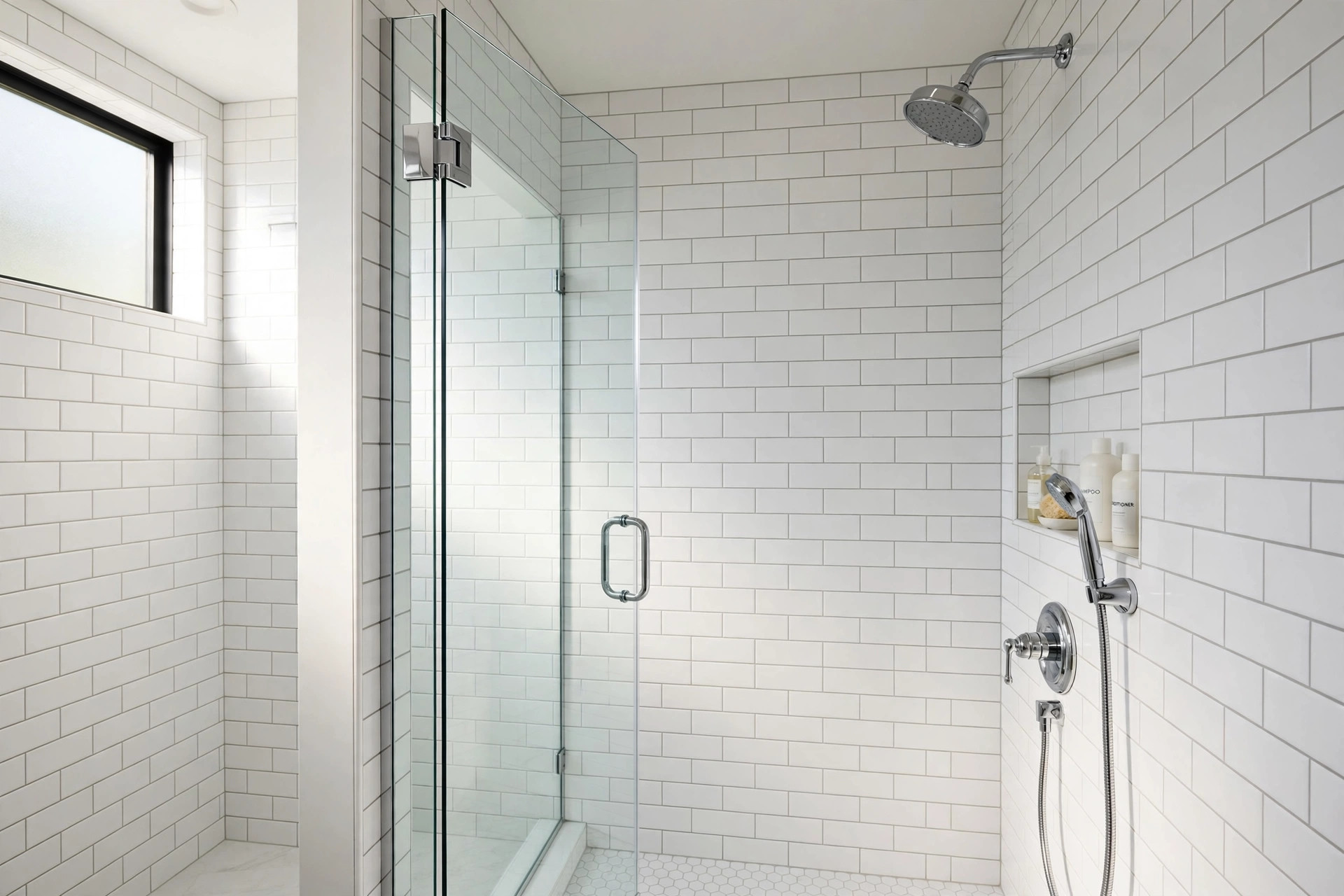

White grout maintenance tips for showers are worth knowing before the tile lines start to fade. White grout looks crisp and clean on the day it is installed. It can turn gray, yellow, or even pink within months in a busy shower. Soap scum, hard water, and mold all settle into the small pores of grout. With a steady routine, the lines can stay bright for years. This guide gives plain steps for cleaning, sealing, and caring for white grout in the shower.
Why White Grout Needs Special Care in Showers
A shower is the hardest place in the home for grout. Hot water runs over the tile every day. Soap, shampoo, and body oil mix into a film that sticks to grout lines. Hard water leaves mineral spots. Warm damp air feeds mold and mildew. White grout shows every one of these problems. Dark grout hides stains. White grout shows them at once.
Grout is also porous. It drinks in water and soap. That is why shower grout needs more care than hallway grout. A little neglect goes a long way here. The good news is that white grout can stay bright for years with a few simple habits. The work takes minutes, not hours.
What to Look For Before You Start: White Grout Maintenance Tips for Showers
Start by looking at the state of your grout. Walk into the shower in good light. Look at the corners first. Corners near the floor and the walls stay wet the longest. Check the grout lines behind the showerhead. Soap runs down that wall the most. Note the color. Is it even? Are some lines yellow? Do you see pink or orange spots? Pink spots are often a type of bacteria that likes damp tile. Green or black spots point to mold or mildew.
Run your finger over a grout line. If it feels rough or sandy, the surface may be worn. If a line crumbles or has small holes, it needs repair before cleaning can help. Also check if the grout was sealed. Drip a few drops of water onto a dry grout line. If the water beads up, sealer is still present. If it soaks in and darkens the line, the sealer has worn off.
Types of Cleaners and Tools for White Grout
You do not need harsh chemicals to clean white grout. Many options are mild and safe. Each has a place in a good routine.
Daily spray. A simple after-shower spray slows soap scum. Many people use a mix of water and white vinegar. Others use a store-bought daily shower cleaner. Spray the walls after each shower. Rinse or leave it to work. This takes ten seconds.
Weekly cleaner. A pH-neutral tile cleaner is best for regular use. It cleans soap film without eating the grout. Acid-based cleaners can damage cement grout over time. Use a soft brush or an old toothbrush for the lines.
Deep cleaner. For stained grout, an oxygen-based powder cleaner works well. Mix it with warm water. Spread the paste on the grout lines. Let it sit for ten to twenty minutes. Scrub and rinse. This is gentler than bleach and kinder to tile finishes.
Sealer. A penetrating grout sealer fills the tiny pores of grout. Water and soap cannot soak in as easily. Choose a sealer made for wet areas. Spray or roll-on types both work.
Tools. Keep a stiff nylon brush, an old toothbrush, and a squeegee near the shower. The squeegee is one of the best tools. A quick wipe of the walls after a shower cuts drying time in half. Less moisture means less mold and fewer stains.
Step-by-Step: A Weekly Routine That Works
A steady routine beats a harsh deep clean every time. Here is a simple weekly plan for keeping white grout bright.
First, rinse the shower walls with hot water. This loosens soap film. Second, spray a pH-neutral cleaner over the tile and grout lines. Let it sit for five minutes. Do not let it dry on the tile. Third, scrub the grout lines with a nylon brush. Work from top to bottom so dirty water runs down. Pay extra care to corners and the floor line. Fourth, rinse well with clean water. Leftover cleaner can attract new dirt. Fifth, dry the walls with a squeegee or a clean towel. This last step makes the biggest difference. Damp grout grows mold. Dry grout does not.
Once a month, do a deeper pass. Mix an oxygen-based cleaner into a paste. Spread it on the grout lines. Wait twenty minutes. Scrub and rinse twice. You will see the white lines come back. Tile and grout work as one system. Many homeowners who learn how to choose tile for wet areas learn the same from best tile for mudroom floor reviews usa: the grout matters as much as the tile.
Sealing: How Often and How to Do It
Sealing is the single most important part of white grout maintenance tips for showers. A good sealer keeps water and soap out of the grout pores. Without sealer, stains sink in fast. With sealer, most dirt sits on the surface and wipes away.
Most cement grout in showers needs new sealer once a year. In a shower used by four people, every six to nine months is safer.
To seal, first clean the grout fully and let it dry for a full day. Moisture under sealer traps dirt. Apply the sealer with a small brush or a sponge applicator. Work it into each grout line. Wipe extra sealer off the tile face within a few minutes. Let it cure as the label says. Most sealers need a full day before the shower is used again.
Epoxy grout is different. It is not porous like cement grout. It rarely needs sealer. If your shower has epoxy grout, cleaning alone is enough. The tile experts at Daltile note that grout type matters as much as tile type when planning care. When you are shopping for tile supplies at Lowe’s, ask which grout came with the tile. This small detail shapes your whole care plan.
Cost and Price of Grout Care
Keeping white grout bright does not cost much. A good pH-neutral tile cleaner costs about five to ten dollars. It lasts for months. A nylon grout brush costs three to eight dollars. A squeegee costs five to twelve dollars. An oxygen-based deep cleaner runs about ten to fifteen dollars for a tub that gives many deep cleans.
Grout sealer is the main cost. A bottle of quality penetrating sealer costs fifteen to thirty dollars. One bottle covers most showers with some left over. If you reseal once a year, that is about two dollars a month.
Compare this to regrouting. A full regrout of a shower costs hundreds of dollars if you hire a pro. Even a do-it-yourself regrout costs fifty to one hundred dollars in materials and a full weekend of work. Simple upkeep is far cheaper. The flooring team at LL Flooring often reminds buyers that tile care costs less than tile replacement. The same idea holds for grout.
Care and Upkeep Beyond Cleaning
Cleaning is only part of the picture. Small habits protect white grout day after day.
Ventilation matters most. Run the bathroom fan during every shower and for twenty minutes after. Open a window if you have one. Moving air dries grout fast. In a bath with no fan, leave the door open after the shower. This single habit stops more mold than any cleaner.
Water quality plays a role too. Hard water leaves white mineral crust on grout lines. If your water is hard, a quick squeegee pass after each shower helps a lot. Some homes use a water softener. Softer water means less mineral buildup.
Watch the caulk lines as well. Where tile meets the tub or the shower pan, builders use caulk, not grout. Caulk can peel or grow mold. Pull it out and replace it when it looks worn. Fresh caulk keeps water from getting behind the tile.
Small repairs should not wait. A missing chunk of grout lets water soak into the wall. Fix it with a small bag of grout and a rubber float. The job takes an hour. Left alone, a small hole can lead to a costly wall repair. For more on keeping tile areas sound, see can you install lvp over hardwood usa for how floor prep thinking applies to wet rooms too.
Safety When Cleaning Grout
Most grout cleaning is safe. A few rules keep it that way. Never mix cleaners. Bleach mixed with ammonia or vinegar makes toxic fumes. Use one product at a time. Rinse between products. Open the bathroom door and run the fan while you clean. Shower spaces are small. Fumes build up fast.
Wear gloves. Cleaners dry out skin. Wear eye protection when scrubbing overhead lines. Rinse the shower floor well when you finish. A slippery floor is a fall risk. Keep cleaners out of reach of children. Store them in a locked cabinet if young kids live in the home.
If mold covers a large area, more than a few square feet, call a professional. Deep mold may sit behind the tile. A pro can test and fix the real problem. The home improvement guides at This Old House cover when a shower repair needs expert help. Safety always comes before a bright grout line.
Common Stains and How to Treat Each One
Different stains need different fixes. Soap scum is the most common. It feels waxy and looks dull. A pH-neutral cleaner and a brush take it off. Hard water spots look white or crusty. A mild vinegar soak softens them. Use vinegar with care on natural stone tile. Acid can etch stone. Test a hidden spot first.
Rust stains show as orange marks, often under metal fixtures. A cleaner made for rust removes them. Pink or orange slime is usually bacteria. Scrub it off and dry the area well. Better ventilation stops it from coming back. Black or green spots are mold or mildew. An oxygen-based cleaner kills it. For stubborn spots, a paste of baking soda and water works as a gentle scrub.
Never use steel wool or wire brushes on grout. They scratch tile and tear grout lines. Stick to nylon. The tile care advice at Mohawk Flooring warns that harsh tools shorten the life of grout. A medium nylon brush from The Home Depot is the better pick than the stiffest brush on the shelf.
When to Repair or Replace Grout
Cleaning cannot fix every grout line. Grout that crumbles, cracks, or falls out needs repair. Small cracks can be filled with new grout. Match the color as close as you can. White grout comes in several shades. Bright white, soft white, and warm white all look different. Bring a tile sample to the store to match.
Deep or wide cracks need the old grout dug out first. A grout saw or a rotary tool removes the loose material. Fill with new grout. Smooth it with a damp sponge. Let it cure. Seal it after a few days.
If the whole shower grout is stained past saving, a full regrout may be the answer. This is a big job. Many homeowners hire a tile setter. Get two or three quotes. Ask each one what grout they use. Epoxy grout costs more but stains less. It can be a smart pick for a fresh start. The flooring options at Shaw Floors show how material choice shapes long-term care. And if you are planning an outdoor tile project too, best outdoor tile for screened porch usa covers similar grout choices for patios.
FAQ
How often should I clean white grout in the shower? Do a quick spray and squeegee after each shower. Do a full scrub once a week. Do a deep clean once a month. Reseal once a year. This rhythm keeps lines bright with little effort.
Can I use bleach on white grout? Bleach works on stains, but it is harsh. It can weaken grout over time and dull some tile finishes. Try an oxygen-based cleaner first. Save bleach for rare, stubborn stains. Always rinse well and air out the room.
Why does my white grout turn yellow? Yellow grout often comes from soap and body oil buildup. Hard water minerals add to it. Some cleaners leave a film that yellows as it ages. A deep clean with an oxygen-based product usually brings the white back. Rinse twice to remove all cleaner residue.
Should I seal white grout in the shower? Yes, if it is cement-based grout. Sealer fills the pores and blocks stains. Test with a water drop. If water soaks in, seal it. Epoxy grout does not need sealer. The cleaning and care tips at The Spruce give the same advice for wet-area grout.
How do I stop mold on white grout? Dry the shower after each use. Run the fan. Fix leaks fast. Keep the grout sealed. Mold needs moisture to grow. Take the moisture away and mold cannot take hold. Clean small spots at once so they do not spread.
Is it worth hiring a pro to clean grout? For a yearly deep clean, a pro can be worth it. Pros use steam and strong extraction tools. They reach grime that home tools miss. For weekly care, do it yourself. The routine is simple and takes little time.
A Short Final Word
White grout in a shower can stay bright. It asks for a small, steady routine. Spray after each shower. Scrub once a week. Deep clean once a month. Seal once a year. Dry the walls every time. These white grout maintenance tips for showers take minutes. They save the cost and work of regrouting. Start today with the water drop test. Then build the routine one step at a time.
References
Daltile. (n.d.). Ceramic and porcelain tile. https://www.daltile.com LL Flooring. (n.d.). Hardwood, vinyl, and tile flooring. https://www.llflooring.com Lowe’s. (n.d.). Home improvement products. https://www.lowes.com Mohawk Flooring. (n.d.). Flooring products. https://www.mohawkflooring.com Shaw Floors. (n.d.). Flooring products. https://www.shawfloors.com The Home Depot. (n.d.). Home improvement products. https://www.homedepot.com The Spruce. (n.d.). Home and garden advice. https://www.thespruce.com This Old House. (n.d.). Home renovation guidance. https://www.thisoldhouse.com
Was this guide helpful?

About Lisa Anderson
The My Garden US editorial team writes practical, in-depth home and garden guides for American homeowners — tested advice, no fluff.
You May Also Like

Shaw vs Mohawk Vinyl Plank Comparison: Which Brand Wins in American Homes
February 27, 2026 0 views
Deck Resurfacing Cost Per Square Foot USA
July 1, 2026 0 views
Polished Concrete Floors Cost Residential USA: A Plain Guide
January 14, 2026 0 views