
Why a Corner Desk Suits Apartment Life
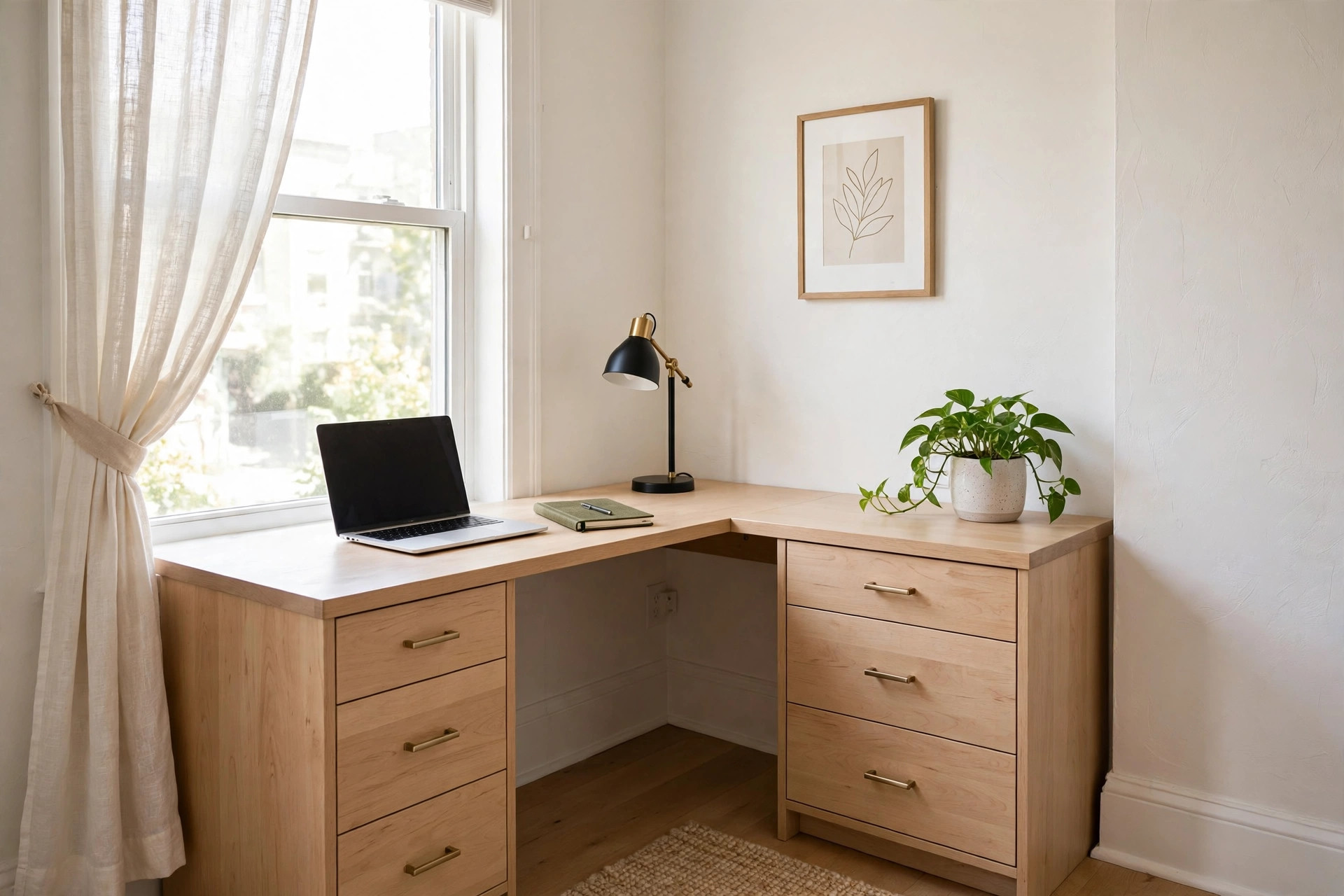
A small corner desk with drawers for apartment office use solves a common problem. Apartments are tight. Corners sit empty. A desk that fits into that unused corner turns dead space into a place to work, pay bills, or write letters. The shape matters. A corner desk uses two walls at once. It gives more surface than a flat desk of the same width. It also leaves the center of the room open, which makes a small space feel larger.
Drawers add a second benefit. Apartment dwellers often lack storage. Pens, files, chargers, and paper have to go somewhere. A desk with drawers keeps these items close but out of sight. The work top stays clear. The room stays tidy. That order matters when the desk sits in a living room or a bedroom, as it often does in a small apartment.
More people now work from home at least part of the week. Home guides from The Spruce note that a defined work area helps the mind shift into work mode. A corner desk creates that area with a small footprint. It marks the spot where work happens. When the workday ends, the desk closes off the corner and the room returns to a home. Furniture guides from IKEA stress that traffic flow is the first rule of small rooms. A corner desk obeys that rule by keeping the main path clear.
There are comfort reasons too. A proper desk lets a person sit upright. The screen sits at eye level. The arms rest at a natural angle. Research on work posture from Steelcase links poor setups to back and neck pain. A laptop on a low table forces the neck down. A corner desk raises the work to the right height. Pair it with a decent chair, and long work days become far more bearable. If the chair needs extra support, an ergonomic chair cushion for tailbone pain relief can help during long hours at the desk.
For renters, nothing attaches to the walls. When the lease ends, the desk moves to the next place.
What to Look for When You Shop: Small Corner Desk with Drawers for Apartment Office
Start with size. Measure the corner twice. Note the width of each wall run. Then subtract a few inches for air. A desk that just barely fits will fight you at every step of assembly. Most small corner desks run 40 to 50 inches along each arm. That fits a monitor, a keyboard, and a lamp. Larger models reach 60 inches. Those suit two screens or shared use by two people.
Depth matters as much as width. The desk needs enough room for the knees. Standard depth is 20 to 24 inches. A shallow desk looks neat but forces the chair back. If space is truly tight, look for a corner unit with a curved front edge. The curve gives leg room where it counts and keeps the desk small where it does not.
Count the drawers and study their layout. Two drawers work for light use. Three or more suit real office work. File drawers are deeper than utility drawers. Check whether the file drawer takes letter and legal folders. Drawer slides decide how the desk feels each day. Metal ball-bearing slides glide smooth and carry weight. Full-extension slides pull the drawer all the way out. That makes the back of the drawer usable. Reviews from Wirecutter often point to hardware quality as the line between a desk that lasts and one that loosens up in a year.
Most small corner desks use one of three materials. Engineered wood with a laminate top is the most common. It is light, cheap, and easy to clean. Solid wood is heavier and costs more. It lasts longer and looks warmer. Metal frames with wood tops give a modern look and strong joints. Makers of adjustable desks like UPLIFT Desk have pushed the mix of steel frames and wood tops into the mainstream.
Check the weight rating. The top should carry at least 100 pounds for a computer setup. Check the drawer bottoms. Thin fiberboard bottoms sag under files.
Plan for power before the desk arrives. Many corner desks now include a cord hole or a cable tray. A built-in power strip costs more but saves a tangled mess. If the desk lacks these features, a stick-on cable tray and a short power strip solve the problem for little money. Keep the strip off the floor. Consider where the wall outlets sit. The desk corner should be near them. An extension cord across the room is a trip hazard and looks bad.
Standard desk height is 29 to 30 inches. That suits most adults of average height. For a fixed desk, the chair does the adjusting. A good chair changes the seat height to meet the desk. The top of the monitor should sit at or just below eye level. Ergonomic reviews from Herman Miller link neutral neck posture to fewer headaches and less fatigue.
Types and Options on the Market
The L-shaped corner desk is the classic form. Two arms meet at a right angle. One arm holds the computer. The other holds papers or a printer. This layout suits people who spread work out. It also suits shared corners, where two people sit side by side along the two arms.
The compact triangular corner desk fits tighter spots. The front edge cuts across the corner in a straight line. The back fits into the angle of the walls. This design saves floor space. It suits laptops more than desktop towers. The surface is smaller, so drawers become even more important. They take the place of surface storage.
The wraparound corner desk adds a return and forms a U shape around the sitter. This is a mini office in a corner. It suits people with lots of gear: two monitors, a printer, reference books. It takes more floor space than the L shape. In a studio apartment, it may crowd the room. Measure with care.
The hutch-top corner desk adds shelving above the surface. Books and supplies sit overhead while the footprint stays small. Watch the window line. A tall hutch blocks window light. Under-shelf lighting from Home Depot fixes the shadow problem.
Light wood tones suit small rooms because they reflect light. Dark finishes look rich but shrink a room in the eye. Small-space gear roundups from PCMag often favor light, simple finishes for tight rooms.
Cost and Price: What to Expect
A small corner desk with drawers for apartment office use spans a wide price range. Budget models start near 80 dollars. These use thin engineered wood and basic slides. They assemble fast and serve light use. Expect some wobble and a shorter life. For a student or a temporary setup, they are fine.
The mid range runs 150 to 350 dollars. This is where most buyers land. Desks here use thicker panels, better slides, and sturdier frames. Many include cable holes and a file drawer. Finish quality improves. Most large retailers, such as Wayfair, stock dozens of options in this band. Sales bring many of them under 250 dollars.
Premium models run 400 to 900 dollars and up. Solid wood, dovetail drawers, and steel frames mark this tier. These desks last a decade or more. They survive moves. They look good in a living room, which matters when the office shares space with the home.
Watch for hidden costs. Delivery fees on heavy desks run 20 to 50 dollars. Assembly services add 60 to 120 dollars. A desk chair, a lamp, and a power strip add another 100 to 200 dollars. The true cost of the setup is the desk plus these extras. Budget for the whole corner, not the desk alone.
A used desk that fits is a better deal than a new one that does not.
Each drawer adds material and labor, so drawer count tracks with price. Decide how many drawers the work truly needs. Extra drawers that sit empty are money spent for nothing. But too few drawers push clutter onto the top, which defeats the purpose. Test labs such as Consumer Reports advise buyers to weigh price against expected years of use. A 300-dollar desk that lasts eight years costs less per year than a 120-dollar desk replaced every two years.
Care and Upkeep
Dust the top weekly with a soft cloth. Wipe spills at once. Water rings set fast on wood and on cheap laminate. Use coasters under drinks. A desk mat under the keyboard and mouse protects the writing area from wear.
Do not overload the drawers. Each drawer has a weight limit, often 15 to 25 pounds for utility drawers. Files are heavy. A full file drawer can top 40 pounds. Overloaded drawers strain slides and pull the desk out of square. Once a desk racks, drawers stick. Fixing it means taking the desk apart and re-squaring it.
Wooden drawer slides benefit from a light wax once a year. Metal ball-bearing slides need no oil. Keep them clean. Dust and grit grind the bearings. Vacuum the drawer cavities when you empty them. Check the screws twice a year. Moving the vacuum, shifting the chair, and leaning on the desk all loosen joints. A quarter turn on each screw keeps the desk tight.
Sunlight fades finishes. Rotate items on the top so fading stays even. A sheer curtain cuts the harsh rays. Keep the desk away from radiators and heating vents. Dry heat shrinks wood and loosens joints.
Once a year, unplug everything and reroute the cords. Dust builds behind desks.
Safety in a Small Space
Tip-over is the first risk. Tall hutches and top-heavy bookcases can tip forward. This is a real danger in homes with small children. Anchor tall units to the wall with the straps that come in the box. Renters can use adhesive anchors or ask the landlord.
Weight balance is the second risk. Keep heavy items low and near the corner joint. That joint is the strongest point of the desk. Printers belong low or on a separate stand.
Cord safety is third. Cords on the floor trip people. Route cords up and back. Use covers where cords cross walkways. Do not daisy-chain power strips. One strip per outlet is the rule. Check strips for heat. A warm strip is a warning. Replace it.
Close drawers when not in use. Open drawers become shin hazards in the dark and steps for climbing toddlers. Soft-close slides stop fingers from getting pinched.
New desks off-gas. Engineered wood gives off formaldehyde at low levels. Ventilate the room well after assembly. Open the window. Run a fan.
Keep paper away from lamps and heaters. Do not overload outlets. Shred old papers instead of stacking them. A tidy desk is a safer desk. The drawers help here again. They give paper a home that is not the floor.
Frequently Asked Questions
Will a corner desk fit in a very small apartment?
In most cases, yes. That is the whole point of the design. Measure the corner first. Allow two inches of clearance on each side. If the corner is near a door swing, check the swing path. In a studio, place the desk so the sitter faces into the room. Facing the wall in a tiny room can feel cramped.
How many drawers do I really need?
Light use needs two: one for tools, one for papers. Real office work needs three or more, with at least one file drawer. Count what you own before you shop. Lay out the pens, files, chargers, and supplies. Then match the drawer space to the pile. Overflow lands on the desk top, and the top is for work.
Can I use a corner desk with a desktop computer tower?
Yes, with planning. Some corner desks include a CPU shelf or cabinet. Without one, the tower sits on the floor under the desk. Keep the tower off carpet if you can. Carpet blocks vents and feeds dust. A small stand or a board under the tower helps. Leave room for cables to reach the monitor and the wall.
Is assembly hard?
Most corner desks take one to two hours for one person. Lay out all parts first. Count the screws. Do not tighten anything fully until the end. That is the most common mistake. Tightening early pulls the frame out of square. A second pair of hands helps with large tops.
What chair height works with a standard desk?
Standard desks run 29 to 30 inches high. Most adults need a seat height of 17 to 19 inches to match. Adjustable office chairs cover this range easily. If the chair cannot adjust, add a cushion to raise the seat or a footrest to support the feet. The goal is simple: thighs level, feet flat, arms at a right angle. An ergonomic laptop stand for couch and bed can also help when work moves off the desk for part of the day. For seating comfort, buyers often compare options like the best office chair for arthritis sufferers usa when comfort is a priority.
A Short Final Word
A small corner desk with drawers for apartment office life is a modest buy with an outsized effect. It claims an empty corner. It stores the tools of the workday. It sets a boundary between home and job.
Shop with a tape measure in hand. Count the drawers against real needs. Check the slides, the weight rating, and the outlet map. Spend what the years of use justify. Then set the desk up with care: good light, clean cables, a chair at the right height. The corner will do the rest.
References
Consumer Reports. (n.d.). Product reviews and ratings. https://www.consumerreports.org Herman Miller. (n.d.). Office furniture and ergonomic seating. https://www.hermanmiller.com IKEA. (n.d.). Home furnishings. https://www.ikea.com PCMag. (n.d.). Technology product reviews. https://www.pcmag.com Steelcase. (n.d.). Office furniture and workplace research. https://www.steelcase.com The Home Depot. (n.d.). Home improvement products. https://www.homedepot.com The Spruce. (n.d.). Home and garden advice. https://www.thespruce.com UPLIFT Desk. (n.d.). Standing desks and ergonomic office furniture. https://www.uplift-desk.com Wayfair. (n.d.). Furniture and home goods. https://www.wayfair.com Wirecutter. (n.d.). Product reviews from The New York Times. https://www.nytimes.com/wirecutter
Was this guide helpful?

About James Carter
The My Garden US editorial team writes practical, in-depth home and garden guides for American homeowners — tested advice, no fluff.
You May Also Like

Ergonomic Laptop Riser for Standing Desk Height: What to Know Before You Buy
July 23, 2026 0 views
Home Office Desk With Side Return Extension: A Complete Buyer’s Guide
January 26, 2026 0 views
Home Office Closet to Office Conversion Kit: A Complete Guide
February 21, 2026 0 views