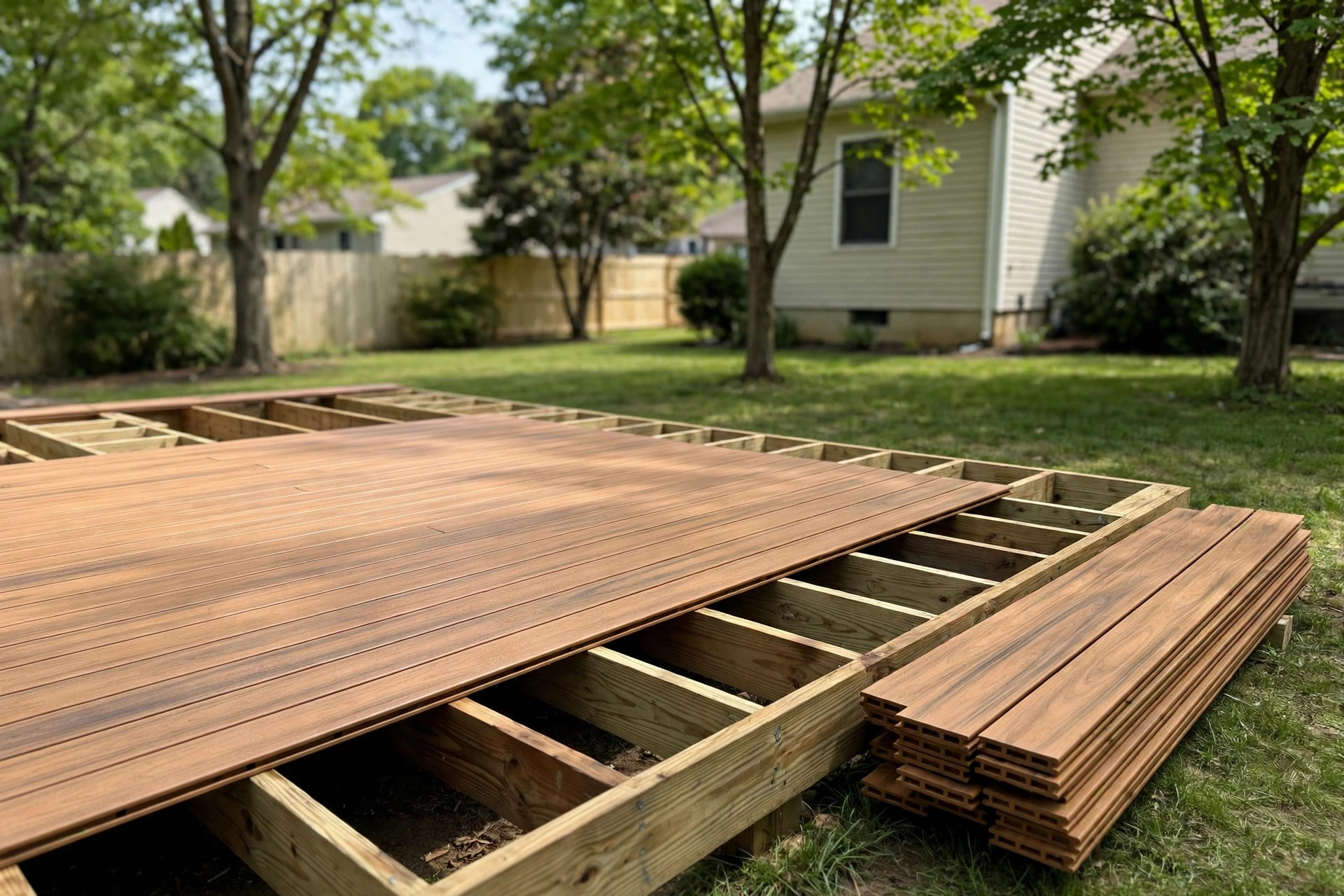

A fair composite decking materials price comparison USA homeowners can trust starts with one fact. Not all composite boards cost the same. The gap between a cheap board and a top board can reach ten dollars a square foot. That gap matters when a deck runs 300 or 500 square feet. This guide walks through the types, the prices, and the long term costs so you can choose with a clear head.
Why a Price Comparison Matters
A deck is one of the largest outdoor projects a homeowner takes on. The boards you pick decide how the deck looks for the next 25 years. They also decide how much care the deck needs each year.
Pressure treated wood costs less at the start. Composite costs more at the start. The trade is simple. Wood needs stain and seal every one or two years. Composite needs a wash with soap and water. When you add up stain, sealer, and weekend labor over twenty years, the math often favors composite. A price comparison shows you where the break-even point sits.
Prices also move with the market. Lumber prices rose and fell sharply in recent years. Composite prices moved less. That steadiness makes a written comparison useful. You can see which choice stays stable and which one swings.
What Composite Decking Is Made Of: Composite Decking Materials Price Comparison Usa
Composite decking is a blend. Most boards mix wood fiber with recycled plastic. Some brands add a cap of polymer around the board. The cap fights fading and stains.
There are two main kinds. Uncapped composite is the older style. It costs less. It can fade in strong sun and soak up stains. Capped composite wraps the board in a tough shell. It costs more. It holds color longer and resists spills.
Knowing which kind a quote covers is key. A cheap bid may use uncapped boards. An expensive bid may use capped boards. You cannot judge a price until you know the kind.
How to Compare Boards the Right Way
Start with the square foot price of the board alone. Stores quote this number. Then add the rest. Fascia boards, rails, screws, and hidden clips add up fast. A quote of six dollars a square foot for boards can reach nine dollars a square foot once you count the trim.
Next, look at the warranty. Most capped boards carry a 25 to 50 year warranty on fade and stain. Uncapped boards carry less. A long warranty has real value. It means the maker trusts the shell.
Then check the weight and the span rating. Composite boards are heavier than wood. Joists may need to sit closer together. That adds framing cost. Ask the maker what joist spacing each board allows.
Finally, look at samples in daylight. Computer photos lie. A board that looks rich brown on a screen may look flat gray in sun. The Spruce keeps photo guides that show boards in real homes. Bob Vila also runs hands on reviews of popular boards.
Types and Options
Uncapped Composite Boards
Uncapped boards are the entry point. They run about four to seven dollars a square foot for material. They suit shaded decks that get little traffic. They fade over time, and grease or wine can leave marks. Some makers have dropped uncapped lines, so stock may be thin.
Capped Composite Boards
Capped boards are the most common choice today. They run about seven to twelve dollars a square foot for material. The cap stops most stains and slows fading. Colors run from light gray to deep walnut. Most lines offer wood grain patterns that look close to real cedar at arm’s length.
Capped PVC Boards
Capped PVC boards have no wood fiber at all. They are pure plastic with a cap. They run about nine to fourteen dollars a square foot for material. They weigh less and never absorb water. They suit poolside decks and docks. They can feel warm under bare feet in hot sun.
Grooved Edge and Solid Edge
Grooved edge boards accept hidden clips. The deck top stays clean with no screw heads showing. Solid edge boards take face screws or plugs. Grooved boards cost the same, but the clips cost extra. Plan on about fifty cents a square foot for clips and fasteners.
Color and Finish Choices
Most makers offer three finish tiers. Smooth finishes cost the least and suit modern homes. Embossed wood grain sits in the middle. Deep, multi tone grain runs at the top of the range. The price step between tiers is usually one to two dollars a square foot.
Color choice also affects heat. Dark browns and charcoal can run 30 degrees hotter than light grays in full sun. If your deck faces south or west, pick a lighter tone. Ask the dealer for a heat rating. Some brands publish slip and heat test scores for each color.
A two tone design can save money. Use premium boards for the field and a cheaper line for the border. The border frames the deck and hides cut ends. This trick is common among builders who watch budgets. Just make sure both boards come from the same maker so the tones match.
Cost and Price
Here is a plain composite decking materials price comparison USA buyers can use at the store. These are material only, in United States dollars per square foot, as seen in recent years:
– Uncapped composite: four to seven dollars – Capped composite: seven to twelve dollars – Capped PVC: nine to fourteen dollars – Premium capped composite with deep grain: ten to fourteen dollars
Add these to every estimate:
– Fascia and trim: one to two dollars a square foot – Hidden clips or screws: about fifty cents a square foot – Railings: thirty to eighty dollars per linear foot, based on style – Labor: eight to fifteen dollars a square foot in most regions
A 400 square foot deck in capped composite often lands between eight thousand and fourteen thousand dollars all in. The same deck in pressure treated wood may land between five thousand and nine thousand dollars. See our pressure treated lumber decking price comparison USA for the wood side of the math.
Region shifts the numbers. Labor runs higher on the coasts and lower in the Midwest and South. Freight also matters. Boards ship from factories mostly in the East and Midwest. Buyers far west sometimes pay more per bundle.
Brand lines add another layer. Entry lines from big makers sit near the low end of the capped range. Their premium lines sit near the high end. The core often matches. The price pays for deeper color, longer warranties, and wider board choices. Lowe’s and Home Depot both post per-board prices online, which makes store-to-store checks easy.
Watch for sales. Spring sales can cut board prices by ten to twenty percent. Contractors also discount off season work in late fall. A deck built in November can cost less than the same deck built in April.
Care and Upkeep
Composite decks need less care than wood, but they still need care. Sweep the deck weekly in leaf season. Wash it twice a year with warm water and mild dish soap. A soft brush lifts most dirt.
Do not use a harsh pressure washer. High pressure can scar the cap. If you must pressure wash, keep the tip at least eight inches from the board and stay under 1,500 psi. This Old House has clear guides on safe deck washing.
Clear snow with a plastic shovel. Metal edges can gouge the cap. Keep planters on trays so soil does not stain the boards. Grease from a grill is the most common stain. Wipe spills the same day they happen.
Mold can grow on any deck in damp shade. A cleaner made for composite decks will remove it. Do not use bleach at full strength. It can lighten the cap and void the warranty.
Safety Notes
Check the joist spacing under old decks before you relay new boards. Composite is heavier than pine. Old joists set at 24 inches on center may need to move to 16 inches. An inspector can confirm this in one visit.
Mind the heat. Dark boards in full sun can reach temperatures that burn bare feet. Light colors stay cooler. If children play on the deck barefoot, choose a light gray or tan.
Mind the slip. Composite boards grip better than old smooth wood, but algae makes any board slick. Wash shaded areas each spring. Family Handyman covers traction and deck safety in plain terms.
Keep grills away from rails and siding. A hot grill can warp nearby boards. Many makers suggest at least 24 inches of clearance.
Planning Your Project
Measure twice before you order. Boards come in 12, 16, and 20 foot lengths. Long boards cut waste on long decks. Plan for ten percent waste on a simple square deck and fifteen percent on one with angles.
Order all boards from the same batch. Color can shift slightly between runs. Check the batch code on the wrap before the truck leaves.
Think about the whole outdoor space. A deck often pairs with shade. Our pergola installation kits price comparison USA can help you price that next step. And if new siding is on your list too, the insulated vinyl siding price comparison USA walks through that market the same way.
Get three quotes. Ask each bidder to name the board brand, the line, and whether the board is capped. Ask for labor and materials on separate lines. Then you can compare with confidence.
FAQ
How much does composite decking cost per square foot in the USA?
Material runs four to fourteen dollars a square foot based on type. Uncapped boards sit at the low end. Capped PVC sits at the high end. Labor adds eight to fifteen dollars a square foot.
Is composite decking cheaper than wood over time?
Often yes. Wood costs less up front but needs stain and seal every one or two years. Composite needs only soap and water. Over twenty years, the totals often favor composite.
Which composite board brand is best?
No single brand wins for every home. Compare the cap, the warranty length, and the color range. Read real reviews and look at boards in daylight before you buy.
Does composite decking fade in the sun?
Capped boards fade far less than old uncapped boards. Some slight mellowing in the first year is normal. Long warranties now cover fade for 25 years or more.
Can I install composite decking myself?
Yes, if you have basic carpentry skill. The work is like wood decking but heavier. You will need a saw with a fine tooth blade and the maker’s clips. Rent help for the framing if the deck sits high.
How long does composite decking last?
Most makers rate capped boards for 25 to 50 years. Real life depends on sun, shade, and care. A well kept deck in a mild climate can outlast its warranty.
A Final Word
A composite decking materials price comparison USA shoppers can act on comes down to three numbers. The board price per square foot. The trim and fastener cost. The labor rate in your region. Write these down for each bid. Then the best value shows itself. Pay for the cap, the warranty, and the color you love. The deck will pay you back in quiet weekends instead of stain brushes.
Buying guides are also published by James Hardie and CertainTeed.
References
Bob Vila. (n.d.). Home improvement advice. https://www.bobvila.com CertainTeed. (n.d.). Building materials and exterior products. https://www.certainteed.com Family Handyman. (n.d.). DIY home repair and maintenance. https://www.familyhandyman.com James Hardie. (n.d.). Fiber cement siding and exterior products. https://www.jameshardie.com Lowe’s. (n.d.). Home improvement products. https://www.lowes.com The Home Depot. (n.d.). Home improvement products. https://www.homedepot.com The Spruce. (n.d.). Home and garden advice. https://www.thespruce.com This Old House. (n.d.). Home renovation guidance. https://www.thisoldhouse.com
Was this guide helpful?

About Emily Rodriguez
The My Garden US editorial team writes practical, in-depth home and garden guides for American homeowners — tested advice, no fluff.
You May Also Like
The Best Insulated Vinyl Siding for Midwest Homes: A Homeowner’s Guide
September 20, 2026 0 views
Reliable Fence Installation Contractors in the USA: A Homeowner’s Guide
July 10, 2026 0 views
Top Rated Insulated Garage Doors for Texas Homes
January 19, 2026 0 views