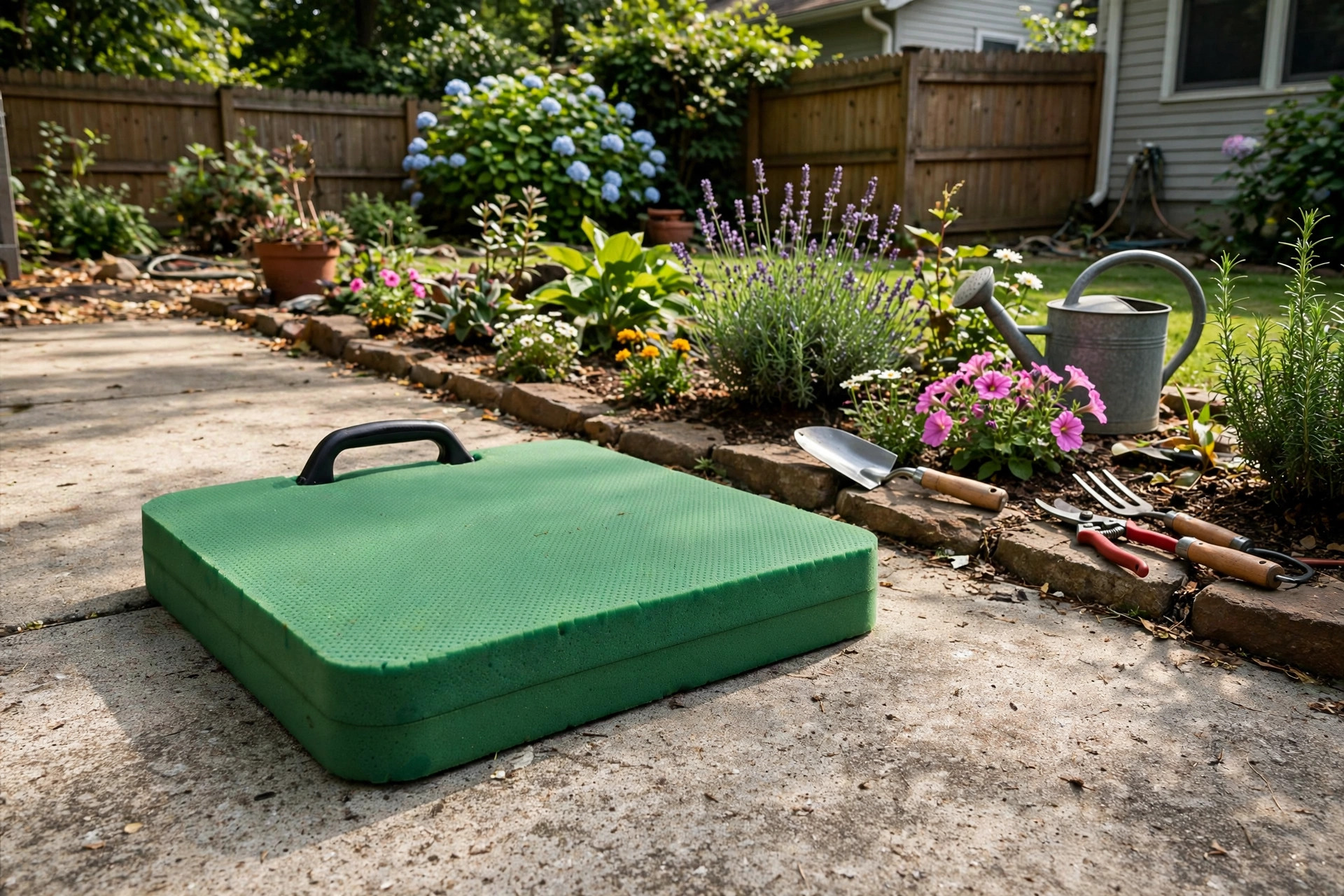
A gardener spends many hours on the ground. Planting, weeding, and edging all ask the knees to bear weight on hard ground. Soil is soft, but concrete is not. The best garden kneeler pad for concrete takes the hard edge off patios, driveways, and walkways. It turns a painful chore into work you can finish with ease. This guide walks you through how to pick the right pad, what materials work best on hard surfaces, and what price you should expect to pay.
Why Kneeling on Concrete Hurts
Concrete does not give. Every pound of body weight presses through the knee and into a surface that will not move. After twenty minutes, the knees ache. After an hour, getting up feels hard. Many gardeners work near patios, pool decks, and paved borders, where hard surfaces are the only place to kneel.
A good kneeler pad spreads the pressure over a wider area. Thick foam takes the sharp point of contact away. The joint stays warmer and calmer. Older gardeners gain the most, but young gardeners benefit too, because small comforts today prevent sore joints tomorrow. Sites such as The Spruce often note that simple comfort tools like pads make yard work far easier on the body.
What to Look for When You Buy: Best Garden Kneeler Pad for Concrete
Shopping for a garden kneeler pad for concrete floors is simpler than it seems. Five points matter most.
First, thickness. On concrete, thin pads fail fast. Look for at least one and a half inches of foam, and two inches is better. Thin mats made for soft soil will not do here.
Second, firmness. The pad must resist bottoming out. Press your thumb into the foam in the store. If you can feel the shelf through it, it is too soft. High-density foam holds its shape under real weight.
Third, size. A pad should fit both knees at once, or give each knee its own large spot. Narrow pads force the knees to the edge, which defeats the purpose. A width of nine to twelve inches suits most adults.
Fourth, water resistance. Concrete near gardens gets wet. A pad that soaks up water grows heavy and cold. Closed-cell foam or sealed covers shed water and dry fast.
Fifth, handles and weight. A pad with a handle is easy to carry from the patio to the flower bed. Light pads win, because you will move them often. Reviews on Consumer Reports can help you compare how different pads feel in daily use.
Types of Garden Kneeler Pads
Three main types cover most needs.
Memory Foam Kneeler Pads
Memory foam molds to the knee. It feels soft at first touch and then firms up under weight. This kind gives the deepest comfort. On concrete, memory foam is a strong choice for long jobs. The drawback is weight and price. Memory foam pads cost more and may hold water longer if the cover is not sealed. They also take longer to spring back in cold weather.
EVA Foam Kneeler Pads
EVA foam is the light, springy material in many mats and shoe soles. A thick foam kneeler for garden work made from EVA weighs almost nothing and sheds water well. It is tough against scrapes from concrete. The comfort is firmer and less plush than memory foam, but for short to medium jobs it does fine. EVA pads often cost less than memory foam pads.
Kneeler Benches With Handles
A kneeler bench is a low frame with a padded top and side handles. You kneel on the cushion and grip the handles to stand back up. For people with weak knees, the handles matter more than the foam. Benches work well on concrete because the frame spreads weight and will not sink. They cost more and take more room in the shed. The Bob Vila site often covers kneeling benches among its garden comfort tools.
Cost and Price
Prices for garden kneeler pads run in a clear range. Basic EVA foam pads often cost between ten and twenty dollars. They suit light use and short jobs. Mid-range memory foam pads run from twenty to forty dollars and give the best comfort for the price. Kneeler benches with handles cost from thirty to eighty dollars, depending on the frame.
Check several stores before you buy. Large retailers like Home Depot and Lowe’s carry many models side by side, so you can press and compare the foam. Garden supply shops such as Gardener’s Supply Company also carry well-reviewed options. Spending a few dollars more on a thicker pad pays back in comfort every single week.
Care and Upkeep
A kneeler pad lasts longer with simple care. After use, shake off soil and rinse the surface with a hose. Let it dry in open air before you store it. Storing a damp pad in a closed shed can lead to mildew on the cover.
Keep the pad out of long sun exposure when not in use. Strong sun breaks down foam over time and fades the cover. Hang it by its handle or lay it flat in the shed. Check the edges now and then. If the foam tears, wrap the spot with tape or replace the pad, because a torn pad lets water inside. A memory foam garden kneeling cushion with a sealed cover needs the least care of all.
Pair your pad with other comfort gear. A sturdy garden apron with pockets keeps tools at hand so you stand less. A garden caddy for carrying tools cuts down on trips back to the shed. These small habits protect your back as much as your knees.
Safety
Foam on wet concrete can slip. Test the pad on your own patio before you trust it fully. If the bottom slides, place a rubber mat under it or choose a pad with a textured base. Keep the work area clear of tools so you do not roll a knee onto a trowel.
Stand up slowly after long kneeling. Blood flow to the legs slows when you kneel, and rising fast can make you dizzy. Use the handles of a kneeler bench or push off a low wall. Keep water near you on hot days. If your knees swell or ache for hours after gardening, see a doctor before you buy more gear. Tool makers such as Fiskars and Corona Tools design ergonomic garden tools that also reduce strain on the hands and wrists.
What Concrete Surfaces Are Hardest on Knees
Not all concrete is the same. New broom-finished concrete has a rough top that grinds against foam. Old patios may have cracks and raised edges that press into the pad. Pool decks often slope, so the pad wants to slide. The best garden kneeler pad for concrete handles all of these, but your surface decides which features matter most.
On rough concrete, pick a pad with a tough outer cover. A canvas or nylon shell resists scrapes that would tear plain foam. On smooth concrete, a textured rubber base stops sliding. Near the pool, a closed-cell pad that will not soak up splashed water is the right call. Walk your work area before you shop. Note the slope, the texture, and where the water sits after rain. Then buy the pad that fits your ground, not a generic pick.
How to Position and Use Your Pad
Small habits make the pad work better. Place the pad fully under both knees before you kneel, not half under. Center your weight so the knees rest in the middle of the foam, away from the edges. If you must shift along a row, slide the pad with you instead of crawling on bare concrete between plants.
Alternate your position during long jobs. Kneel for twenty minutes, then sit back on your heels or stand for a few minutes. Movement keeps the blood flowing and stops stiffness. If you garden near raised beds, set the pad on the concrete at the bed edge and rest your forearms on the bed wall. This takes weight off the knees and the lower back at the same time.
Frequently Asked Questions
How thick should a garden kneeler pad for concrete be? Aim for at least one and a half inches. Two inches or more is better for concrete. Thin mats made for soft soil will bottom out on hard surfaces.
Is memory foam or EVA foam better on concrete? Memory foam gives deeper comfort and suits long jobs. EVA foam is lighter, sheds water well, and costs less. For concrete, many gardeners prefer memory foam for comfort and EVA foam for easy care.
Can I leave my kneeler pad outside? Short spells are fine, but long sun and rain shorten its life. Bring it in or store it under cover when the job is done.
Will a kneeler pad help with knee pain? It reduces pressure and often eases soreness during work. It does not treat joint disease. If pain persists, talk with your doctor.
How do I wash a foam kneeler pad? Rinse it with a garden hose and scrub with a soft brush and mild soap. Rinse well and air dry. Do not use a pressure washer, which can tear the foam. Do not put the pad in a washing machine.
Do I need a kneeler bench instead of a pad? If standing back up is hard, a bench with handles is worth the cost. If your knees only ache from pressure, a thick pad is enough.
Where else can I use my kneeler pad? Any hard surface works: garage floors, boat decks, and tiled floors. Keep a second cheap pad for indoor repairs so the garden pad stays clean.
A Short Final Word
The best garden kneeler pad for concrete is thick, firm, and water resistant. It fits both knees, carries easy, and holds its shape under real weight. Match the type to your body and your budget. Then keep it clean and stored dry. Your knees will thank you every time you work near the patio. While you shop, look at other comfort tools too, such as a garden hose reel cart to save trips across the yard. Advice from garden seed and supply houses like Burpee can also point you toward gear that suits your climate and your plants.
References
Bob Vila. (n.d.). Home improvement advice. https://www.bobvila.com Burpee. (n.d.). Seeds, plants, and gardening supplies. https://www.burpee.com Consumer Reports. (n.d.). Product reviews and ratings. https://www.consumerreports.org Corona Tools. (n.d.). Garden and landscape tools. https://www.corona-tools.com Fiskars. (n.d.). Garden and cutting tools. https://www.fiskars.com Gardener’s Supply Company. (n.d.). Gardening tools and supplies. https://www.gardeners.com Lowe’s. (n.d.). Home improvement products. https://www.lowes.com The Home Depot. (n.d.). Home improvement products. https://www.homedepot.com The Spruce. (n.d.). Home and garden advice. https://www.thespruce.com
Was this guide helpful?

About David Wilson
The My Garden US editorial team writes practical, in-depth home and garden guides for American homeowners — tested advice, no fluff.