
Introduction
Each fall, millions of American homeowners face the same chore. Leaves fall from the trees, and the lawn disappears under a thick blanket of red, gold, and brown. A rake can do the job, but it is slow work. A blower is fast but loud, and it only moves the leaves from one spot to another. The best push lawn sweeper for leaves offers a middle path. It is quiet, it needs no fuel, and it collects the leaves into a bag as you walk.
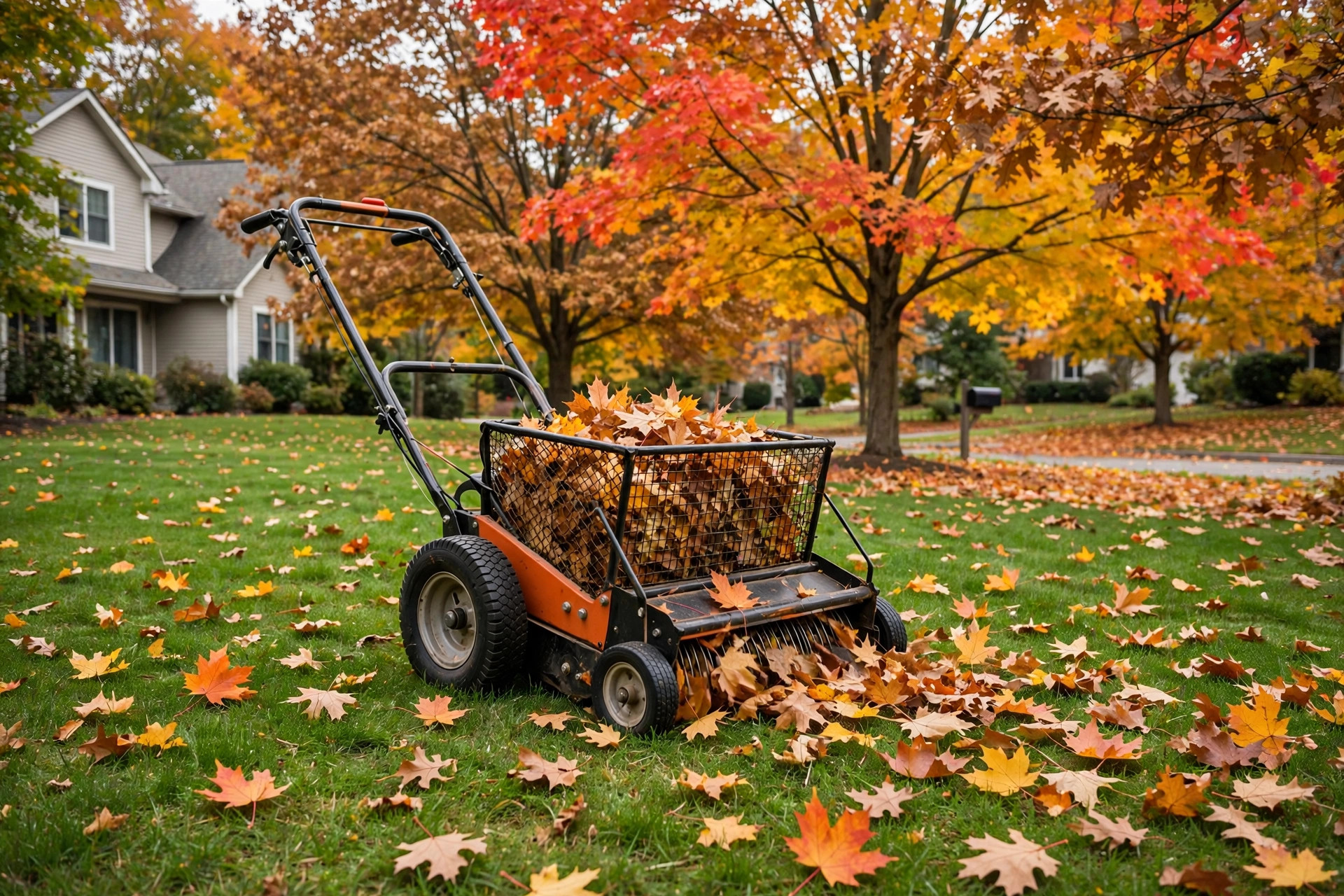
A push lawn sweeper looks simple. It is a set of spinning brushes held in a frame with two wheels and a hopper, or bag, behind it. When you push it across the lawn, the wheels turn the brushes. The brushes throw leaves and light debris up and back into the hopper. There is no engine, no cord, and no noise beyond a soft whir. For a small to medium yard with several trees, it can save hours of work each fall.
This guide explains how a push lawn sweeper works, what to look for when you buy one, which types suit which yards, what they cost, and how to keep the machine in good shape. It also covers safety and answers common questions. Whether this is your first fall in a new house or you are replacing an old rake, this plain account will help you choose well.
Why a Push Lawn Sweeper Matters for Leaves: Best Push Lawn Sweeper for Leaves
Leaves are more than a mess. When they pile up and stay wet, they shut out the sun and air that grass needs. A lawn covered in leaves for weeks can come back in spring thin and patchy, with bare spots where mold or disease took hold. Many county extension offices advise that a leaf layer left on the grass through winter does real harm. A quick cleanup each week during the heavy weeks of fall is the best defense.
The question is how to do that cleanup. Raking a quarter-acre yard can take two or three hours. A power blower is faster, but it can be loud enough to bother neighbors, and it does not collect anything. You still have to bag the leaves by hand. A push sweeper collects as it goes. You push it, the hopper fills, you dump it into a bag or a pile, and you walk on. For flat lawns with dry leaves, a sweeper is often the quickest quiet tool in the shed.
There is also a cost angle. A good sweeper costs less than a leaf blower and far less than a riding mower with a collection system. It uses no gas and no electricity, so there are no fuel or charging costs. Over ten seasons, a well-kept sweeper can be the cheapest way to keep a leafy yard clear.
How a Push Lawn Sweeper Works
The design is old and proven. Two wheels drive a set of brushes, usually four, through a gear or belt. As the wheels turn, the brushes spin faster than the wheels. Their bristles sweep across the grass, flick leaves and twigs up, and throw them backward into a hopper. A typical hopper holds between five and seven cubic feet of leaves.
The operator sets the brush height with a lever. For short grass, set the brushes low. For taller grass or deep leaves, raise them a little so the machine moves freely and does not jam. Most models also let you detach the hopper and empty it from the back or the top. The whole machine weighs between twenty and thirty pounds when empty, so most adults can push it with ease.
One point to keep in mind: a push sweeper works best on dry leaves. Wet leaves mat together and weigh much more. A sweeper can still pick them up, but you will work slower and empty the hopper more often. Many owners rake or blow the worst spots first, then let the sweeper do the finishing passes.
What to Look for When You Choose
Sweeping Width
Sweepers come in widths from about twenty-one inches to about twenty-six inches. A wider path covers the yard faster, but it is heavier and harder to turn in tight corners. For an open rectangular lawn, a twenty-six inch model is a good pick.
Brush Height Adjustment
Look for a model with several height settings and a lever that is easy to reach. Cheap sweepers have only two or three fixed heights. Better ones have a smooth range. You will adjust the height more than you think, as leaf depth and grass height change through the season.
Hopper Size
A larger hopper means fewer trips to dump. Seven cubic feet is generous. Five cubic feet is common and fine for smaller yards. Check that the hopper is easy to lift off and that it opens fully so packed leaves drop out without a struggle.
Brush Quality
Brushes are the working heart of the machine. Dense, stiff bristles pick up better than thin ones. Some makers sell replacement brush sets, which can add years to the life of the sweeper. If you can find reviews that mention brush wear, read them. Worn brushes are the main reason an old sweeper stops picking up cleanly.
Wheels and Build
Big wheels roll over roots and rough ground more easily than small ones. A steel or heavy plastic frame lasts longer than a thin one. Try the handle in the store if you can. It should sit at a comfortable height and feel steady when you push. Folding handles are handy if your shed is small.
Storage
Many push sweepers fold flat or stand on end. Measure your storage space before you buy. A folded sweeper can hang on a wall hook, which keeps the brushes off the ground and in shape through the winter.
Types and Options
Standard Push Sweepers
These are the classic models, twenty-one to twenty-six inches wide, with four brushes and a rear hopper. They suit lawns up to about half an acre. Most homeowners will never need anything more. Prices run from about eighty dollars to about two hundred dollars.
High Capacity Sweepers
Some models stretch to a wider path and a larger hopper. They clear open ground fast but weigh more and need more push. They suit large, flat lawns. Prices run from about one hundred fifty dollars to about three hundred dollars.
Tow Behind Sweepers
If you own a riding mower or a garden tractor, a tow behind sweeper hitches to the back and lets the mower do the work. These are much larger, with hoppers up to twelve cubic feet. They are the right tool for an acre or more of leafy ground. They cost more, usually two hundred to four hundred dollars, but they pair with a machine you already own. Brands such as Toro and John Deere make yard equipment lines that many tow sweeper owners already use.
Combination With Other Tools
A sweeper does not replace every tool. A leaf vacuum for large yards can handle beds and corners where a sweeper cannot reach. A best backpack leaf blower for homeowners is useful for blowing leaves out of shrubs and off the driveway before the sweeper takes over the lawn. Many owners use a blower first and a sweeper second, which is faster than either tool alone.
Cost and Price
Prices for push lawn sweepers have stayed fairly steady. In most years, a basic model sells for about eighty to one hundred twenty dollars. A mid range model with better brushes, more height settings, and a bigger hopper sells for about one hundred twenty to one hundred eighty dollars. Top models with the widest path and the sturdiest build can reach two hundred dollars or a little more.
Watch for fall sales. Big box stores and online sellers often cut prices in late September and October, right when leaves start to fall. A sweeper bought on sale can serve for a decade, so the cost per year is small.
Also count the cost of care. Replacement brushes run about twenty to forty dollars. A new hopper bag runs about thirty to fifty dollars. Keep the machine dry and clean, and you may never need either.
Care and Upkeep
A push sweeper asks for little, but a little care goes a long way. After each use, brush the leaves and dirt off the brushes and the frame. Check the hopper bag for tears. Once a season, oil any moving points the manual names. Store the sweeper in a dry place. If it must live in an unheated shed, cover it so the brushes do not collect frost.
Check the brush height each time you start. Grass grows and settles, and last week’s setting may now be wrong. A sweeper set too low drags and is hard to push. A sweeper set too high leaves leaves behind.
At the end of fall, give the machine a good cleaning. Shake out the hopper, wipe the frame, and look at the brushes. If the bristles are bent or thin, order a new set over the winter so the sweeper is ready in spring. Spring is also a good time to use the sweeper. It picks up winter twigs, old seed heads, and the last of the fall leaves that blew into corners.
Using Your Sweeper Well
Technique matters. Walk at a steady pace, not a run. Overlap each pass by a few inches. Start at the far edge of the lawn and work toward your dump spot, so you do not walk through clean ground. On deep leaves, make a first pass with the brushes raised, then a second pass at normal height.
Empty the hopper before it is packed solid. A stuffed hopper is heavy to lift and can jam the brush housing. It is faster to dump often than to clear a jam. Dump into bags if your town collects yard waste, or onto a compost pile. Shredded leaves make fine mulch, and a best leaf mulcher for compost reviews can turn them into rich material for the garden.
Wind is a friend and an enemy. Sweep with the wind at your back when you can. On very windy days, plan shorter sessions. Even with a sweeper, gusts can undo your work.
Safety
A push sweeper is one of the safest yard tools you can own. It has no engine, no blades, and no cord. Still, a few habits keep the work safe. Wear gloves when you empty the hopper. Hidden thorns, sticks, or sharp bits of trash can lurk in a leaf pile. Wear sturdy shoes with a good grip. Wet leaves are slick, and a fall on a sloped lawn can hurt.
Watch for stones and metal. A sweeper can throw a small stone if a brush catches it wrong. Clear the lawn of toys, tools, and fallen branches before you sweep. Keep children and pets at a safe distance while you work, not because the machine is dangerous but because a turned ankle or a bump from the frame is easy to avoid.
If you use other yard tools, mind their rules too. Briggs and Stratton publishes engine safety guidance for the power equipment many sweeper owners also run, such as mowers and blowers. Gas engines need care with fuel and hot parts that a push sweeper never asks for, which is one more reason the simple tool is welcome in the shed.
Frequently Asked Questions
Can a push lawn sweeper pick up wet leaves? It can, but not as well. Wet leaves are heavy and stick together. The sweeper will pick up many of them, but you may need slower passes and more frequent dumping. If the leaves are soaked, wait a day for them to dry, or blow them into a pile first and let air get under them.
How big a yard can a push sweeper handle? Most owners are happy on lawns up to about half an acre. Beyond that, the walking adds up. For an acre or more, consider a tow behind sweeper that hitches to a riding mower. For very small yards, a rake may be just as fast.
Does a sweeper work on ground other than lawn? It works on any short turf. It is less useful on wild meadow grass, on ground cover like ivy, or on gravel. On paved driveways and paths, a broom or blower is better.
Will a sweeper pick up pine needles? Some will. Short needles on short grass sweep up fairly well. Long needles and heavy pine straw can wrap around the brushes and cause jams. If your yard is mostly pines, check reviews from owners with the same trees before you buy.
How long does a push lawn sweeper last? With basic care, ten years or more is common. The brushes wear first. Replacement brush sets are sold for most popular models and can restore a tired machine.
Is a sweeper better than a leaf blower? They do different jobs. A blower moves leaves fast but does not collect them. A sweeper collects as it goes but moves slower. Many homeowners use both: the blower clears beds, corners, and hard surfaces, and the sweeper cleans the open lawn.
A Final Word
The best push lawn sweeper for leaves is not a marvel of technology. It is a simple machine with brushes, wheels, and a bag, and that is its charm. It is quiet enough for a Sunday morning, clean enough for a small shed, and strong enough to clear a leafy yard week after week. Choose a width that fits your lawn, a hopper you can lift, and brushes you can replace. Then walk your lawn at a steady pace and let the machine do the work.
References
Toro. (n.d.). Lawn and garden equipment. https://www.toro.com John Deere. (n.d.). Yard and garden equipment. https://www.deere.com Briggs & Stratton. (n.d.). Engines and power equipment. https://www.briggsandstratton.com
Was this guide helpful?

About Emily Rodriguez
The My Garden US editorial team writes practical, in-depth home and garden guides for American homeowners — tested advice, no fluff.
You May Also Like
Lawn Irrigation Winterization Service Near Me: What to Know Before the First Freeze
September 23, 2026 0 views
Best Reel Mower for Small Lawns: A Plain Guide to Choosing and Using One
July 21, 2026 0 views
Buffalo Grass Seed for Texas Lawns: A Practical Guide for Hot, Dry Summers
January 31, 2026 0 views