
The search for the best hot tub for backyard oasis plans starts with a simple dream. You picture warm water under an evening sky. You see steam rise in cool air. You hear soft sounds from the jets. Then you ask a harder question. Which tub is right for your yard, your budget, and your family? This guide gives a clear answer in plain words. It walks through the types of hot tubs, the features that matter, the costs you will face, and the safety rules you must follow. By the end, you will know how to choose a tub that fits your home and your life.
Why a Hot Tub Matters in Your Backyard
A hot tub turns an ordinary yard into a private retreat. The warm water eases tired muscles after a long day. The quiet setting gives you a place to talk with family or sit alone with your thoughts. Many owners use their tub in every season. A soak feels fine in spring rain, summer night air, or winter snow.
A hot tub can also raise the value of your home. A clean, well-kept tub shows buyers that the yard is a place for rest. It is not the main reason to buy, but it helps your home stand out. More important, it gives you a reason to spend time outside. A yard that gets used stays in better shape than a yard that sits empty.
If your yard also holds a pool, the hot tub fits in well with the rest of your water care. You may want to read about the best pool vacuum for large debris to keep the whole space clean with less work.
How to Choose the Best Hot Tub for a Backyard Oasis: Best Hot Tub for Backyard Oasis
Choice starts with size. Count the people who will use the tub most weeks. A two-person tub suits a couple. A four-to-six person tub fits a small family. A tub for seven or more works for large groups, but it costs more to heat and takes more space.
Next, look at the shell and the cabinet. The shell is the inner tub body. Acrylic shells last long and hold heat well. Rotomolded shells are lighter and cost less. The cabinet is the outer frame. Wood cabinets look natural. Synthetic cabinets resist rot and need little care.
Check the number and type of jets. More jets do not always mean a better soak. Jet placement matters more than jet count. Sit in the tub at the store if you can. Feel where the jets hit your back, neck, and feet. Look for seats that fit your height. A deep seat suits tall people. A shallower seat suits shorter people.
Insulation and the cover matter for running cost. A well-insulated tub holds heat on cold nights. A thick locking cover keeps heat in when the tub is closed. Guides at Hot Spring Spas explain how full-foam insulation lowers monthly bills. Pages at Bullfrog Spas show how jet systems can be moved to fit different bodies.
Look at the control panel. It should be easy to read in the dark. Large buttons help when your hands are wet. A simple panel is better than a panel with features you will never use.
Types of Hot Tubs for a Backyard Oasis
Hot tubs fall into three broad groups. Each group has a place in a backyard plan.
Portable Hot Tubs
Portable tubs are the most common choice. They arrive as one unit and sit on a pad or deck. They plug into a 110-volt outlet or need a 220-volt line. Most hold four to seven people. They cost less than built-in models and can move with you if you sell the home. For most buyers, a portable tub is the best hot tub for backyard oasis goals because it gives full comfort with fair cost.
Inflatable Hot Tubs
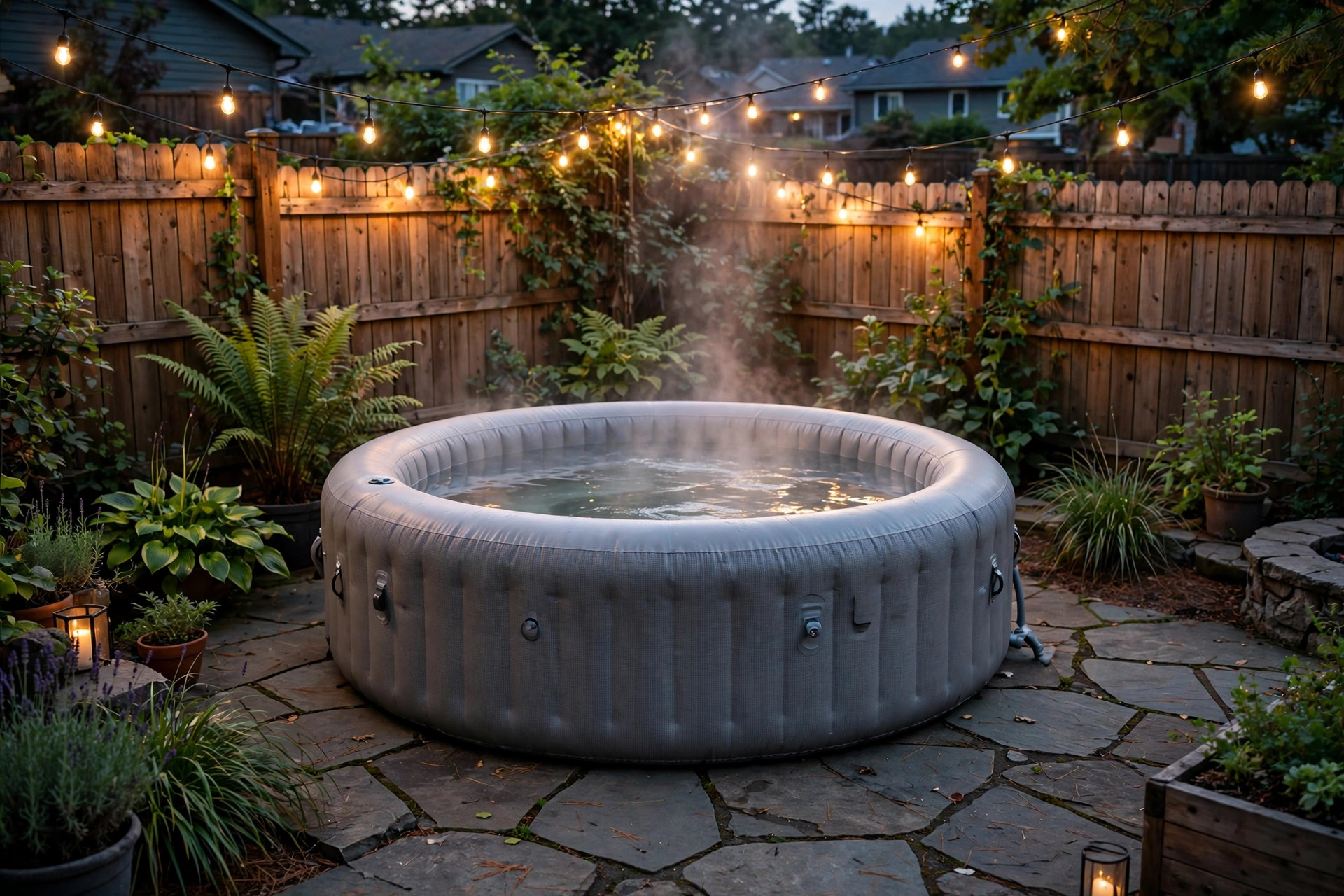
Inflatable tubs use air-filled walls. They set up in an hour and cost far less than hard-shell tubs. They are a good test of the hot tub habit. If you find that you soak three times a week, you may later buy a hard-shell model. The walls are soft, which some people like and some do not. Heat loss is higher, so winter use costs more.
Built-In and In-Ground Hot Tubs
Built-in tubs sit in a deck or in the ground. They look like part of the yard from the start. They cost the most and need a contractor. They also add the most to home value. A built-in tub suits a home where the owners plan to stay for many years.
Articles at Jacuzzi compare these three groups in more detail and show how each one fits a different budget.
Cost and Price: What You Will Pay
Prices vary by type and size. An inflatable tub may cost a few hundred dollars. A small portable tub may cost five to eight thousand dollars. A large premium portable tub may cost twelve to twenty thousand dollars. A built-in tub with deck work can pass twenty-five thousand dollars.
The sticker price is only part of the cost. Plan for these added costs:
– A concrete pad or a strong deck, since a full tub is very heavy. – Electrical work, often a 220-volt line run by a licensed electrician. – Delivery and crane service if the tub must go over a fence. – Water to fill the tub and chemicals to keep it clean. – Monthly power bills, which rise in cold months.
A hot tub that holds 400 gallons weighs over three thousand pounds when full. Make sure the pad or deck can carry that weight. This step cannot be skipped. A sagging base can crack the shell.
Retailers like The Home Depot list tubs in many price bands, and their buying pages help you see what each price level includes.
Installation: From Delivery Day to First Soak
Start with the site. Pick a spot that is level, close to the house, and near a power source. Keep a clear path for delivery. Measure gates, fences, and turns before the truck arrives. The tub will not bend around a tight corner.
Pour or set the base before delivery day. A four-inch concrete pad is the most common base. A reinforced deck also works if an engineer or builder approves it. Never place a full-size tub on bare soil or grass. The ground shifts, and the shell can crack.
Have the electrician finish the wiring first. Most portable tubs need a 220-volt line with a ground-fault breaker. The breaker box must sit at least five feet from the water. This rule keeps stray current away from the tub.
On delivery day, the crew sets the tub on the pad. You then fill it with a garden hose. Add the start-up chemicals per the manual. Heat the water to your chosen setting. Most people pick 100 to 104 degrees. Test the jets and the cover lock before your first soak.
Care and Upkeep Through the Year
A hot tub needs steady care. The work is small when you do it each week.
Test the water two or three times a week. You check chlorine or bromine, pH, and alkalinity. Keep pH between 7.2 and 7.8. Sanitizer keeps the water safe to sit in. Test strips are cheap and easy to read. Guides at Swim University walk through each test step with clear photos.
Shock the water once a week or after heavy use. Shocking burns off oils and waste that the filter misses. Run the jets with the cover open for twenty minutes after you add shock.
Clean the filter every month. Pull the cartridge out, rinse it with a hose, and soak it in filter cleaner a few times a year. A clean filter keeps the water clear and lowers strain on the pump.
Change the water every three to four months. Drain the tub, wipe the shell with a soft cloth, and refill. Do not use harsh cleaners inside the shell. They can damage the surface and throw off the water balance.
Care for the cover too. Wipe it down each month and treat the vinyl with a protectant. A cover that sags or cracks should be replaced. A bad cover leaks heat and raises your power bill.
Shops like Leslie’s and Pool Warehouse sell test kits, filters, covers, and chemicals for every common tub size.
If you also own an above-ground pool, the ladders and steps need the same steady care. Our guide on how to clean pool ladder steps shows a simple routine that takes only a few minutes.
Safety Rules Every Owner Must Follow
Water and heat demand respect. Set house rules and keep them.
Keep the cover locked when the tub is not in use. A locked cover keeps children out. It also keeps pets and debris out. The U.S. Consumer Product Safety Commission warns that drowning can happen fast and quiet, even in small bodies of water. A locking cover is a basic guard.
Never leave children alone in or near the tub. An adult should watch at all times. Keep the water at or below 104 degrees. Children and pregnant women should soak for shorter times and at lower heat. Ask a doctor if you are unsure.
Do not use the tub alone if you have a health problem that could cause you to faint. Do not mix alcohol with hot water. Alcohol and heat together can cause dizziness and falls.
Keep electrical items away from the water. No radios or lamps at the tub edge unless they are made for wet areas. Make sure the ground-fault breaker works. Test it once a month with the test button.
Place the tub where you can see it from the house. Good light on the path helps at night. A non-slip surface around the tub cuts the risk of falls on wet feet.
Landscaping Around Your Backyard Oasis
The tub is the center, but the setting makes the oasis. Start with privacy. A wood fence, tall shrubs, or a lattice screen blocks the view from neighbors. Bamboo grows fast and looks soft in the evening light.
Add light that is warm and low. String lights or small path lights give a calm glow. Avoid bright white flood lights. They kill the mood and bother the neighbors.
Choose plants that can stand steam and splashes. Ferns, hostas, and ornamental grasses do well near tubs. Keep thorny plants away from the walking path. Bare feet and thorns do not mix.
Set a small table and two chairs near the tub. You need a place for towels, water glasses, and the cover lifter. A storage bench holds chemicals out of sight and out of reach of children. Stone or pavers underfoot stay cooler than dark concrete in summer.
Common Mistakes to Avoid
New owners make the same few mistakes. You can skip them.
Do not buy the biggest tub you can afford. Buy the size you will fill most weeks.
Do not skip the site check. Measure the path, the gate, and the pad. Delivery crews charge extra when the tub does not fit and must come back.
Do not guess at chemicals. Test the water and add what the test says. Too much sanitizer burns eyes. Too little lets germs grow. The Spruce has plain guides on water balance for beginners at The Spruce.
Do not place the tub under trees that drop leaves and sap. Debris clogs the filter and stains the shell. A little shade is fine. A shower of leaves is not.
FAQ
How much does the best hot tub for backyard oasis use cost to run each month?
Most owners pay between thirty and eighty dollars a month for power, based on tub size, climate, and cover quality. Good insulation and a tight cover keep the cost near the low end. Cold winters and a worn cover push it to the high end.
What is the best water temperature for a hot tub?
Most adults pick 100 to 104 degrees. Start at 100 and raise it slowly. Children, older adults, and pregnant women should use lower heat and shorter soaks. Never go above 104 degrees.
How often should I change the hot tub water?
Change it every three to four months with normal use. If the water foams, smells, or stays cloudy after treatment, change it sooner. Heavy use by many guests means more frequent changes.
Can I put a hot tub on my existing deck?
Only if the deck can carry the full weight of water, tub, and people. A full tub can weigh more than three thousand pounds. Have a builder or engineer check the deck first. When in doubt, pour a concrete pad.
Do I need a permit to install a hot tub?
Many towns ask for an electrical permit for the 220-volt line. Some ask for a building permit for the pad or deck. Call your town office before you buy. The dealer can often tell you what your town requires.
How long does a hot tub last?
A well-made portable tub lasts ten to twenty years with steady care. The shell often outlasts the pumps and heater. Replacing a pump or heater costs far less than replacing the whole tub, so good care pays off.
A Short Final Word
The best hot tub for backyard oasis living is the one that fits your yard, your budget, and your habits. Pick the right size. Insist on good insulation and a locking cover. Plan the pad and the power before delivery day. Keep the water clean with small weekly steps. Follow the safety rules without fail. Do these things, and your tub will give you years of quiet evenings under the sky.
If your backyard also has a pool, the rest of your water gear deserves the same care. See our notes on the best pool ladder for above ground to finish your setup with safe, easy entry to the pool.
References
Bullfrog Spas. (n.d.). Hot tubs and spas. https://www.bullfrogspas.com Hot Spring Spas. (n.d.). Hot tubs and spas. https://www.hotspring.com Jacuzzi. (n.d.). Hot tubs and hydrotherapy. https://www.jacuzzi.com Leslie’s Pool Supplies. (n.d.). Pool supplies and equipment. https://www.lesliespool.com Pool Warehouse. (n.d.). Pool equipment and supplies. https://www.poolwarehouse.com Swim University. (n.d.). Pool and hot tub care guides. https://www.swimuniversity.com The Home Depot. (n.d.). Home improvement products. https://www.homedepot.com The Spruce. (n.d.). Home and garden advice. https://www.thespruce.com U.S. Consumer Product Safety Commission. (n.d.). Product safety information. https://www.cpsc.gov
Was this guide helpful?

About Robert Taylor
The My Garden US editorial team writes practical, in-depth home and garden guides for American homeowners — tested advice, no fluff.
You May Also Like
How to Winterize Pool Equipment Properly: A Step-by-Step Guide
June 1, 2026 0 views
Best Pool Vacuum Head for Vinyl: A Complete Buyer’s Guide
January 8, 2026 0 views
Pool Liner Replacement Cost Estimate: What You Will Really Pay
May 18, 2026 0 views