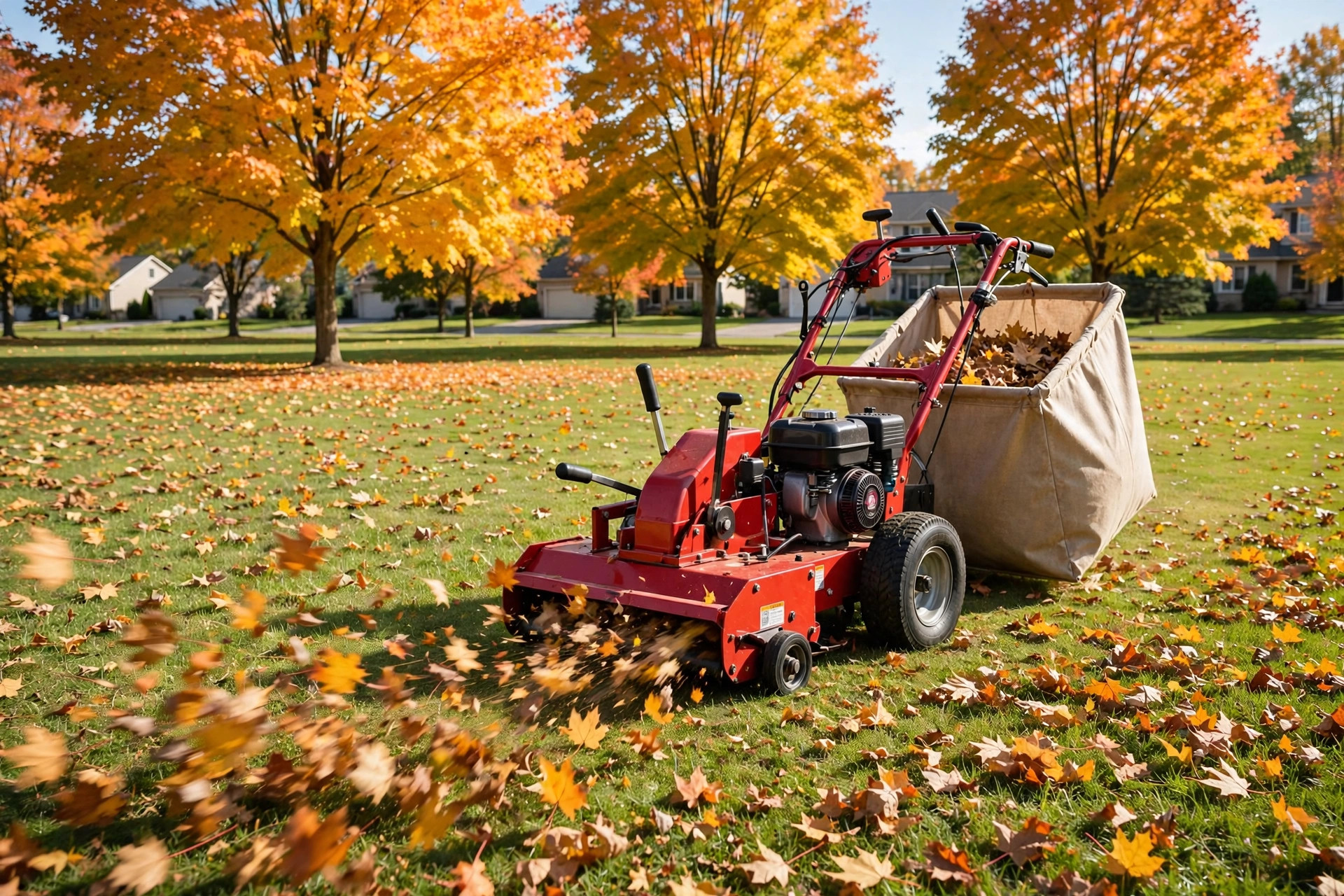

A leaf vacuum for large yards buying guide helps you pick the right machine when fall leaves pile up by the ton. Raking a small lawn is simple. Raking one or two acres is not. A good leaf vacuum sucks up leaves, chips them into mulch, and packs them into a bag or bin. This guide walks you through the choices step by step.
Why a Leaf Vacuum Matters on a Large Yard
A large yard with mature trees can drop thousands of pounds of leaves each fall. If you let them sit, they smother the grass. Wet leaves also stain driveways and sidewalks. Thick mats of leaves give insects and mold a place to hide. Your lawn pays the price by spring.
Raking alone costs too much time on a big property. A wheelbarrow and a tarp work, but the job can take whole weekends. A leaf vacuum speeds the work by a wide margin. It vacuums leaves off the grass, shreds them, and collects them in one pass. Shredded leaves take up far less room. Ten bags of whole leaves can shrink to one bag of mulch. That means fewer trips to the curb or the compost pile.
There is a lawn care bonus too. Shredded leaves make fine mulch for garden beds. Some owners spread a light layer of leaf mulch over flower beds each fall. It feeds the soil as it breaks down. Guides on Pennington lawn care resources often note that returning chopped organic matter to the yard helps soil health over time.
A vacuum also helps people with back or arm strain. Raking a half acre or more can wear out even a strong worker. Pushing a self-propelled vacuum is far gentler. For anyone who has spent a full day with a rake, the upgrade is easy to feel.
What to Look for Before You Buy: Leaf Vacuum for Large Yards Buying Guide
Every leaf vacuum promises power. The real question is whether it fits your yard. Here are the points that matter most for large properties.
Power and Suction
Look at the engine size or motor power first. Gas models often run 200cc engines or more. Strong suction matters when leaves are wet and heavy. Dry leaves are easy to lift. Wet oak leaves and soggy maple leaves are not. A weak machine clogs or stalls. If your yard holds deep drifts, choose a unit with a high CFM rating and a proven chipper blade. Owner feedback at Consumer Reports yard tool ratings can help you compare suction power across brands.
Bag or Bin Size
On a large yard, bag size sets your pace. A small bag fills in minutes. Then you stop, walk to the curb or pile, and dump it. A larger bag lets you work longer between dumps. Walk-behind models may hold five to eight bushels. Tow-behind units hold far more. If you hate stopping, size matters as much as power.
Weight and Ease of Use
Leaf vacuums can be heavy. Walk-behind units weigh fifty pounds or more. Self-propelled models pull themselves forward, which saves your arms. Check the wheel size too. Big rear wheels roll over roots and rough ground. Small plastic wheels sink into soft soil. A machine that is hard to push will sit unused in the shed.
Noise Level
Gas engines are loud. Some neighborhoods have rules about noise hours. Electric and battery models run much quieter. If you plan to work early in the morning or live close to neighbors, noise may tip your choice toward electric. A look at Greenworks electric yard tools shows how far battery machines have come in recent years.
Types of Leaf Vacuums
Leaf vacuums come in several styles. Each one suits a different yard size and budget.
Handheld Leaf Blower Vacuums
These are the smallest option. A combo unit blows leaves into piles, then switches to vacuum mode. They are light and cheap. They suit small yards and quick touch-ups. For a large yard they are too slow. The bags are tiny. Still, one can serve as a second tool for tight spots around flower beds and fences.
Walk-Behind Leaf Vacuums
This is the classic choice for big yards. The machine looks like a small lawn mower. You push it over the lawn and it sucks up leaves as you walk. Most models shred leaves at a ten-to-one or twelve-to-one ratio. They handle an acre or more with steady effort. Brands like the Toro leaf equipment line and John Deere walk-behind models both offer walk-behind vacuums with chipper blades.
Tow-Behind Leaf Vacuums
A tow-behind unit hitches to a riding mower or garden tractor. The mower deck blows leaves into a chute, and the vacuum pulls them into a giant trailer bin. These hold many bushels at once. They are the fastest option for two acres or more. The trade-off is cost and storage. You also need a tractor to pull it. If you are still weighing mower costs, our guide to financing a riding mower may help with the math.
Backpack and Wheeled Blower-Vacuums
Some commercial-grade vacuums mount the engine on a frame with large wheels or a backpack harness. These suit uneven ground and steep banks where walk-behind units struggle. They cost more than basic models. For most home lawns they are overkill.
Vacuum Attachments for Mowers
Some riding mowers accept bagging and vacuum kits. A special deck plate and hose turn the mower into a leaf collector. This is a solid pick if you already own a riding mower. Buying a separate vacuum may cost more than the kit. Check that your mower model supports the attachment before you buy.
How to Compare Leaf Blower vs Vacuum for Big Yards
Many shoppers weigh a leaf blower vs vacuum for big yards. A blower moves leaves into piles. It does not pick them up. You still rake or haul the piles away. A vacuum both gathers and shreds. It turns waste into mulch.
For large yards, the vacuum usually wins. Blowing leaves on two acres just moves the problem around. Wind can scatter your piles. A vacuum collects leaves in one pass and shrinks them into easy loads. The only case where a blower wins is bare ground with no grass. On gravel drives or patios, blowing is faster. On turf, vacuuming is better.
Some owners buy one machine that does both. A combination blower-vacuum lets you blow leaves off hard surfaces and vacuum them off the lawn. It is a handy setup for properties with mixed ground. Reviews in The Spruce fall yard care articles often test these combo units side by side.
Cost and Price Ranges
Leaf vacuum prices vary with size and power. Handheld combo units run about 100 to 200 dollars. Walk-behind gas vacuums run about 500 to 1,200 dollars. Tow-behind units run about 1,000 to 2,500 dollars or more. Vacuum kits for riding mowers fall in the middle, often 400 to 900 dollars.
Buying in fall is easy because stores stock up. Prices can rise in October and drop after the season ends. Spring sales sometimes offer the best deals on leftover stock. The Home Depot leaf vacuum selection lists current models so you can track prices through the season.
Running costs matter too. Gas models need fuel and oil. They also need blade sharpening and spark plug changes. Battery models need no gas, but you may need a spare battery for a big yard. Think about total cost over five years, not just the sticker price.
Care and Upkeep
A leaf vacuum lasts longer with basic care. Clean the bag or bin after each use. Wet leaves left inside cause mold and smell. Check the impeller blade each season. A dull blade shreds poorly and forces the engine to work harder. Sharpen or replace it when the edges round off.
Change the oil on gas models as the manual says. Most small engines need fresh oil once or twice a year with heavy use. Clean or replace the air filter too. A clogged filter cuts power and wastes fuel. The Briggs & Stratton engine support site offers simple guides for routine engine tasks.
Store the machine dry through winter. Drain the fuel or add stabilizer if it sits for months. Old gas can gum up the carburetor. Cover the vacuum to keep dust off the engine. In spring, check the tires, tighten bolts, and run a short test before the leaves fall again.
One more tip for lawn health. A clean lawn mowed to the right height makes vacuuming easier. Thick, uncut grass traps leaves and slows the machine down. A sharp mower blade and clean edging lines help the whole yard look its best. If your edger is due for service, see our edger blade replacement guide.
Safety Tips
Leaf vacuums are safe when used with care. Always wear eye protection. Shredded leaves and small sticks can fly out of the bag opening. Wear hearing protection with gas models. Thick gloves protect your hands when clearing a clog.
Never reach into the impeller housing while the engine runs. Shut the machine off and let it stop fully before you clear leaves or sticks. Keep children and pets away from the work area. A walk-behind vacuum can throw debris several feet.
Watch for hidden objects. Large yards hide sticks, rocks, and lost toys under the leaves. Metal objects can damage the blade or fly out with force. Walk the yard once before you start and pick up anything that could jam the machine. If your yard has river rock beds, keep the vacuum nozzle away from the stones to avoid picking them up.
Fuel safety matters for gas models. Fill the tank outdoors with the engine off. Wipe up spills before you start. Store fuel in an approved container away from heat. The LawnStarter leaf cleanup services site notes that hiring help for the first big cleanup can reduce risk for owners who are unsure about running power equipment.
Frequently Asked Questions
How big a leaf vacuum do I need for one acre? A walk-behind gas vacuum with a five-bushel bag or larger handles one acre well. It takes a few hours of steady work. For two acres or more, a tow-behind unit saves real time.
Can a leaf vacuum pick up wet leaves? Yes, but with limits. Strong gas models handle damp leaves fine. Soaked, matted leaves may clog any vacuum. Let very wet drifts dry for a day if you can. A rake can loosen packed mats before you vacuum.
Does a leaf vacuum work on pine needles? It works, but needles are tricky. They are small and slippery. Many models pick them up, yet the bag fills fast because needles pack tight. Programs at Scotts seasonal lawn programs often pair needle cleanup with a fall feeding for a healthier spring lawn.
Is a battery leaf vacuum strong enough for a large yard? Battery models suit yards up to a half acre. For larger yards, one battery may not last the whole job. If you choose battery power, buy a spare pack and a fast charger. Gas still leads for big, deep drifts.
What is the best month to buy a leaf vacuum? Early fall gives the best selection. Late fall and winter bring clearance prices. If you can wait, January sales often cut prices on leftover stock. Watch store flyers starting in September.
Can I compost the shredded leaves from my vacuum? Yes. Shredded leaves compost faster than whole leaves because they have more surface area. Mix them with grass clippings or kitchen scraps for a balanced pile. Avoid composting leaves from black walnut trees, which can harm some plants.
A Final Word
Choosing the right machine comes down to yard size, leaf volume, and how much work you want to do. A walk-behind vacuum fits most large yards. A tow-behind unit fits the biggest properties. Handheld models work best as a second tool. Match the power to your leaves, pick a bag you can live with, and keep up with simple care. Your fall cleanup will shrink from a weekend chore to an afternoon task.
References
Briggs & Stratton. (n.d.). Small engine support. https://www.briggsandstratton.com Consumer Reports. (n.d.). Yard tool ratings and buying guides. https://www.consumerreports.org Deere & Company. (n.d.). Lawn and garden equipment. https://www.deere.com Greenworks Tools. (n.d.). Cordless outdoor power tools. https://www.greenworkstools.com The Home Depot. (n.d.). Lawn and garden supplies. https://www.homedepot.com LawnStarter. (n.d.). Lawn care and leaf removal services. https://www.lawnstarter.com Pennington. (n.d.). Lawn care resources. https://www.pennington.com Scotts. (n.d.). Lawn care programs. https://www.scotts.com The Spruce. (n.d.). Yard and garden advice. https://www.thespruce.com Toro. (n.d.). Outdoor power equipment. https://www.toro.com
Was this guide helpful?

About James Carter
The My Garden US editorial team writes practical, in-depth home and garden guides for American homeowners — tested advice, no fluff.
You May Also Like

Affordable Mulch Installation Service Near Me: A Practical Guide
January 31, 2026 0 views
The Best Gas Leaf Blower Under 300 Dollars for American Yards
August 19, 2026 0 views
Flagstone Walkway Ideas for Backyards
May 30, 2026 0 views