---
Table of Contents
Table of Contents
- Rain Garden Design: What a Rain Garden Actually Is
- Picking the Spot
- How Big Should It Be
- Design Idea 1: The Downspout Garden
- Design Idea 2: The Dry Creek Bed
- Design Idea 3: The Corner Pocket Garden
- Design Idea 4: The Curbside Strip
- Design Idea 5: The Tiered Slope Garden
- Building It Step by Step
- Choosing Plants
- What Not to Plant
- Caring for the Garden
- Common Mistakes
- References
A rain garden is a shallow planted basin that catches runoff from your roof, driveway, or patio and lets it soak into the ground. It is one of the most useful things you can build in a small backyard. It cuts puddles, feeds the soil, and looks like a real garden instead of a drainage project. Done right, it blooms from spring to fall and needs less care than a lawn. If you are new to rain garden design, start with the basics below.
This guide covers rain garden design ideas for small backyards: where to put one, how big to make it, which plants to use, and how to build it without heavy equipment.
Rain Garden Design: What a Rain Garden Actually Is
When it comes to rain garden design, getting the details right makes all the difference.

Many homeowners find that rain garden design is easier than they expected once they know the basics.
A rain garden is not a pond. It is a saucer-shaped dip in the yard, usually four to eight inches deep, planted with tough native plants. Rain flows in from a downspout or a slope, ponds for a few hours, then drains down through the soil. Within a day or two it is dry again.
The EPA lists planting a rain garden among the top things homeowners can do to soak up the rain instead of sending it down the storm drain. Runoff from roofs and driveways picks up oil, fertilizer, and dirt on its way to local streams. A rain garden filters that water through soil and roots first.
Picking the Spot
Many homeowners find that rain garden design is easier than they expected once they know the basics.
The key to rain garden design is choosing the right approach for your space and budget.
Location makes or breaks a rain garden. Walk your yard in a hard rain and watch where the water goes. The best spots:
- Downslope of a downspout. Roof water is the easiest runoff to catch. Extend the downspout to the garden with a buried pipe or a shallow stone swale.
- In a natural low spot. If one corner of the yard always puddles, that is your garden site.
- At least ten feet from the house. Keep ponded water away from the foundation.
- Away from septic systems and wells. Check local rules for setback distances.
- In sun or part sun. Most rain garden plants want at least half a day of sun.
Do a simple drainage test. Dig a hole about a foot deep and fill it with water. If it drains within a day, your soil works. If water sits for more than two days, the spot is too tight and you should pick another one or plan on amending the soil heavily. The EPA's landscaping tips page has more on matching plantings to site conditions. The University of Delaware's rain garden fact sheet walks through site prep for sandy versus clay soils, including when to excavate deeper and add gravel and filter fabric.
How Big Should It Be
The key to rain garden design is choosing the right approach for your space and budget.
With a little planning, rain garden design can fit even a busy schedule.
A common rule of thumb is to make the garden about one fifth the size of the area draining into it. A downspout draining a few hundred square feet of roof wants a garden of roughly fifty to one hundred square feet. In a small backyard, that might be a ten-by-ten-foot bed or a long six-by-fifteen strip along a fence.
Small is fine. Two or three small basins near different downspouts often work better than one big one. Small gardens are easier to dig, easier to plant, and fit into tight yards. Even a four-by-eight-foot rain garden makes a real dent in runoff.
Depth matters more than size. Four to eight inches of ponding depth is the sweet spot. Shallower and the water runs off before it soaks in. Deeper and the garden holds water too long, which breeds mosquitoes and drowns plants.
Design Idea 1: The Downspout Garden
With a little planning, rain garden design can fit even a busy schedule.
Before you start, it helps to understand how rain garden design works in real homes.
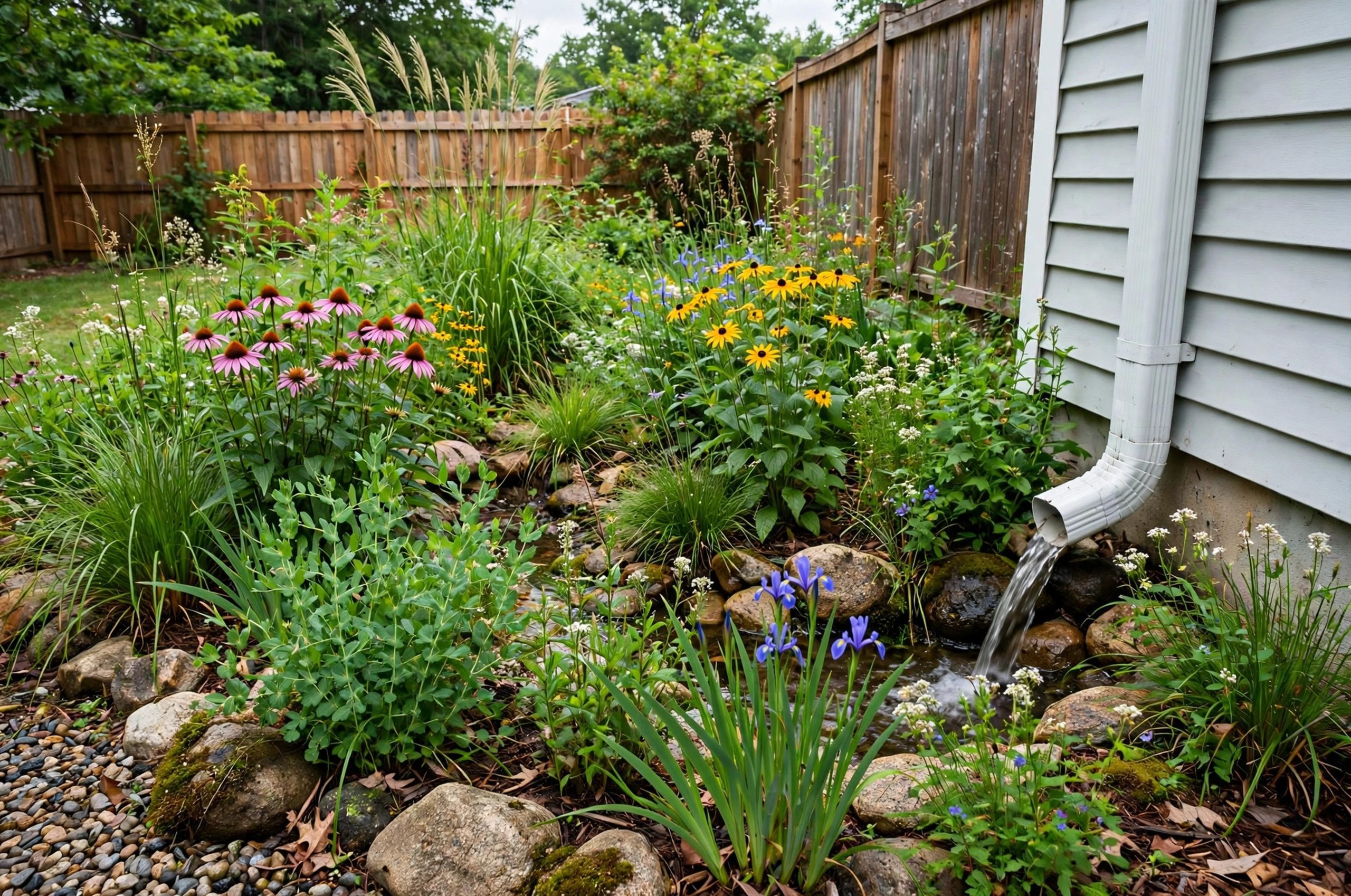
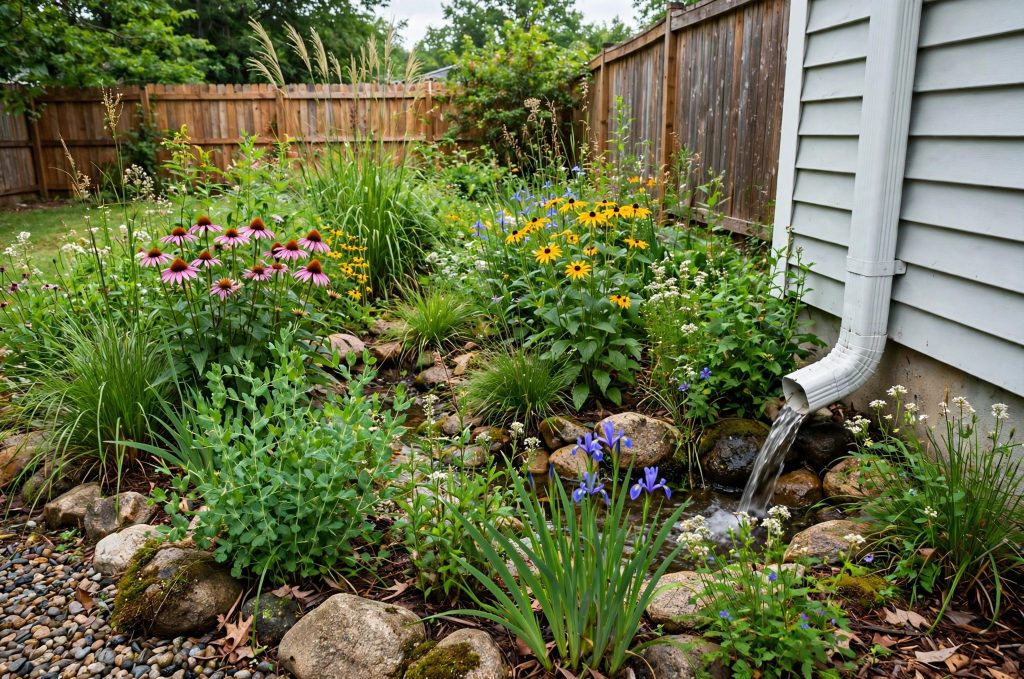
The classic small-yard rain garden sits at the end of a downspout. Dig a kidney-shaped basin about eight feet long and five feet wide. Line the inlet with river rock so the falling water does not carve a gully. Plant the center with wet-tolerant plants and the rim with plants that like it drier. Mulch the whole thing with shredded bark. This one bed can handle a full roof downspout.
Design Idea 2: The Dry Creek Bed
Before you start, it helps to understand how rain garden design works in real homes.
A good plan for rain garden design saves time, money, and frustration.
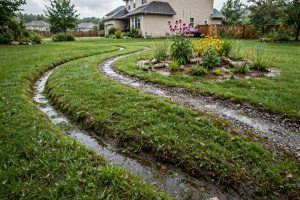
If you like a natural look, shape the garden as a dry creek. Dig a winding shallow channel from the downspout to the basin, line it with river rock, and plant the banks with grasses and flowers. When it rains, water runs down the creek into the garden. When it is dry, the stone channel looks like a design feature. Kids love this one.
Design Idea 3: The Corner Pocket Garden
A good plan for rain garden design saves time, money, and frustration.
Tight on space? Tuck a small round garden into a back corner where two fences meet. Even a six-foot circle catches the runoff from a patio or a section of lawn. Plant it thick so it reads as a flower bed, not a drainage pit. A corner garden doubles as a privacy planting if you add a tall grass or two.
Design Idea 4: The Curbside Strip
For most people, rain garden design comes down to a few smart choices.
If your yard slopes toward the street, a long narrow rain garden along the side property line catches water before it hits the sidewalk. Keep it shallow and plant low growers so sight lines stay open. Check with your city first, since some towns have rules about plantings near the curb.
Design Idea 5: The Tiered Slope Garden
If you are new to rain garden design, start with the simplest option and build from there.
For a sloped yard, build two or three small terraced basins stepping down the hill, connected by short stone spillways. Each tier catches water and passes the overflow to the next. Terracing slows water on slopes where a single garden would wash out. Bob Vila's roundup of plants for erosion control is useful here, since many of those tough slope plants also handle the wet-dry cycle of a rain garden basin. For more on handling wet yards, see our guide to lawn drainage solutions for soggy yards.
Building It Step by Step
When it comes to rain garden design, getting the details right makes all the difference.
You can build a small rain garden in a weekend with a shovel, a wheelbarrow, and a level.
1. Mark the shape. Lay a garden hose on the ground in the shape you want. Step back and look at it from the house. Adjust until it looks right.
2. Strip the sod. Cut out the grass inside the shape with a flat spade. Save the sod for patching bare spots elsewhere. A nursery guide to how to build a rain garden, based on NC State Extension guidance, is a good companion here: it recommends a shallow basin about four to six inches deep with a level bottom so water spreads instead of pooling in one corner.
3. Dig the basin. Dig four to eight inches deep in the center, sloping gently up to ground level at the edges. Keep the bottom as level as you can so water ponds evenly.
4. Amend the soil. Mix the dug soil with compost, about one part compost to two parts soil, and put it back. This sandy, rich mix drains well and feeds the plants. Do not use heavy clay straight from the hole.
5. Set the inlet. Where water enters, lay flat stones or river rock to spread the flow and stop erosion. If you are piping a downspout underground, bury solid pipe that daylights at the garden edge.
6. Plant thick. Space plants about a foot apart. Thick planting shades out weeds and the roots open up the soil so water soaks in faster. Water everything well.
7. Mulch. Spread two to three inches of shredded hardwood mulch. Skip fine mulches that float away in the first storm. Do not pile mulch against plant stems.
8. Add an overflow. Every rain garden needs a way out for big storms. Cut a shallow spillway on the downhill edge, armored with stone, so overflow leaves without carving a channel.
Choosing Plants
Many homeowners find that rain garden design is easier than they expected once they know the basics.
Rain garden plants must handle two extremes: wet feet after a storm and dry soil between rains. Native plants are the best bet because they evolved for exactly this. Rutgers Cooperative Extension's rain garden plant list is a great reference for the Northeast and Mid-Atlantic.
Think in three zones:
- The wet center. Plants here sit in ponded water after storms. Good picks: blue flag iris, swamp milkweed, cardinal flower, great blue lobelia, Joe Pye weed, and sedges.
- The middle slope. Wet sometimes, dry sometimes. Good picks: black-eyed Susan, purple coneflower, bee balm, switchgrass, little bluestem, and New England aster.
- The dry rim. Rarely wet. Plant like a normal flower bed. Good picks: coneflower, coreopsis, daylilies, ornamental grasses, and small shrubs like summersweet.
Native plants also feed pollinators, which is a bonus. Our guide on how to attract pollinators to the garden pairs well with rain garden planting. A rain barrel at the downspout is another smart combo. See our rain barrel reviews for options.
What Not to Plant
The key to rain garden design is choosing the right approach for your space and budget.
Skip plants that hate wet feet, like lavender and most Mediterranean herbs. Skip aggressive spreaders like mint and bamboo that will take over the basin. And skip anything invasive in your region. Your state extension service has a native plant list. Use it.
Caring for the Garden
Rain gardens are low care, not no care. The first season is the important one.
- Water the first summer. New plants need steady water until their roots grow deep. After that, rainfall usually suffices.
- Weed the first year. Weeds move into bare soil fast. Pull them before they seed. Thick planting and mulch do most of the work for you. The EPA's lawn and garden pest guidance favors this kind of prevention-first approach over reaching for sprays.
- Leave the stems standing over winter. Hollow stems shelter beneficial insects. Cut them back in early spring.
- Check the inlet and overflow after big storms. Clear leaves and sticks so water flows where it should.
- Do not fertilize. Rain gardens filter runoff. Added fertilizer just washes downstream. NC State Extension's rain garden design guidance covers sizing math and construction steps if you want to dig deeper into the numbers.
Common Mistakes
- Too deep. More than eight inches of ponding drowns plants and breeds mosquitoes.
- Too close to the house. Keep it ten feet out minimum.
- No overflow. The first big storm will find the weak spot. Plan the exit.
- The wrong plants. A pretty plant that cannot handle wet roots will die in the first wet month. Match plants to zones.
- Skipping the drainage test. Heavy clay that never drains makes a mosquito pond, not a rain garden. A little care goes a long way with rain garden design.
References
- Bob Vila. (n.d.). Plants for erosion control on steep properties. https://www.bobvila.com/articles/plants-for-erosion-control/
- NC State Extension. (n.d.). Rain garden design and water quality. https://emgv.ces.ncsu.edu/documents/608278/Water-Quality-MW.pdf
- Rutgers Cooperative Extension. (n.d.). Plants for the rain garden. http://water.rutgers.edu/Rain_Gardens/RGWebsite/misc/FlahiveDiNardoRainGardenPlantsNewYork09.pdf
- Rutgers Cooperative Extension. (n.d.). Rain garden maintenance manual. https://water-archive.rutgers.edu/Projects/William_Penn/Install-Projects%20PDF/Maintenance%20Manual_LopatcongPool.pdf
- TFC Nursery. (n.d.). How to build a rain garden. https://tfcnursery.com/blogs/resources/how-to-build-a-rain-garden
- U.S. Environmental Protection Agency. (n.d.). Lawn and garden pest control. https://www.epa.gov/safepestcontrol/lawn-and-garden
- U.S. Environmental Protection Agency. (n.d.). Landscaping tips. https://www.epa.gov/node/169179
- U.S. Environmental Protection Agency. (n.d.). What you can do to soak up the rain. https://www.epa.gov/soakuptherain/what-you-can-do-soak-rain
- University of Delaware Cooperative Extension. (n.d.). Rain garden fact sheet. https://Www.udel.edu/academics/colleges/canr/cooperative-extension/fact-sheets/rain-garden/
Was this guide helpful?

About My Garden US
The My Garden US editorial team writes practical, in-depth home and garden guides for American homeowners — tested advice, no fluff.