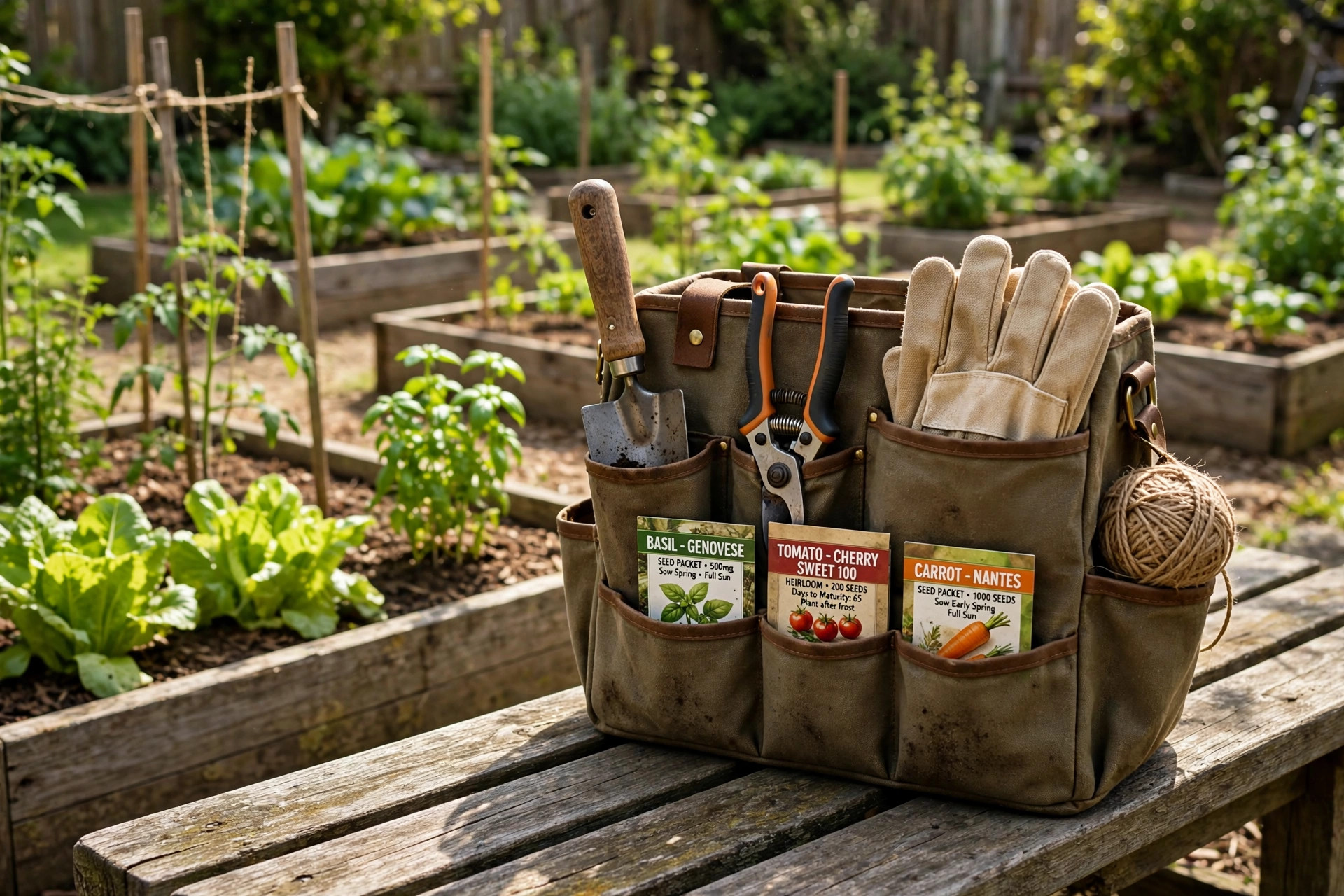

A garden asks much of the hands that tend it. Tools pile up by the back door. Gloves go missing in the grass. The twine turns up only after the job is done. The best garden caddy for carrying tools puts an end to this small daily waste. It holds the trowel, the pruning shears, the markers, and the seed packets in one tidy bundle.
A caddy is a simple thing. That is its charm. Yet simple tools vary more than most people expect. Fabric, plastic, wood, and metal each bring their own virtues. Pockets may be deep or shallow. Handles may be long or short. Some caddies ride on wheels. Others hang from the arm or rest on the hip. This guide walks through the choices in plain terms. It explains what to look for, what each type costs, how to keep a caddy sound through the seasons, and how to use one safely. At the end, a short list of questions and answers settles the points most buyers ask about first.
Why a Garden Caddy Matters
Order is the quiet friend of good gardening. A bed of vegetables or a row of roses rewards steady attention. Attention is hard to give when the tools are scattered. A caddy keeps every tool close at hand, and workers of every sort do better when their tools are near.
The best garden caddy for carrying tools saves time in the most literal way. Each trip back to the shed or garage is a trip not spent planting, weeding, or pruning. Over a season, the saved minutes grow into saved hours. The caddy also saves tools. A trowel left out in the rain will rust. Shears left in the sun will dull and dry out. A caddy that travels with the gardener keeps metal tools dry and clean between uses. This lengthens their life by years.
There is also the matter of the body. A caddy with the right handle and the right weight lets the gardener carry tools at the side, close to the body, with the back straight. This is kinder than a bucket hooked over one forearm or a loose armful of implements.
Finally, a caddy teaches beginners. A new gardener does not yet know which tools matter. A caddy with clear pockets invites the habit of putting each thing in its place. Order learned in the first season lasts for decades.
How to Choose the Best Garden Caddy for Carrying Tools
Choice begins with an honest look at the garden itself. Catalogs from gardening supply houses show how size, material, and pocket layout change with the gardener’s needs. A small city plot needs little more than a hand tote with room for a trowel, a pair of shears, and a handful of packets. A half-acre of beds may call for a rolling caddy that also carries a jug of water and a bag of soil. The gardener who grows mostly flowers will want narrow slots for delicate tools. The gardener who grows vegetables may want wide pockets for bulky gloves and a big pair of loppers.
Size and Capacity
The right size is the size that gets carried without complaint. A caddy that is too large will sit in the shed while the gardener works with a plastic bag. A caddy that is too small will overflow, and the overflow will end up on the ground anyway. Most buyers do well with a caddy between ten and sixteen inches long. Measure the longest tool before buying. Pruning shears and bulb planters vary in length, and a pocket an inch short is a pocket useless.
Material and Durability
Canvas and heavy polyester are the common fabrics. They are light, washable, and kind to the hands. Look for double stitching at the handles and reinforced bottoms. Plastic caddies wipe clean in seconds and stand up to mud, but they can crack in hard frost if left outside. Wooden caddies look handsome and hold their shape for years under a roof, though they dislike long exposure to rain. Metal caddies are the toughest of all, yet they add weight and may rust at the seams unless coated. Well-known tool brands tend to favor canvas and hard plastic, which tells the buyer something about what survives real use.
Pockets and Layout
Count the pockets before buying. Then picture each tool going into one. The best garden caddy for carrying tools offers a mix of deep outer pockets for gloves and tall bottles, narrow sleeves for pens and markers, and at least one long pocket for a trowel or hand fork. An open center works well for seed packets, a ball of twine, and a small notebook.
Handles and Carrying Comfort
Handles decide whether the caddy is a pleasure or a burden. Short top handles suit a tote that travels from bed to bed. A long shoulder strap frees both hands for gates and watering cans. Padded grips help when the load is heavy. For gardeners with sore backs, a caddy with wheels is worth serious thought. Garden supply specialists stock several rolling models, and their catalogs show how handle height and wheel size change the feel of the pull.
Drainage and Cleanliness
Gardening is wet work. A caddy that cannot drain will breed odor and rot. Fabric caddies often have mesh bottoms or grommet holes. Plastic caddies may have a drain plug. If neither is present, empty and air the caddy after each use.
Types of Garden Caddies
The market offers five broad families. Each suits a different gardener.### Open Tote Caddies
The open tote is the classic. It has a rigid frame or a stiffened fabric body, a wide open top, and pockets all around. Everything is visible at a glance. It suits beginners and small gardens. Its weakness is exposure. In a sudden shower, everything inside gets wet. Some totes include a small rain cover, which solves the problem at a modest extra cost.
Bucket and Bucket-Bag Caddies
The bucket caddy turns an ordinary five-gallon bucket into a tool carrier. A fabric sleeve with pockets wraps around the bucket, and the inside holds soil, water, or weeds. This is the cheapest type by far. It also doubles as a seat in a pinch, provided the lid is firm. The drawbacks are bulk and weight. A full bucket is heavy, and the round shape wastes space in a small shed. Still, for the gardener who already owns buckets, the sleeve alone is a bargain. Home improvement stores and home centers carry these sleeves in their garden aisles every spring.
Rolling Caddies and Garden Carts
A rolling caddy carries more than any tote. It rides on two or four wheels and often includes a handle that locks upright. Some models add a small seat, which is a blessing for long planting sessions. These caddies suit large gardens, allotments, and gardeners who prefer not to lift. The cost is higher, and the bulk demands storage space. Readers who need still more capacity may wish to look at our guide to the best garden cart for heavy loads, which compares full-size carts side by side.
Waist and Hip Caddies
The waist caddy is a belt or apron with pockets. It keeps tools on the body while both hands stay free. Pruners and rose growers love it. It carries little, which is both its virtue and its limit. Many gardeners wear the belt for pruning rounds and set the tote down at the end of the row.
Wooden and Vintage-Style Caddies
Wooden caddies copy the toolboxes of an earlier age. They are divided into compartments, fitted with a central handle, and often handsome enough to leave on a porch. They appeal to gardeners who value craft and keep their tools under cover. They are heavier than fabric and need occasional oiling to stay sound.
Cost and Price
A garden caddy is a modest purchase, but the range is wide. Understanding it helps the buyer spend once and spend well.
Bucket sleeves and simple fabric totes start at the low end. These cost little more than a bag of fertilizer and serve a small garden for several seasons if kept dry. Mid-range totes, made of heavier canvas with reinforced stitching, padded handles, and many pockets, cost more but last longer. This middle band holds the best value for most buyers.
Rolling caddies and carts sit at the top of the range. The price reflects the wheels, the frame, and often a seat. Wooden caddies vary widely. A plain pine box is cheap. A finished hardwood model with brass fittings can cost as much as a rolling cart. Buyers who compare ratings before buying can consult independent product testing groups for impartial reviews.
A word of caution is in order. A very cheap caddy with thin fabric and weak handles may tear in the first season. The gardener then buys twice. It is better to buy one sturdy caddy than two flimsy ones. Large chain retailers and hardware stores both stock budget and premium lines side by side, which makes comparison easy in the aisle.
Care and Upkeep
A caddy is a servant of the garden. Like any servant, it works better when cared for.
Empty the caddy after each use. Shake out soil and dead leaves. Wipe plastic and metal with a damp cloth. Turn fabric caddies inside out and brush them clean. Never store a damp caddy in a closed shed. Air is its friend.
Check the handles and stitching each spring. Tighten loose screws on wooden and metal models. Oil the wheels of rolling caddies with a drop of machine oil. Rub a little linseed oil into wooden handles once a year to keep them from drying and splitting. Tool makers and workshop and garden guides both publish seasonal maintenance checklists that cover these small jobs in detail.
Store the caddy under cover. A porch, a shed, or a garage corner will do. Sunlight breaks down fabric over time, and frost cracks cheap plastic.
Sharp tools deserve their own care. Clean blades with a rag, dry them fully, and store them in their pockets. A drop of oil on pruning shears keeps the spring lively. Readers who want to keep their blades keen should see our notes on garden tool storage ideas for shed, which show how a tidy shed protects every tool in it.
Safety in the Garden
A caddy full of tools is a caddy full of edges. Treat it with respect.
Keep sharp blades pointed down or sheathed. A trowel loose in an open tote can cut a hand that reaches in blindly. Many caddies include blade guards or deep narrow pockets for this reason. Use them. Carry the caddy at the side, never balanced on the head or shoulder where it can tip.
Chemicals need care. If the caddy carries fertilizer or pesticide, keep those containers upright and sealed. Wash the caddy after chemical use before it touches food crops or seed packets. Gloves used with chemicals should travel in a separate pocket. Children and pets should not play with a loaded caddy. Put it out of reach when the work pauses.
Heat is a quiet hazard. A dark caddy left in summer sun can grow hot enough to burn, and so can the metal tools inside it. Rest the caddy in the shade between tasks.
Frequently Asked Questions
What is the best garden caddy for carrying tools for a beginner? An open fabric tote with eight to twelve pockets is the best start. It is light, cheap, and easy to organize. The beginner can see every tool at once and learn the habit of putting each one back. A bucket sleeve is a fine low-cost alternative.
How many tools should a caddy hold? Most home gardeners carry between six and twelve tools. A trowel, a hand fork, pruning shears, gloves, a ball of twine, plant markers, and a few seed packets cover most days. A caddy sized for this load will not tempt the gardener to overload it.
Are rolling caddies worth the extra money? For large gardens and for gardeners with back or knee trouble, yes. The wheels carry the weight, and many models include a seat. For a small patio garden, a rolling caddy is more than needed. Match the caddy to the garden, not to the catalog.
Can a garden caddy be left outside? It is better not to. Sun fades fabric and warps plastic. Rain rusts metal fittings and breeds mildew. A minute spent carrying the caddy indoors adds years to its life. If it must stay out, choose metal or heavy plastic and cover it.
What is the difference between a garden caddy and a garden tote? The words overlap. In common use, a tote is a simple bag with handles, while a caddy has structured pockets, a rigid frame, or compartments made for tools. Many products called totes are really caddies. The label matters less than the layout.
Should I buy a caddy with a seat? A seat helps during long planting and weeding sessions. It adds weight and cost, and the seat must be sturdy to be safe. Gardeners with sore knees often find the seat worth every penny. Our review of the best garden kneeler with handles looks at seating and kneeling aids in more depth.
A Final Word
The garden rewards those who are ready. The best garden caddy for carrying tools is not the dearest or the cleverest. It is the one that fits the gardener’s hands, the gardener’s tools, and the gardener’s plot. Choose a sturdy material. Count the pockets. Test the handles. Then fill it, carry it out, and get to work. Good tools, kept in good order, make gardening the pleasure it ought to be, as home and garden writers and home improvement writers often note.
References
Ace Hardware. (n.d.). Hardware and home supplies. https://www.acehardware.com Bob Vila. (n.d.). Home improvement advice. https://www.bobvila.com Burpee. (n.d.). Seeds, plants, and gardening supplies. https://www.burpee.com Consumer Reports. (n.d.). Product reviews and ratings. https://www.consumerreports.org Corona Tools. (n.d.). Garden and landscape tools. https://www.corona-tools.com Family Handyman. (n.d.). DIY home repair and maintenance. https://www.familyhandyman.com Fiskars. (n.d.). Garden and cutting tools. https://www.fiskars.com Gardener’s Supply Company. (n.d.). Gardening tools and supplies. https://www.gardeners.com Lowe’s. (n.d.). Home improvement products. https://www.lowes.com The Home Depot. (n.d.). Home improvement products. https://www.homedepot.com The Spruce. (n.d.). Home and garden advice. https://www.thespruce.com Walmart. (n.d.). Everyday low prices. https://www.walmart.com
Was this guide helpful?

About David Wilson
The My Garden US editorial team writes practical, in-depth home and garden guides for American homeowners — tested advice, no fluff.
You May Also Like

How to Grow Carrots in Raised Beds: A Complete Beginner’s Guide
June 29, 2026 0 views
The Best Garden Boots Waterproof for Mud: A Plain Guide
May 24, 2026 0 views
How to Pick the Best Garden Cart for Farmers Market Days
August 18, 2026 0 views