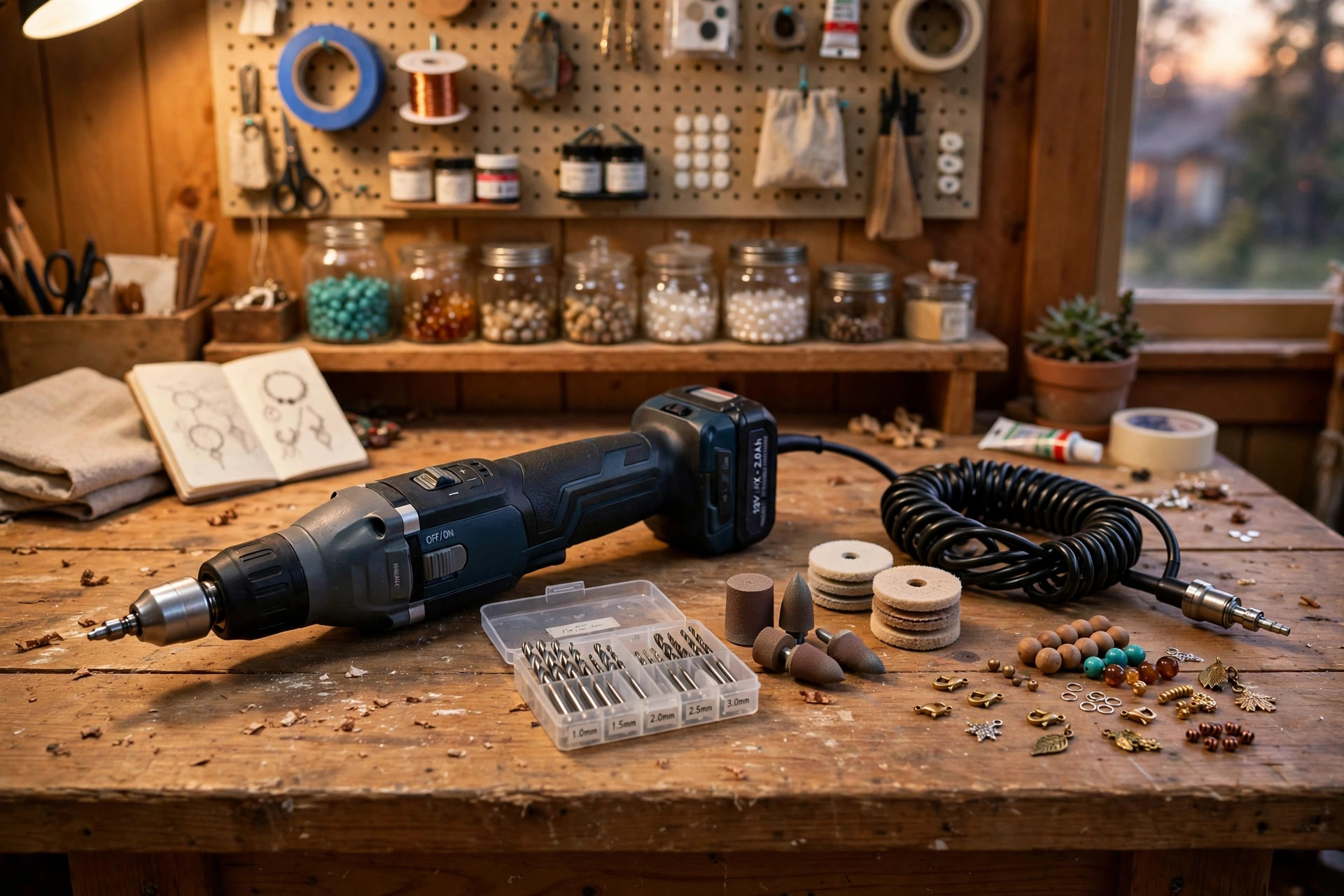

A small rotary tool can change the way you make things at home. The best rotary tool for diy crafts and jewelry fits in one hand. It spins a tiny bit at high speed. With the right bit, it can drill, cut, grind, sand, carve, engrave, and polish. One tool does the work of many. That is why crafters and jewelry makers keep one on the bench at all times.
This guide will help you choose the right model for your work. We will look at what matters most, the main types, the cost, the care of the tool, and the safe way to use it. No technical jargon. Just plain facts, so you can buy with confidence.
Why a Rotary Tool Matters for Crafts and Jewelry
Many craft projects need small, careful work. A large drill is too heavy. A knife is too slow. A rotary tool sits between the two. It is light. It is easy to hold. It turns at thousands of revolutions per minute, so a tiny cut or polish takes seconds.
For jewelry makers, the tool is almost required. A rotary tool for jewelry making drills clean holes in beads and pendants. It polishes metal to a bright shine. It engraves names or designs on rings and charms. It cuts wire and shapes wax for casting. These small jobs are hard to do well by hand.
For general DIY crafts, the tool is just as useful. It carves wood for small signs and figures. It etches glass. It smooths the edges of cut plastic. It cleans old paint from small items. Sites like This Old House often show rotary tools in small home projects, because one tool can handle so many tasks.
A rotary tool also saves money over time. Instead of buying a separate drill, sander, polisher, and engraver, you buy one motor and many bits. A good set of bits costs little and lasts long. For a home craft room, that is hard to beat.
How to Choose the Best Rotary Tool for DIY Crafts and Jewelry
Not every rotary tool suits fine work. Big, rough tools are made for garages. Craft and jewelry work needs control. Look at these points before you buy.
Speed Control
Speed is the first thing to check. Good tools offer a wide range, often from about 5,000 to 35,000 revolutions per minute. Low speed is for polishing and delicate engraving. High speed is for drilling and cutting.
A dial on the body gives the best control. Some tools change speed only in steps. A smooth dial is better for craft work. You can slow the bit just enough to avoid burning wood or melting plastic. Reviewers at Family Handyman often stress this point. Control matters more than raw power.
Power Source
Rotary tools come in corded and cordless forms. A corded tool plugs into the wall. It gives steady power and never runs out. It is a good choice for a fixed bench where you work for hours.
A cordless rotary tool for crafts runs on a battery pack. It is free of cords. You can move around a large project. The battery lasts about one to two hours of steady use. For most jewelry and craft jobs, that is enough. Keep a second battery charged, and work never stops.
Grip and Weight
You will hold this tool for long stretches. It should feel like a thick pen or a small handle. Weight under one pound is ideal. A slim body gives a steady hand for engraving and detail work.
Some models come with a flexible shaft. This is a long cable that connects the motor to a small handpiece. The motor hangs or rests on the table. Your hand holds only the light handpiece. This gives very fine control for jewelry. Many engravers prefer this setup.
Collet Size and Attachments
The collet is the small clamp that holds the bit. The most common size is 1/8 inch. Many bits come in that size. Some tools also accept smaller collets, such as 1/16 inch, for fine jewelry bits.
Check that the tool accepts a wide range of bits. A good kit includes drill bits, grinding stones, cutting wheels, sanding drums, polishing wheels, and wire brushes. You can also buy extra rotary tool accessories for engraving later. A tool with a keyless chuck is easy to change, but a standard collet holds small bits with more care.
Types of Rotary Tools
Three main types serve craft and jewelry work. Each has its own strength.
Corded Models
Corded models are the classic choice. They plug in and run at full power. They cost less than cordless tools of the same quality. They are also lighter in the hand, since there is no battery. For a bench setup, a corded model is simple and reliable.
The main drawback is the cord. It can drag across your work. It limits where you can go. For most craft rooms, this is a small issue. Many crafters at Michaels and similar stores buy corded kits because the price is right and the power is steady.
Cordless Models
Cordless models run on rechargeable batteries. They are free to move. You can take them to the porch, the kitchen table, or a craft fair. Newer models hold a charge well and give power close to corded tools.
The cost is higher, and you may need spare batteries. For jewelry makers who travel to shows, or for anyone without a fixed bench, cordless is the clear winner. Home Depot and other retailers stock many cordless kits with two batteries and a charger.
Pen-Style and Micro Motors
Pen-style tools are thin and light, like a marker. They are made for detail work such as engraving and fine polishing. Micro motors are small bench units with a flexible shaft and a tiny handpiece. They are the choice of professional jewelers.
These tools cost more than basic rotary tools. They also run smoother and quieter at low speeds. If your work is mostly fine detail, such as ring engraving or stone setting, a pen-style tool or micro motor is worth the price. The Dremel line includes slim models built for this kind of work.
Cost and Price Ranges
Prices vary by type and brand. A basic corded kit with bits often costs between 30 and 60 dollars. These kits suit beginners and light craft work. They drill, sand, and polish well enough for most home projects.
Mid-range tools cost between 60 and 120 dollars. These add better speed control, stronger motors, and more bits. Many jewelry makers buy in this range. The tool lasts longer and runs smoother.
High-end models cost 120 to 300 dollars or more. These include pen-style tools, micro motors, and top cordless kits with two batteries. They suit daily use and professional work. Bob Vila and other home sites note that heavy users should buy the best tool they can afford, since a cheap motor can burn out under daily load.
Do not forget the cost of bits and accessories. A good starter set costs 15 to 40 dollars. Replacement bits are cheap. Budget 30 to 50 dollars per year for bits if you use the tool often.
Care and Upkeep
A rotary tool needs little care, but a few habits will make it last for years.
Keep the vents clear. The motor cools itself with air drawn through small slots in the body. Dust from wood and metal can block these slots. Blow them out with a can of air every few weeks. Never run the tool with blocked vents. It will overheat.
Change bits with care. Turn the tool off and unplug it before changing a bit. Tighten the collet firmly but not with force. A loose bit will wobble and spoil your work. A stuck collet can be freed with a drop of oil and a gentle turn.
Store the tool in its case. Dust and drops are the main enemies. A hard case keeps bits sorted and the motor safe. Keep batteries in a cool, dry place. Do not leave them in heat, such as a car in summer.
Oil the moving parts once or twice a year if the manual calls for it. Most modern tools are sealed and need no oil. Read the small booklet that comes in the box. It takes five minutes and saves trouble later.
Safety
A rotary tool spins fast. Treat it with respect, and it will serve you well for years.
Wear eye protection every time you use it. Bits can break. Chips of metal, stone, and wood fly at speed. Simple safety glasses cost little and prevent serious harm. A dust mask is wise when sanding wood or grinding stone. Fine dust harms the lungs over time.
Hold the work steady. Clamp small pieces in a vise or hold them with pliers. Never hold a tiny bead between your fingers while drilling. The bit can catch and spin the piece. Many jewelry teachers at JOANN classes teach this rule first.
Let the bit do the work. Press lightly. A hard push does not cut faster. It only bends the bit, burns the work, and strains the motor. A gentle touch gives clean results.
Unplug the tool when you change bits. This is the most common cause of small accidents. A moment of care saves a cut finger.
Keep cords away from the spinning bit. With corded tools, lay the cord behind you. A bit can catch a loose cord in a second.
Keep children and pets away from the bench while you work. Store the tool and bits out of reach when you are done.
Frequently Asked Questions
Can a rotary tool cut metal jewelry wire?
Yes. Use a thin cutting wheel or a small saw blade bit. Hold the wire firm with pliers. Cut at medium speed with a light touch. A small rotary tool for wood carving can also cut soft metals like copper and silver with the right wheel.
What is the best speed for polishing silver?
Low to medium speed works best, often around 10,000 to 15,000 revolutions per minute. High speed can burn the polish and stain the metal. Use a soft felt wheel and a small amount of polishing compound. Wipe the piece clean between passes.
Are cordless rotary tools strong enough for stone work?
Light stone work, such as drilling small holes in soft stone beads, is fine with a good cordless model. Hard stone grinding takes more power and longer time. For heavy stone work, a corded tool or a micro motor is the better choice.
How long do rotary tool bits last?
It depends on the material and the use. Diamond bits for glass and stone last many months of light use. Sanding drums wear out faster, since the grit sheds with use. Cutting wheels are thin and break often, so keep spares. Buying bits in bulk from stores like Blick Art Materials lowers the cost.
Can I use a rotary tool to engrave glass?
Yes. Use a diamond point bit at low to medium speed. Draw your design on the glass with a marker first. Move the bit slowly along the lines with a light touch. Keep the glass steady on a soft cloth. Practice on scrap glass before working on a finished piece.
Do I need a flexible shaft for jewelry?
It is not required, but it helps a great deal. A flexible shaft makes the handpiece light and slim. Your hand tires less, and fine lines come easier. Many jewelers add a shaft to a standard tool instead of buying a separate micro motor. It is a good middle step.
A Final Word
The best rotary tool for diy crafts and jewelry is the one that fits your hand, your work, and your budget. A beginner can start with a simple corded kit and grow into better bits. A serious jeweler may want a smooth pen-style tool with a flexible shaft. Either way, the basics are the same: good speed control, a comfortable grip, and the right bit for the job.
Take time to learn the tool. Practice on scrap wood, glass, and metal before you touch a finished piece. Read the manual. Wear your glasses. With care, a rotary tool will be the most used tool in your craft room.
If your craft work grows, related tools can help too. A rotary cutter speeds fabric work for craft projects. A vinyl cutter can make custom labels and decals for jewelry boxes. A mini sewing machine stitches small pouches for finished pieces. Together, these tools turn a small room into a true workshop.
References
Blick Art Materials. (n.d.). Art and craft supplies. https://www.dickblick.com Bob Vila. (n.d.). Home improvement advice. https://www.bobvila.com Dremel. (n.d.). Rotary tools and accessories. https://www.dremel.com Family Handyman. (n.d.). DIY home repair and maintenance. https://www.familyhandyman.com JOANN. (n.d.). Fabric and craft supplies. https://www.joann.com Michaels. (n.d.). Arts and crafts supplies. https://www.michaels.com The Home Depot. (n.d.). Home improvement products. https://www.homedepot.com This Old House. (n.d.). Home renovation guidance. https://www.thisoldhouse.com
Was this guide helpful?

About Lisa Anderson
The My Garden US editorial team writes practical, in-depth home and garden guides for American homeowners — tested advice, no fluff.
You May Also Like
Pottery Wheel for Home Beginners: A Plain Guide to Clay Art
August 8, 2026 0 views
Best Craft Paint for Wood Signs DIY: A Plain Guide
April 19, 2026 0 views
Best Sewing Machine for Heavy Duty Denim USA
September 2, 2026 0 views