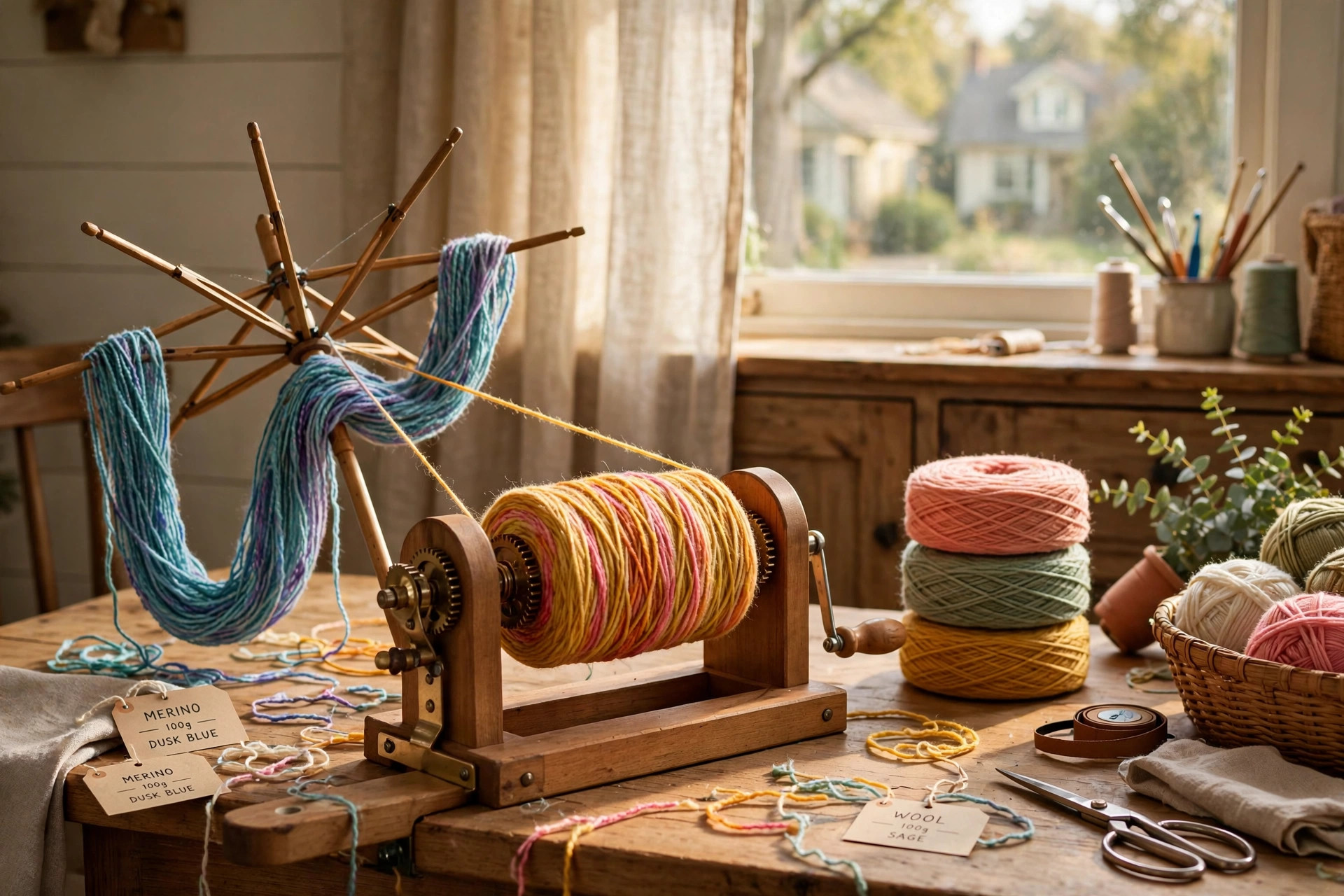

A tangled skein of yarn can ruin a quiet evening of craft. You sit down to start a new project, and within minutes the strand knots itself into a bird’s nest. The best yarn winder for crochet and knitting solves this old problem in a simple way. It turns loose skeins and hanks into neat, compact balls, called cakes, that feed from the center without rolling across the floor.
Yarn winders are small tabletop tools. Most clamp to the edge of a table. You place a hank of yarn on a swift, feed the end through a guide, and turn the handle. In a few minutes you hold a flat-bottomed cake that sits still while you work. The tool saves time, protects fine fibers, and keeps your stash neat on the shelf.
This guide explains what makes a good winder, the main types you can buy, what each type costs, how to use one, and how to care for it. It also answers common questions from crafters who are buying their first winder or replacing a worn one.
Why a Yarn Winder Matters
Working straight from a hank sounds fine until the first snag. Hanks are twisted loops of yarn. Pulling the strand straight from the loop lets the loops shift and tighten around each other. Before long you are untangling instead of stitching.
A ball winder fixes the shape of the yarn before you begin. The finished cake feeds from its center, so the outside stays in place. Your work moves faster because you stop to untangle far less often. Tension also stays more even, since the yarn meets no resistance from knots. Even tension shows in the finished fabric, with rows that lie flat and look alike.
Winders help with storage too. Cakes stack on shelves and fit into storage bins better than floppy hanks. Each cake uses its full volume, so a shelf holds more yarn in less space. Labels or notes tucked under each cake tell you the fiber and dye lot, which matters when you return to a project months later.
Crafters who dye their own yarn or buy in bulk feel the benefit most. Dyed hanks must dry, then sit until use. Winding them once at the start means they are ready the moment inspiration strikes. Gift knitters and small sellers who wind many skeins each week save hours over a season.
How to Choose the Best Yarn Winder: Best Yarn Winder for Crochet and Knitting
Not every winder suits every crafter. Five factors decide which model fits your craft.
Capacity. Most tabletop winders wind cakes of three to four ounces. Larger models handle up to ten ounces, which suits bulky yarn and blanket projects. If you work mostly with standard skeins, a small winder does the job. If you buy jumbo skeins for afghans, choose a high-capacity model.
Build quality. Winders come in plastic and metal. Plastic models cost less and work well for light weekly use. Metal bodies and metal gears last longer and turn more smoothly under heavy yarn. Look for a winder with a firm clamp that grips the table without wobble. The guide arm should move freely and hold its position.
Drive style. Manual winders use a hand crank. They cost less, run silent, and let you control the speed, which protects delicate fibers. Electric winders wind fast with the push of a button but cost much more. For most home crafters, a manual winder is enough.
Compatibility with a swift. A winder works best paired with an umbrella swift, which holds the hank open and spins as yarn feeds out. Many winders sell alone. Check that your winder and swift mount well together, or buy a combo set made by the same brand.
Ease of use. A good winder needs no tools to set up. The crank should turn without jerks. The cake should slide off the spindle with a gentle lift. Read user reviews for notes on smooth motion and on whether the clamp fits thick table edges.
Crafters pairing a winder with other tools often keep a yarn bowl on the table too. The bowl holds the finished cake while the ball winder does the prep work.
Types of Yarn Winders
Tabletop Ball Winders
The classic choice clamps to a table edge. A handle drives a spindle through gears. You feed yarn from a swift through the guide, crank steadily, and a cake forms. Prices run from about twenty dollars for basic plastic models to near one hundred for sturdy metal ones. These suit nearly every home crafter and last for years with light care.
Electric Ball Winders
Electric models wind at the touch of a switch. They suit sellers and dye studios that wind dozens of skeins each week. They cost from about one hundred fifty to over three hundred dollars. They are louder than manual models and need an outlet nearby. For occasional home use they are more machine than most crafters need.
Hand Winding and Nostepinnes
A nostepinne is a simple wooden stick used to wind center-pull balls by hand. It costs little and teaches the feel of tension. It takes far longer than a crank winder, so it suits crafters who wind only one skein at a time and enjoy slow methods. Some crafters also wind by hand around a cardboard tube for the same reason.
Winder and Swift Combination Sets
Many brands sell the winder and umbrella swift together. Buying the set costs less than buying both alone, and the parts are made to fit each other. This is the easiest path for a first-time buyer. Entry sets start near forty dollars.
Cost and Price Guide
Prices for yarn winders fall into clear tiers.
Budget, under 30 dollars. Basic plastic winders with small capacity. Fine for crafters who wind a few skeins a month. Expect a lighter clamp and more care in cranking.
Mid-range, 30 to 80 dollars. Better plastics, smoother gears, and some metal parts. Most home crafters land here. A good mid-range winder with a swift set handles years of regular use.
Premium, 80 to 150 dollars. Metal bodies, metal gears, high capacity, and fine finish. These wind heavy and delicate fibers with equal ease. A premium winder is a once-in-a-decade purchase.
Electric, 150 dollars and up. Built for volume. Dye studios and small yarn shops recover the cost in saved hours.
Ongoing costs are near zero. A winder needs no refills and little upkeep. The main added cost may be a swift, if not bought in a set, and spare drive bands for models that use them. When budgeting, remember that good storage protects your wound cakes, and craft storage bins for yarn and fabric keep dust off finished work.
Retailers such as Michaels and JOANN carry a wide range of winders and swifts, often with seasonal sales. Big-box stores like The Home Depot stock clamps and craft tables that pair well with winders. Specialty fiber shops, including KnitPicks, offer winders chosen for serious knitters.
How to Wind Yarn Step by Step
1. Open the hank and remove its ties. Drape it over the umbrella swift and open the swift until the hank sits firm but not stretched. 2. Clamp the winder to a steady table edge. Tighten until it does not rock. 3. Find the outside end of the hank. Feed it through the winder’s guide eye and wrap it a few turns around the spindle. 4. Turn the crank at a steady, moderate pace. Let the swift spin freely. Do not yank the yarn or force the handle. 5. Keep light, even pressure. The cake should form firm but springy. Over-tight winding stretches the yarn and changes its gauge. 6. When the cake is done, lift it gently off the spindle. Tuck the starting end into the center so it feeds cleanly later.
Winding takes about five minutes per skein once you learn the rhythm. Work in good light so you can spot slubs, knots, or color breaks as the yarn passes. Mark each cake with the fiber content and dye lot on a small tag.
Care and Upkeep
A yarn winder asks for little care. Dust it after use with a dry cloth. Keep it in a box or bag so the clamp and gears stay free of lint. Once a year, check the gears for hair and fiber caught between teeth, and clear them with tweezers.
Do not oil plastic gears unless the maker says to, since oil attracts dust. Metal gears take a tiny drop of sewing-machine oil at long intervals. Store the winder indoors, away from damp basements, since moisture can rust metal parts and warp wooden swifts.
If the crank grows stiff, the drive band may be worn. Bands cost a few dollars and swap in minutes. If the clamp no longer grips, a rubber pad cut from shelf liner restores the bite. With this small care a quality winder serves for a decade or more.
Craft and tool guides at Family Handyman, This Old House, and Bob Vila cover clamp and gear upkeep in more depth. Art supply shops like Blick carry storage boxes sized for craft tools.
Safety
Yarn winders are safe tools, but a few habits keep fingers and fibers safe. Keep small children away from a clamped winder, since the clamp can pinch and the crank handle can swing. Never place fingers near the gears while the handle turns. Mount the winder on a stable table so it cannot tip during fast cranking.
Wind at a calm pace. Forcing the crank strains the gears and can snap fine yarn. If the yarn snags, stop the handle before pulling the strand free. This protects both the yarn and the tool. When finished, unclamp the winder and store it where it will not fall on feet or pets.
Frequently Asked Questions
Do I need a swift with a yarn winder? A swift is not strictly required, but it makes winding far easier. Without a swift, a helper must hold the hank open, or you must drape it over a chair back. A swift spins freely and feeds yarn at the pace you crank. Most crafters find the pair worth the cost.
Can I wind yarn without a winder at all? Yes. You can wind a center-pull ball by hand or with a nostepinne. It takes longer and builds less even tension than a crank winder. For one skein now and then, hand winding works fine. For regular crafting, a winder pays for itself in saved time.
What size cake should I wind? Match the cake to the skein. Standard four-ounce skeins fit small winders. Jumbo skeins need high-capacity models. Winding in one cake per skein keeps dye lots together and avoids extra joins in your work.
Will a winder damage delicate yarn? Not if you wind gently. Crank at a steady pace and keep the yarn firm but not stretched. Very fine lace weight and single-ply yarns need a light touch. Electric winders run faster, so manual winders give more control over fragile fibers.
How do I keep wound cakes from tangling in storage? Store cakes with the center-pull end tucked in. Place them in bins or bags so strands cannot catch on neighbors. Many crafters pair their winder with storage bins for yarn and fabric to keep cakes clean and neat.
Which yarn pairs best with a winder? Any hank or skein yarn benefits. Wool, cotton, and acrylic all wind well. If you are choosing soft yarn for crochet blankets, winding it into cakes before you start keeps long blanket rows tangle-free. Online marketplaces such as Amazon and Walmart list many yarn and winder bundles for beginners.
Final Word
The best yarn winder for crochet and knitting is the one that fits your table, your yarn, and your pace. For most crafters, a mid-range manual winder with an umbrella swift does everything needed. It turns tangled hanks into ready cakes, speeds up every project, and keeps the craft room tidy. Choose sturdy build over fancy features, wind at a calm pace, and your winder will serve you well for years of happy stitching.
References
Amazon. (n.d.). Online shopping. https://www.amazon.com Blick Art Materials. (n.d.). Art and craft supplies. https://www.dickblick.com Bob Vila. (n.d.). Home improvement advice. https://www.bobvila.com Family Handyman. (n.d.). DIY home repair and maintenance. https://www.familyhandyman.com JOANN. (n.d.). Fabric and craft supplies. https://www.joann.com KnitPicks. (n.d.). Yarn and knitting supplies. https://www.knitpicks.com Michaels. (n.d.). Arts and crafts supplies. https://www.michaels.com The Home Depot. (n.d.). Home improvement products. https://www.homedepot.com This Old House. (n.d.). Home renovation guidance. https://www.thisoldhouse.com Walmart. (n.d.). Everyday low prices. https://www.walmart.com
Was this guide helpful?

About Emily Rodriguez
The My Garden US editorial team writes practical, in-depth home and garden guides for American homeowners — tested advice, no fluff.
You May Also Like
DIY Wreath Making Kit for Front Door Decor: A Complete Guide
January 25, 2026 0 views
Acrylic Paint Set for Beginners Canvas Art: A Simple Start
August 25, 2026 0 views
How to Find the Best Embroidery Floss Organizer for Thread Storage
May 7, 2026 0 views