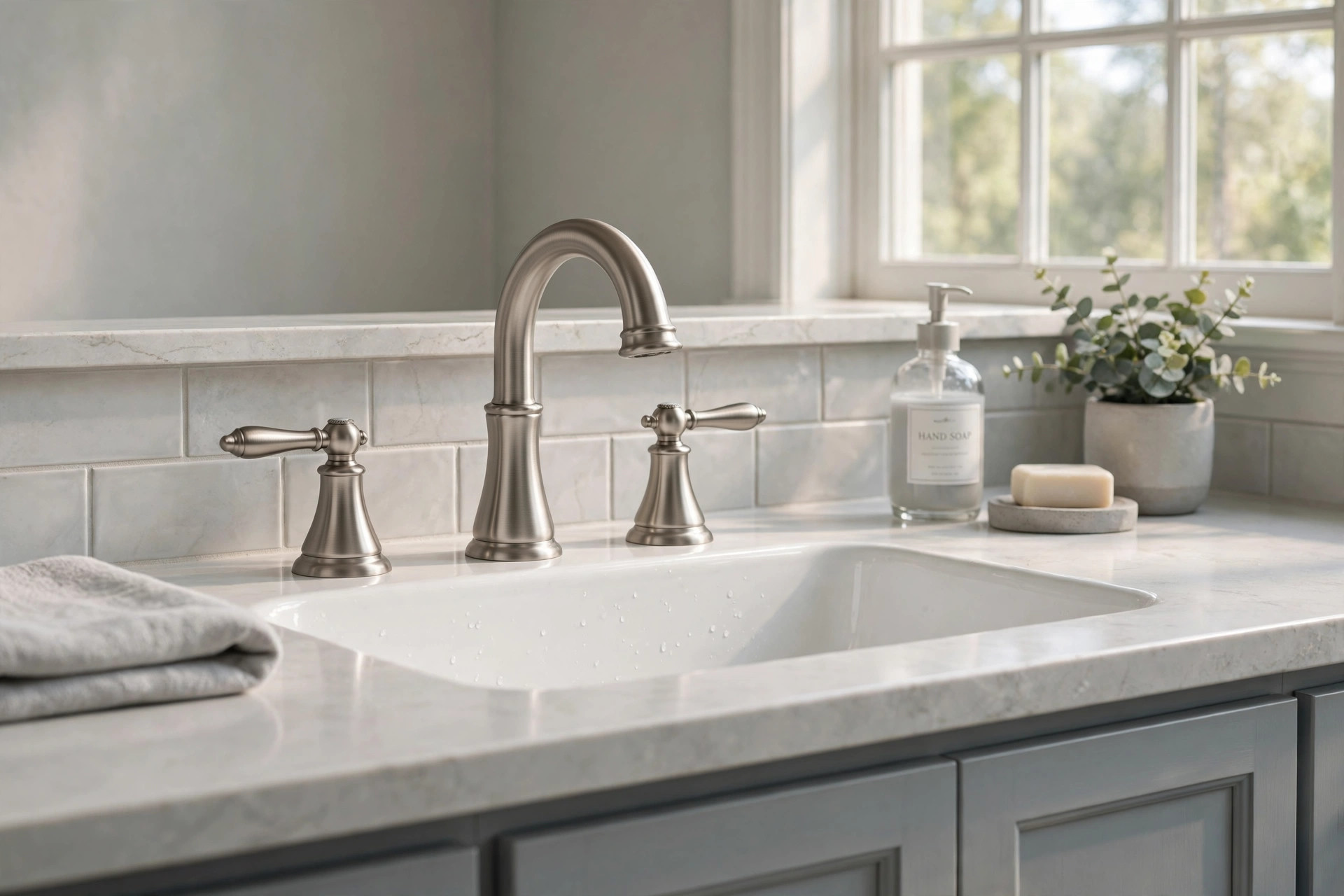

A brushed nickel faucet is a faucet finished in a soft, satin gray metal that looks much like brushed steel with a warm touch. This brushed nickel faucets American homes guide walks you through why this finish became so common in the United States, how to shop for it, what it should cost, and how to keep it looking new for years. The finish sits between bright chrome and dark oil-rubbed bronze in tone. It hides water spots better than chrome and goes with almost every style of cabinet, tile, and counter. If you are planning a remodel or simply replacing a worn tap, the sections below give you the full picture.
Why Brushed Nickel Became a Standard in American Homes
In the 1980s and 1990s, chrome was the common finish in most American bathrooms. It was cheap, bright, and easy to find. By the late 1990s and early 2000s, builders and remodelers began to want something softer. Brushed nickel answered that need. It had the clean look of a modern metal but without the sharp shine of chrome. Magazines and home shows featured it in room after room, and buyers asked for it by name.
One reason for its rise was the finish itself. Brushing the nickel leaves fine lines in the metal surface. These lines scatter light instead of reflecting it in one hard beam. The result is a soft glow that feels warm rather than cold. Design writers at The Spruce have long noted that such softened metal finishes age well in a home. They do not shout for attention. They sit quietly beside stone counters, white tubs, and wood cabinets.
A second reason was pure practicality. Brushed nickel hides fingerprints and water spots. A family bathroom gets used many times a day. Chrome shows every splash. Brushed nickel keeps a tidy look between cleanings. For busy American households with children, this mattered a great deal.
A third reason was flexibility. The finish works with many styles. It fits a colonial home in New England as well as a ranch house in Texas. It pairs with white, beige, gray, and blue tile. It also matches a wide range of other hardware, from door levers to towel bars to cabinet pulls. HGTV design guides often point out that consistent hardware color across a room makes a bathroom feel pulled together. Brushed nickel made that consistency easy to reach.
How Brushed Nickel Is Made and What to Look For: Brushed Nickel Faucets American Homes Guide
A brushed nickel finish starts with a faucet body made of brass. The brass is plated with nickel, and then the nickel layer is brushed with fine abrasive material to create the signature texture. On quality faucets, a final clear coat seals the surface. This coat resists tarnish and makes cleaning easier.
When you shop, the details on the box tell you a great deal. Look first for solid brass construction in the body. Brass lasts for decades and resists corrosion. Cheaper faucets may use zinc or plastic inside. These can wear out faster. Look next for a ceramic disc valve. A ceramic disc cartridge opens and closes with two smooth plates. It seals drip-free far longer than an old rubber washer. Makers such as Moen and Delta Faucet build most of their mid-range and high-end lines on this valve type.
Also check the finish warranty. A good faucet carries a lifetime finish warranty for the original owner. This means the maker will replace the faucet if the finish peels, flakes, or corrodes under normal use. If the warranty is short or vague, that is a warning sign. Read the fine print before you buy. Trusted retailers such as Lowe’s list warranty terms on each product page, which makes comparison simple.
The feel of the handle tells you something too. A handle should move smoothly and stop in a firm, clear position. It should not wobble. A spout should swing, if it swings, without grinding. These small tests in the store often predict years of daily use.
Water flow is rated in gallons per minute. Most bathroom faucets in the United States run at 1.2 gallons per minute or less by law. Kitchen faucets run at 1.8 gallons per minute or less. These limits come from federal standards and help save water. A good faucet feels full even at a low flow because of how the water is mixed with air in the aerator.
Types of Faucets and Where Each Belongs
Bathroom Sink Faucets
Bathroom faucets come in three common setups. A single-hole faucet fits a sink with one hole in the deck. It has one handle that controls both hot and cold. A centerset faucet fits sinks with three holes spaced four inches apart. The spout and two handles sit on one plate. A widespread faucet fits three holes spaced eight inches apart. Its spout and handles are separate pieces. Measure your sink before you shop. The hole count and spacing decide which type you can use.
Kitchen Faucets
Kitchen faucets take more abuse than bathroom faucets. They wash dishes, fill pots, and rinse vegetables. A pull-down sprayer head is now standard on most models. It lets you aim water where you need it. High-arc spouts give room for tall pots. Some models add a pause button or a touch feature that starts water with a tap of the wrist. These features cost more, but they earn their keep in a busy kitchen.
Tub and Shower Faucets
Tub and shower faucets mix hot and cold water behind the wall. What you see is the trim: the handles, the shower arm, and the spout. When you buy a tub or shower set, you buy the trim and the valve body. Both must match. It is wise to pick a shower head that matches the faucet finish. If you need help with that choice, our notes on choosing a matching shower head walk through head types and flow rates. Our broader brushed nickel faucet buying advice also covers valve types in more depth.
Matching the Rest of the Room
One smart habit is to match your faucet to your other hardware. If your home has double sinks, matching both faucets keeps the room calm and even. Our page on double sink vanities explains how vanity width and faucet spread work together. Towel bars, robe hooks, and toilet-paper holders in the same brushed nickel finish tie the whole room together. Many makers sell full bath suites so every piece matches exactly.
Cost and Price in American Homes
Prices for brushed nickel faucets cover a wide range. A basic bathroom faucet from a store brand may cost forty to eighty dollars. It will work, but the finish and the valve may not last. A mid-range faucet from a name brand runs from one hundred to two hundred fifty dollars. This is the sweet spot for most homeowners. You get solid brass, a ceramic disc valve, and a lifetime finish warranty.
High-end designer faucets run from three hundred to seven hundred dollars or more. They offer heavier castings, finer brushing, and extra features such as touch control or built-in water filters. For a kitchen, where the faucet works hard every day, spending in the mid to high range often pays off.
Installation adds to the bill. A simple swap of one bathroom faucet may cost one hundred to two hundred dollars for a plumber’s labor. A kitchen faucet with new supply lines can cost two hundred to four hundred dollars installed. If the plumber must open a wall or move pipes, the cost climbs. Get a written estimate before work starts. Many homeowners do the swap themselves, since most faucets ship with clear instructions and standard fittings. Repair and remodel guides from This Old House walk through the basic steps of a faucet replacement for the careful do-it-yourselfer.
Replacing a whole home’s faucets adds up. A three-bedroom home might have five to eight faucets. Buying them all from one brand in one finish can cut the per-unit price. It also keeps every room consistent. Watch for seasonal sales at home centers. Late fall and early spring often bring the deepest discounts.
Care and Upkeep
Brushed nickel is easy to care for, but it is not carefree. A weekly wipe with a soft cloth and warm water keeps most of it clean. For harder spots, use a drop of mild dish soap on the cloth. Rinse and dry the faucet after cleaning. Leaving water to air-dry leaves mineral spots, even on this forgiving finish.
Do not use harsh cleaners. Abrasive powders, bleach, and ammonia can eat through the finish or dull the clear coat. Vinegar is a common home cleaner, but straight vinegar left sitting on the finish can damage it. If you use a vinegar mix for hard-water buildup, apply it briefly and rinse right away. Maintenance writers at Bob Vila stress this rule for all plated finishes: mild soap and a soft cloth first, stronger steps only when needed, and never anything abrasive.
Hard water is the main enemy of a faucet finish. If your home has hard water, mineral scale builds up around the base and the aerator. Clean the aerator twice a year. Unscrew it, soak it in a mild cleaning solution, brush it with an old toothbrush, and screw it back on. This keeps flow strong and even.
Check under the sink twice a year for slow drips. A drip at the supply lines can stain the cabinet and the finish. Tighten a loose connection by hand, then a quarter turn with a wrench. If a handle drips, the cartridge may need replacing. Cartridges are cheap and most makers sell them for many years after a model is retired.
Safety Notes
Hot water safety matters in every home. Set your water heater to 120 degrees Fahrenheit. This is hot enough for bathing and dishes but cool enough to prevent most scalds. Children and older adults are at the highest risk. Some shower valves include an anti-scald limit stop. This small part caps how far the handle can turn toward hot. Ask your plumber about it when a valve is installed or replaced.
Turn off the water before you start any faucet work. Close the shutoff valves under the sink. If there are none, shut off the main house valve. Open the faucet to release pressure before you loosen anything. Keep a towel and a small bucket handy. Even a drained line can hold a cup of water.
Lead is another concern. Since 2014, federal law has required that faucets sold in the United States be nearly lead-free in wetted parts. Buy from established brands sold by major retailers. A faucet from Kohler or American Standard will meet this standard. Be wary of no-name faucets from unknown sellers, which may not have been tested to the same rules.
Frequently Asked Questions
Does brushed nickel match stainless steel appliances?
It matches well enough for most eyes. Brushed nickel is warmer and slightly darker than most stainless steel. In a kitchen, the faucet sits on the counter while the appliances stand across the room. The small difference in tone is rarely noticed. If you want an exact match, look at a maker’s stainless finish line instead. Many brands sell both.
Will the finish wear off over time?
On a quality faucet with a lifetime finish warranty, no. The nickel layer is thick and sealed. What can happen is scratching from hard use or harsh cleaners. Clean gently and the finish should look the same in ten years as it did on day one. Cheap faucets with thin plating can show wear, especially on handles that get gripped daily. This is one more reason to buy a mid-range faucet from a known maker.
Can I mix brushed nickel with other finishes in one room?
Yes, and many designers do it on purpose. A common pairing is brushed nickel faucets with matte black mirror frames or cabinet hardware. The rule is to keep it simple. Use two finishes at most in one room. Give each finish a clear job. For example, make all the plumbing brushed nickel and all the hardware black. Scattered mixing looks accidental. Planned mixing looks sharp.
How do I clean water spots off brushed nickel?
Wipe with a soft cloth dampened in warm water and a drop of dish soap. Dry at once with a second cloth. For stubborn spots, a paste of baking soda and water applied gently can lift mineral marks. Rinse well. Avoid steel wool, scouring pads, and any cleaner labeled as abrasive. These will scratch the brushed texture and the damage cannot be undone.
Are brushed nickel faucets going out of style?
No. The finish has been popular for more than twenty years and shows no sign of leaving. It is now a neutral, like white subway tile or a gray wall. Trends come and go around it. Chrome has made a comeback in some modern rooms, and matte black has had its moment. Brushed nickel remains the safe middle ground. If you plan to sell your home, buyers accept it without a second thought.
What should I bring to the store when shopping for a faucet?
Bring three things. First, the hole count and spacing of your sink, measured with a tape. Second, a photo of the room on your phone, so you can judge the finish against your tile and counters. Third, your budget. Faucet prices vary widely, and it helps to know your ceiling before a salesperson starts showing models. If you are replacing an old faucet, bring the old one or its brand name. Matching parts are easier to find with that information in hand.
A Final Word
A brushed nickel faucet is a quiet workhorse. It does its job, looks good doing it, and asks for little in return. Pick solid brass, a ceramic disc valve, and a lifetime finish warranty. Match the finish across the room. Clean it gently. Set your water heater wisely. Do these simple things and your faucets will serve your American home for decades, looking as calm and warm as the day they were installed.
References
American Standard. (n.d.). Bathroom and kitchen products. https://www.americanstandard.com Bob Vila. (n.d.). Home improvement advice. https://www.bobvila.com Delta Faucet. (n.d.). Kitchen and bathroom faucets. https://www.deltafaucet.com HGTV. (n.d.). Home and garden ideas. https://www.hgtv.com Kohler. (n.d.). Bathroom and kitchen fixtures. https://www.kohler.com Lowe’s. (n.d.). Home improvement products. https://www.lowes.com Moen. (n.d.). Faucets and plumbing fixtures. https://www.moen.com The Spruce. (n.d.). Home and garden advice. https://www.thespruce.com This Old House. (n.d.). Home renovation guidance. https://www.thisoldhouse.com
Was this guide helpful?

About Lisa Anderson
The My Garden US editorial team writes practical, in-depth home and garden guides for American homeowners — tested advice, no fluff.
You May Also Like
Bathtub Refinishing Kits Texas Homes USA: A Plain Guide to Restoring Worn Tubs
August 28, 2026 0 views
Where to Buy Quiet Exhaust Fans in the USA: A Full Guide for Homeowners
January 1, 2026 0 views
Quiet Exhaust Fans: Reviews and Buying Guide USA
September 2, 2026 0 views