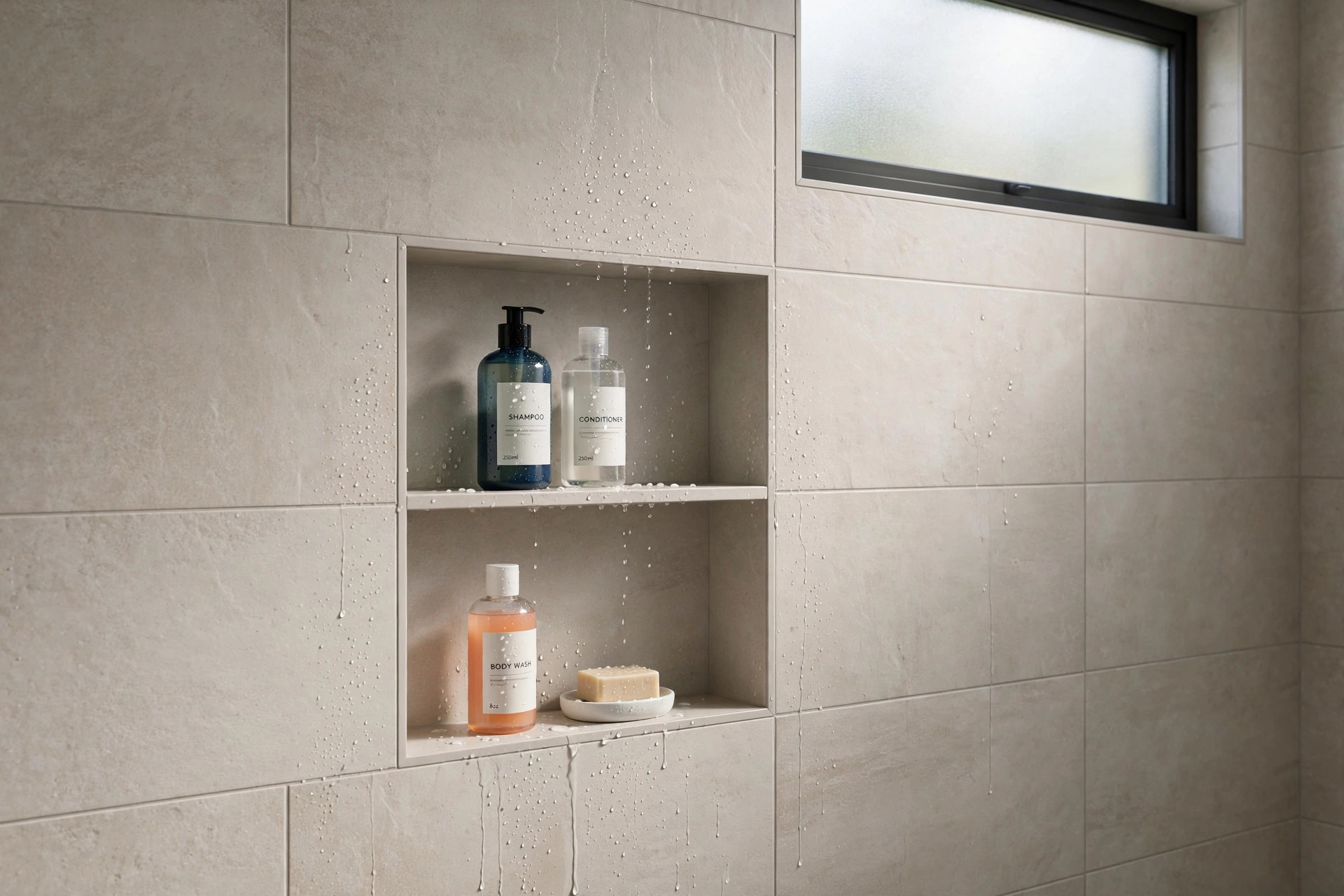

A recessed shelf in the shower wall can change the way a bathroom works. It holds shampoo, soap, and razors. It keeps the floor of the shower clear. It looks clean and built in. Many shoppers ask about shower niche inserts, where to buy them in the USA, and what they cost. This guide answers those questions in plain words.
Why Shower Niches Matter
A shower niche is a hollow space cut into the shower wall. It sits back from the surface of the tile. Bottles rest inside it instead of on the shower floor or hanging from the shower head. This sounds like a small change. In daily life it is a large one.
First, a niche saves space. Small showers have no room for a corner shelf that sticks out. A recessed niche takes up no floor or wall space beyond the wall itself. In a tight stall, that matters.
Second, a niche is safer. Bottles on the shower floor can slip under your feet. A corner shelf can bump your elbow or head. A niche sits flat inside the wall. Nothing sticks out to knock against you.
Third, a niche looks better. A wire shelf that hangs from the pipe can rust and drip. A suction cup shelf can fall in the middle of the night. A niche is part of the wall. It looks planned and finished. It can raise the value of a bathroom remodel in the eyes of a buyer.
What to Look For When You Choose: Shower Niche Inserts Where to Buy Usa
Not all shower niche inserts are the same. Here are the points that matter most when you shop.
Size. Niches come in many sizes. A single small square, about 12 by 12 inches, holds two or three bottles. A long horizontal niche, sometimes 24 or 36 inches wide, works for a shared shower. A tall vertical niche can hold items for two people at two levels. Measure your wall space before you buy. Think about what you will put in the niche each day.
Waterproof backing. The insert itself is not always the waterproof layer. Many inserts are made of waterproof foam or plastic that will not rot. But the seal around the insert is what keeps water out of the wall. Look for a product that is rated for wet areas. Check that it works with thin-set mortar and tile. A good walk-in shower kits guide will tell you the same about shower bases: the waterproof layer is what protects the house.
Tile-ready or finished. Some inserts are foam boards with a waterproof skin. You tile right over them. Some are finished metal or plastic boxes. You set them into the wall and they need no tile. Tiled niches match the wall and look custom. Finished inserts are faster to install and easier to clean.
Drainage and slope. Water should not sit in the niche. The shelf of the niche needs a slight slope toward the shower so water runs off. Some finished inserts are made with this slope built in. If you tile a niche yourself, your tile setter must pitch the bottom shelf forward by a small amount.
Material. Stainless steel inserts resist rust and look modern. They cost more. Plastic inserts are light and cheap but can look plain. Foam waterproof niches are light, easy to cut, and accept tile. Tempered glass shelves can be added for an extra level inside a tall niche.
Load strength. A niche should hold full shampoo bottles without bending. Foam niches are rated for a set weight. Check the rating if you keep heavy glass bottles in the shower.
The Main Types of Shower Niche Inserts
Prefabricated foam niches. These are made of waterproof foam with a cement-like coating. They are square or rectangular boxes that fit between wall studs. They are light and easy to install during a remodel. You tile over them. Popular sizes include 12 by 12, 12 by 24, and 12 by 36 inches. They are a top pick for do-it-yourself tile jobs.
Stainless steel finished niches. These are polished metal boxes. They drop into a framed opening in the wall. No tile is needed inside. They come in brushed or polished finishes. They suit modern bathrooms. Some have one, two, or three shelves built in.
Plastic and ABS finished niches. These cost less than metal. They are light and simple to clean. The look is plain, but in a rental or a budget remodel they do the job. Some models snap together to form double or triple niches.
Custom built niches. A tile setter can build a niche from cement board and waterproof membrane. This costs more in labor. It gives full control over size and shape. Arched niches and corner niches are often built this way.
Corner niche units. These fit into the corner where two walls meet. They suit small showers where a flat wall niche is not possible. They are often made of the same waterproof foam as flat niches.
Shelf add-ons. If you already have a tall niche, you can add glass or stone shelves inside it. This turns one tall space into two or three levels. Make sure the shelf material can handle daily water.
Where to Buy Shower Niche Inserts in the USA
Now to the main question: where can you buy shower niche inserts in the USA? You have three main paths: big home improvement stores, brand and maker websites, and local tile and plumbing supply shops. Each has strengths.
Big Home Improvement Stores
The fastest way to see products in person is a national home improvement store. Home Depot stocks foam shower niches, stainless steel inserts, and niche kits in many stores. You can hold the product, check the size, and read the box. Lowe’s carries a similar range, with its own house-brand tile tools and waterproofing supplies nearby on the same aisle. Both stores also sell online with ship-to-store pickup. This is useful if the size you need is not on the local shelf. Staff in the tile aisle can often answer basic questions about which mortar and grout to pair with a foam niche.
Fixture Brand Websites
Major bathroom brands sell niche and shower parts through their own sites and dealer networks. Kohler and Moen are known for fixtures, and their sites help you match finishes across a bathroom. Delta Faucet offers shower system parts and accessories in matching finishes. American Standard sells through dealers and online partners. Buying from a brand site or an authorized dealer gives you full warranty support. This matters if a finish fails in two years.
Advice and How-To Sources
Before you buy, it helps to read plain how-to guidance. This Old House publishes step-by-step bathroom remodel articles that explain framing, waterproofing, and niche placement. Bob Vila covers tool and material picks for tile work in simple terms. HGTV shows design ideas that help you pick niche size and placement for looks. The Spruce has buyer guides on bathroom storage and remodel parts. These sites do not sell the inserts themselves. They help you shop with more care.
Local Tile and Plumbing Shops
Local supply houses serve tile setters and plumbers. They often carry professional-grade foam niches and waterproofing systems that the big stores do not stock. Prices can be higher, but the advice is strong. If you hire a contractor, ask what brand of niche they prefer. Many pros buy from the same local shop for every job and know which models seal best.
What to Ask Before You Buy
Wherever you shop, ask these questions. Is the insert rated for shower walls? What stud spacing does it fit? Does the price include the waterproofing kit or just the box? What is the warranty? Can you return it if the size is wrong? A clear answer to each question tells you that you are buying the right part.
Cost and Price
Shower niche inserts vary in price by type and size. The numbers below are typical USA retail prices in 2026. Prices move with brand and store.
A small prefabricated foam niche, about 12 by 12 inches, often costs between 60 and 120 dollars. A larger foam niche, 12 by 24 inches, often costs between 90 and 160 dollars. Waterproofing tape and sealant for the edges may add 20 to 40 dollars.
A finished stainless steel niche often costs between 100 and 300 dollars. Larger triple-shelf models can reach 400 dollars. Plastic finished niches often cost between 40 and 100 dollars.
Labor is a separate cost. If a contractor installs the niche during a tile job, labor for framing the opening, setting the niche, and tiling it may add 150 to 400 dollars.
To keep costs down, buy the niche before the tile work starts. Show it to your tile setter early. Changing niche size after the wall is framed causes rework. Rework costs money.
If you pair the niche with other shower upgrades, plan the full list at once. Many shoppers who buy a niche also shop for frameless shower doors and rain shower heads in the same project. One delivery, one contractor visit, and one design plan keep the budget in line.
Care and Upkeep
A shower niche is easy to keep. Clean it when you clean the shower. Wipe the shelf with a soft cloth and a mild cleaner. Do not use harsh acid cleaners on natural stone shelves. They can etch the surface.
Check the grout lines around a tiled niche once a year. Grout can crack where the wall meets the niche. Small cracks let water in. Re-seal or re-grout cracked lines before they grow.
For stainless steel inserts, dry the surface after heavy use if your water leaves spots. A soft cloth keeps the finish bright. Do not use steel wool. It scratches the surface and can leave rust marks from the wool itself.
For plastic inserts, a paste of baking soda and water lifts soap scum without scratching. Rinse well. For foam niches with tile, treat them like the rest of the tile wall.
Safety
A niche is one of the safest storage choices in a shower, but a few points still matter.
Do not place glass bottles where they can fall on bare feet.
Do not overload a foam niche past its rated weight. A shelf that sags can crack the grout. Cracked grout lets water behind the tile.
Keep the niche shelf sloped toward the shower. Standing water breeds mildew and can stain grout. If water pools in your niche, the slope was set wrong. A tile setter can fix this with a thin layer of mortar under the shelf tile.
When you cut an opening for a niche, check for pipes and wires in the wall first. A stud finder with wire detection helps. If you are not sure, call a professional. Cutting into a water line costs far more than a service call.
Frequently Asked Questions
Can I add a shower niche to an existing tiled shower? Yes, but it is harder than adding one during a remodel. A tile setter must cut through the tile and backer board, frame the opening, set the insert, waterproof it, and re-tile. Expect higher labor cost than a new-build niche. A finished stainless steel insert can make the job simpler because it needs less tile work inside.
What is the best size for a shower niche? For one person, a 12 by 24 inch niche is a good middle choice. It holds shampoo, conditioner, soap, and a razor. For two people, a 12 by 36 inch niche or two stacked 12 by 12 niches works well. Measure your tallest bottle and add two inches. That is your minimum height.
Do shower niche inserts leak? The insert itself rarely leaks. Leaks happen at the seams where the insert meets the wall. Good waterproofing at those seams is what keeps water out. Follow the maker's sealing steps exactly. Do not skip the corner tape.
Tile-ready or finished insert: which is better? Tile-ready foam niches look custom and match the wall. They take more skill to install. Finished metal or plastic inserts install fast and clean easy. They cost more up front for metal. Pick the one that fits your skill level and your budget.
Where is the best place to put a shower niche? Put it on a side wall, not the wall with the plumbing, if you can. The plumbing wall may hold pipes that block the opening. Place the niche at chest height so you can reach it without bending. Keep it out of the direct spray of the shower head so bottles do not fill with water.
How long does a shower niche last? A well sealed niche lasts as long as the tile around it. That can be twenty years or more. The weak point is the grout and sealant, not the insert. Re-seal grout every few years and the niche will outlast the fixtures around it.
A Final Word
A shower niche insert is a small part with a large daily payoff. It clears the shower floor. It keeps bottles at hand. It gives the bathroom a finished look. You can buy one at a national home improvement store, from a fixture brand, or through a local tile supply shop. Pick the right size, seal it well, and keep the shelf clean. Do that, and the niche will serve you well for decades.
References
American Standard. (n.d.). Bathroom and kitchen products. https://www.americanstandard.com Bob Vila. (n.d.). Home improvement advice. https://www.bobvila.com Delta Faucet. (n.d.). Kitchen and bathroom faucets. https://www.deltafaucet.com HGTV. (n.d.). Home and garden ideas. https://www.hgtv.com Kohler. (n.d.). Bathroom and kitchen fixtures. https://www.kohler.com Lowe’s. (n.d.). Home improvement products. https://www.lowes.com Moen. (n.d.). Faucets and plumbing fixtures. https://www.moen.com The Home Depot. (n.d.). Home improvement products. https://www.homedepot.com The Spruce. (n.d.). Home and garden advice. https://www.thespruce.com This Old House. (n.d.). Home renovation guidance. https://www.thisoldhouse.com
Was this guide helpful?

About Lisa Anderson
The My Garden US editorial team writes practical, in-depth home and garden guides for American homeowners — tested advice, no fluff.
You May Also Like
Shower Niche Inserts for California Homes: A Plain Guide
August 21, 2026 0 views
Rain Shower Heads: How to Find the Best USA Online Deals
July 23, 2026 0 views
Brushed Nickel Faucets California Homes USA: A Practical Buyer’s Guide
March 17, 2026 0 views