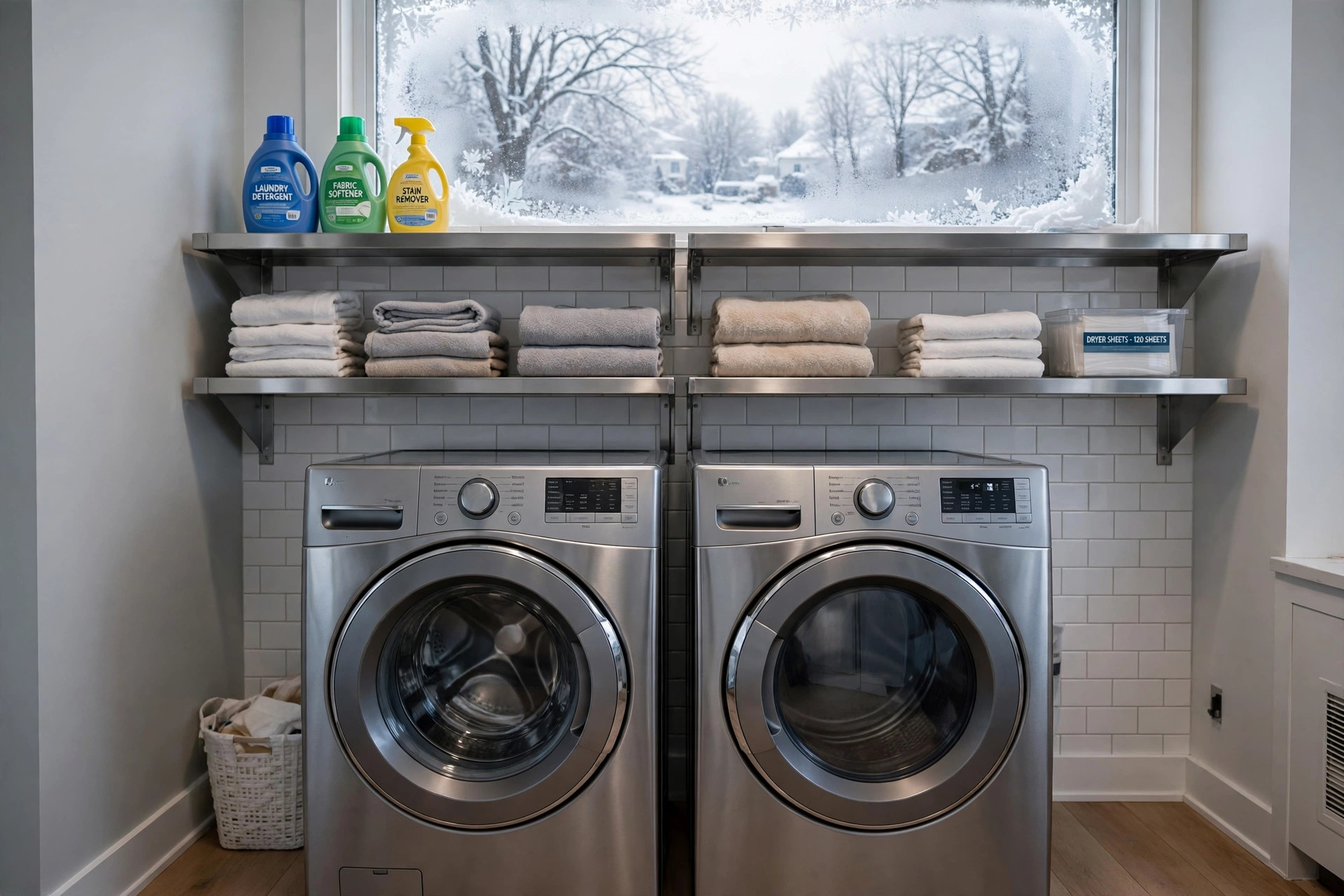

A Shelf That Holds Up When the Air Turns Cold
Many homes in the northern states keep the washer and dryer in a room that is far from warm. The garage laundry corner, the basement washroom, or the mudroom with a laundry corner can drop near freezing in January. Steam from the washer rises. Cold walls sweat. In such rooms, an ordinary wood shelf warps, swells, and grows dark spots of mold within one winter. That is why waterproof laundry room shelving for cold climates matters. It is built from materials that do not drink water and do not rust. This guide explains why it matters, what to look for, the main types, what it costs, how to keep it up, and how to stay safe.
Why It Matters: Waterproof Laundry Room Shelving for Cold Climates
Cold air cannot hold much moisture. When warm, damp air from the washer and dryer meets a cold wall or a cold shelf, the water in the air turns into liquid on the surface. This is condensation. It happens on windows, pipes, and shelves alike. A plain wooden shelf soaks up that water. Over time, the wood swells, the finish peels, and mold takes hold. Pressed wood products such as particle board do even worse; they can fall apart in a single season of damp cold.
Waterproof laundry room shelving for cold climates solves this problem at the root. Stainless steel does not rust. Aluminum does not rust. High-density plastic, often called HDPE, lets water run right off. Glass shelves do not absorb a drop. When the shelf itself cannot take in water, condensation becomes a small matter of wiping the surface dry. The shelf stays straight, strong, and clean through years of cold winters.
There is a second reason, and it is about weight. Laundry rooms hold heavy things. Detergent bottles, fabric softener jugs, bleach, and baskets of wet towels add up fast. A warped shelf sags under weight. A waterproof shelf made of steel or thick plastic keeps its shape. It holds the load without bending. You can also find ideas for matching wall storage among waterproof wall mounted storage shelves for sale when you plan the whole room.
What to Look For
The first thing to check is the material. Look for shelves sold as stainless steel, powder-coated steel, aluminum, HDPE plastic, or resin. Powder coating helps steel resist rust, but it is the base metal that matters most. If the label says chrome over plain steel, ask whether it is meant for damp rooms. Some chrome shelves rust at the joints in cold, damp air. Retailers such as Home Depot list the materials of each shelf in the product details, which makes comparison easier.
The second thing is the bracket or support. A waterproof shelf can still fail if the bracket rusts. Look for brackets of the same material as the shelf. Stainless brackets with stainless shelves are the safest pair. Check the screws too. Stainless or coated screws are worth the small extra cost.
The third thing is the load rating. Good shelves state how many pounds they hold per shelf. In a laundry room, a rating of 50 pounds per shelf is a fair minimum. Fifty pounds covers large detergent bottles with room to spare. If you plan to store cases of supplies, look for 100 pounds per shelf.
The fourth thing is depth and length. Most laundry shelves run 12 inches deep. This fits detergent bottles with space in front. Shelves 16 inches deep hold baskets. Measure your wall before you buy. Leave room for the dryer vent and for the washer lid to open fully if the washer is a top loader. Guides at This Old House often stress measuring twice before drilling, and the advice fits laundry rooms well.
The fifth thing is finish and edges. Raised edges, sometimes called lips, keep bottles from sliding off when the washer shakes the wall. A small lip of one inch is enough. Some wire shelves have this built in. For solid shelves, a separate rail can be added.
Types and Options
Waterproof laundry room shelving for cold climates comes in several types. Each has strengths and weak spots.
Stainless steel shelves are the strongest choice. They do not rust, they do not stain, and they wipe clean. They cost more than other types, but they last the longest. They suit rooms that get very cold and stay damp for weeks.
Powder-coated steel shelves cost less. The coating seals the steel from water. They work well in rooms that are cold but fairly dry. Inspect the coating each year. If it chips, touch it up with a rust-proof paint so the steel under it stays sealed.
Heavy plastic shelves, often sold as resin or HDPE units, are light, cheap, and fully waterproof. They will not rust at all. They hold less weight than steel, so check the rating. They are a fine pick for lighter goods such as folded towels, dryer sheets, and spray bottles.
Wire shelves of coated metal allow air to move. This helps bottles dry faster and keeps musty smells down. The wires can be hard to keep clean, and small items may tip through the gaps. A thin liner on top fixes that.
Glass shelves look clean and bright. They are fully waterproof. Tempered glass is strong, but it can break if struck hard. It is best for display areas rather than for heavy detergent jugs.
Wall-mounted units free the floor for baskets and hampers. Freestanding shelf towers stand on their own and need no drilling. If you rent, a freestanding unit may be the better choice. For smaller movable storage, many households pair fixed shelves with rolling storage carts bought online in Florida style units that can roll wherever they are needed.
Cost and Price
Prices run wide. A single heavy plastic shelf can cost under thirty dollars. A basic powder-coated steel wall shelf often runs between forty and eighty dollars. A full stainless steel unit with three shelves may cost between one hundred and two hundred and fifty dollars. Freestanding stainless towers can pass three hundred dollars.
Installation adds to the cost if you hire help. Mounting two wall shelves takes a handyman about an hour. In many towns, that service runs between seventy-five and one hundred and fifty dollars. If you do it yourself, the only extra cost is wall anchors and a drill bit, often under twenty dollars. Price guides from Consumer Reports and shopping sites like Wayfair help set a fair budget before you buy.
Think in terms of cost per year. A cheap shelf that must be replaced every two winters is dear in the end. A stainless shelf that lasts fifteen years is cheap in the end. Buy the best material your budget allows.
Care and Upkeep
Waterproof does not mean carefree. Simple upkeep keeps shelves safe and clean for years.
Wipe shelves down once a month with a damp cloth and mild soap. Pay care to the joints and brackets, where water can sit. Dry the surface after wiping. In a cold room, standing water takes long to dry on its own.
Check the room for condensation each winter. If the walls sweat heavily, the room needs more air flow. A small exhaust fan, even one run for an hour after each wash day, moves damp air out. The EPA publishes plain guidance on indoor moisture and mold, and it is worth a read for any damp room.
Keep heavy items low and light items high. This keeps the center of gravity low and the shelf stable. Do not stack bottles above the lip or edge.
Watch for signs of trouble. Rust-colored spots on brackets, a shelf that rocks, or anchors that pull from the wall all call for quick repair. Tighten screws each spring. Re-level the shelf if the wall has shifted with frost.
Once a year, take everything off the shelves and inspect the wall behind them. Mold can grow where you cannot see it. Catch it early and clean it with soap and water. If the mold covers more than a small patch, call a professional cleaner.
Safety
A shelf that falls can hurt. Mount every wall shelf into studs or use anchors rated for the full load. Never trust plain drywall with a loaded shelf. A shelf that holds fifty pounds of detergent needs anchors rated well above that number.
Keep bleach, detergents, and pods out of the reach of small children. Cold-climate laundry rooms often sit near back doors where children pass through. A locking cabinet or a high shelf adds safety. The Consumer Product Safety advice found on many home sites stresses storing cleaners up high, and family handyman guides repeat the point.
Do not block the dryer vent with shelving. The vent needs clear space to push hot air outside. A blocked vent is a fire risk. Keep at least one foot of clear space around the vent pipe.
Do not overload. The load rating is a limit, not a goal. Stay under it. Spread weight across the shelf rather than piling it in the middle.
If the laundry room shares space with a furnace or water heater, keep shelves clear of hot pipes and flues. Heat and chemicals do not mix well.
FAQ
Will stainless steel shelves rust in a cold laundry room? True stainless steel resists rust very well, even in damp cold. Low-grade steel sold as stainless-look may not. Buy from a trusted maker and check the grade. Wipe the surface dry from time to time and the metal will last for decades.
Are plastic shelves strong enough for detergent? Many are. Heavy HDPE shelves rated at fifty pounds or more per shelf hold full detergent bottles with ease. Check the rating on the box. Keep the heaviest bottles on the lowest shelf, close to the brackets or legs.
Can I mount shelves on a concrete basement wall? Yes. Use masonry anchors and a masonry drill bit. Mark the holes, drill to the right depth, tap the anchors in, and drive the screws. A level keeps the shelf straight. Guides at Bob Vila walk through masonry mounting step by step.
What depth works best over a washer and dryer? Twelve inches fits most laundry goods. If the machines are deep, a shelf twelve inches deep sits above them without sticking out too far. Sixteen-inch shelves hold baskets but may crowd a narrow room. Measure the space above the machines before you buy.
Do wire shelves work in damp rooms? Yes, if the wire is stainless or well coated. Wire lets air move, which fights mildew. Add liners so small items do not fall through. Inspect the coating each year and touch up any chips.
Should I choose wall-mounted or freestanding shelves? Wall-mounted shelves free the floor and hold more weight when fixed to studs. Freestanding towers need no holes and suit renters. If the room wall is weak or crumbling, freestanding is the safer pick. For more wall-storage ideas, see pegboard wall organizers price comparison guides that cover anchors and load limits.
A Short Final Word
A cold laundry room is hard on storage. Warm damp air meets cold surfaces, and water appears where you least want it. Waterproof laundry room shelving for cold climates meets that challenge with honest materials: stainless steel, aluminum, heavy plastic, and glass. Pick a material that suits your room, check the load rating, mount it right, and give it a wipe each month. The shelf will outlast many winters, and the laundry room will stay dry, clean, and safe. Retailers such as Lowe’s, IKEA, and The Container Store carry many of these types, and design sites like Apartment Therapy show how to arrange them well.
References
Apartment Therapy. (n.d.). Home design ideas and inspiration. https://www.apartmenttherapy.com Bob Vila. (n.d.). Home improvement advice. https://www.bobvila.com Consumer Reports. (n.d.). Product reviews and ratings. https://www.consumerreports.org Family Handyman. (n.d.). DIY home repair and maintenance. https://www.familyhandyman.com IKEA. (n.d.). Home furnishings. https://www.ikea.com Lowe’s. (n.d.). Home improvement products. https://www.lowes.com The Container Store. (n.d.). Storage and organization products. https://www.containerstore.com The Home Depot. (n.d.). Home improvement products. https://www.homedepot.com This Old House. (n.d.). Home renovation guidance. https://www.thisoldhouse.com U.S. Environmental Protection Agency. (n.d.). Protecting human health and the environment. https://www.epa.gov Wayfair. (n.d.). Furniture and home goods. https://www.wayfair.com
Was this guide helpful?

About Emily Rodriguez
The My Garden US editorial team writes practical, in-depth home and garden guides for American homeowners — tested advice, no fluff.
You May Also Like

Best Bike Storage Racks with Free Shipping
August 8, 2026 0 views
Stackable Pegboard Wall Organizers for Sale: A Complete Buying Guide
August 6, 2026 0 views
Spice Rack Organizers Reviews and Buying Guide: Choose the Right One for Your Kitchen
May 11, 2026 0 views