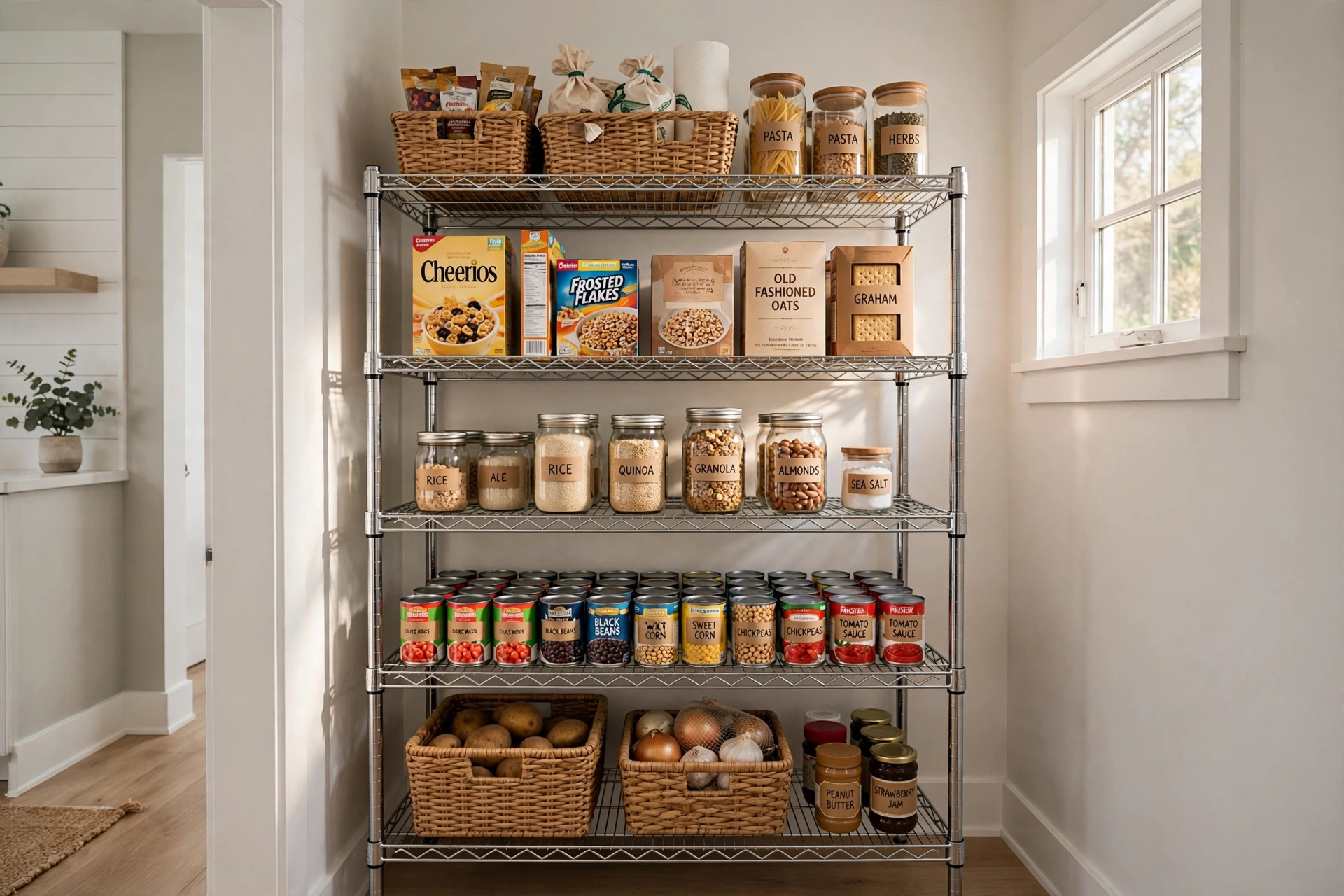

A pantry that works well makes daily life easier. You can see every can, bag, and box at a glance. You can reach what you need without moving ten things first. The heart of that order is good shelving. This guide to top rated pantry shelving units for sale will help you sort through the many options. You will learn what materials hold up best, what sizes fit real kitchens, what prices to expect, and how to care for the shelves once they are in place.
Why Pantry Shelving Matters
A pantry without shelves is just a closet. Items pile on the floor. Boxes crush bags. Cans roll into dark corners and stay there until they expire. Good shelving changes all of that. It turns a small dark space into a working part of the kitchen.
Shelving matters most in homes where storage space is tight. Many kitchens in America have small closets set aside as pantries. Some homes have only a few feet of wall. The right shelves make that wall do double duty. Deep shelves at the bottom hold bulk goods. Narrow shelves at eye level hold the items you reach for each day.
Shelving also saves money. When you can see what you own, you buy less of the same thing twice. Fewer cans go past their date in the back. A well-built unit can last twenty years or more, so the cost per year is very low. For these reasons, shoppers who look at pantry shelving units reviews and buying guide pages keep coming back to a few trusted styles. This guide walks you through them.
What to Look for When You Shop: Top Rated Pantry Shelving Units for Sale
Not every shelving unit fits every pantry. Before you buy, take a tape measure to your pantry or closet. Write down the width, depth, and height of the space. Note the door swing and any pipes or vents on the walls. A unit that is one inch too wide is a unit you cannot use.
Measure First
Depth is the most common mistake. Shelves deeper than sixteen inches make small items hard to see and reach. Shelves shallower than ten inches waste space behind them. For most pantries, twelve to fourteen inches of depth is the sweet spot. You can store a standard can on a twelve-inch shelf and still read its label.
Height matters too. A tall unit that reaches the ceiling adds a full extra shelf of storage. But make sure the top shelf stays within reach, or plan to keep a small step stool nearby. Leave at least two inches of air between the top of the unit and the ceiling so you can set it upright during assembly.
Weight Capacity
Canned goods are heavy. A single shelf of canned beans can weigh thirty or forty pounds. The top rated pantry shelving units for sale list a weight rating per shelf and for the whole unit. Look for shelves rated at fifty pounds or more each. Wire shelves tend to be strong for their weight, while solid wood shelves spread weight well. If the rating is not printed on the box or the product page, treat that as a warning sign and look elsewhere. The Container Store and similar specialty retailers publish clear load ratings on their pantry systems, which makes comparison easier.
Adjustability
Pantries change over time. One year you buy cereal in bulk; the next year you switch to jars of dried beans. Adjustable shelves let you move a shelf up or down in minutes. Most freestanding metal units use clips or slots that let you shift each shelf by one-inch steps. Wall-mounted track systems let you move whole brackets along a rail. Fixed wood shelves look fine but lock you into one layout. If your storage needs change at all, choose adjustable.
Finish and Material
Kitchens are warm and sometimes damp. Bare metal can rust. Cheap particle board can swell near a steamy stove. Look for epoxy-coated wire, powder-coated steel, sealed wood, or heavy plastic. Each has strengths. Epoxy-coated wire resists rust and lets air move, which keeps food fresher. Sealed solid wood looks warm and holds heavy loads. Heavy molded plastic is light, cheap, and will never rust, though it may bow under great weight. Readers who also store goods in bedrooms often check our budget friendly nightstands with storage drawers buying guide for matching small-space ideas.
Types of Pantry Shelving Units
Freestanding Wire Racks
The workhorse of American pantries is the freestanding wire rack. Steel wires are welded into shelves, then coated in chrome or epoxy. The open design lets air flow and keeps dust from settling. You can see items from the side as well as the front. Most come in heights from four to six feet and can be stacked or split into two shorter units. Casters can be added so the whole unit rolls out for cleaning. Large retailers such as Home Depot and Wayfair carry dozens of these units in many widths, which is why they appear so often on lists of the best sellers.
Solid Wood and Laminate Shelves
Wood shelves suit kitchens where looks matter. A pantry with a door of glass, or a kitchen where the pantry opens onto the living room, may call for shelves that look like furniture. Solid pine and oak shelves are strong and easy to cut to size. Laminate-covered particle board is cheaper and comes in many colors, but it needs edge banding to keep moisture out of the core. Wood shelves pair well with IKEA pantry frames and with custom closet systems sold by many home centers.
Wall-Mounted Track Systems
A track system screws one horizontal rail to the wall studs, and brackets hang from the rail. Shelves rest on the brackets. The whole system can be lifted off and moved without new holes. This is the best choice for renters and for anyone who wants to change the layout often. Track systems cost more than a simple wire rack, but they use every inch of wall and can hold great weight when the rail hits the studs. How-to guides at Family Handyman show the steps for finding studs and leveling the rail.
Over-the-Door and Narrow Units
Some pantries are only a few feet wide, or the pantry is a section of a hall closet. Narrow rolling carts and over-the-door racks fit these spots. They hold spices, cans, and small jars where a full-depth unit would block the door. They are not a full answer for a large family, but they add useful storage in tight rooms. Shoppers on the West Coast often search for where to buy linen closet organizers in california alongside these slim units, since both solve the same narrow-space problem; see our guide to where to buy linen closet organizers in california.
Cost and Price: What You Should Expect
Prices for top rated pantry shelving units for sale run from under forty dollars to well over five hundred. The range is wide because the products are very different.
Small four-tier plastic or wire units, about two feet wide, sell for thirty to sixty dollars. These suit a first apartment or a small overflow pantry. Mid-range five-tier chrome or epoxy wire racks, three to four feet wide, sell for eighty to one hundred and eighty dollars. These are the best value for most families. Heavy-duty commercial-style racks with six tiers and high load ratings sell for two hundred to four hundred dollars. Custom track systems and solid wood built-ins start near three hundred dollars and climb past six hundred with doors and trim.
Watch for sales in January and September, when stores clear storage lines. Buying online can be cheaper, but check the shipping cost. A large wire rack ships in a long box and can add twenty or thirty dollars in freight. Big stores like Lowe’s and Target often let you order online and pick up in the store for free, which avoids the freight charge.
Do not judge a unit by price alone. A forty-dollar rack with shelves rated at twenty-five pounds each will bow under canned goods within a year. A one-hundred-and-twenty-dollar rack rated at three hundred and fifty pounds total will serve for decades. Read the ratings, read the reviews, and buy the strength you need.
Care and Upkeep
Pantry shelves need little care, but a small routine keeps them clean and strong for years.
Wipe shelves down twice a year. Take everything off one shelf at a time, wash with warm soapy water, and dry fully before you reload. This is also the right time to check dates and throw out what is old. Wire shelves can be cleaned with a damp cloth and a soft brush to get into the corners. Do not use harsh cleaners on epoxy coatings; they can dull the finish.
Check the clips and screws once a year. Plastic clips on wire racks can crack with age. Tighten any loose screws on track brackets. If a shelf starts to sag, move heavy items to lower shelves and lighten the load. A sagging shelf that is left alone will bow for good.
Keep the pantry dry. A small leak from a pipe can ruin wood shelves and start rust on cheap metal. If your pantry shares a wall with a bathroom or a laundry room, check that wall each season. Ideas for keeping the whole home fresh and organized appear regularly on The Spruce and Apartment Therapy.
Safety in the Pantry
Heavy shelves can tip. Any freestanding unit taller than four feet should be anchored to the wall with the strap or bracket that comes in the box. This is vital in homes with children, who may climb, and in areas where the ground can shake. The anchor takes five minutes to install and prevents a real injury.
Store the heaviest items on the lowest shelves. This lowers the center of gravity and keeps the unit stable. It also saves your back. Bags of flour, large cans, and jugs of oil belong near the floor. Light items like cereal boxes, paper towels, and spices belong up high.
Watch the edges. Wire shelves can have sharp wire ends if the coating chips. Run a hand along each shelf after assembly. If you feel a sharp spot, cover it with a small piece of tape or a shelf liner. Shelf liners also stop small jars from tipping through the wires. Many liner and organization ideas are covered by Amazon product guides and by Walmart home storage pages, both of which carry wide liner rolls at low prices.
Frequently Asked Questions
How deep should pantry shelves be?
Twelve to fourteen inches suits most pantries. That depth holds standard cans and jars in a single row, so you can see every label. Deeper shelves hide items in the back. Shallower shelves waste the space behind them. For bulk goods like large bags of rice, one deeper shelf at the bottom of the unit is fine.
Are wire shelves or wood shelves better for a pantry?
Both work well. Wire shelves let air move, resist dust, and are easy to clean. Wood shelves look warmer, hold heavy loads without sag, and stop small items from tipping. Wire costs less and adjusts more easily. Wood suits pantries that are on display. Choose by your needs and your budget, not by fashion.
Can I install pantry shelving myself?
Yes, in most cases. Freestanding racks need no tools beyond what comes in the box, and most people finish in under an hour. Wall-mounted track systems need a drill, a level, and a stud finder. If you can hang a curtain rod, you can mount a track system. Built-in wood shelves need a saw and some skill; many homeowners hire a handyman for that work.
How much weight can a pantry shelf hold?
It depends on the unit. Light plastic shelves may hold twenty-five pounds each. Mid-range wire shelves often hold fifty to eighty pounds each. Heavy-duty racks can hold one hundred and fifty pounds or more per shelf. Always check the printed rating and keep some margin. A shelf rated at fifty pounds should carry no more than forty in daily use.
Where is the best place to buy pantry shelving?
Home centers, furniture stores, and online marketplaces all carry good options. Home centers let you see the unit before you buy. Online stores offer more sizes and often lower prices. Specialty storage stores carry systems with the clearest load ratings. Compare at least three sellers before you decide, and read reviews from buyers who store the same kinds of goods you do.
How do I stop cans from sliding on wire shelves?
Shelf liners are the simple answer. A roll of ribbed plastic liner cut to size keeps cans in place and stops small jars from tipping through the wires. Some shoppers also use small bins or baskets on each shelf to group items. Both methods make the pantry look tidy and make cleaning faster.
A Short Final Word
The best pantry shelving is the shelving that fits your space, holds your goods, and lasts. Measure your pantry. Choose a weight rating with room to spare. Pick adjustable shelves so the unit can grow with your needs. Anchor tall units to the wall. Do those four things, and the top rated pantry shelving units for sale will narrow down to a short list that truly fits your home. A tidy pantry is not a luxury. It is a small daily comfort that pays for itself every time you cook.
References
Amazon. (n.d.). Online shopping. https://www.amazon.com Apartment Therapy. (n.d.). Home design ideas and inspiration. https://www.apartmenttherapy.com Family Handyman. (n.d.). DIY home repair and maintenance. https://www.familyhandyman.com IKEA. (n.d.). Home furnishings. https://www.ikea.com Lowe’s. (n.d.). Home improvement products. https://www.lowes.com Target. (n.d.). Retail store. https://www.target.com The Container Store. (n.d.). Storage and organization products. https://www.containerstore.com The Home Depot. (n.d.). Home improvement products. https://www.homedepot.com The Spruce. (n.d.). Home and garden advice. https://www.thespruce.com Walmart. (n.d.). Everyday low prices. https://www.walmart.com Wayfair. (n.d.). Furniture and home goods. https://www.wayfair.com
Was this guide helpful?

About Michael Thompson
The My Garden US editorial team writes practical, in-depth home and garden guides for American homeowners — tested advice, no fluff.
You May Also Like
Affordable Basement Shelving Units for Sale: A Simple Buyer’s Guide
July 19, 2026 0 views
Space Saving Heavy Duty Wire Shelving Buying Guide
October 4, 2026 0 views
The Best Nightstands With Storage Drawers for American Homes
September 3, 2026 0 views