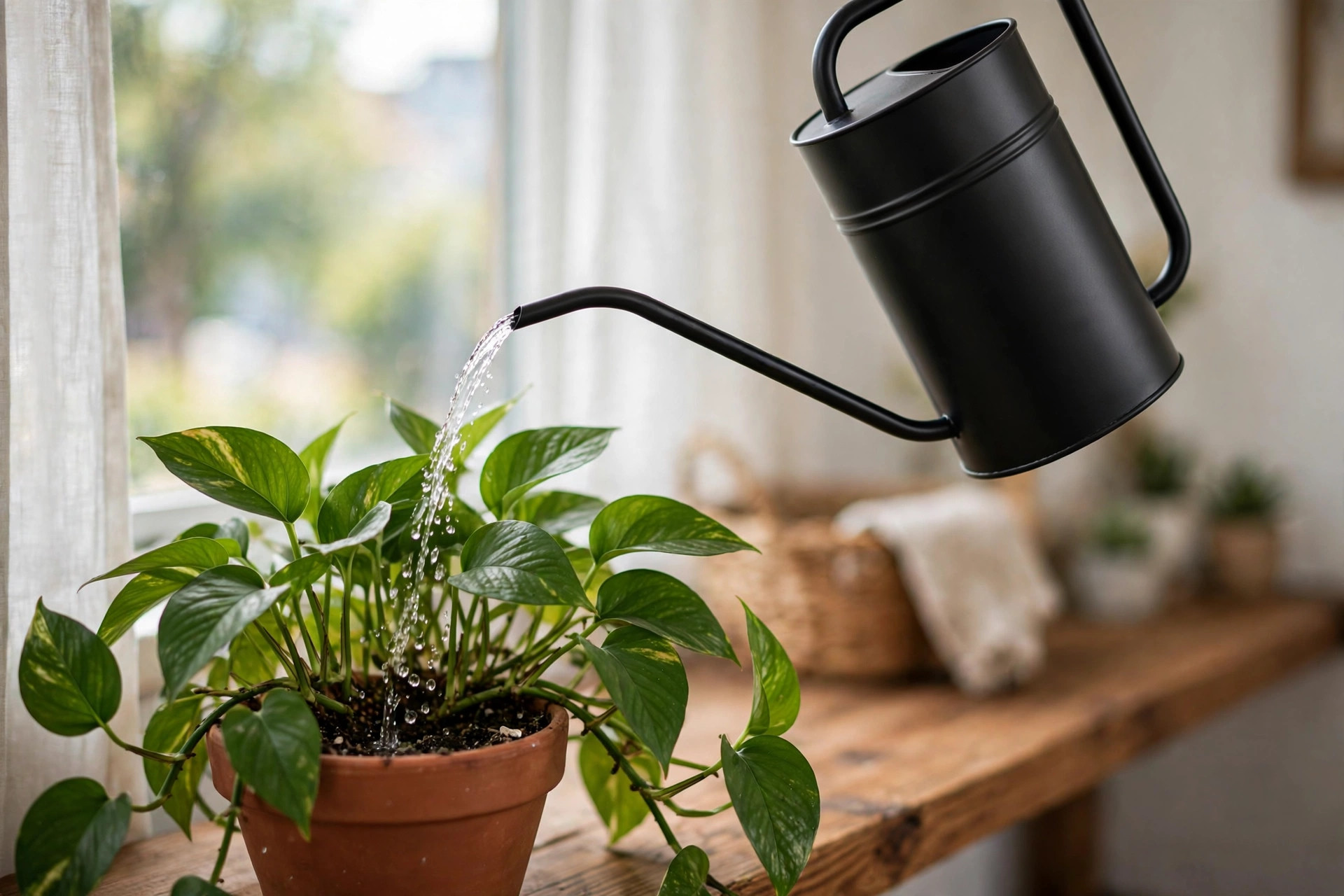

Every indoor plant needs water, and the way you give it matters more than most people think. The best watering can for indoor plants is not the biggest one you can find. It is the one that gives you control. A good can lets you reach the soil under the leaves without spilling water on the floor. It delivers a soft stream that does not wash the soil away. For a person with a few pots on a windowsill, or a home full of green corners, the right watering can makes the daily task simple and clean.
Why the Right Watering Can Matters
A glass of water poured from above can flood a small pot in seconds. Water runs off the top and out the drain hole. The roots get little, and the soil washes away. A watering can with a long thin spout solves this. You place the spout close to the soil and let the water flow slowly. The soil drinks it in.
Indoor plants also suffer from too much water. Wet leaves and damp stems invite rot and fungus gnats. A precise spout keeps water on the soil, where it belongs. Many plant keepers find that a good can cuts down on spills and mess. You spend less time wiping up the shelf.
The right can also protects your back and arms. A full gallon can is heavy. For indoor use, a smaller can is easier to lift and carry from sink to plant. You refill it more often, but each trip is light and safe. Guides at Family Handyman note that light, balanced tools make home chores easier over time.
What to Look for in an Indoor Watering Can: Best Watering Can for Indoor Plants
Size and Capacity
Most indoor watering cans hold between half a gallon and one gallon. A half-gallon can weighs about four pounds when full. That is easy to handle with one hand. A full gallon weighs over eight pounds. Choose the smaller size if your plants are on high shelves or if you carry water across the room. Choose the larger size if you have many plants and do not want to refill often.
The Spout
The spout is the heart of the can. For indoor plants, a long narrow spout is best. It reaches under wide leaves and into tight clusters of pots. Some spouts end in a rose, a head with many small holes that makes a gentle shower. A removable rose gives you two tools in one: a soft shower for seedlings and a steady stream for big pots.
Materials
– Plastic cans are light and cheap. They come in many colors. Good plastic lasts for years, but thin cheap plastic can crack if dropped. – Stainless steel cans are strong and look fine on an open shelf. They cost more and weigh more, but they last a long time. – Copper cans are lovely and age with a warm color. They are often small, which suits indoor use. Copper cans cost the most. – Ceramic cans match home decor well. They are heavy and can break if dropped.
For most homes, a good plastic or steel can is the smart choice. Reviews at Consumer Reports show that material quality matters more than price alone.
Handle and Balance
Hold the can before you buy it if you can. The handle should feel right in your hand, full or empty. A two-handle design, one on top and one on the back, gives the most control. You tilt with the rear handle and guide with the top one. The can should not feel tip-heavy when full.
Types of Indoor Watering Cans
Long-Spout Cans
These are the classic choice. A slender body with a long thin spout lets you water the plant at the back of the shelf without moving the whole row. Makers such as Fiskars and Corona build garden tools with comfort in mind, and the same care goes into their watering cans. A long spout also helps with hanging plants. You reach the pot without a step stool.
Mini and Decorative Cans
Small cans, half a quart to a quart, are fine for succulents and small herbs. Many are made to look nice on a shelf. They double as decor when not in use. The drawback is constant refilling. If you own more than a dozen small plants, a tiny can will slow you down.
Self-Watering and Gravity Cans
A few indoor cans use gravity feed or slow drip tips. You set the can down and let it water the plant over time. These suit people who travel. They are not a full replacement for normal watering, but they help in a pinch. Big stores such as Home Depot and Lowe’s carry both simple and advanced indoor watering tools.
How to Water Well With Your Can
A good can is only half the job. How you pour matters just as much.
Start with the soil, not the leaves. Touch the top inch of soil with your finger. If it feels dry, water. If it feels damp, wait a day. Push the spout low, close to the soil surface, and pour in a slow circle. Move around the pot so the water spreads evenly. Stop when a little water comes out of the drain hole. Tip the plant and empty the saucer after ten minutes. Roots sitting in water rot fast.
Water in the morning when you can. The plant has the whole day to use the water. Leaves that get wet by mistake dry faster in daylight. In winter, most indoor plants rest and need less water. Check the soil, not the calendar. A plant that needed water twice a week in July may need it once every ten days in January.
Watch for signs of trouble. Yellow leaves often mean too much water. Dry brown leaf edges often mean too little. If water runs straight through the pot the moment you pour, the soil may have shrunk from the pot sides. Set the whole pot in a basin of water for twenty minutes and let it drink from below. Your can is still the best tool for normal watering, but a soak fixes a dried-out root ball.
Rotate the habit, not just the plant. People tend to overwater the plants they see most and forget the ones in corners. Make a simple round of your rooms with the can. The ritual takes ten minutes and keeps every plant alive. Many plant guides at The Spruce and Bob Vila stress this simple routine over fancy gear.
Water Quality Tips
Tap water is fine for most houseplants. If your water is very hard, white crust forms on the soil and pot rims. Fill the can and let it sit overnight before you water. This settles the temperature and lets chlorine leave. For very sensitive plants like calatheas, some keepers use filtered or rain water. You do not need to buy bottled water for every plant. Start with plain tap water and switch only if a plant shows brown leaf tips that nothing else fixes.
Cost and Price
A plain plastic indoor watering can costs between five and twelve dollars. A mid-range steel or well-made plastic can runs twelve to thirty dollars. Designer copper or ceramic cans can cost forty dollars or more.
Price tracks build quality more than watering ability. A seven-dollar can with a good spout waters as well as a thirty-dollar can. The difference shows up after a year or two of daily use. Cheaper cans may crack at the spout joint or lose their rose. If you water daily, spend a little more for a solid joint and thick walls. Seasonal buying guides at The Spruce often note that the middle price band gives the best value for home garden tools.
Care and Upkeep
Rinse the can after each use if your water leaves mineral marks. Once a month, fill it with warm water and a spoon of white vinegar. Let it sit for an hour, then rinse. This clears mineral buildup from the spout and rose.
Store the can empty and dry. Water left inside grows algae and smells bad. If the rose clogs, soak it in vinegar and clear the holes with a pin. Check the spout joint now and then. A slow drip at the joint means the seal is worn. Some cans have replaceable seals, which you can find through shops like Gardener’s Supply.
Keep copper cans dry between uses to slow tarnish. A soft cloth keeps them bright. Steel cans need little care beyond a rinse.
Safety
Water and floors are a poor pair. Always check that the rose is tight before you lift a full can. A loose rose can pop off and soak a shelf. Carry the can upright and move plants aside before you pour, not after.
Do not use very hot or very cold water. Room-temperature water is kindest to roots. Let tap water sit in the can for an hour before watering if your tap runs cold. This also lets chlorine gas off, which sensitive plants like spider plants prefer.
Keep the can where children and pets cannot tip it over. A full can is heavy enough to hurt small feet. Store sharp-ended long spouts out of walkways.
Practical home safety advice, such as the tips found at Bob Vila, applies here as well: plan your route from sink to plant before you lift.
Frequently Asked Questions
What size watering can is best for indoor plants?
For most homes, a half-gallon can is the best size. It is light when full and easy to aim. A full gallon works if you have many plants, but it is heavy on high shelves. Tiny quarter-quart cans suit succulents and one or two small pots.
Should I get a watering can with a rose?
A removable rose is the best of both worlds. Use the rose for a gentle shower on seedlings and new cuttings. Take it off for a steady stream into big pots. If you must pick one, a narrow plain spout is more useful indoors than a fixed rose.
Is plastic or metal better for an indoor watering can?
Both work well. Plastic is light, cheap, and fine for daily use. Steel lasts longer and looks better on open shelves. Copper is a style choice and costs the most. Pick the material that fits your budget and your decor. Seed starting experts at Burpee often stress that gentle watering matters more than the can’s material.
How often should I clean my watering can?
Rinse it each time you fill it, and deep clean with vinegar once a month. Algae grows fast in a can left full in sunlight. A clean can keeps the spout flowing well and the water fresh for your plants.
Can I use an outdoor watering can indoors?
You can, but it is not ideal. Outdoor cans are big and heavy, and their wide spouts make a mess on a shelf. A small indoor can with a narrow spout gives far better control. Save the big can for the yard.
How much water should I give each plant?
Water until it runs from the drain hole, then stop and empty the saucer. Most houseplants like the top inch of soil to dry between waterings. A good indoor can helps you measure by feel. You learn fast how much each pot takes.
A Short Final Word
The best watering can for indoor plants is a simple tool that does one job well. Pick a size you can lift with ease. Pick a spout that reaches the soil without a fight. Clean it now and then. The rest is habit. If you also like small hand tools for your indoor garden, a garden dibber for seed planting makes neat holes for seeds, a garden kneeler with tool pouch helps with low repotting work, and if you ever move plants outside in autumn, guides on cold weather vegetables to plant in fall are worth a look.
References
Bob Vila. (n.d.). Home improvement advice. https://www.bobvila.com Burpee. (n.d.). Seeds, plants, and gardening supplies. https://www.burpee.com Consumer Reports. (n.d.). Product reviews and ratings. https://www.consumerreports.org Corona Tools. (n.d.). Garden and landscape tools. https://www.corona-tools.com Family Handyman. (n.d.). DIY home repair and maintenance. https://www.familyhandyman.com Fiskars. (n.d.). Garden and cutting tools. https://www.fiskars.com Gardener’s Supply Company. (n.d.). Gardening tools and supplies. https://www.gardeners.com Lowe’s. (n.d.). Home improvement products. https://www.lowes.com The Home Depot. (n.d.). Home improvement products. https://www.homedepot.com The Spruce. (n.d.). Home and garden advice. https://www.thespruce.com
Was this guide helpful?

About Robert Taylor
The My Garden US editorial team writes practical, in-depth home and garden guides for American homeowners — tested advice, no fluff.
You May Also Like

Garden Edging Ideas for Vegetable Beds: Borders That Work as Hard as You Do
August 31, 2026 0 views
Best Garden Soil for Raised Beds: A Plain Guide
February 12, 2026 0 views
How to Pick the Best Garden Cart for Farmers Market Days
August 18, 2026 0 views