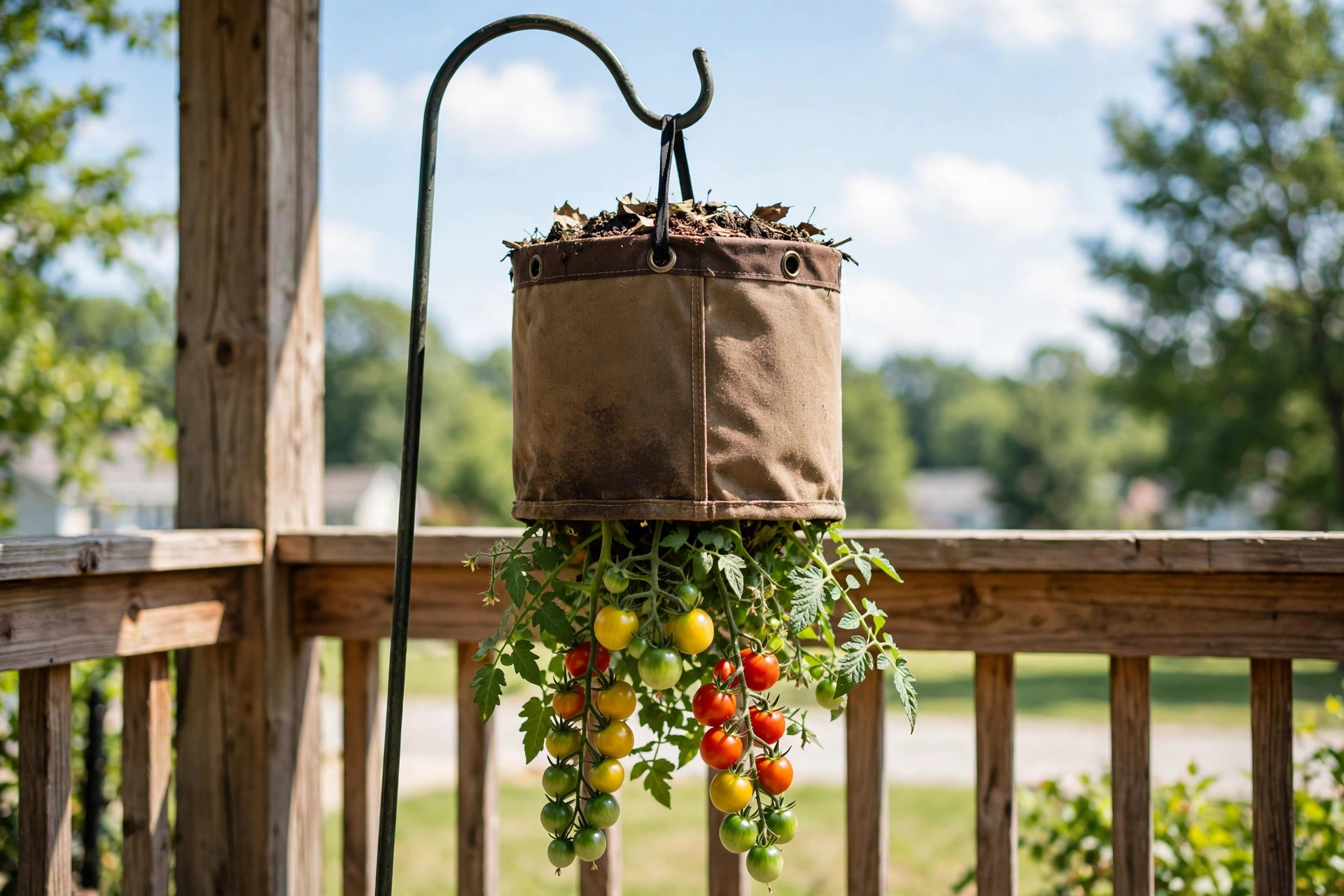

Growing tomatoes upside down is a fun way to garden in a small space. The method flips the usual plan on its head. Instead of planting the seedling in the ground and tying it to a stake, you set the plant through a hole in the bottom of a hanging container. The roots point up into the soil. The stems hang down toward the ground. Gravity does some of the work for you.
Many people learn how to grow tomatoes upside down because they lack a big yard. Renters, city dwellers, and seniors with bad knees all like this method. It also works well for anyone who wants to add color and life to a porch or balcony. This guide explains the full process in plain steps. You will learn why the method works, what kind of planter to buy or build, how to plant, how to care for the plant through the season, and what it costs.
Why Grow Tomatoes Upside Down
The main reason people try this method is space. An upside-down planter hangs from a hook, a beam, or a shepherd’s crook. It needs no garden bed. A small patio or a narrow balcony can hold two or three planters with ease.
There are other gains as well. Weeds are not a problem in a hanging container. The plant does not sit in wet soil, so many common root diseases are less likely to take hold. Pests that live in the ground, such as cutworms and some beetles, have a harder time reaching the leaves. The fruit hangs in the open air, which helps air flow around it and keeps the skin dry after rain.
There are trade-offs too. A hanging container dries out faster than a garden bed. You must water it every day in hot weather, and sometimes twice a day. A wet container is heavy. It may weigh twenty to forty pounds. The hook and support must be strong enough to hold it safely. Also, some gardeners find that yields are a bit lower than in-ground plants. Still, for a fresh supply of cherry and salad tomatoes, the method works well.
For anyone short on ground space, this is one of the simplest tricks in the garden. If you keep a tidy shed, you may also like reading about keeping your garden tools stored in the shed between watering sessions.
What to Look For in an Upside-Down Planter: How to Grow Tomatoes Upside Down
A good upside-down planter has a few basic traits. First, it needs a wide, stable opening at the top for filling soil and watering. Second, it needs a firm hole at the bottom that holds the young plant in place without pinching the stem. Third, it must hang from a strong strap, chain, or rope. Cheap cords stretch and snap when the soil is wet.
Size matters. A five-gallon planter gives the roots enough room to feed the plant through the whole season. Smaller planters dry out too fast and stunt growth. Look for a fabric or thick plastic body. Fabric pots breathe well and keep roots cooler in summer heat. Solid plastic pots hold moisture longer but can get very hot in direct sun.
Good drainage is a must. Water should flow freely through the soil and out around the stem. If water sits in the bag, the roots rot. Many garden supplies from trusted sellers describe these details on the package, so read the label before you buy.
Also check the hanging hardware. The hook, bracket, or beam must hold at least fifty pounds. A wet planter plus a full-grown plant is heavier than most people guess. When in doubt, buy hardware rated for more weight than you need.
Types of Upside-Down Planters and Options
There are three common paths: store-bought bags, rigid planters, and homemade buckets.
Store-bought fabric bags are the most popular. They cost little, weigh almost nothing when empty, and fold flat for winter storage. Most come with a strong nylon strap. They last two or three seasons if you store them dry. Tested product reviews from independent groups can help you compare bag quality before you spend.
Rigid plastic planters are sturdier. They often have a snap-in lid that keeps the soil from spilling out when the wind blows. They cost more, but they look tidier on a porch and last for many years.
Homemade buckets are the cheapest option. Take a clean five-gallon bucket with a lid. Cut a two-inch hole in the bottom. Line the bottom with a piece of old fabric or a coffee filter to hold the soil back. Feed the seedling through the hole, fill the bucket with potting mix, and hang it from the handle with a heavy chain. Many home project guides show simple ways to build safe hanging supports from lumber or steel pipe.
Some growers also use large inverted grow bags or two-liter bottles for herbs, but tomatoes need more room than that. For tomatoes, stay with five gallons or larger.
How to Plant and Care for Upside-Down Tomatoes
Start with a young, healthy seedling from a nursery or from your own seeds. Choose a determinate or bush variety if this is your first try. These stay short and put out most of their fruit at once. Cherry types such as grape and pear tomatoes also do well hanging. Big beefsteak types are harder to manage in a hanging bag because the fruit is heavy.
Planting steps:
1. Lay the empty planter on its side. Feed the seedling through the bottom hole so the root ball sits inside and the leaves hang below. 2. Hold the plant in place and fill the container with moist potting mix. Use a light mix made for containers, not heavy garden soil. 3. Water well. Let the extra water drain out. 4. Hang the planter from a strong hook in full sun. Tomatoes need at least six hours of direct sun each day. 5. Mulch the top with a thin layer of straw or bark to slow drying.
Watering is the most important job. In warm weather, check the soil every morning. Push your finger one inch into the mix. If it feels dry, water slowly until water runs out the bottom. Hanging plants may need water twice a day in July and August.
Feed the plant every two weeks with a liquid fertilizer made for tomatoes or vegetables. Follow the label rate. Too much fertilizer burns the roots. Pinch off yellow leaves with clean hand tools and drop them in the trash, not on the ground. Good air flow helps stop blight, a common leaf disease.
Watch for pests. Aphids and hornworms sometimes find hanging plants. Pick them off by hand or wash them off with a strong spray of water. Check the hanging strap and hook once a month. Tighten anything that looks loose.
If you grow with children, a small garden wagon for kids can help them carry watering cans and hand tools to the porch. Simple habits like that turn chores into family time.
Cost and Price
The cost of growing tomatoes upside down is low. A fabric hanging planter sells for about eight to twenty dollars. A rigid planter costs twenty to forty dollars. A homemade bucket costs nothing if you have one in the garage, plus a few dollars for a strong chain and hook.
Potting mix is the other main cost. A two-cubic-foot bag costs about ten to eighteen dollars at a hardware store or a home and garden center. One bag fills one five-gallon planter with some left over. Seedlings cost three to six dollars each. Fertilizer costs about ten dollars for a bottle that lasts the whole season.
In total, plan on about twenty-five to fifty dollars for your first planter, plant, and supplies. In later years, you only pay for new mix, new seedlings, and fertilizer. A healthy plant can yield five to fifteen pounds of tomatoes, so the harvest can pay back the cost many times over.
Safety and Common Mistakes
Safety starts with the support. Never hang a heavy planter from a thin curtain rod, a plastic gutter, or a weak tree branch. Use a porch beam, a steel shepherd’s crook driven deep into firm ground, or a wall bracket rated for heavy loads. Hang the planter where it will not swing into a walkway or over a chair. A falling planter can hurt a child or a pet.
Water adds weight. A planter that feels light in May can feel like a stone in August. Check the hook and strap at the start of the season and again in mid-summer.
Common mistakes are easy to avoid. The biggest one is letting the soil dry out. A plant that wilts again and again will drop its flowers and give little fruit. Set a daily watering habit. The second mistake is planting too early. Wait until nights stay above fifty degrees before you set the seedling out. Cold air stunts growth. The third mistake is using plain garden soil. It packs down, drains poorly, and starves the roots of air. Always use a light container mix.
Wear gloves when you prune or tie stems. Some people get skin rash from tomato leaves. Keep gardening tools clean and sharp so cuts on the plant heal fast. For more detail on safe plant care, many gardening guides cover pruning and pest control step by step.
When the season cools, think ahead. You can save seeds from your best fruit, clean and store the planter, and plan for cold weather vegetables to plant in fall while the garden rests.
Frequently Asked Questions
Do upside-down tomatoes really grow well? Yes, they grow well if you water and feed them on time. Cherry and grape types give the best results. Large beefsteak types can work, but the fruit may pull on the stem, so bush and cherry varieties are the safer choice.
How often should I water an upside-down tomato? Check the soil daily. In mild weather, once a day is enough. In heat above eighty-five degrees, water twice a day. Water until it runs out the bottom of the planter.
Can I grow other vegetables upside down? Yes. Peppers, cucumbers, and some herbs grow well this way. Squash and melons are too heavy. Herbs such as basil and parsley do fine in smaller hanging bags.
What kind of soil should I use? Use a potting mix made for containers. Do not use soil from the yard. Container mix drains well, stays light, and feeds the roots with air. You can mix in a slow-release fertilizer at planting time.
Will the plant grow up instead of down? The stems may turn upward at the tips at first. That is normal. As the plant grows heavier, the stems hang down. The plant will set fruit along the hanging stems.
When should I take the planter down? Bring it in or take it down after the first hard frost kills the leaves. Clean out the old soil and plant. Wash the bag or bucket and store it dry. A clean planter lasts longer and starts each spring disease-free.
A Final Word
Learning how to grow tomatoes upside down takes only an afternoon, but the reward lasts all summer. With a strong hook, a roomy planter, good soil, and steady water, you can pick fresh tomatoes right from your porch. Start with one bag and a cherry variety. Once you see the first red fruit hanging in the sun, you will want to hang a second one next year. For home advice on small-space projects like this, trusted sites offer many more ideas worth trying.
Related guides on this site include best pruning shears for rose bushes.
References
Best garden wagon for kids reviews. (n.d.). Home and garden information. https://www.best-garden-wagon-for-kids-reviews/ Bob Vila. (n.d.). Home improvement advice. https://www.bobvila.com Burpee. (n.d.). Seeds, plants, and gardening supplies. https://www.burpee.com Consumer Reports. (n.d.). Product reviews and ratings. https://www.consumerreports.org Corona Tools. (n.d.). Garden and landscape tools. https://www.corona-tools.com Family Handyman. (n.d.). DIY home repair and maintenance. https://www.familyhandyman.com Fiskars. (n.d.). Garden and cutting tools. https://www.fiskars.com Gardener’s Supply Company. (n.d.). Gardening tools and supplies. https://www.gardeners.com Lowe’s. (n.d.). Home improvement products. https://www.lowes.com The Home Depot. (n.d.). Home improvement products. https://www.homedepot.com The Spruce. (n.d.). Home and garden advice. https://www.thespruce.com
Was this guide helpful?

About Robert Taylor
The My Garden US editorial team writes practical, in-depth home and garden guides for American homeowners — tested advice, no fluff.
You May Also Like

How to Grow Mint Without Spreading: A Complete Guide
September 16, 2026 0 views
How to Compost Food Scraps Safely
July 22, 2026 0 views
Vermicomposting Bin for Beginners Guide: How to Start a Worm Bin at Home
January 19, 2026 0 views