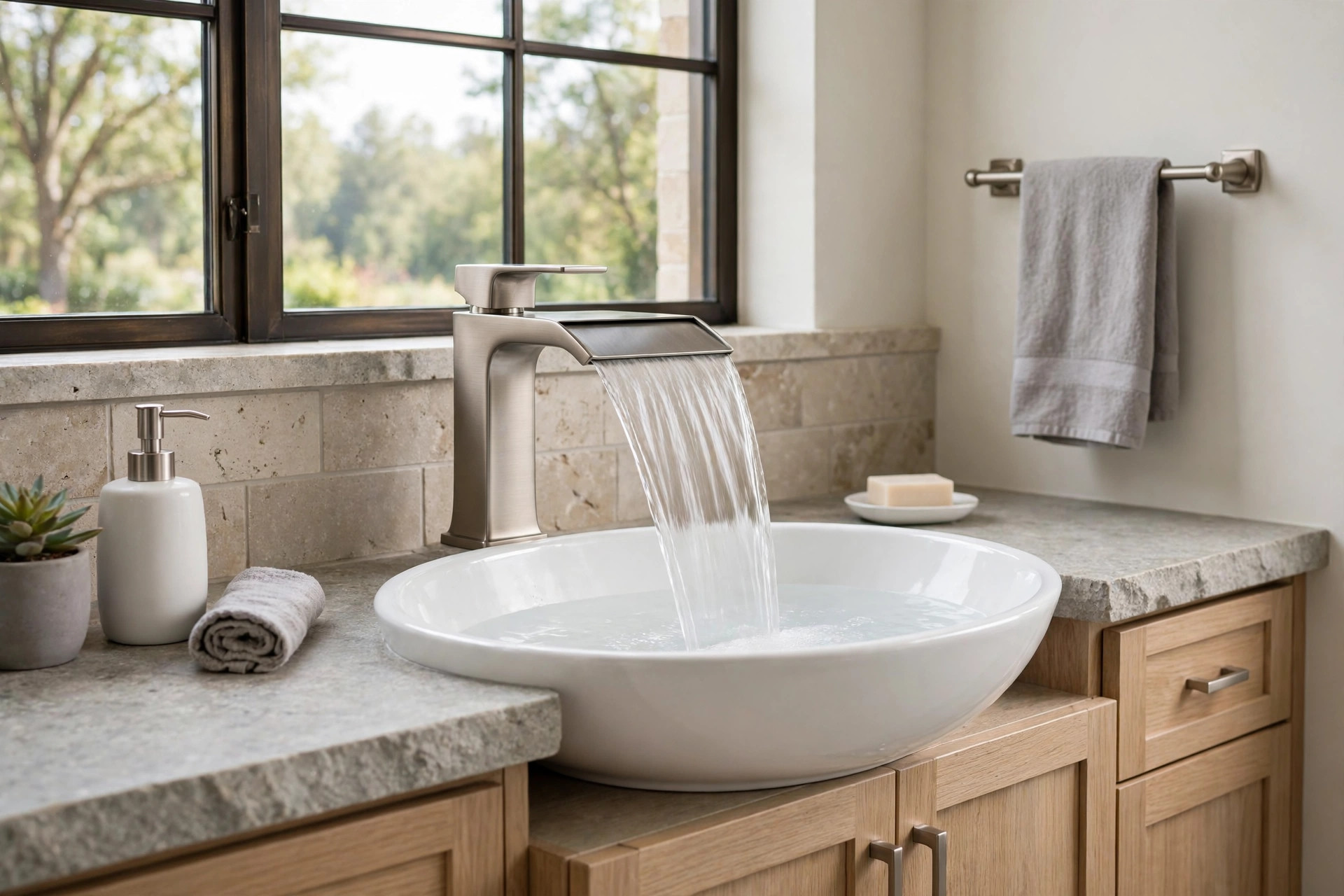

Few fixtures change the feel of a bathroom as fast as a faucet. The waterfall bathroom faucet has grown popular in the USA for one clear reason. It pours water in a wide, flat sheet instead of a narrow stream. It looks like a small indoor waterfall. But beauty is not the whole story. Any buyer should weigh the waterfall bathroom faucet pros cons before paying for one. This guide lays out the good and the bad in plain terms. It covers what these faucets are, how to choose one, what they cost, how to care for them, and the safety facts that matter. By the end, you will know if a waterfall faucet fits your home.
Why It Matters
A faucet is used many times each day. It sets the tone of the whole sink area. A waterfall spout turns a plain sink into a showpiece. That is why these faucets show up in so many bathroom remodel photos now. They suit vessel sinks best. The open sheet of water looks its finest falling into a bowl that sits above the counter.
What Is a Waterfall Bathroom Faucet: Waterfall Bathroom Faucet Pros Cons Usa
A waterfall bathroom faucet is a sink faucet with an open channel spout. Water flows across a flat plate or through a wide slot and drops in a smooth curtain. There is no aerator screen at the tip. The result is a steady ribbon of water about two to four inches wide. Most models are single-handle. You lift or turn one lever to mix hot and cold water. Common finishes are chrome, brushed nickel, matte black, oil-rubbed bronze, and brushed gold. A brushed gold bathroom faucet in waterfall style is a frequent choice for warm-toned bathrooms.
These faucets are made for vessel sinks, which sit on top of the counter. They also suit undermount sinks with a tall enough spout. They are not meant for standard drop-in sinks with shallow bowls. The spout must reach over the rim of a high bowl.
The Pros of a Waterfall Bathroom Faucet
Striking Modern Look
The main pro is style. The flat sheet of water is calm and pleasing. It draws the eye. Guests notice it. Designers at brands like Kohler and Delta use waterfall spouts to give a bathroom a spa-like mood. If your goal is a fresh, modern update, few small changes do more than this faucet.
Smooth, Gentle Water Flow
The water comes out softly. It does not blast or sputter. Washing hands feels gentle. The stream is wide, so water spreads across your hands quickly. The sound is soft too. It makes a low, steady rush rather than a hiss.
Easy Handle Control
Most waterfall faucets use a single lever. One motion sets both flow and temperature. This is simple for children and for older hands. It is also handy when your hands are soapy. Many models use ceramic disc valves, which are the industry standard for drip-free shutoff. Moen and American Standard both note that ceramic disc cartridges give long, reliable service in single-handle faucets.
Good Match for Vessel Sinks
Vessel sinks need a tall spout. Waterfall faucets are tall by design. The spout arches up and over the bowl rim. The pairing looks planned and neat. With a standard short faucet, a vessel sink can be awkward to use.
Many Finishes and Shapes
The market now offers waterfall faucets in almost every finish. Chrome suits a clean look. Matte black fits a bold look. Brushed nickel hides water spots better than chrome. If you compare a single hole vs widespread faucet, you will find that most waterfall models are single-hole, which makes installation simple. One hole, one deck plate, one supply hookup.
The Cons of a Waterfall Bathroom Faucet
Splashing Can Be a Problem
This is the top complaint. The wide sheet of water hits the sink and spreads. If the spout is too high above the bowl, or the bowl is shallow, water splashes onto the counter. The fix is to match the faucet height to the sink. The spout should sit four to six inches above the rim of the vessel bowl. Measure before you buy. Retailers such as The Home Depot and Lowe’s list spout height in the product specs, so check those numbers.
Hard Water Leaves Marks
The flat spout plate is a wide, open surface. In areas with hard water, mineral deposits build up fast. You will see white crust on the plate and around the slot. A quick wipe each day prevents buildup. Owners who skip the wipe will face crusty edges that are hard to clean. A water softener helps, though that is a bigger project. Guides at This Old House explain how hard water shortens fixture life and how softening can help.
No Aerator Means More Water Use
Standard faucets have aerators that mix air into the stream. This cuts water use while keeping pressure. Most waterfall faucets lack this feature. They can use more water per minute. Federal rules still cap bathroom faucet flow at 2.2 gallons per minute, and many states cap it lower. The EPA WaterSense program labels faucets that use 1.2 gallons per minute or less. Some waterfall models meet that mark. Many do not. If you care about your water bill, check the gallons-per-minute rating on the box.
Cleaning Takes More Effort
The open channel collects dust, soap film, and grime. The inside of the slot is hard to reach. A thin brush or an old toothbrush helps. You must clean it often or the sheet of water turns uneven. Standard tube spouts are easier to wipe down. Owners should be honest about this trade. The faucet looks best when it is clean, and it needs cleaning to stay that way.
Water Sheet Can Turn Uneven
Over time, mineral buildup inside the channel can break the smooth sheet into separate streams. The look suffers. A vinegar soak can clear light buildup. Heavy buildup may need the spout taken apart. Not all models allow easy disassembly. Read reviews before buying and favor brands with clear cleaning guidance, such as the care pages from Aqua Sana and the fixture makers.
Price and Parts
Waterfall faucets often cost more than plain models. Designer finishes add more. Replacement parts can be harder to find for off-brand models. A cartridge for a major brand is easy to order. A cartridge for a no-name import may not exist. The Family Handyman repair guides show why sticking with known brands pays off when a part wears out.
How to Choose the Right One
Match Faucet to Sink
Start with the sink. Measure the bowl height. The spout outlet should clear the rim by four to six inches. For a tall vessel bowl, pick a tall faucet. For a semi-recessed bowl, a medium height works. The spout reach must land the water near the drain, not near the front edge. A short reach causes splashing at the front.
Check the Flow Rate
Look for the gallons-per-minute number. A 1.2 GPM WaterSense model saves water. A 2.2 GPM model uses nearly twice as much. In states with strict rules, only low-flow models are legal to sell. The box or the web listing will state the rating. When in doubt, pick the lower flow. You will barely notice the difference in daily use.
Pick a Finish for Your Water
Chrome is classic and easy to clean. Brushed nickel hides spots. Matte black looks sharp but shows every mineral mark. Brushed gold warms up a white bathroom but costs more. If your water is hard, lean toward brushed nickel or chrome. Save the dark finishes for soft-water homes or for owners who wipe daily.
Choose a Trusted Brand
Faucet brands differ in valve quality and parts support. Major makers publish clear specs and sell spare cartridges for years. Off-brand models may look the same in photos but use thin castings and weak valves. Read the warranty. A lifetime finish warranty and a five-year valve warranty are good signs. The best widespread bathroom faucet roundups show how brand support affects long-term satisfaction, and the same lesson applies here.
Types and Options
Waterfall faucets come in several forms. The basic deck-mount model sits on the counter behind the sink. A wall-mount model hides the plumbing in the wall and leaves the counter clear. Wall-mount looks sleek but needs a plumber to set the rough-in valve inside the wall. That adds cost and makes future swaps harder.
Some models add LED lights that change color with water temperature. Blue for cold, red for hot. These are fun but add parts that can fail. Glass spout models use a clear glass channel. They look striking when new, but they show every speck of buildup.
Cost and Price
Prices span a wide range. Budget models start around 60 to 120 dollars. Mid-range models from known brands run 150 to 350 dollars. Designer models in special finishes can pass 500 dollars. Wall-mount models cost more, and the in-wall valve adds 100 to 200 dollars in parts plus labor.
Installation cost depends on the setup. Swapping a deck-mount faucet on an existing single hole is a simple job. A handy owner can do it in an hour with basic tools. A plumber may charge 150 to 300 dollars for the visit. Wall-mount installation is a bigger job. Opening the wall, setting the valve, and tiling over it can add several hundred dollars.
Do not forget the small costs. New supply lines, plumber’s putty, and thread tape add up. If your shutoff valves are old, replace them while the water is off. It is cheap insurance against a leak later.
Value tip: a mid-priced faucet from a major brand is the sweet spot. You get a good ceramic valve, a solid finish, and parts you can buy in five years.
Care and Upkeep
Daily care is simple. Wipe the spout and the plate with a soft cloth after the last use of the day. This takes ten seconds and stops most buildup. Weekly, wipe the whole faucet with a damp cloth and mild dish soap. Rinse and dry. Drying matters. Air-dried drops leave spots.
For mineral buildup, use white vinegar. Soak a cloth in vinegar and lay it on the spout plate for 15 minutes. Then wipe and rinse. Do not use harsh acids or abrasive pads. They strip the finish. Clean the channel slot monthly with a soft bottle brush and flush with clean water. If the sheet turns ragged, the slot is partly blocked, and a vinegar soak usually restores the smooth flow.
Check under the sink twice a year. Look at the supply lines and the drain connections for drips. A small drip caught early is a five-minute fix. A drip ignored for months rots the cabinet floor.
Replace the cartridge if the handle drips or feels stiff. Most makers sell the exact part by model number. Keep your model number and receipt.
Safety Facts
Scald safety matters with any faucet. Water heaters set above 120 degrees Fahrenheit can scald skin fast. Set your heater to 120 degrees. Many single-handle faucets include a limit stop that caps how far the handle turns toward hot. Ask your plumber to set it. This is vital in homes with children or older adults.
Lead rules matter too. US law limits lead in faucets that touch drinking water. Buy faucets marked as meeting the federal lead-free standard. The box should state compliance plainly.
Slip safety is a real concern with waterfall faucets. Splashing wets the counter and the floor. Water on tile is a slip hazard. If your setup splashes, fix the height mismatch or add a thick mat. Do not accept a wet floor as normal.
Frequently Asked Questions
Are waterfall faucets hard to install?
A deck-mount model is as easy as any single-hole faucet. You set the base, tighten the nut, and hook up two supply lines. Most owners with basic tools finish in under an hour. Wall-mount models are harder. They need in-wall plumbing and should be left to a licensed plumber.
Do waterfall faucets waste water?
They can use more than aerated faucets. The open spout has no air-mixing screen. Check the flow rating. A 1.2 GPM model is efficient. Your habits matter too. Turning the tap off while brushing teeth saves more water than any fixture choice.
How do I stop the splashing?
Match the spout height to your sink. Four to six inches above the bowl rim is the target. Make sure the water lands near the drain. Lower the flow a bit if your valve allows it. If splashing persists, the faucet may be too tall for that sink.
Will it work with hard water?
It will work, but it needs more care. Wipe the spout daily. Do a vinegar soak monthly. Consider a softener if your water is very hard. Brushed nickel and chrome finishes hide spots better than matte black in hard-water homes.
How long does a waterfall faucet last?
A good one lasts 10 to 15 years or more. The ceramic valve is the key part and rarely wears out. The finish fails first on cheap models. Buy from a known brand and clean gently.
Can I put one on a standard shallow sink?
It is not advised. The long drop from a tall spout to a shallow bowl causes heavy splashing. Waterfall faucets are made for vessel and deep bowls. For a shallow sink, pick a standard low-arc faucet instead.
A Short Final Word
The waterfall bathroom faucet pros cons come down to a clear trade. You gain striking looks, gentle flow, and a perfect match for vessel sinks. You accept more splashing risk, more cleaning, and higher water use in many models. For a style-led remodel with a vessel sink, it is a fine choice. Pick a trusted brand, match the height to your bowl, check the flow rating, and wipe it daily. Do those four things and the faucet will serve you well for years. If low upkeep matters more than looks, a standard faucet remains the wiser buy.
References
American Standard. (n.d.). Bathroom and kitchen products. https://www.americanstandard.com Aquasana. (n.d.). Water filtration systems. https://www.aquasana.com Delta Faucet. (n.d.). Kitchen and bathroom faucets. https://www.deltafaucet.com Family Handyman. (n.d.). DIY home repair and maintenance. https://www.familyhandyman.com Kohler. (n.d.). Bathroom and kitchen fixtures. https://www.kohler.com Lowe’s. (n.d.). Home improvement products. https://www.lowes.com Moen. (n.d.). Faucets and plumbing fixtures. https://www.moen.com The Home Depot. (n.d.). Home improvement products. https://www.homedepot.com This Old House. (n.d.). Home renovation guidance. https://www.thisoldhouse.com U.S. Environmental Protection Agency. (n.d.). Protecting human health and the environment. https://www.epa.gov
Was this guide helpful?

About David Wilson
The My Garden US editorial team writes practical, in-depth home and garden guides for American homeowners — tested advice, no fluff.
You May Also Like
Frozen Pipe Prevention Tips for USA Homes
March 12, 2026 0 views
The Best Water Test Kit for Well Water in the USA: A Homeowner’s Guide
January 19, 2026 0 views
Potassium Chloride vs Sodium Softener Salt: Which One Should You Use?
April 18, 2026 0 views