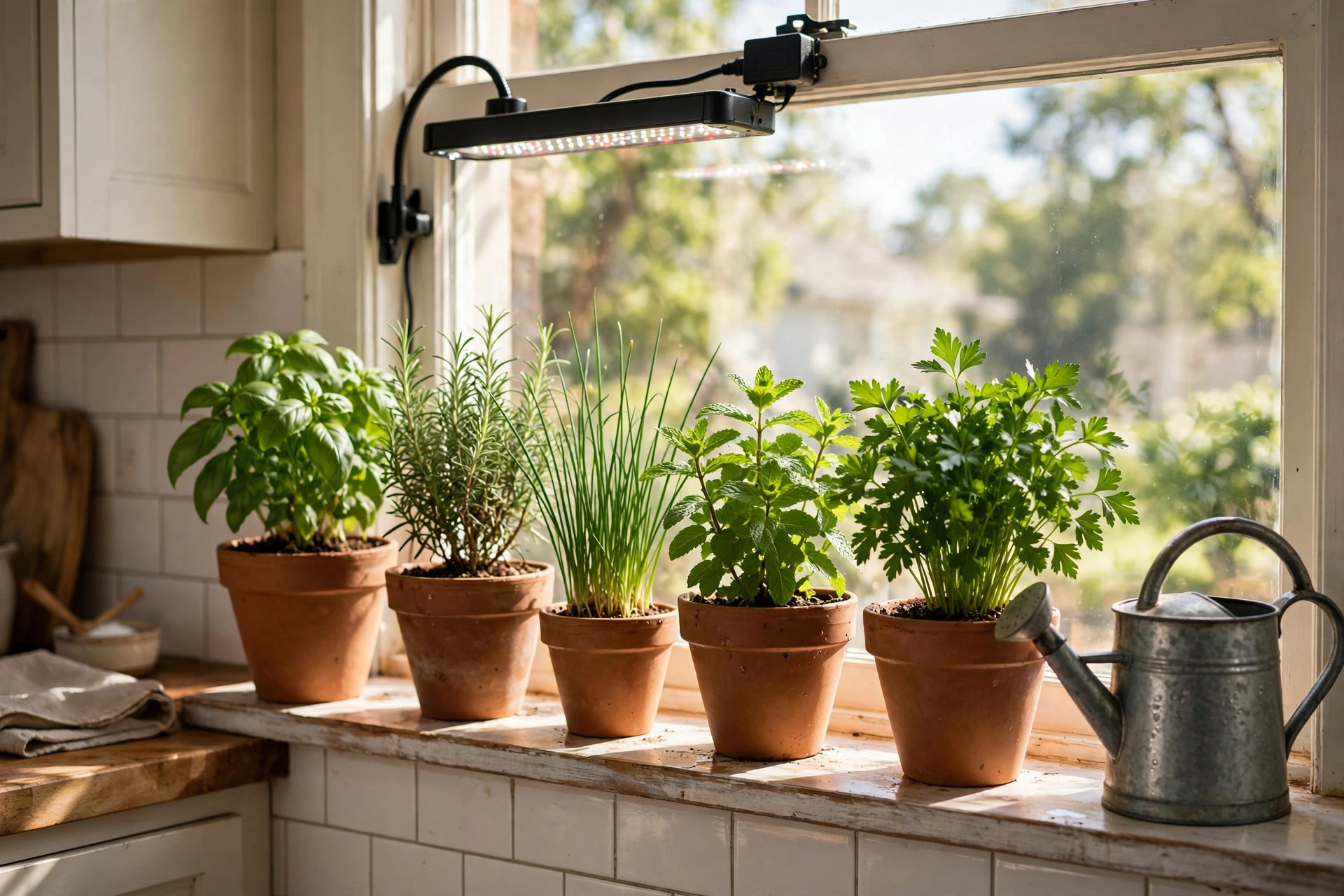
Many home cooks wish for fresh herbs in the middle of winter. Learning how to grow herbs indoors year round makes that wish real. With a few pots, good light, and simple care, you can cut basil in January and snip chives in July. This guide shows you how to do it step by step.
Why Grow Herbs Indoors Year Round
Fresh herbs cost a great deal at the store. A small pack of basil may cost more than a whole plant. When you learn how to grow herbs indoors year round, you stop paying those high prices. You also get fresher flavor. A leaf cut seconds before it goes into the pot tastes far better than one that sat in a plastic pack for a week.
Indoor herbs also make your home smell good. A pot of rosemary by the window fills the room with a clean pine scent. Mint on the sill gives a cool fresh note. Beyond taste and scent, growing herbs indoors gives you a small bit of green life in your home through the dark months. It is a calm and simple hobby that takes only a few minutes a day.
What You Need to Get Started: How to Grow Herbs Indoors Year Round
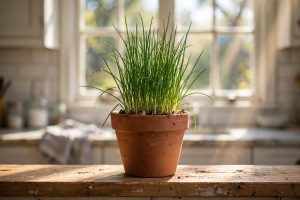
You do not need much to begin. The basics are pots, soil, seeds or small plants, and light. Start with pots that have holes in the bottom so extra water can drain out. A pot that is six inches wide works well for most herbs. Terra cotta pots are a good choice because they let the soil breathe.
Use a good potting mix, not soil from the yard. Indoor herbs do best in a light, loose mix that drains well. A potting mix made for container gardens holds just the right amount of water while letting roots breathe. You can also learn more about starting plants indoors with a guide to starting seeds indoors if you plan to grow from seed.
You will need a watering can made for indoor plants with a narrow spout. This lets you water the soil right at the base of the plant without soaking the leaves. A small tray under each pot catches extra water and protects your sills and tables.
How to Choose the Right Herbs
Not all herbs are easy indoors. Some do far better than others. The best herbs for indoor growing are basil, chives, mint, parsley, oregano, thyme, and rosemary. These herbs stay small, grow well in pots, and give you plenty of leaves to harvest.
Basil is the most loved indoor herb, but it needs the most light. Chives are very easy and keep growing back after you cut them. Mint is almost too easy and should always have its own pot, since its roots spread fast and take over. Rosemary and thyme grow slowly but live for years as indoor plants if they get enough sun.
If you are new to this, start with three or four easy ones. Chives, parsley, mint, and oregano are kind to beginners. Once you learn how to grow herbs indoors year round with these, you can add basil, rosemary, and other harder plants.
Growing From Seed or Buying Plants
You can start herbs from seed or buy small plants from a garden center. Starting from seed costs less and gives you more choice of types. Basil, parsley, and chives grow fast from seed. Rosemary and thyme are slow from seed, so most people buy small plants instead.
Store-bought plants often come in small pots with poor soil. It is best to move them to a bigger pot with fresh potting mix within a week. This gives the roots room to grow and keeps the plant healthy.
Light: The Most Important Factor
Light is the key to learning how to grow herbs indoors year round. Most herbs need six hours of bright light each day. A south-facing window is the best spot in most American homes. East or west windows work for herbs that need a little less sun, like mint and parsley.
In winter, days are short and the sun sits low. Even a good window may not give enough light. If your plants look thin, pale, or stretched out with long stems, they are not getting enough light. A simple grow light solves this problem. A full-spectrum LED grow light placed six to twelve inches above the plants for twelve to fourteen hours a day works as well as the sun.
Many growers at Burpee note that steady light keeps herbs strong through winter. Advice from The Spruce also points to light as the first thing to check when indoor herbs fail. Keep the lights on a timer so your plants get the same hours of light each day.
Setting Up Grow Lights
Choose LED grow lights over old-style fluorescent tubes. LEDs use less power and give off little heat. Hang or clip the light so it sits close to the tops of the plants. Move it up as the plants grow. Most herbs do well with fourteen hours of light and ten hours of dark. The dark time matters too, since plants rest at night.
Watering and Feeding
Indoor herbs need steady water but not wet feet. Water when the top inch of soil feels dry to your touch. Push your finger into the soil. If it is dry, water well. If it feels damp, wait a day. Overwatering is the most common cause of dead indoor herbs.
Water slowly until it runs out of the drainage holes. Then empty the tray under the pot. Never let the pot sit in standing water, since this rots the roots. In winter, when the air is dry from heating, herbs may need water more often. In summer, check daily.
Herbs in pots use up the food in their soil over time. Feed them every two to four weeks with a half-strength liquid plant food made for indoor plants. Do not overfeed. Too much plant food makes weak, soft growth with less flavor. Tips from Gardener’s Supply Company stress that light feeding keeps herb flavor strong. Bob Vila’s garden guides also remind growers that less is more with herb plant food.
Temperature and Air
Most herbs like the same temperatures you do. Daytime temperatures of sixty-five to seventy-five degrees work well. At night, they can stand a little cooler, down to about sixty degrees. Keep pots away from hot air vents and cold drafts. Both dry out and stress the plants.
Good air flow helps keep herbs healthy. Stale, still air lets mold and bugs grow. If you can, open a nearby window for a short time on mild days. A small fan on low, set across the room, also moves the air. Just do not point it straight at the plants.
Dry indoor air in winter is hard on herbs. A pebble tray helps. Put a layer of pebbles in a tray, add water just below the tops of the pebbles, and set the pot on top. The water slowly evaporates and raises the dampness around the plant. Grouping plants close together also helps hold moisture in the air.
Types of Indoor Herb Setups
There are several good ways to set up your indoor herb garden. The simplest is a row of pots on a sunny windowsill. This works well for a few herbs and costs very little.
A second choice is a plant shelf with grow lights. Each shelf holds several pots, and lights on each level give even growth. This is the best way to learn how to grow herbs indoors year round in a dark home or a north-facing apartment.
A third choice is a self-watering planter. These pots have a water store at the bottom that feeds the soil slowly. They help if you travel or forget to water. Experts at Fiskars point out that the right tools make steady care much easier.
Some people use hydroponic kits, which grow herbs in water with added nutrients instead of soil. These kits cost more but grow herbs fast and need no soil mess. Pruning tools from Corona Tools are handy for keeping any herb setup neat, and project ideas from Family Handyman can help you build your own shelves or planters.
Cost and Price
Starting an indoor herb garden is not costly. A simple setup with four pots, potting mix, and seeds costs about thirty to fifty dollars. Buying four small plants instead of seeds adds about fifteen to twenty dollars.
A grow light costs between twenty and sixty dollars for a good LED model. This is the one item worth buying well, since poor light is the main reason indoor herbs fail. Buying guides from Consumer Reports can help you pick a light that lasts.
Compare this with store prices. Fresh herb packs often cost three to four dollars each. If you use two packs a week, you spend over three hundred dollars a year. An indoor herb garden pays for itself in a few months. Supplies from Home Depot or Lowe’s keep start-up costs low.
Care and Upkeep Through the Seasons
Spring
Spring is the time to start new plants and move things around. Start seeds indoors in March. Give overwintered plants fresh soil or a slightly bigger pot. Trim back any thin winter growth so new stems come in full.
Summer
In summer, herbs grow fast. Harvest often. Pinch basil tops to keep it bushy and stop it from flowering. Move pots to a bright porch or patio if you like, but bring them back inside before nights turn cold. Watch for bugs like aphids on new growth.
Fall
In fall, bring outdoor pots inside before the first frost. Check each plant for bugs first. Cut herbs back by about one third so they fit their indoor space. Place them in your sunniest window or under grow lights.
Winter
Winter is the test. Days are short, so use grow lights. Water less often since growth slows. Keep plants away from cold windows at night. A little care keeps your herbs alive and growing until spring returns.
Safety
Indoor herb growing is safe, but a few rules help. Keep plant food and pest sprays out of the reach of children and pets. Some sprays made for outdoor gardens are not safe to use where you eat and cook. Use only products marked safe for indoor food plants.
Some herbs can bother pets. Chives and other onion-family herbs can be harmful to cats and dogs if eaten in large amounts. Keep those pots where pets cannot reach them, or grow pet-safe herbs like basil and parsley instead.
FAQ: How to Grow Herbs Indoors Year Round
How much light do indoor herbs really need?
Most herbs need six hours of bright light each day. Basil, rosemary, and thyme need the most. In winter, add a grow light for twelve to fourteen hours a day. Pale, stretched plants are a sign of too little light.
What is the best soil for indoor herbs?
A light, loose potting mix made for containers works best. It should drain well but hold some water. Never use heavy garden soil from outside. It packs down in pots and holds too much water.
How often should I water indoor herbs?
Water when the top inch of soil feels dry. This is usually every few days, but it depends on the pot size, the plant, and the season. Always let extra water drain out and empty the tray.
Can I grow herbs indoors without grow lights?
Yes, if you have a bright south-facing window. Many people succeed with just a good window. But grow lights make a big difference in winter and in dark homes. They are the most sure way to learn how to grow herbs indoors year round.
When should I start harvesting my herbs?
Start cutting once the plant is about six inches tall and has several sets of leaves. Never take more than one third of the plant at once. Regular cutting keeps herbs growing and stops them from getting thin.
Do indoor herbs need plant food?
Yes, but only a little. Feed every two to four weeks with half-strength liquid plant food. Too much food gives weak growth and less flavor.
A Short Final Word
Learning how to grow herbs indoors year round is simpler than most people think. Give your herbs bright light, good soil, steady water, and regular cutting. Start with easy herbs, watch how they grow, and adjust as you learn. In a few months you will have fresh flavor at hand in every season. A small indoor herb garden is one of the most useful and pleasant projects a home can hold.
References
Bob Vila. (n.d.). Home improvement advice. https://www.bobvila.com Burpee. (n.d.). Seeds, plants, and gardening supplies. https://www.burpee.com Consumer Reports. (n.d.). Product reviews and ratings. https://www.consumerreports.org Corona Tools. (n.d.). Garden and landscape tools. https://www.corona-tools.com Family Handyman. (n.d.). DIY home repair and maintenance. https://www.familyhandyman.com Fiskars. (n.d.). Garden and cutting tools. https://www.fiskars.com Gardener’s Supply Company. (n.d.). Gardening tools and supplies. https://www.gardeners.com Lowe’s. (n.d.). Home improvement products. https://www.lowes.com The Home Depot. (n.d.). Home improvement products. https://www.homedepot.com The Spruce. (n.d.). Home and garden advice. https://www.thespruce.com
Was this guide helpful?

About Michael Thompson
The My Garden US editorial team writes practical, in-depth home and garden guides for American homeowners — tested advice, no fluff.