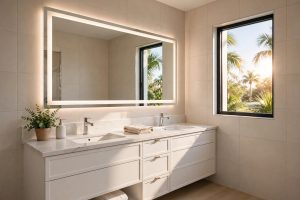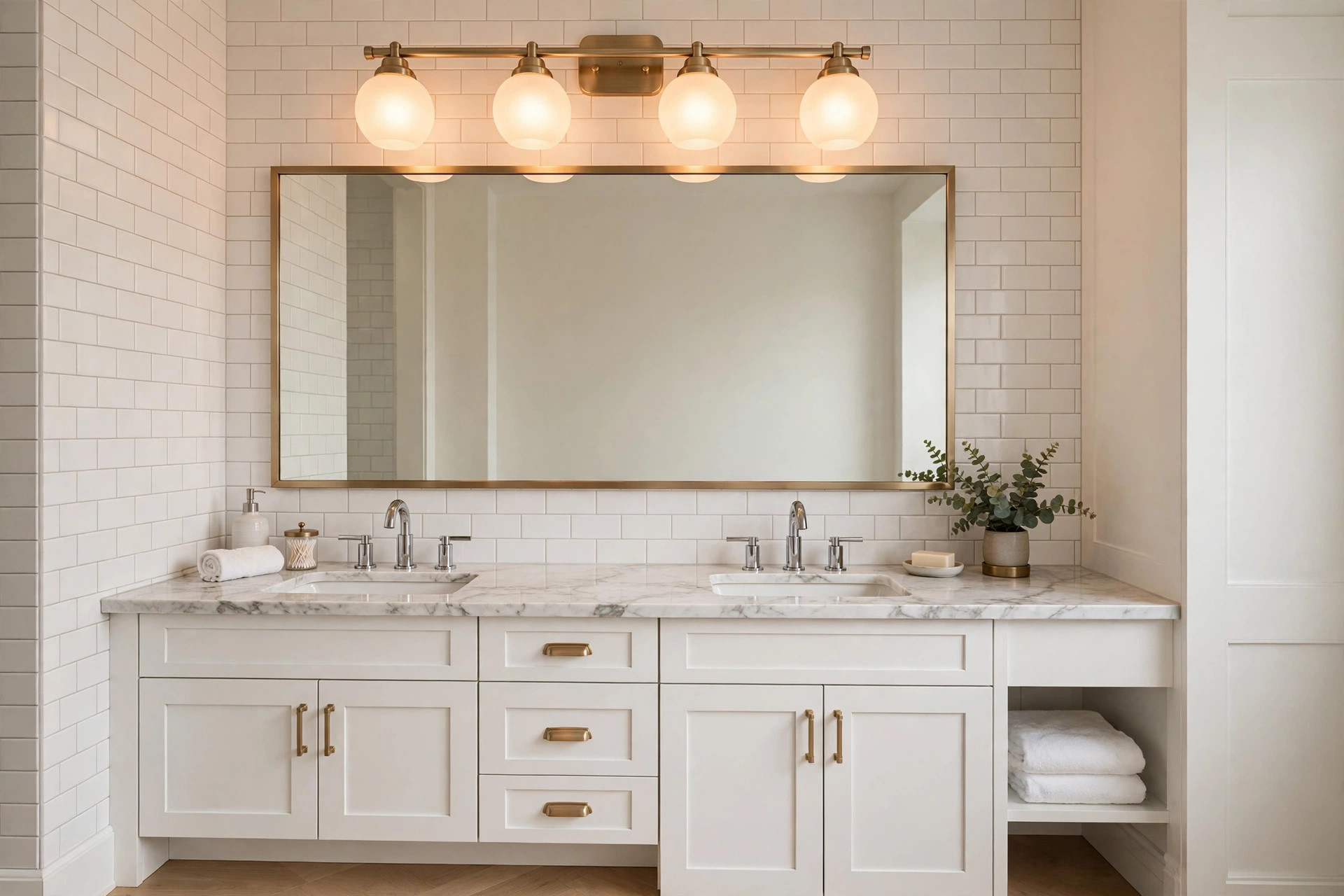

This bathroom vanity light bars American homes guide covers a fixture that most buyers think about for only a few minutes. That is a mistake. The light bar above the bathroom mirror does more work than any other lamp in the house. It shapes the face you see each morning. It sets the mood of the room. It can raise the value of a bathroom remodel. And it costs far less than most people expect. You will learn what a vanity light bar is, why it matters, how to choose one, what types exist, what they cost, how to care for them, and how to install them with safety in mind.
Why Vanity Light Bars Matter
A bathroom vanity light bar is a row of two to five lamps mounted on a single bar above or beside the bathroom mirror. It throws light forward onto the face instead of down from the ceiling. This one detail changes everything about how a bathroom feels and works.
Light Changes How a Face Looks
The human face is read by light. A single ceiling lamp casts shadows under the eyes, the nose, and the chin. Those shadows make the skin look tired and the colors look wrong. Shaving becomes guesswork. Makeup applied under bad light looks different in daylight. A good vanity light bar solves this. It sends light from several points at once, and the light meets the face from the front. Shadows shrink. Colors read true. Small tasks like trimming a beard or putting in contact lenses get easier and safer.
Light Changes How a Room Feels
Bathrooms are small rooms. In many American homes, they have no window at all. The vanity light bar often becomes the main light source. Warm light makes the room feel calm. Bright, cool light makes it feel clean and alert. The right bar can make a small bath look larger and a plain bath look finished. Design writers at HGTV often point out that lighting is the fastest way to lift a bathroom without moving a single pipe.
Light Affects Home Value
Real estate agents tell the same story again and again. Buyers walk into a bathroom and judge it in seconds. Clean lines and good light suggest a well-kept home. Dated or broken lighting suggests hidden problems. A new vanity light bar costs a fraction of a new tile floor, yet it photographs well and reads as “updated.” For sellers, it is one of the cheapest upgrades with real visible effect.
What to Look for When You Choose: Bathroom Vanity Light Bars American Homes Guide
Buying a vanity light bar is not hard, but a few facts matter. Keep these in mind as you shop.
Size and Proportion
Measure the mirror first. A common rule says the light bar should be about three quarters the width of the mirror. A bar that is too short leaves the edges of the mirror dark. A bar that is too long hangs past the mirror and looks clumsy. For a 36-inch mirror, look for a bar around 24 to 30 inches wide. The same rule applies to the bathroom sink vanities the bar lights. In bathrooms with a mirrored medicine cabinet, keep the bar slightly narrower than the frame and centered.
Brightness
Brightness is measured in lumens. Most bathrooms need 1,500 to 2,500 lumens from the vanity area. Two to four bulbs at 400 to 800 lumens each will get you there. Small powder rooms can use less. Large master baths may need more, or a second light source. Read the lumen rating on the package, not just the watt rating. Two bulbs with the same watts can give very different light.
Color Temperature
Color temperature is measured in kelvin, written as K. It tells you whether the light looks warm or cool.
– 2700K gives a warm, yellow glow. It feels like evening light. It flatters skin. – 3000K gives a soft white glow. It is the most common choice for bathrooms. – 4000K gives a neutral white glow. It is bright and clean, closer to office light. – 5000K gives a cool, blue-white glow. It reads as daylight but can feel harsh.
For most faces, 2700K to 3000K is the safest choice. Makeup looks most natural under light near 3000K. Bulbs labeled “daylight” often run 5000K. They are fine for detail work, but many people find them cold in the morning.
Color Rendering Index
The color rendering index, or CRI, runs from 0 to 100. It measures how truly the light shows colors. Sunlight scores 100. For a bathroom, look for a CRI of 90 or higher. Lower CRI light can make healthy skin look sallow and red clothing look dull. This number is printed on most good bulb boxes. Many shoppers ignore it, and that is why their new light still looks wrong. Articles on The Spruce remind readers that CRI matters as much as brightness for a mirror area.
Finish and Style
The bar itself comes in many finishes. Brushed nickel is the quiet workhorse. It hides water spots and matches most faucets. Chrome is bright and classic. Matte black suits modern baths. Brass and gold tones warm up white tile. Oil-rubbed bronze fits traditional rooms. Pick a finish that matches the faucet and the other hardware. Mixed metals can work, but they ask for a careful eye. Retailers like Lowe’s carry the full range, and the Home Depot site lets you filter bars by finish so you can compare side by side.
Types and Options
Vanity light bars come in several forms, each with its own strengths and trade-offs.
Multi-Light Bars with Exposed Bulbs
This is the classic form. A horizontal bar holds three or four open sockets, often with glass shades. Globe bulbs give soft, even light. The style ranges from Hollywood glam to farmhouse. The open design makes bulb changes easy. The drawback is dust. Open sockets collect it, and glass shades need wiping. Still, this type remains the most popular in American homes because it works well and costs little.
Integrated LED Bars
These bars have the light source built in. There are no bulbs to change. The LED strip or panel sits inside a slim housing, often no thicker than a finger. The light is even and the profile is modern. The life span is long, often rated at 30,000 to 50,000 hours. The drawback is real. When the LED fails, you replace the whole bar. Quality varies widely between brands. Buy from a maker with a real warranty and a known name.
Bath Bars with Frosted Glass Shades
A frosted or opal glass shade spreads light softly and hides the bulb inside. Bell shapes, drum shapes, and simple cylinders are common. This type suits traditional and transitional bathrooms. The shade can dim the light a little, so choose bulbs on the brighter side.
Sconces as Vanity Light
Some builders skip the bar and mount a sconce on each side of the mirror. This is excellent lighting. Light from both sides fills the face with almost no shadow. It costs more because it needs two fixtures and two wiring points. But for a master bath remodel, it is worth the thought. Many led bathroom mirrors now build side lighting into the mirror frame itself, which is the same idea in modern dress.
Cost and Price
Vanity light bars are one of the least costly bathroom fixtures.
Fixture Prices
A simple two-light bar from a builder brand can cost 30 to 60 dollars. A mid-range three- or four-light bar in brushed nickel or black usually runs 80 to 180 dollars. Designer bars in brass or with hand-blown glass can reach 250 to 500 dollars. Integrated LED bars run 60 to 300 dollars depending on length and quality. These prices hold steady across big-box stores and online sellers.
Bulb Prices
LED bulbs cost 3 to 10 dollars each and last years. Older incandescent vanity bulbs cost less per bulb but burn out faster and use far more power. Over five years, the LED is far cheaper to run.
Installation Prices
If the wiring box already exists above the mirror, swapping a bar is a simple job. An electrician may charge 100 to 200 dollars for the visit. If new wiring is needed, the cost rises to 300 to 600 dollars depending on wall access. A do-it-yourselfer with basic skill can swap a bar in under an hour, but the power must be off at the breaker, not just at the switch. Cost guides at Bob Vila give ranges for common fixture swaps by region.
The Value Question
Think in total cost. A 120-dollar bar plus 150 dollars of labor is 270 dollars. That is less than one percent of a typical full bathroom remodel. Few upgrades give more visible return per dollar.
Care and Upkeep
A vanity light bar asks little, but it asks it on schedule.
Cleaning
Turn the light off and let the bulbs cool. Wipe the bar with a soft damp cloth. Dry it at once to stop water spots on metal finishes. Glass shades can be washed in warm soapy water, rinsed, and dried. Do this every few months. Steam and hair spray leave a film that dims the light over time. A dirty shade can cut light output by a fifth without you noticing.
Bulb Replacement
LED bulbs fade slowly rather than burning out all at once. If one side of the mirror looks dimmer, check whether that bulb has aged faster. Replace all bulbs in the bar at the same time so the color and brightness match. Keep one spare bulb in the house. When a bar uses integrated LEDs and one section fails, check the warranty before you buy a new bar.
Checking Mounts
Once a year, give the bar a gentle test. It should not rock or pull from the wall. Steam and temperature changes work screws loose. If the bar wobbles, tighten the mounting screws with the power off.
Safety
Bathrooms and electricity are a serious pair. The rules are simple and worth following.
Keep Water Away from Wiring
Never touch a light fixture with wet hands. Never spray cleaners directly onto the bar. Spray the cloth, then wipe. Make sure the bar carries a damp rating at minimum. This rating is set by testing labs and printed on the fixture. Guidance from This Old House stresses that bath fixtures must match the zone they sit in.
Turn Off Power Before Work
Before you change a bar or tighten a mount, turn off the breaker for that circuit. Switches can be wired in odd ways in older homes. The breaker is the only sure off.
Watch the Heat
Older incandescent and halogen bulbs run hot. Keep flammable things, like tissue boxes and aerosol cans, away from the bar. LED bulbs run far cooler, which is one more reason to choose them. Check the fixture’s maximum wattage rating and never fit a bulb above it. An over-watt bulb can cook the socket and the wiring.
Call a Professional When Needed
Call an electrician if you see any of these: scorch marks around the fixture, a burning smell, flicker that a new bulb does not fix, or a breaker that trips when the light is on. These are warning signs. They do not get better on their own. Makers such as Kohler, Moen, Delta Faucet, and American Standard publish clear installation and safety sheets for their fixtures. Read the sheet that comes in your box before you start.
Frequently Asked Questions
How high should a vanity light bar sit above the mirror?
A common target is 75 to 80 inches from the floor to the center of the bar. That places it just above the mirror for most adults. The exact height depends on the mirror size and the tallest user. Stand in front of the mirror and mark where the bar centers on your face line, then mount slightly above that point.
Can one light bar serve a double-sink vanity?
Two separate bars, one over each sink, give the best result. If the budget allows only one, choose a wide bar of five or six lights centered over the pair.
Are LED vanity bars better than bars with bulbs?
Each has a place. Integrated LED bars look slim and modern and need no bulb changes. Bars with sockets let you pick your own bulbs and change color temperature later. If you like to adjust your home over time, sockets give freedom. If you want a clean look and no maintenance, integrated LED wins.
What color temperature is best for applying makeup?
Most makeup artists suggest 3000K to 3500K with a CRI above 90. This range reads close to natural indoor light. It keeps foundation colors honest. Bulbs near 2700K are warm and flattering but can hide small color errors. Bulbs near 5000K show everything but can feel harsh at seven in the morning.
Can I put a dimmer on a vanity light bar?
Yes, if both the fixture and the bulbs are marked dimmable. Many integrated LED bars dim well with a compatible LED dimmer. Mixing a non-dimmable LED with a dimmer causes flicker and buzz. Check both labels. When in doubt, buy the dimmer and the bulbs from the same brand line.
How do I match the light bar to my faucet finish?
Bring a photo of the faucet to the store, or order finish samples online. Brushed nickel, chrome, and matte black are easy to match because most brands use the same tones. Brass and bronze vary more between makers. Side-by-side comparison in daylight beats memory every time.
A Short Final Word
A bathroom vanity light bar is a small fixture with a large job. It lights the face, sets the mood, and lifts the whole room. Choose the right width, pick bright bulbs with high color rendering, favor warm white tones, and respect the safety rules around water and wiring. The care is light. The payoff shows every morning in the mirror. Use this bathroom vanity light bars American homes guide as a checklist when you shop, and you will buy once and buy well.
References
American Standard. (n.d.). Bathroom and kitchen products. https://www.americanstandard.com Bob Vila. (n.d.). Home improvement advice. https://www.bobvila.com Delta Faucet. (n.d.). Kitchen and bathroom faucets. https://www.deltafaucet.com HGTV. (n.d.). Home and garden ideas. https://www.hgtv.com Kohler. (n.d.). Bathroom and kitchen fixtures. https://www.kohler.com Lowe’s. (n.d.). Home improvement products. https://www.lowes.com Moen. (n.d.). Faucets and plumbing fixtures. https://www.moen.com The Home Depot. (n.d.). Home improvement products. https://www.homedepot.com The Spruce. (n.d.). Home and garden advice. https://www.thespruce.com This Old House. (n.d.). Home renovation guidance. https://www.thisoldhouse.com
Was this guide helpful?

About Lisa Anderson
The My Garden US editorial team writes practical, in-depth home and garden guides for American homeowners — tested advice, no fluff.
You May Also Like
Brushed Nickel Faucets USA Online Deals: A Buyer’s Guide
May 8, 2026 0 views
Bathroom Vanity Light Bars Reviews Buying Guide USA
February 13, 2026 0 views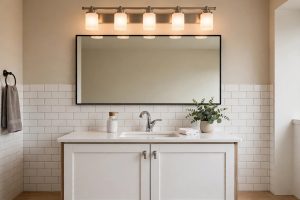
Bathroom Vanity Light Bars Buying Guide USA: How to Choose the Right One
February 20, 2026 0 views