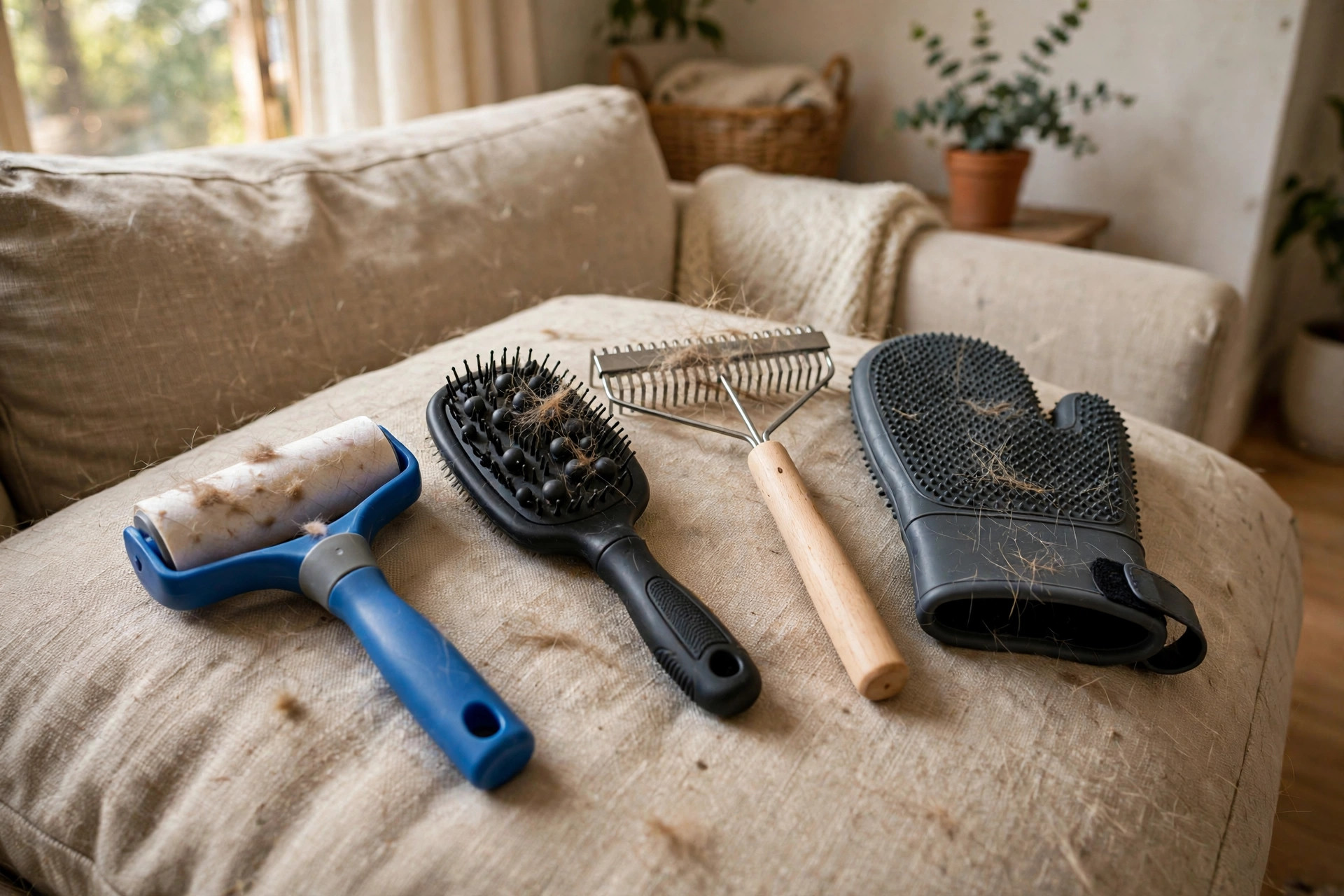

Pet owners love their animals. They love the clean fur and the warm company. But loose hair is part of the deal. It lands on the couch, the rug, the car seat, and the dark coat you wore for one hour. This pet hair removal tools reviews and buying guide walks you through the tools that actually work. It covers quick daily rollers, sturdy brushes for furniture, and vacuums built for pet homes. The aim is simple: help you pick the right tools the first time.
Why It Matters
Pet hair is more than a cosmetic problem. Fine hairs work deep into fabric. Once they settle into carpet fibers, they resist normal cleaning. The longer they sit, the harder they are to lift. Regular removal keeps fabrics looking new for longer. It also keeps the house feeling fresh.
There is a health side too. Pet dander clings to loose hair. Dander is a common trigger for allergies and asthma. Homes with pets and allergy sufferers need a steady cleaning routine. Good tools make that routine short and painless. The U.S. Environmental Protection Agency offers plain advice on indoor air and the role of dander, dust, and steady cleaning in a healthy home.
Guests notice hair. A few stray hairs on the sofa send a message. It says the home is not cared for, even when it is. The right tool takes thirty seconds to fix that before the doorbell rings. That is the real payoff of a good buying guide. You buy once, you buy well, and the small jobs stop feeling like work.
Cost matters as well. Cheap tools often fail fast. A roller that tears after two sheets is no bargain. A brush that leaves half the hair behind wastes your time. Reading pet hair removal tools reviews before you buy saves both money and effort. Independent testers like the crew at Consumer Reports publish plain, careful product testing that cuts through marketing claims.
What to Look For: Pet Hair Removal Tools Reviews and Buying Guide
Ease of Use
The best tool is the one you will actually reach for. A tool that needs setup, plugs, or a trip to the closet stays unused. Daily tools should be light and ready in seconds. Lint rollers and grooming mitts win here. Keep one in the living room and one near the door. If the tool is within arm’s reach, the hair never builds up.
Surface Fit
Hair behaves differently on every surface. A roller that flies across cotton trousers may skate over a rough couch. Stiff brushes suit carpet and car trunks. Soft silicone suits sofas and pet beds. Rubber bristles grip smooth fabrics. Think about your own home. List the surfaces that collect the most hair. Then match the tool to the surface, not the other way around.
Hair Type
Long, fine hair from breeds like collies or ragdolls wraps around bristles. It also mats into carpet. Short, stiff hair from labradors or beagles burrows into upholstery and pierces fabric like tiny needles. Tools marketed for “all pets” often favor one hair type. Read reviews from owners of your breed when you can. Their experience is worth more than a broad claim.
Cleaning the Tool
A tool that traps hair must release it. Some rollers need endless refill sheets. Some brushes clog at the base and need a comb to clear. Reusable tools with a simple emptying step cost less over time. Check how the tool dumps its load. A quick pull, a base that opens, or a rinse under the tap keeps the tool pleasant to use for years.
Durability and Cost
Pet hair tools take abuse. They get dragged across rough fabric day after day. Handles crack. Rubber strips peel. Bristles bend. Heavier builds last longer. Look at the joint between handle and head. That is where cheap tools fail first. A tool that costs twice as much and lasts five times longer is the cheaper choice in the end.
Types of Pet Hair Removal Tools
Lint Rollers
Lint rollers are the classic. A sticky sheet rolls across fabric and lifts loose hair. They shine on clothing and light upholstery. They are fast, quiet, and need no skill. The downside is waste. Each sheet fills in a few passes. Heavy shedders can burn through a refill roll in a week. Keep a roller by the front door for last-minute fixes. For reviews of top-rated rollers and stickier alternatives, cleaning editors at The Spruce compare dozens of options side by side.
Rubber and Silicone Brushes
Rubber brushes use static and friction to ball hair up into clumps. They work well on sofas, pet beds, and car seats. Many are reusable and rinse clean. The motion matters. Short, firm strokes in one direction pull hair from fabric. Long random strokes just push it around. Rubber tools are gentle on fabric. They rarely snag or pill upholstery. They are a top pick for daily furniture touch-ups.
Grooming Gloves and Mitts
A glove with nubbed rubber palm turns petting into grooming. Slip it on, stroke the animal, and loose hair sticks to the palm. Peel it off when done. Many pets accept the glove better than a brush. It feels like attention, not grooming. The glove catches hair at the source, before it reaches the couch. It will not replace deep cleaning. But used a few times a week, it cuts the total hair load in half. Pet-focused reviewers at The Spruce Pets often rank grooming gloves among the kindest options for nervous animals.
Fabric Rakes and Combs
A fabric rake is a simple tool with a wide rubber or metal edge. It digs into carpet and thick upholstery. It pulls embedded hair to the surface in rows. Pet owners with wall-to-wall carpet swear by them. They also work on stairs and car trunks. The motion is slow and firm. Rake in one direction, then pick up the gathered hair by hand or with a vacuum. Rakes cost little and last for years.
Handheld Pet Vacuums
Handheld vacuums built for pet hair add power to the job. They suit car seats, stairs, and pet beds. Look for a motorized brush head. Plain suction alone leaves hair woven in fabric. A rotating brush loosens it first. Cordless models are handy. Corded models run longer and often cost less. Check the dust cup size. A tiny cup fills in minutes in a heavy-shedding home. Home experts at Bob Vila publish steady, practical buying advice on household vacuums and their pet-specific attachments.
Upright and Canister Vacuums
A full-size vacuum is still the backbone of pet hair control. Pet models add sealed filtration, tangle-resistant brush rolls, and pet-specific attachments. A sealed HEPA system keeps fine dander from blowing back into the room. That matters for allergy homes. Upholstery tools and crevice tools reach the spots where hair gathers: along baseboards, under cushions, between car seats. If you pair a good vacuum with daily quick tools, the weekly deep clean takes half the time. Maintenance walkthroughs at Family Handyman show how to keep a vacuum running at full strength for years.
Furniture Covers and Throws
Prevention counts as a tool. A washable throw over the dog’s favorite chair catches hair before it reaches the cushion. Shake it outside, toss it in the wash, and the chair stays clean. Covers cost less than most gadgets. They also protect fabric from claws and drool. Pick a color close to your pet’s coat. It hides the hair between washes.
Cost and Price
Pet hair tools span a wide range. A basic lint roller costs a few dollars. A pack of refill rolls adds up over a year. Rubber brushes and grooming gloves usually run five to twenty dollars. They are reusable, so the one-time cost is the total cost. Fabric rakes sit in the same range.
Handheld pet vacuums start near thirty dollars and climb past one hundred for strong cordless models. Full-size pet vacuums run from one hundred fifty to five hundred dollars or more. Price buys suction, filtration, and durability. It also buys attachments that reach pet hair hiding spots.
Think in yearly terms. A tool you use daily should cost little per use. A fifty-dollar reusable brush used twice a day for two years costs about seven cents a day. A cheap roller with constant refills can pass that within months. Add up the refills before you call something cheap. If you want to compare prices across stores, the home improvement aisles at The Home Depot stock nearly every category of pet hair tool in one place.
Related reading in this buying series: our guide to pet odor eliminator sprays reviews and buying guide covers the smell side of pet mess, our top rated carpet stain remover kits buying guide tackles the stains hair often hides, and our tips for buy pet hair removal tools online in california walk through shipping and returns for online orders.
Care and Upkeep
Tools work best when they are clean. Rinse rubber brushes under warm water when hair stops releasing. Let them air dry fully before storage. A damp brush grows mildew. Wash grooming gloves by hand with mild soap. Machine washing can warp the rubber nubs.
Empty vacuum dust cups before they reach the fill line. A full cup cuts suction fast. Check the brush roll monthly. Hair wraps around it like thread on a spool. Cut it free with scissors, taking care not to nick the bristles. Wash or replace filters on schedule. A clogged filter chokes the motor and lets fine dust escape.
Store rollers away from heat. Heat softens the adhesive and ruins the sheets. Hang brushes by the handle rather than stacking them. Bent bristles lose their grip. Classic home care guides from This Old House stress the same point for all cleaning gear: a few minutes of care after use adds years to a tool’s life.
Replace tools when they stop performing. A brush that leaves half the hair behind costs time every day.
Safety
Pet hair tools are simple, but a few safety points matter. Keep small rollers and refill cores away from toddlers. The sticky sheets are a choking hazard if peeled off and mouthed. Store grooming tools where pets cannot chew them. A chewed rubber brush sheds bits that a dog may swallow.
With vacuums, keep cords clear of walkways during use. Unplug before clearing a jammed brush roll. Never run a vacuum over a wet pet bed unless the model is rated for wet use. Water and motors do not mix.
Groom gently. Pressing hard with a rake or stiff brush can scratch skin, especially on short-coated breeds. If the pet flinches or the skin reddens, ease off. The ASPCA pet care resources remind owners that grooming should stay calm and kind, and that any tool that causes pain should be set aside. Product safety basics, from proper use to keeping small parts from children, are also covered by testers at Good Housekeeping, who review household tools with safety in mind.
For pet supplies beyond cleaning, from grooming aids to nutrition, retailers like Chewy carry wide selections with customer reviews that help you compare real-world results.
FAQ
How often should I remove pet hair from furniture?
Daily is best for heavy shedders. A quick pass with a rubber brush or roller takes under two minutes per sofa. Light shedders can go every two or three days. The rule is simple: clean before the hair weaves into fabric. Once it sets deep, removal takes ten times the effort.
Do pet hair removal tools work on car interiors?
Yes, with the right choice. Rubber brushes and fabric rakes are the top picks for car seats and trunks. Car upholstery is tight and rough, so hair grips hard. Short, firm strokes with a rubber tool ball the hair up. Finish with a handheld vacuum. Keep a small brush in the glove box for quick touch-ups before passengers climb in.
Are reusable tools better than disposable lint rollers?
For daily home use, yes. Reusable rubber brushes and gloves cost more up front but nothing per use. They also create no waste. Disposable rollers still win for travel and clothing. They are small, quiet, and need no cleaning. Many owners keep both: reusables at home, a roller in the bag.
Will these tools help with allergies?
They help, but they are one part of the picture. Removing hair also removes the dander clinging to it. That lowers the allergen load in the room. For real relief, pair hair removal with a vacuum that has sealed HEPA filtration, wash pet bedding weekly in hot water, and keep pets out of the allergic person’s bedroom. Ask your doctor for a full plan.
How do I stop my vacuum brush roll from tangling with hair?
Cut wrapped hair free after every few uses. Some pet vacuums have self-cleaning or tangle-resistant rolls that cut down the chore. A fabric rake used on carpet before vacuuming also helps. It gathers the long strands first, so the vacuum handles only the loose remainder.
A Final Word
Pet hair is a fact of life with animals. It does not have to be a daily frustration. Pick one quick tool for daily touch-ups, one strong tool for furniture, and one good vacuum for weekly deep cleans. Read reviews before you buy. Take care of the tools you own. The house stays clean, the pets stay happy, and the whole job fades into the background of a normal day.
References
ASPCA. (n.d.). Pet care and animal welfare resources. https://www.aspca.org Bob Vila. (n.d.). Home improvement advice. https://www.bobvila.com Chewy. (n.d.). Pet supplies. https://www.chewy.com Consumer Reports. (n.d.). Product reviews and ratings. https://www.consumerreports.org Family Handyman. (n.d.). DIY home repair and maintenance. https://www.familyhandyman.com Good Housekeeping. (n.d.). Product reviews and home advice. https://www.goodhousekeeping.com The Home Depot. (n.d.). Home improvement products. https://www.homedepot.com The Spruce. (n.d.). Home and garden advice. https://www.thespruce.com The Spruce Pets. (n.d.). Pet care guides and product reviews. https://www.thesprucepets.com This Old House. (n.d.). Home renovation guidance. https://www.thisoldhouse.com U.S. Environmental Protection Agency. (n.d.). Protecting human health and the environment. https://www.epa.gov
Was this guide helpful?

About Michael Thompson
The My Garden US editorial team writes practical, in-depth home and garden guides for American homeowners — tested advice, no fluff.
You May Also Like
Powerful Antibacterial Disinfectant Sprays With Free Shipping: What to Know Before You Buy
May 5, 2026 0 views
Carpet Cleaning Service Companies Cost Guide USA
July 5, 2026 0 views
The Best Same Day Appliance Repair Services for Homeowners
August 26, 2026 0 views