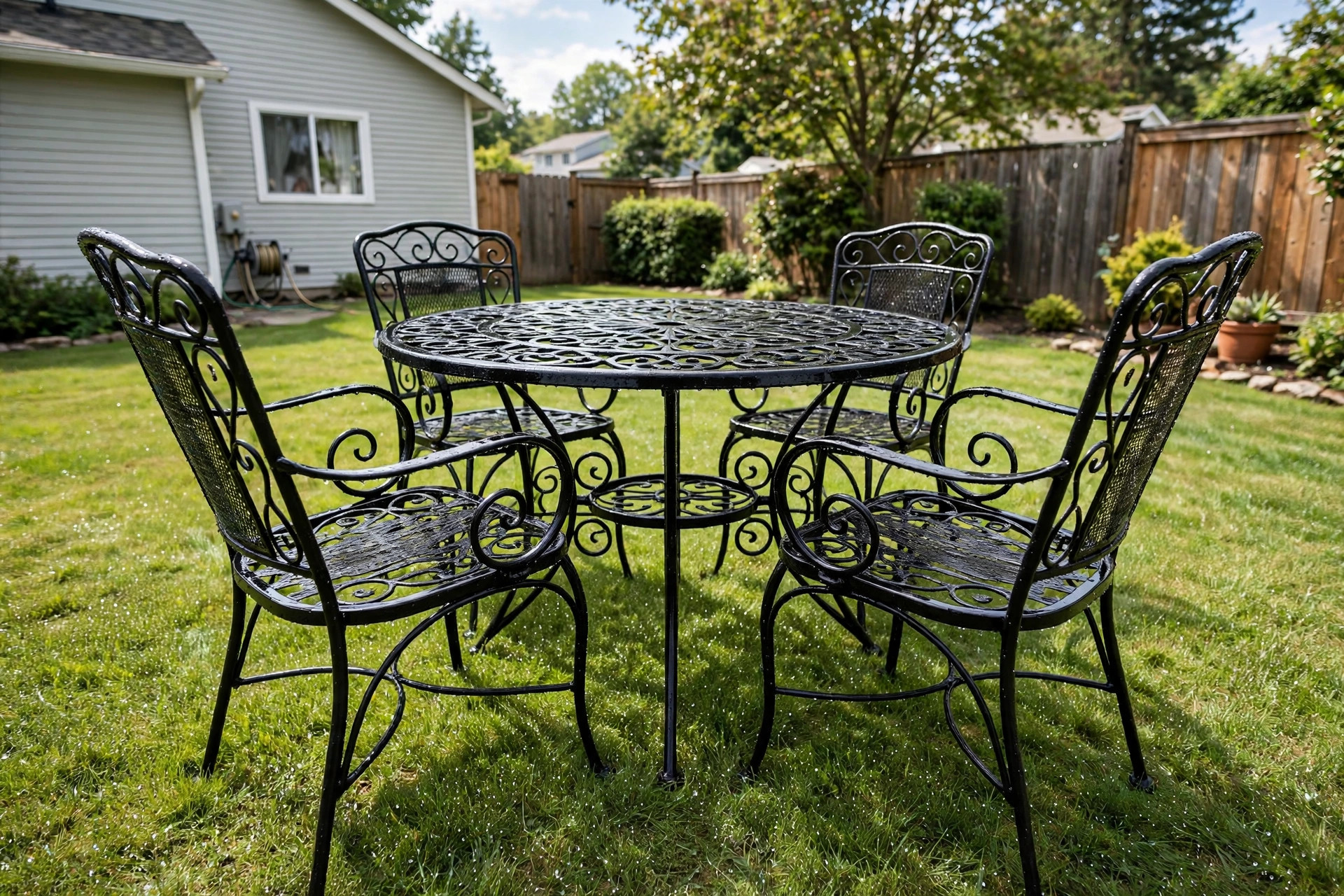

Iron and steel garden furniture can last for decades. It is strong, it holds its shape, and it looks proper on a porch or a lawn. But it has one weak point. Water and air work on bare metal, and in time orange spots of rust appear. Once rust takes hold it spreads, and a fine chair or table can look worn in a single season. The good news is that most rust can be stopped before it starts. These metal patio furniture rust prevention tips follow the plain habits garden owners have used for years: keep the finish sound, keep water away, treat small spots early, and store sets well in winter.
Why Rust Prevention Matters
Rust is not dirt. It is the metal itself breaking down. When iron or steel meets water and oxygen, the surface turns rough and orange and flakes away. Under the flake, fresh metal is open to the air, and the cycle repeats. Joints, welds, and bolt holes fail first, because water collects there and the paint is thin.
Prevention matters more than cure. A new set carries a factory coat of paint or powder coating. While that coat is whole, the metal is sealed and safe. Keep that seal whole: repair nicks, touch up paint, and keep water from sitting on the metal. Guides on how to remove rust from patio furniture are useful, but every hour spent on them is an hour that prevention would have spared you.
A note on metal types helps. Wrought iron, cast iron, steel, and aluminum are all common in patio sets. Aluminum does not rust in the common sense, though it can pit in salt air. Iron and steel do rust. If a magnet sticks to your frame, these metal patio furniture rust prevention tips apply to it in full. Check the joints and the undersides first. That is where rust hides.
Know the Enemies of Metal Furniture: Metal Patio Furniture Rust Prevention Tips
Rust needs three things: bare metal, water, and time. Remove any one of them, and rust cannot grow. Each enemy of your furniture supplies one of these.Rain and dew are the first enemy. A chair left in the open collects dew every morning and rain every storm. Water sits in the seat pan, in the hollow of a tube leg, and along the welds. Even a good coat of paint softens under constant wetness, and tiny cracks open at stress points. Planters, cushions, and umbrellas add to the problem. A planter set on a metal table keeps the spot beneath it damp for days.
The second enemy is damage to the finish. A chip from a stone, a scratch from dragging the chair across concrete, a scrape from a dog or a mower — each one opens a small window to bare metal. Rust often starts at exactly these spots. The underside of a set suffers the most, because it is dragged and bumped and never looked at. Tip your chairs and table once a year and inspect the feet, the leg ends, and the welds.
The third enemy is soil and salt. Fertilizer, garden chemicals, and pool water all speed rust. Near the coast, salt air is the hardest enemy of all. Salt draws moisture from the air and holds it on the metal. Coastal owners must wash their sets often and keep a heavier coat of wax on the metal. Grease and bird droppings are less severe, but they trap moisture too, so clean them off when you see them.
The fourth enemy is neglect in winter. A set left uncovered through months of rain, snow, and freeze-thaw cycles will age years in a single season. Water freezes in small cracks and opens them wider. This is why patio furniture storage ideas for winter matter as much as any summer habit. A dry shed or a sound cover does more for a metal set than any paint can.
Cleaning: The First Line of Defense
Clean metal furniture often, and you will catch most problems early. Wash the set at the start of the season, once more in midsummer, and again before winter storage. Use warm water, a mild dish soap, and a soft cloth or sponge. Avoid wire brushes, harsh scouring pads, and strong acids on painted surfaces. Those tools remove paint as well as dirt, and the paint is your shield.
Rinse with a garden hose, not a pressure washer. A pressure washer can drive water into joints and lift the paint at edges. After washing, dry the set with a towel. Do not let it drip-dry. Pay special attention to the spots where tubes meet, where bolts pass through, and where feet touch the ground.
If your set has cushions, lift them off while you wash the frame. Let the frame dry fully before the cushions go back. Many owners wash the frame when they how to clean outdoor furniture cushions: one session, two jobs done, and no damp fabric left pressed against painted steel.
Once a year, after the spring wash, inspect every piece in good daylight. Look for chips, bubbles, and rough spots. A paint bubble often hides a small rust spot beneath it. Mark each damaged place and deal with it at once.
Touch-Up and Protective Coatings
The heart of rust prevention is the finish. Keep it whole, and rust has no way in. When you find a chip or scratch, repair it at once. Small repairs take minutes. Large repairs take a weekend.
For a small chip, work in this order. Sand the spot lightly with fine sandpaper to remove loose paint and any fresh rust. Wipe the dust away, then dry it. Apply a rust-inhibiting primer in a thin coat. Let the primer dry fully, following the time printed on the can. Then apply a matching topcoat of exterior enamel or metal paint. Two thin coats are better than one thick coat.
For a full repaint, choose a calm, dry day. Remove loose paint with a wire brush or sander, treat any rust with a rust converter or primer, and coat the whole piece with exterior-grade metal paint. Spray paint made for metal gives a smooth, even coat and reaches into joints better than a brush. A fresh coat of paint, properly done, can add five years or more to a set.
After paint, consider wax. A coat of paste wax or a metal protectant, applied once or twice a year, adds a thin water-shedding layer over the paint.
Oiled finishes suit some older wrought iron pieces. If your set was sold with an oil finish rather than paint, renew it each season with a light oil made for the purpose.
Covers, Placement, and Smart Storage
No coating lasts forever under constant wetness. The surest of all metal patio furniture rust prevention tips is also the simplest: keep the set dry. Good weatherproof patio furniture covers heavy duty are worth their price. Choose covers that fit the shape of your pieces, with vents or mesh panels that let air move. A cover that traps moisture is worse than no cover at all.
Placement matters too. Set furniture on a surface that drains. A stone patio that sheds water is better than bare soil that holds it. If the set stands on grass, move it now and then so the ground beneath dries. Lift planters off metal tables with small feet or saucers so air can pass under them. Keep sprinklers from hitting the set every morning. That daily soaking is a common cause of rust that owners never notice.
Small habits add up. Bring cushions inside at night and in rain. Tilt chairs after a storm so water runs off. If dew is heavy in the evening, the covered set stays far drier than the uncovered one.
Winter storage deserves a plan. The best place for a metal set in winter is a dry garage, shed, or covered porch. Clean and dry each piece, touch up any paint, and apply wax before it goes in. If indoor space is short, use covers outdoors and place the pieces on blocks so meltwater does not pool under the feet. Check the set once in midwinter.
Types of Metal Furniture and Their Needs
Not every metal set asks for the same care. Cast iron is heavy and strong, with a rough surface that holds paint well. Its thick sections rust slowly, which gives the owner time to catch spots. Wrought iron is lighter, with slender bars and scrollwork. Its many joints and crevices collect water, so inspect the welds closely.
Steel tube furniture is common and affordable, but the tubes are hollow. If water enters through a chip or an open end, it rusts from the inside, where you cannot see it. Check that tube ends have caps or plugs, and replace lost caps.
Some sets mix metals: an aluminum top with steel legs, for example. The aluminum parts need little care, but the steel parts need full care. Test with a magnet to know which parts are which. Galvanized steel carries a zinc coat that resists rust; touch up scratches with a zinc-rich primer. Even stainless steel profits from washing and waxing.
Cost and Price of Prevention
Rust prevention is cheap work. A can of rust-inhibiting primer, a can of exterior metal paint in a matching color, fine sandpaper, and a tin of paste wax will cover a full dining set for several seasons. Together these supplies cost about the same as a single new chair, and far less than a replacement set.
Covers are the largest single cost. A set of heavy-duty covers for a table and chairs costs more than a can of paint, but a good cover lasts three to five years and protects the whole set.
Professional refinishing is the expensive option. Sandblasting and powder coating a dining set can cost half the price of a new one. It is worth doing for a high-quality wrought iron set, because the powder coat lasts longer than any hand-applied paint. For a cheap steel set, replacement often makes more sense.
Time is the other cost. Expect to spend an afternoon each spring on washing and inspection, an hour here and there on touch-ups, and an afternoon in autumn on winter preparation.
Retailers such as IKEA and Wayfair sell metal patio sets in many styles, and their product pages often note the finish and the care it needs. For paints, primers, and covers, a store such as Home Depot stocks rust-inhibiting products made for outdoor metal.
Safety Notes
Paint, primer, and rust converter are chemicals. Work in open air or a well-ventilated space, and wear gloves and eye protection when sanding old paint. Some older furniture may carry lead-based paint. If your set is very old and the paint is thick and chalky, test for lead before sanding.
Sanding rust makes dust, so wear a dust mask. Let painted pieces cure fully before anyone sits on them.
A rusted set can also be unsafe to use. Check load-bearing parts — legs, chair frames, and the table base — for deep rust. If the metal is soft, flakes in layers, or bends under pressure, the piece may fail under weight. When in doubt, retire the piece or have a metalworker judge it.
Frequently Asked Questions
How often should I check my metal patio furniture for rust? Inspect the set at least three times a year: in spring, in midsummer, and in autumn before storage. In coastal areas or very wet climates, check monthly. Early spots are small and easy to fix.
Can I stop rust without repainting the whole piece? Yes, in most cases. Sand the spot, apply rust-inhibiting primer, and touch up with matching paint. Spot repair works well as long as the surrounding paint is sound and the rust has not gone deep.
Does wax really help prevent rust? It helps as a second layer. Wax does not replace paint or primer, but over sound paint it sheds water and slows the wear of the finish. Apply paste wax once or twice a year to a clean, dry set.
Should I cover my furniture even in summer? Covers help in every season. In summer they block dew, rain, and sun. Use breathable covers with vents so moisture does not build up underneath.
Is it safe to use a rust converter on garden furniture? Rust converters are made for this purpose and are safe when used as directed. They turn surface rust into a stable black compound that can be painted over. Work outdoors, wear gloves and eye protection, and let the product cure fully before priming and painting.
How long can a metal patio set last with good care? A quality iron or steel set, kept painted, covered, and stored dry in winter, can last twenty years or more. Even a cheap set does far better with these metal patio furniture rust prevention tips than without them. The finish is the life of the set. Guard it, and the metal underneath stays sound.
A Final Word
Rust is patient, but it is not quick. It needs an open door — a chip, a scratch, a damp joint — and time to work. Your job is to close the doors. Wash the set, dry it, repair the finish, keep it covered, and store it dry in winter. A metal patio set is an investment in the comfort of your home. Protect it as one.
References
IKEA. (n.d.). Home furnishings and outdoor furniture. https://www.ikea.com Wayfair. (n.d.). Home goods and patio furniture. https://www.wayfair.com Home Depot. (n.d.). Home improvement and outdoor living. https://www.homedepot.com
Was this guide helpful?

About Jennifer Lee
The My Garden US editorial team writes practical, in-depth home and garden guides for American homeowners — tested advice, no fluff.
You May Also Like
Outdoor Chaise Lounge with Wheels Reviews: A Buyer’s Guide
August 31, 2026 0 views
Patio Furniture for Cold Climates Reviews: What Holds Up in Harsh Winters
January 16, 2026 0 views
Outdoor Rug Pad for Concrete Patio: A Plain Guide
June 4, 2026 0 views